Backup Power for Medical Devices: How to Keep Life-Saving Equipment Running When the Grid Fails
When the grid goes down, medical devices like CPAP machines, oxygen concentrators, and insulin coolers can become life-or-death priorities. Here's how to keep them running.
According to the Centers for Disease Control and Prevention, approximately 60 million Americans live with at least one chronic condition requiring ongoing medical management — and millions of those people depend on electrically powered devices to survive. CPAP machines, oxygen concentrators, home ventilators, powered wheelchairs, insulin coolers, and infusion pumps don't stop being necessary when the power goes out. But in most households, the plan for a grid failure amounts to little more than hoping the outage doesn't last long.
That's not a plan. That's gambling with your life — or the life of someone you love.
Whether you're a prepper in a rural farmhouse, a suburban homeowner, or an apartment dweller in the middle of a city, if you or a family member depends on a powered medical device, backup power is not optional survival gear — it is the foundation of your entire emergency preparedness strategy. Hurricanes, winter storms, EMP events, cyberattacks on grid infrastructure, and simple equipment failures can all cut power for hours, days, or weeks. This guide will show you how to build a layered backup power solution that works regardless of where you live.
Why Medical Device Users Face Unique Risks in Grid-Down Emergencies
FEMA data consistently shows that people with disabilities and chronic health conditions are disproportionately affected during disasters. After Hurricane Katrina, hundreds of deaths were directly or indirectly linked to loss of powered medical equipment. After Superstorm Sandy, hospitals scrambled to manage patients whose home oxygen concentrators had failed. The 2021 Texas winter storm knocked out power for millions, and dialysis patients and oxygen-dependent individuals faced life-threatening emergencies within hours.
The problem isn't just the outage itself — it's that most people with medical power needs have no backup at all. Registering with your local utility as a medical baseline customer is a good start, but it doesn't guarantee priority restoration, and it does absolutely nothing in a widespread regional grid failure or an EMP event that takes the grid dark for an extended period.
Your survival kit for medical device dependency has to be built before the crisis — not improvised during it.
Know Your Device's Power Requirements Before You Buy Anything
Before purchasing any backup power solution, you need to know exactly what you're powering. Every powered medical device has a wattage rating, and many have additional requirements — some run on DC power only, some require pure sine wave inverters, and some (like oxygen concentrators) draw substantial power continuously.
- CPAP machines: Typically 30–60 watts without a heated humidifier; 100–200 watts with the humidifier running
- Oxygen concentrators: Usually 150–600 watts depending on flow rate and model — among the most power-hungry home medical devices
- Home ventilators: Typically 100–300 watts; absolutely require uninterrupted power
- Powered wheelchairs: Battery-powered by design but require charging; most use 24V systems drawing 5–10 amps
- Insulin coolers and medication refrigerators: 40–80 watts continuously
- Infusion pumps: Generally low wattage (5–20 watts) but often have battery backup built in
Calculate your daily watt-hour (Wh) requirement by multiplying device wattage by hours of daily use. A CPAP running 8 hours at 60 watts needs 480Wh per night minimum. An oxygen concentrator at 300 watts running 16 hours a day needs 4,800Wh daily — a significantly more challenging load to meet off-grid.
Also confirm whether your device requires a pure sine wave output. Most sensitive medical electronics do. Modified sine wave inverters — common in cheaper power stations — can damage CPAP motors and oxygen concentrator compressors over time or cause them to malfunction immediately.
Tier 1: Portable Power Stations for CPAP and Low-Draw Devices
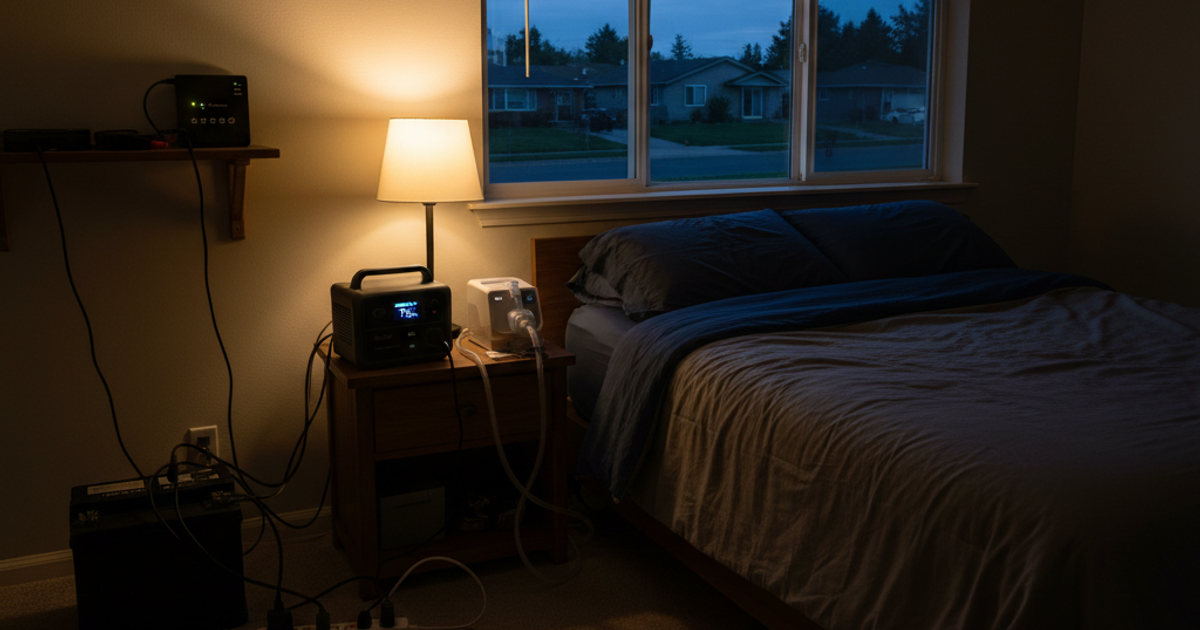
For CPAP users specifically, portable power stations have become the go-to solution, and for good reason — they're quiet, safe for indoor use, require no fuel, and can be recharged via solar panels, car chargers, or standard wall outlets. If you or your partner depends on a CPAP and your emergency preparedness plan doesn't include one of these, fix that today.
The Jackery Explorer portable power station is one of the most popular and field-proven options in this category. Jackery units are available in multiple capacities from 240Wh to over 2,000Wh, output clean pure sine wave AC power, and can be paired with Jackery SolarSaga panels for completely off-grid recharging — making them viable for both urban apartment dwellers and rural homesteaders.
For CPAP users who want a purpose-built medical solution that's even more compact and travel-friendly, the Medistrom Pilot 24 Lite CPAP battery is specifically designed to power ResMed and Philips Respironics CPAP and BiPAP machines. It connects directly to your machine's DC power input, bypassing the AC adapter entirely for greater efficiency — meaning you get significantly more runtime per charge than you would running your CPAP through a general-purpose power station's AC outlet. For anyone building a bug out bag or evacuation kit around medical device dependency, this compact purpose-built battery deserves serious consideration.
Similarly, if your machine is a ResMed AirSense 10, you should look at a CPAP battery backup specifically compatible with the ResMed AirSense 10, as machine-specific batteries often provide two to three times the runtime of generic solutions by powering the unit at its native DC voltage rather than converting AC to DC with losses along the way.
Tier 2: Large-Capacity Solar Generators for Oxygen Concentrators and High-Draw Devices
If you or a family member depends on an oxygen concentrator, a home ventilator, or multiple devices simultaneously, you need substantially more power capacity. This is where large-format solar generators — sometimes called solar power stations — become essential survival gear.
The Bluetti AC200P solar generator offers 2,000Wh of capacity with 2,000W of pure sine wave AC output — enough to run a typical home oxygen concentrator for six to eight hours on a single charge, or to power multiple lower-draw devices simultaneously over a longer period. It accepts up to 700W of solar input and can also be charged via a standard wall outlet, your vehicle, or a combination of sources simultaneously. For a suburban or rural household with solar panels on the roof or a portable array in the yard, this is a serious medical emergency power solution.
For those who want the most capable home backup power solution available in a portable form factor, the EcoFlow Delta Pro home backup power station offers 3,600Wh of capacity expandable to 25kWh with additional battery units — and can be connected to your home's electrical panel via a transfer switch for seamless whole-home or dedicated circuit backup. It charges extremely fast (from empty to 80% in under an hour via AC), accepts solar input up to 1,600W, and outputs 3,600W of pure sine wave power. For oxygen-dependent individuals in areas prone to extended outages, this represents a genuine multi-day solution rather than just emergency bridging power.
Rural preppers with existing small wind generators or solar arrays can integrate these power stations as battery storage, creating a genuinely robust off-grid medical power system that doesn't depend on sunshine alone.
Tier 3: Whole-Home Generators for Extended Outages
For outages lasting more than three to five days, portable power stations alone — even large ones — may not be sufficient without consistent solar recharging. A standby or portable fuel-powered generator remains the most practical solution for extended grid-down scenarios involving high-draw medical devices.
Key considerations for generator-based medical backup power:
- Run time and fuel consumption: A 2,000-watt generator running an oxygen concentrator and basic household loads will burn through one to two gallons of gasoline every four to six hours. Plan your fuel storage accordingly — at minimum a week's worth, ideally more with proper fuel stabilizer treatment.
- Never run generators indoors: Carbon monoxide poisoning kills dozens of Americans every year during power outages. Generators must run outdoors, well away from windows and doors — including in apartments where using a generator on a balcony is both illegal and deadly.
- Transfer switch: If powering medical devices through your home's wiring, a proper transfer switch prevents dangerous backfeeding into the grid and protects utility workers and your equipment.
- Noise and security: A running generator announces your operational status to the neighborhood. Maintain situational awareness and consider a generator enclosure or strategic placement to reduce noise signature in SHTF scenarios.
Practical Power Planning for Apartment and Urban Dwellers
Urban preppers and apartment dwellers face real constraints — no yard for a generator, limited space for large power stations, and often no access to rooftop solar. But you're not without options:
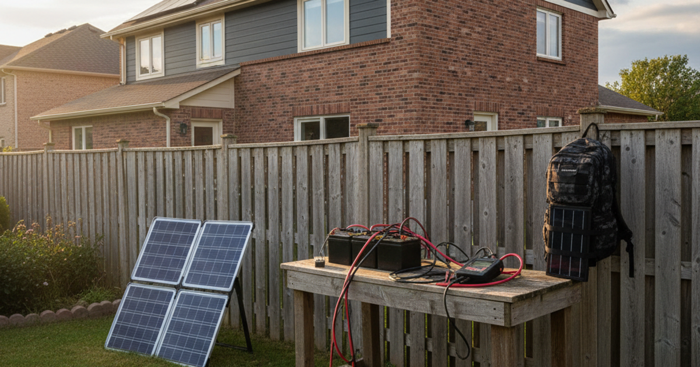
- Balcony solar charging: A 200–400W portable solar panel array on a south-facing balcony can meaningfully extend a power station's runtime through a multi-day outage.
- Vehicle charging: Most portable power stations can charge from your vehicle's 12V outlet or a dedicated DC charging cable. In an extended outage, periodic vehicle charging can keep a CPAP battery topped up indefinitely — as long as you have fuel.
- Utility medical priority programs: Register with your utility's medical baseline or life support program. It won't guarantee power, but in minor outages it may mean faster restoration.
- Know your evacuation trigger: If your device requires more power than your backup can supply, your evacuation plan must include pre-identified destinations — a family member's home with power, a hotel with a generator, or a medical shelter — and you need to know exactly when to activate it.
Additional Medical Preparedness Considerations
Backup power is essential, but it's one piece of a larger medical preparedness picture:
- Consumable supplies: CPAP filters, masks, and tubing; oxygen concentrator filters; insulin; and other medical supplies should be stockpiled alongside your power solution. Review our medication stockpiling guide for a comprehensive approach to building a medical reserve.
- Device documentation: Keep copies of your device prescriptions, settings, and model numbers in a waterproof bag — part of your survival kit and evacuation documents.
- Caregiver training: Anyone in your household should know how to operate your backup power system and medical device under stress.
- Community resources: Connect with neighbors and consider joining a neighborhood mutual aid network — someone nearby may have generator capacity they'd be willing to share in a genuine emergency.
What You'll Need
- Portable power station or battery backup system (capacity rated for your device's wattage)
- Uninterruptible Power Supply (UPS) for immediate switchover
- Solar panels or backup generator (for extended outages)
- Heavy-duty extension cords and surge protectors
- Power inverter (if using car battery as backup)
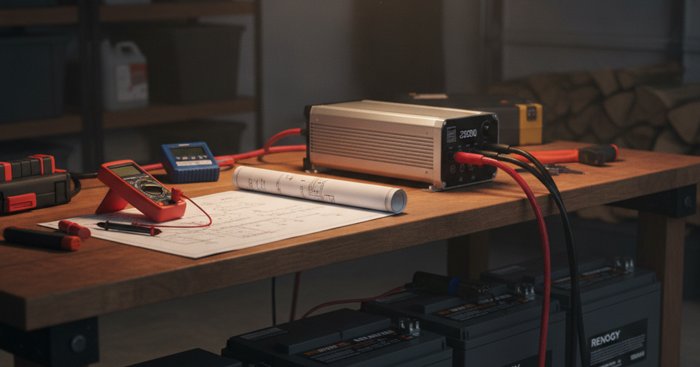
- Multimeter for testing voltage output
- Manufacturer's power specifications for all medical devices
- Backup batteries specific to your medical equipment
Step-by-Step Instructions
Step 1: Calculate Your Medical Device Power Requirements
Review the manufacturer's label on each life-saving device to identify its wattage, voltage, and amperage requirements. Add up the total wattage of all devices that must run simultaneously, then multiply by 1.5 to account for startup surge and provide a safety margin. Document whether each device requires pure sine wave power versus modified sine wave, as many sensitive medical electronics demand the former. Keep this information in a readily accessible location with your emergency supplies.
Step 2: Install an Uninterruptible Power Supply (UPS) for Critical Devices
Connect your most critical medical equipment to a hospital-grade UPS that provides instant battery backup when grid power fails. Position the UPS close to the medical device to minimize cord length and potential voltage drop. Test the UPS monthly by unplugging it from the wall while the device is running to ensure seamless transition. Most UPS units provide 30-90 minutes of runtime, giving you time to activate larger backup systems.
Step 3: Set Up a Portable Power Station as Secondary Backup
Choose a lithium battery power station with capacity exceeding your calculated requirements by at least 25% and compatible output ports for your devices. Position it in an accessible location and keep it fully charged at all times, checking the charge level weekly. Practice connecting your medical devices to the power station during a drill so you can execute the process quickly during an actual emergency. Label all connection points and store necessary adapters with the unit.
Step 4: Establish a Renewable or Generator-Based Charging System
Install solar panels with a charge controller to recharge your battery systems during extended outages, ensuring panels receive at least 4-6 hours of direct sunlight daily. Alternatively, maintain a properly ventilated backup generator with sufficient fuel stored safely outside your home, running it outdoors at least 20 feet from windows and doors. Test your charging system monthly to verify it can replenish your battery reserves faster than your medical devices deplete them. Keep fuel stabilizer in stored gasoline and rotate fuel supplies every 3-6 months.
Step 5: Create a Vehicle-Based Backup Option
Purchase a pure sine wave power inverter rated for your device requirements that connects to your vehicle's battery, keeping it stored in your car with necessary cables. Ensure your vehicle's fuel tank remains at least half-full at all times for emergency power generation. Never run your vehicle in an enclosed space; position it outside with proper ventilation when using it as a power source. This option provides backup for your backup systems when stationary power solutions fail.
Step 6: Develop a Rotation and Testing Schedule
Mark your calendar to test all backup power systems on the first day of each month, simulating a complete grid failure. Rotate through each backup layer (UPS to portable station to generator/solar to vehicle) to verify seamless transitions and identify any equipment failures before an emergency. Document run-times, recharge durations, and any performance issues in a logbook. Replace batteries in all systems according to manufacturer specifications, typically every 2-4 years.
Step 7: Prepare an Emergency Action Plan and Contact List
Write step-by-step procedures for activating each backup power system and post them near your medical equipment and power supplies. Include emergency contact numbers for your medical equipment supplier, utility company, and healthcare provider who can arrange alternative care locations if backup power fails. Inform family members and caregivers about backup power locations and activation procedures, conducting quarterly drills. Register with your utility company's medical baseline program if available, which may prioritize power restoration to your address during outages.
Frequently Asked Questions
How long can a portable power station run a CPAP machine?
It depends on the power station's capacity and whether you're using the heated humidifier. A 500Wh power station running a CPAP at 60 watts without the humidifier will last approximately eight hours — one full night. With the humidifier running at 150 watts, that same unit lasts only about three hours. For reliable nightly backup, aim for at least 500Wh capacity without the humidifier, or 1,000–1,500Wh if you need the humidifier. Purpose-built CPAP batteries like the Medistrom Pilot 24 Lite are more efficient because they use DC power directly, often providing 50–100% more runtime than AC-based solutions of the same capacity.
Can I run a home oxygen concentrator off solar power during a grid outage?
Yes, but it requires substantial solar capacity. A typical home oxygen concentrator draws 300–600 watts continuously. To run one through the night (when solar isn't producing) you'd need 3,600–7,200Wh of stored battery capacity — which means a large-capacity power station like the EcoFlow Delta Pro with expansion batteries, or a dedicated off-grid solar storage system. During daylight hours, a 600–1,000W portable solar array can run the concentrator directly while simultaneously recharging storage. This is achievable for rural and suburban users with space for panels; urban apartment dwellers with concentrator dependency should prioritize evacuation planning alongside whatever battery backup they can manage.
What should I do if my powered wheelchair runs out of charge during an extended power outage?
Most powered wheelchairs use 24V lead-acid or lithium battery systems and require a dedicated charger. In a grid-down situation, you can charge wheelchair batteries using a portable power station with sufficient capacity (most wheelchair chargers draw 3–8 amps at 24V, or roughly 72–192 watts), a vehicle-based DC power setup, or a solar generator. A 1,000–2,000Wh power station should fully charge a typical wheelchair battery in four to eight hours. Keep the wheelchair battery charged above 50% at all times during a known emergency, and consider a spare charger stored in a Faraday-protected container if EMP is a concern. Also identify manual transport alternatives and personal support contacts in advance — your emergency plan should never have a single point of failure.
Affiliate Disclosure: SHTF Plan participates in the Amazon Services LLC Associates Program. Some links are affiliate links — we may earn a small commission at no extra cost to you.