Blackout Battery Banks: How to Choose and Use Portable Power for Any Emergency
When the grid fails, a portable battery bank can mean the difference between darkness and survival. Here's how to pick the right one.
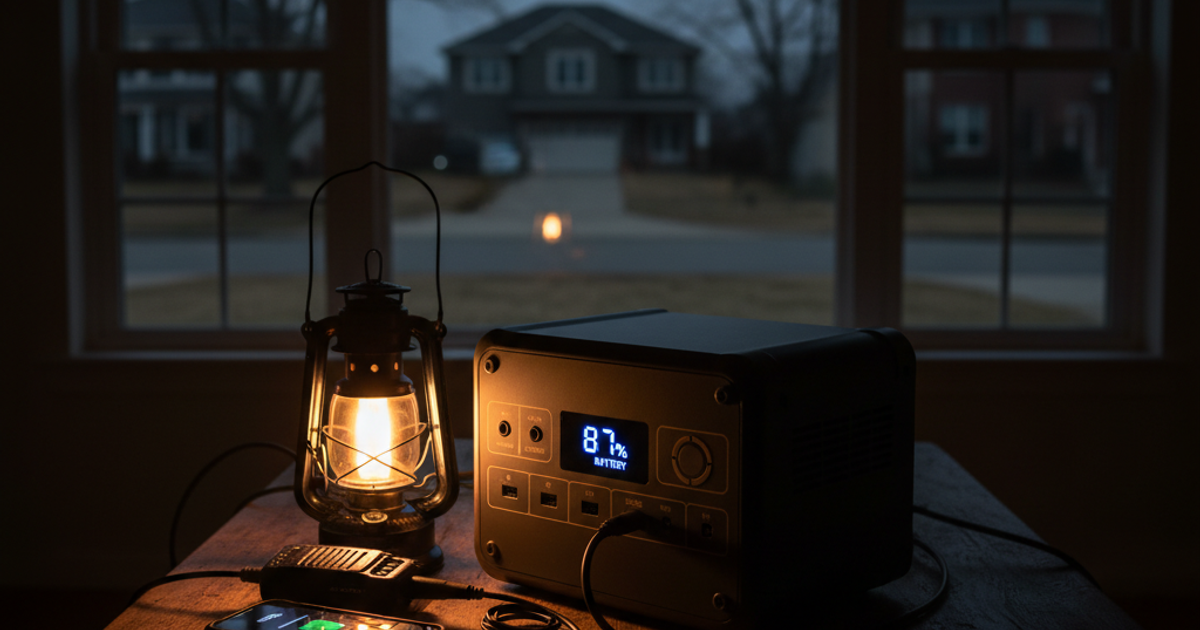
According to the U.S. Energy Information Administration, the average American experiences just over eight hours of power interruptions per year — and that number has been trending upward as extreme weather events grow more frequent and grid infrastructure ages. For preppers and emergency-minded households, those statistics aren't abstract: they represent hours without refrigeration, communication, lighting, and medical equipment. A well-chosen portable battery bank or power station is one of the most practical investments you can make in your emergency preparedness setup, whether you live in a downtown apartment, a suburban home, or a rural homestead miles from the nearest town.
This guide breaks down everything you need to know about selecting, sizing, and deploying portable power for blackouts and SHTF scenarios — from pocket-sized power banks to high-capacity off-grid power stations that can run a full refrigerator for days.
Understanding the Difference: Power Banks vs. Portable Power Stations
The terms are often used interchangeably, but they describe very different classes of devices. Power banks are compact, lightweight units — typically 10,000mAh to 30,000mAh — designed primarily for charging phones, tablets, and small electronics via USB. Portable power stations are larger units with significantly higher capacity (measured in watt-hours, or Wh) that include AC outlets capable of running appliances, CPAP machines, fans, and even small refrigerators.
Your emergency preparedness strategy may require both. A compact power bank lives in your bug out bag or everyday carry kit for personal device charging. A larger power station stays home to handle extended blackouts. Understanding this distinction is the first step to building a layered, redundant power system.
How to Calculate Your Emergency Power Needs
Before you buy anything, calculate your realistic power requirements. List every device you'd need to run during a 72-hour blackout. Common priorities include:
- Cell phone: ~10-20Wh per full charge
- LED lighting: ~5-10W per bulb
- CPAP machine: ~30-60Wh per night
- Mini refrigerator: ~30-60W continuous draw
- Laptop: ~50-100Wh per charge
- Two-way radio or HAM radio: ~5-20Wh
Add up your daily watt-hour consumption, then multiply by the number of days you want to cover. A 72-hour preparedness window is the standard recommended by FEMA, but serious preppers typically plan for 7-14 days or longer. For critical medical devices, check our article on Backup Power for Medical Devices: How to Keep Life-Saving Equipment Running When the Grid Fails for device-specific guidance.
What You'll Need
Tools
- Multimeter (to test battery health and output)
- USB power meter (to measure actual device draw)
Supplies
- Jackery Explorer 1000 portable power station
- Anker 737 Power Bank high capacity
- Anker 625 solar panel for power bank charging
- Heavy-duty extension cord (12-gauge, 25-foot)
- Surge protector with multiple outlets
- USB charging hub (to maximize port availability)
Choosing the Right Capacity for Your Situation
Capacity is measured in watt-hours (Wh) for power stations and milliamp-hours (mAh) for power banks. Here's a practical breakdown by living situation:
Apartment and Urban Dwellers
Space and weight constraints matter in an apartment. You likely don't have a garage to store a 60-pound power station, and bugging out on foot means portable is paramount. For urban survival, a high-capacity power bank like the Anker 737 Power Bank delivers 24,000mAh with 140W output — enough to charge a phone roughly 5-6 times, run a laptop, and keep a small LED lantern going for days. It's compact enough to fit in a backpack and powerful enough to matter. If you're building a serious emergency stockpile in a small space, pair this with your existing kit — see our guide on Apartment Prepping: How to Build a Serious Emergency Stockpile in a Small Space for complementary strategies.
Suburban Households
Suburban preppers have more room to work with and are more likely to shelter in place during an extended outage. A mid-range power station in the 500-1000Wh range hits the sweet spot between portability and capability. The Goal Zero Yeti 500X is a battle-tested unit that delivers 505Wh of capacity with both AC and DC outputs, MPPT solar charging, and a rugged design. It can keep a CPAP running for multiple nights or power LED lighting throughout a 72-hour event. It's quiet, produces no fumes, and is safe to use indoors — something a gasoline generator cannot claim.
Rural and Off-Grid Preppers
Rural households often face longer outages since they sit at the end of utility repair priority lists. High-capacity power stations paired with solar panels are the gold standard here. The EcoFlow DELTA 2 offers 1024Wh of capacity with an expandable battery system, ultra-fast recharging (80% in under an hour from AC), and a 2400W AC output that can run a small refrigerator, power tools, or a well pump. For serious off-grid preparedness, the Bluetti AC200P pushes that further with 2000Wh capacity and 17 output ports, making it one of the most capable portable power stations available for extended SHTF scenarios.
Solar Charging: The Force Multiplier for Any Power System
A power station without a recharging plan is a finite resource. Solar panels transform your portable power system from a one-time battery into a renewable energy supply. The Jackery SolarSaga 100W solar panel is a foldable, weather-resistant panel specifically designed to pair with portable power stations. It can recharge a 1000Wh station in approximately 8-10 hours of direct sunlight — or faster when paired with a second panel. For charging power banks directly, the Anker 625 solar panel is a compact 100W option that folds into a briefcase-sized form factor, making it ideal for apartment balconies, vehicle rooftops, or tossing in the back of a bug-out vehicle.
When using solar, position panels at the optimal angle for your latitude and keep them clean. Even light dust accumulation can reduce output by 15-25%. In winter or low-sunlight conditions, expect reduced performance and plan your power budget accordingly. For a deeper look at solar-powered preparedness, see our Backup Power That Works: How to Choose and Use a Generator for Home Emergencies article for a broader comparison.
Step-by-Step Instructions
Step 1: Audit Your Critical Devices and Calculate Power Requirements
Write down every device you'd need during a 72-hour blackout and find its wattage on the label or in the manual. Multiply each device's wattage by the hours per day you'd run it to get daily watt-hours. Sum all devices and multiply by the number of days you want to cover — this is your minimum capacity target.
Step 2: Select the Right Power Station Tier for Your Living Situation
Match your capacity target to the appropriate device class: compact power bank (under 30,000mAh) for personal devices and bug-out scenarios, mid-range station (500-1000Wh) for suburban shelter-in-place, or high-capacity station (1000Wh+) for rural/off-grid and medical device applications. Prioritize units with MPPT solar charging inputs if you plan to add solar panels.
Step 3: Purchase and Pair a Compatible Solar Panel
Identify the solar input port and maximum solar input wattage on your power station (listed in the specs). Select a solar panel or array that matches this input — the Jackery Explorer 1000, for example, accepts up to 400W of solar input. Pair it with one or two foldable solar panels to maximize recharge speed during a grid-down event.
Step 4: Fully Charge Your Power Station Before Storing It
Always store your power station at 80-100% capacity so it's ready when you need it. Set a recurring calendar reminder to recharge it every 3-6 months, as lithium batteries self-discharge over time. Some units like the EcoFlow DELTA 2 have a storage mode that automatically maintains optimal charge levels.
Step 5: Test All Outlets and Ports Under Load Before an Emergency
Plug in each device you plan to use during an emergency and confirm it operates correctly. Use a USB power meter to verify actual output wattage. This is the time to discover that your CPAP machine requires a pure sine wave inverter — not during the blackout itself. Most quality power stations provide pure sine wave AC output, but verify this in the specs.
Step 6: Establish a Device Priority List and Charging Schedule
During an actual emergency, treat your power station like a finite fuel tank. Charge phones and medical devices first. Run lighting and communications second. Refrigeration and comfort devices last. Avoid running high-draw appliances like electric kettles or hair dryers, which can drain a 1000Wh station in under an hour. Consider pairing your power plan with blackout cooking strategies to eliminate the power demand for food preparation entirely.
Step 7: Store Your Equipment Correctly for Long-Term Readiness
Keep power stations in a cool, dry location between 50°F and 77°F — heat degrades lithium batteries significantly over time. Avoid storage in a hot garage, car trunk, or near heat sources. Keep solar panels clean and store them in their protective cases or wrapped in a soft cloth to prevent surface scratches that reduce efficiency.
Step 8: Build a Layered Power System with Redundancy
Relying on a single device is a single point of failure. Build redundancy by combining a high-capacity power station for home use, a mid-size unit for vehicles, and one or two personal power banks in your everyday carry or bug out bag. The compact BioLite Charge 80 PD is purpose-built for emergency use, featuring an integrated LED emergency light, USB-C PD fast charging, and a rugged weatherproof design that makes it an excellent addition to any survival kit or bug out bag.
Recommended Gear
For preppers who want a mid-range option that balances portability with serious output, the Goal Zero Yeti 500X remains one of the most trusted names in portable emergency power, known for its durability and ecosystem of compatible accessories. Those stepping up to whole-home emergency support should look hard at the Bluetti AC200P, which delivers 2000Wh of capacity — enough to run a full-size refrigerator for 20+ hours or power a rural homestead's essential loads through a multi-day outage.
Communication is just as critical as power during an emergency. Make sure your power plan includes enough reserve to keep your two-way radios and communication devices charged — read our article on When Cell Networks Fail: How to Build a Family Emergency Communication Plan to integrate communications into your overall preparedness strategy.
Frequently Asked Questions
How long will a portable power station last during a blackout?
Runtime depends entirely on capacity and what you're running. A 1000Wh power station will run a 10W LED light for roughly 100 hours, charge a smartphone approximately 50-70 times, or run a 60W CPAP machine for about 16 hours. If you're running a mini refrigerator drawing 45W continuously, expect roughly 18-22 hours of runtime. Always calculate your actual load before the emergency and prioritize critical devices to maximize useful runtime.
Can I use a portable power station indoors safely?
Yes — this is one of the most significant advantages portable power stations have over gasoline generators. Lithium-based power stations produce no combustion fumes and are completely safe to operate indoors, in apartments, and in enclosed spaces. Gasoline and propane generators must always be operated outdoors due to carbon monoxide risk. Always check that your unit is not overheating during extended use and ensure adequate ventilation around the unit itself.
What size solar panel do I need to recharge my power station during a grid-down event?
Match your solar panel wattage to your power station's maximum solar input rating, which is listed in the specifications. A 100W panel will recharge a 1000Wh station in approximately 10-12 hours of good sunlight — but two 100W panels will cut that to 5-6 hours. For faster recharging in uncertain weather, go as large as your power station's input limits allow. Most quality portable power stations support between 200W and 600W of solar input, and foldable panels make storage practical even in small spaces.
Affiliate Disclosure: SHTFPlan.net participates in the Amazon Services LLC Associates Program. Some links are affiliate links — we may earn a small commission at no extra cost to you.