Psychological First Aid: How to Help Trauma Survivors When Mental Health Services Are Gone
When disaster strikes, mental collapse can be just as deadly as physical injury. Learn how to recognize and treat acute trauma in others when no professional help is coming.
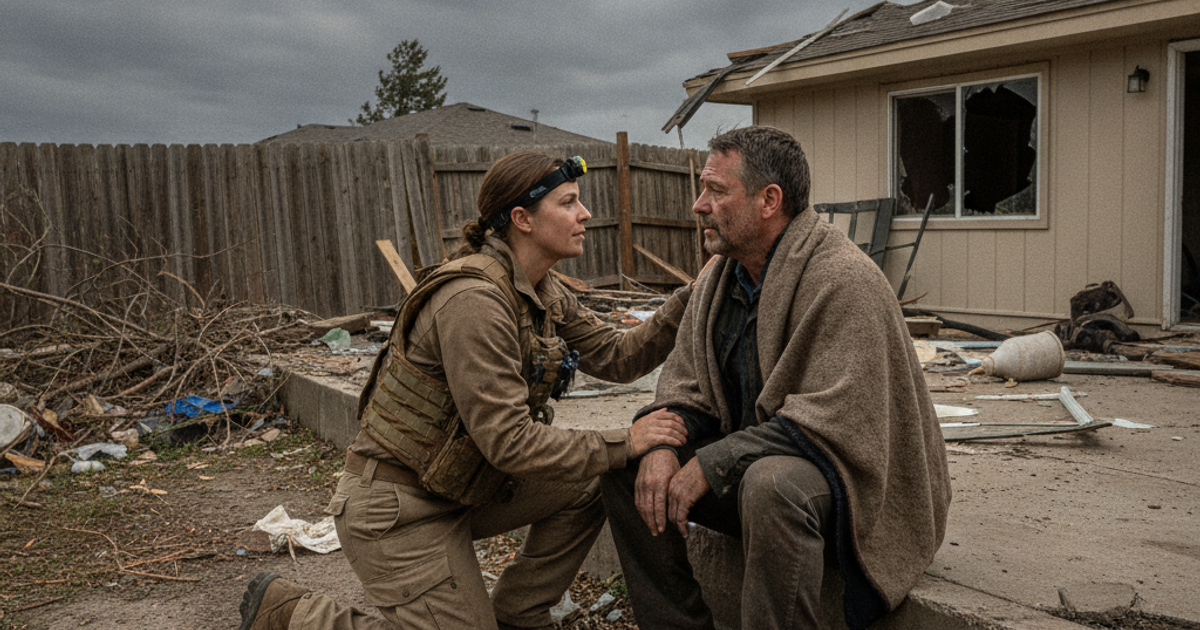
When disaster strikes — whether it's a major earthquake, a prolonged grid-down event, civil unrest, or a catastrophic flood — the psychological casualties can outnumber the physical ones. According to the Substance Abuse and Mental Health Services Administration (SAMHSA), up to 40% of disaster survivors will experience significant psychological distress, and many will meet the criteria for acute stress disorder or post-traumatic stress disorder (PTSD). In a true SHTF scenario where mental health clinics are closed, therapists are unreachable, and 911 is a memory, ordinary people become the only psychological lifeline available.
This is where Psychological First Aid (PFA) becomes an essential survival skill — as critical as treating a gunshot wound or purifying contaminated water. PFA is an evidence-based framework developed by organizations like the National Child Traumatic Stress Network (NCTSN) and the World Health Organization specifically for use in disaster settings. It doesn't require a clinical license. It requires situational awareness, human compassion, and a working knowledge of how trauma impacts the mind.
Whether you're sheltering in an apartment with neighbors who just lost everything, managing a rural homestead where someone witnessed violence, or coordinating a suburban mutual aid group after a prolonged blackout, these techniques can stabilize distressed survivors, prevent psychological deterioration, and keep your group functional when it matters most. For broader context on managing mental health pressures in crisis environments, see our guide on surviving the mental toll and psychological breakdown in a crisis.
What You'll Need
Supplies
- Psychological First Aid Field Operations Guide (NCTSN workbook)
- Moleskine journal notebook for emotional processing and trauma writing
- Stress ball or fidget sensory grounding tool for anxiety relief
- American Red Cross Emergency Handbook (covers physical and mental first aid)
Understanding Acute Stress Reactions in Disaster Survivors
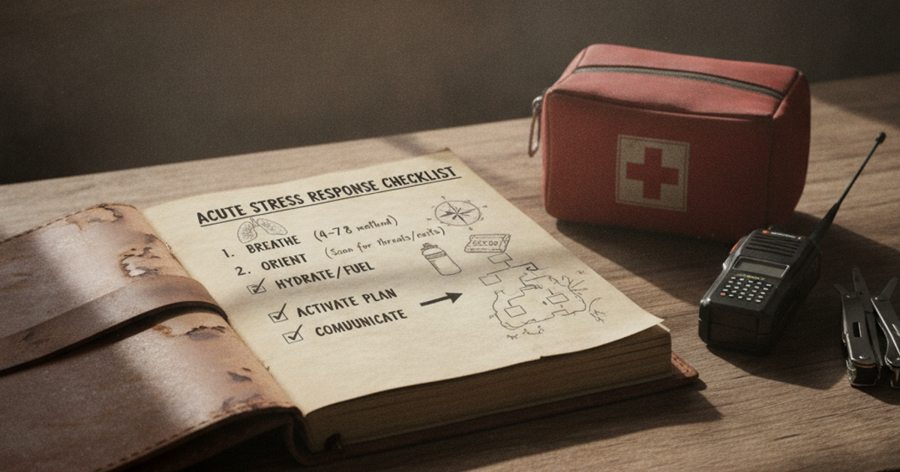
Before you can help someone, you need to recognize what you're looking at. Acute stress reactions exist on a spectrum, and not all trauma responses look like what you see in movies. Research from FEMA and the FEMA Are You Ready emergency preparedness guide consistently shows that trained community members who understand trauma response are far more effective at stabilizing groups than those who simply have good intentions but no knowledge framework.
Common Acute Stress Reactions to Recognize
- Emotional numbing and shock: The person appears flat, detached, or "not there." They may stare blankly, fail to respond to questions, or seem disconnected from their surroundings. This is dissociation — the brain's emergency circuit breaker.
- Hyperarousal and hypervigilance: Excessive startle response, inability to sit still, constant scanning of the environment, difficulty sleeping, extreme irritability. These individuals are stuck in fight-or-flight mode.
- Intrusive re-experiencing: Flashbacks, nightmares, or sudden emotional overwhelm triggered by sights, sounds, or smells that resemble the traumatic event.
- Avoidance behavior: Refusal to discuss the event, avoiding locations or people associated with the trauma, emotional withdrawal from the group.
- Somatic complaints: Trauma often manifests physically — headaches, nausea, chest tightness, trembling, or difficulty breathing with no obvious physical cause.
- Impaired decision-making: Survivors in acute stress may be unable to process basic information, prioritize tasks, or remember instructions — a dangerous liability in a survival group.
Children and elderly individuals may show additional signs: regression to younger behaviors, excessive clinginess, aggression, or prolonged silence. Your situational awareness as a PFA provider must extend to the entire group, not just the most visibly distressed person.
The Core Principles of Psychological First Aid in a Grid-Down World
The NCTSN model of Psychological First Aid rests on five evidence-based principles: safety, calm, connectedness, self-efficacy, and hope. These aren't abstract ideals — they're operational objectives. Each one can be deliberately created even in severe resource-limited environments.
The Crisis Counseling disaster mental health response workbook is an invaluable printed reference for any serious prepper's library. In a scenario where internet access is gone, having this kind of resource in physical form means you're not improvising from memory when someone in your group is in crisis.
Safety First — Then Psychological Support
You cannot stabilize someone psychologically while they are still in active danger. Before any emotional support intervention, ensure the person is physically safe, warm, and sheltered. An urban apartment dweller whose building is still structurally compromised needs relocation before comfort. A rural survivor who just fled a wildfire needs to know the immediate threat is contained. Real or perceived ongoing danger keeps the nervous system locked in survival mode, making PFA impossible.
Do Not Force Processing
One of the most persistent myths about trauma response is that survivors need to "talk it out" immediately. Research consistently shows that forcing trauma narratives in the acute phase (the first 72 hours) can worsen outcomes and even contribute to PTSD. PFA is not debriefing. You are not a therapist extracting a story. You are a stabilizing presence who listens when the survivor chooses to speak.
Step-by-Step Instructions
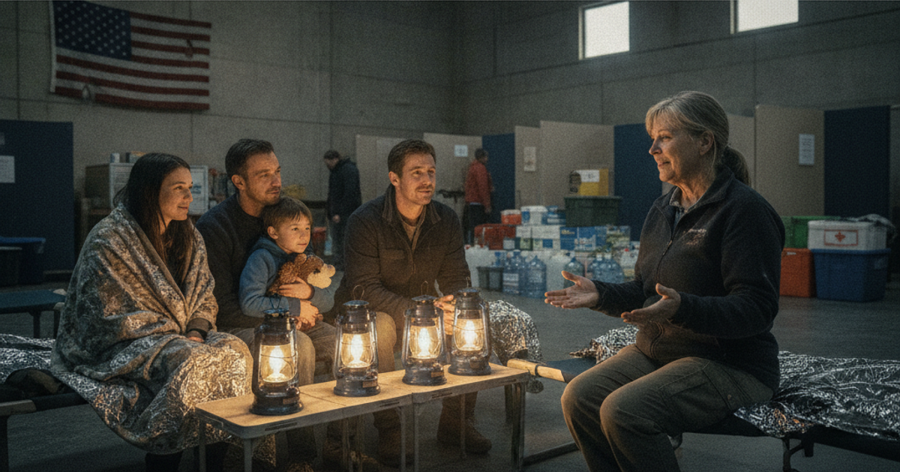
Step 1: Approach the Survivor Safely and Non-Intrusively
Make your presence known calmly before approaching. Crouch or sit to their level if they are seated or on the ground — standing over a distressed person activates threat responses. Introduce yourself by name and role: "My name is [Name]. I'm here to help. You're safe right now." Speak slowly and clearly. Do not rush toward someone in acute shock, as sudden movement can trigger a startle response in hyperaroused individuals.
Step 2: Assess Immediate Needs Before Offering Emotional Support
Before any psychological intervention, run a rapid needs assessment. Ask: "Are you injured? Are you in pain? Do you need water or food? Are there others who need help?" Address immediate physical needs first — pain, dehydration, cold, and hunger all worsen psychological distress. In urban settings, check if the person is separated from family members; reconnection is one of the most powerful stabilizers available.
Step 3: Establish Calm Using Grounding Techniques
For survivors who are dissociating, panicking, or hyperventilating, grounding techniques bring the nervous system back online. The 5-4-3-2-1 method is highly effective: ask the person to name 5 things they can see, 4 they can physically feel (feet on ground, fabric of clothing), 3 they can hear, 2 they can smell, and 1 they can taste. A stress ball or sensory grounding tool placed in the person's hands provides immediate tactile anchoring for those who cannot engage verbal exercises. Pair grounding with slow, deliberate breathing — breathe in for 4 counts, hold for 4, exhale for 6.
Step 4: Listen Actively Without Directing the Narrative
Once the person is grounded and calm, offer presence without pressure. "I'm here with you. You don't have to say anything right now" is more therapeutic than "Tell me what happened." If they begin to speak, use active listening: nod, maintain comfortable eye contact, and reflect what you hear back to them — "It sounds like that was terrifying." Never minimize their experience with phrases like "at least you survived" or "others have it worse." Validation of their emotional reality is the foundation of trust.
Step 5: Provide Practical Assistance to Restore a Sense of Control
Trauma strips people of agency. Restoring small, manageable choices rebuilds self-efficacy — one of the five core PFA principles. Offer simple decisions: "Would you like to sit here or move to the other room?" or "Would you prefer water or something to eat first?" Involve the survivor in small tasks appropriate to their capacity — folding a blanket, helping organize supplies, or watching over a specific area. The act of being useful is psychologically restorative. For those who are literate and stable enough, encourage writing in a journal notebook — research from the University of Texas shows that expressive writing significantly reduces trauma symptoms and emotional distress.
Step 6: Connect Survivors to Social Support Networks
Isolation is one of the most powerful amplifiers of trauma. Wherever possible, reconnect survivors with family members, friends, or community members they trust. In an urban setting, this might mean reuniting neighbors. In a rural setting, it might mean radio contact with family at another location. Even in the absence of existing relationships, integration into a functional group — with roles, routines, and shared purpose — provides the social scaffolding that prevents acute stress from hardening into chronic PTSD.
Step 7: Monitor for Dangerous Escalation and Suicidal Ideation
PFA providers must be alert to signs that a survivor's condition is worsening rather than stabilizing. Red flags include: talking about not wanting to live, giving away possessions, expressing that others would be "better off" without them, extreme agitation that does not respond to calming, or complete withdrawal from all interaction. If you observe these signs, do not leave the person alone. Remove access to lethal means if possible. Stay with them, speak calmly, and use direct language: "Are you thinking about hurting yourself?" Asking directly about suicidal thoughts does not increase risk — research consistently shows it reduces it.
Step 8: Protect Your Own Mental Health as a PFA Provider
Secondary traumatic stress — sometimes called compassion fatigue — is a real occupational hazard for anyone providing sustained emotional support in a disaster environment. Establish clear "off-shift" periods where you are not the primary support person. Debrief with a trusted group member after difficult interactions. Practice the same grounding and breathing techniques you teach others. Your preparedness community is only as resilient as its most burned-out member. For pre-crisis psychological fortification, see our guide on building mental resilience before and after SHTF.
Special Considerations for Different Environments
Urban and Apartment Settings
In densely populated environments, you may be managing psychological triage for multiple people simultaneously. Designate a quiet, visually separated space — even a corner screened by blankets — as a de-escalation zone. Noise, chaos, and crowds worsen hyperarousal. In apartment buildings, coordinating with neighbors means you can implement a buddy system where each distressed person is paired with a calm, stable individual. Privacy is limited but critical — conduct sensitive conversations in the lowest-traffic space available.
Suburban and Rural Settings
Rural survivors may face the added burden of geographic isolation — no neighbors within earshot, no immediate community to reconnect with. If communication infrastructure is down, the silence itself can become threatening. Maintaining routines (regular mealtimes, scheduled tasks, structured activities) becomes especially important. Animals — livestock or pets — can also serve as powerful grounding anchors; the physical presence and care of animals has documented anxiety-reducing effects. For additional crisis decision-making support, our article on how to stay calm and make smart decisions when a crisis hits is a valuable companion resource.
Building Psychological Resilience Before Disaster Strikes
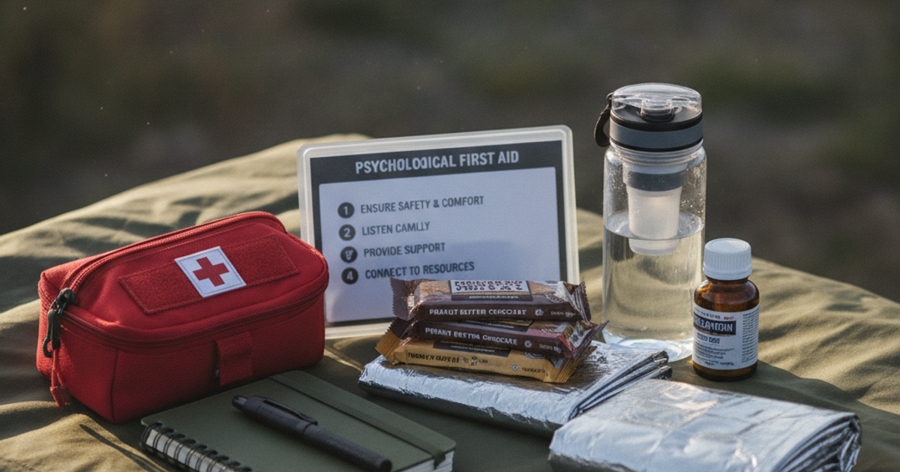
The time to develop PFA skills is before you need them. Consider adding the Psychological First Aid Field Operations Guide to your physical reference library alongside your medical manuals. Practice grounding techniques with family members now so they're automatic under stress. Include emotional resilience protocols in your family emergency plan.
Daily stress management practices build the neurological reserve that makes acute stress reactions less severe. Mindfulness-based tools have strong evidence behind them — products like a Headspace meditation app gift card or a Calm app subscription can help you build a consistent pre-crisis mindfulness practice while internet access is available. Both platforms offer guided breathing, body scans, and sleep meditations — skills that transfer directly to PFA interventions. Download content for offline use while you still can.
For comprehensive physical first aid preparation that complements psychological care, our article on building a trauma kit when EMS is gone covers the physical side of emergency medical response in detail.
Recommended Gear for Psychological First Aid Preparedness
A well-rounded psychological preparedness kit should include printed references you can use when power and internet are unavailable. The American Red Cross Emergency Handbook covers both physical and mental health first aid in a compact, field-ready format — an essential addition to any bug out bag or emergency preparedness library. For deeper academic and clinical grounding, the Crisis Counseling disaster mental health response book provides the theoretical framework that helps you adapt PFA techniques across different types of traumatic events. Keep a dedicated journal notebook in your emergency supplies — both for survivors to use for expressive writing and for your own after-action processing as a PFA provider. Finally, a simple stress ball or sensory grounding tool costs almost nothing and can be the most immediately effective intervention you have for someone in acute dissociative shock.
Frequently Asked Questions
What is Psychological First Aid and how is it different from therapy?
Psychological First Aid (PFA) is an evidence-based approach to supporting people in the immediate aftermath of a disaster or traumatic event. Unlike therapy, PFA does not involve diagnosis, treatment of mental illness, or deep exploration of past trauma. It focuses on five objectives: establishing safety, promoting calm, encouraging connectedness, restoring self-efficacy, and instilling hope. Anyone can be trained to deliver PFA — it requires no clinical license, making it ideal for community members, preppers, and disaster responders who need to support survivors when professional mental health services are unavailable.
How do I know if someone is in acute stress reaction or just upset?
Acute stress reaction goes beyond normal distress. Look for dissociation (blank staring, unresponsiveness, seeming "not present"), severe hyperarousal (extreme startle response, inability to sit still, rapid breathing, racing heart), inability to perform basic cognitive tasks, and physical symptoms like uncontrollable trembling or difficulty breathing without a physical cause. Someone who is "just upset" will generally be able to engage in basic conversation, follow simple instructions, and respond to comfort. If you're unsure, treat the person as if they are in acute stress — the interventions are gentle enough that they cause no harm to someone who is merely distressed.
Can I do more harm than good if I try to help a trauma survivor without training?
The most harmful thing you can do is force someone to relive or narrate their trauma before they are ready — so avoid that above all else. Beyond that, the core PFA actions (providing safety, presence, calm, practical assistance, and connection to support) are broadly beneficial and low-risk. The biggest risks come from well-meaning helpers who push for detailed trauma disclosure, offer dismissive reassurances, or project their own emotional reactions onto the survivor. Educating yourself with resources like the NCTSN Field Operations Guide before disaster strikes dramatically reduces the risk of unhelpful intervention.
Affiliate Disclosure: SHTFPlan.net participates in the Amazon Services LLC Associates Program. Some links are affiliate links — we may earn a small commission at no extra cost to you.