
Shotgun vs. Rifle vs. Handgun: How to Choose the Right Long Gun for Home Defense When SHTF
When law enforcement is unavailable, your firearm choice could mean life or death. Here's how to pick the right weapon for home defense in a crisis.
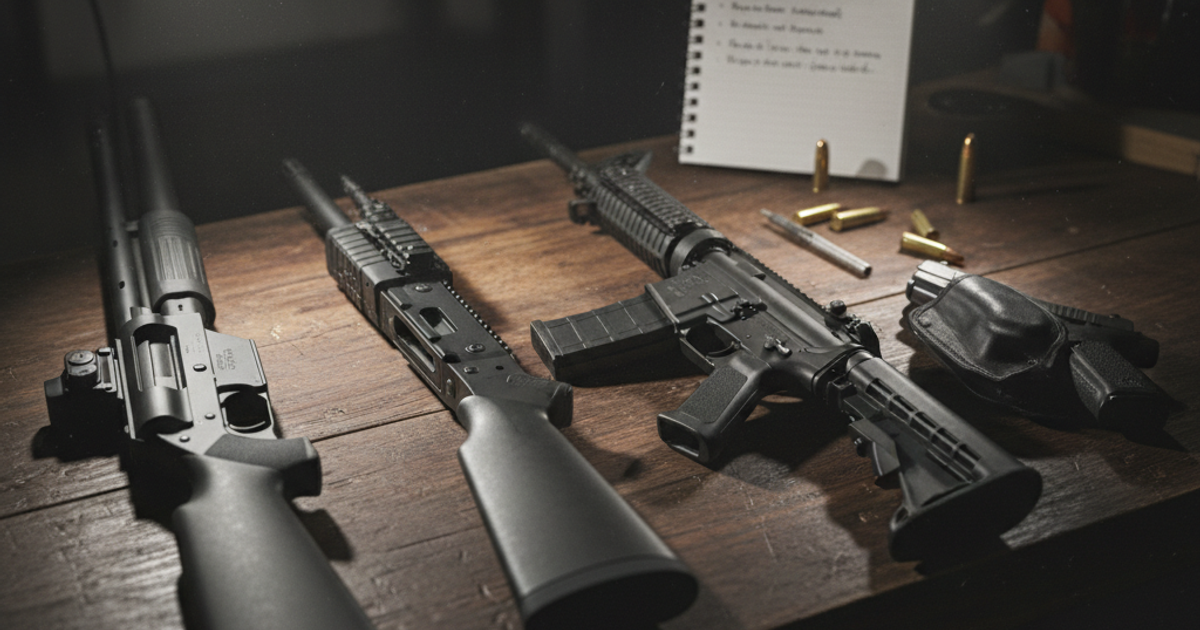
When the grid goes down and emergency services are unavailable, your home defense firearm may be the last line of protection between your family and serious harm. Choosing the right platform — shotgun, rifle, or handgun — isn't a matter of preference alone. It's a tactical decision shaped by your living environment, physical capability, ammunition availability, and the specific threats you're likely to face. Whether you're an apartment prepper in a dense urban core, a suburban homeowner on a quarter-acre lot, or a rural prepper with 40 acres, the calculus changes significantly. This guide breaks down each platform honestly so you can make an informed decision for your SHTF scenario.
What You'll Need
Tools
- Safariland gun cleaning kit universal
- Bore Snake Hoppe's rifle cleaning kit
- Streamlight TLR-1 weapon light
Supplies
- 12-gauge buckshot (00 or #4)
- 5.56/.223 or 9mm ammunition stockpile
- Magpul PMAG 30 round magazine
- Firearm safe or lockbox for secure storage
Understanding the Core Trade-Offs in Home Defense Firearm Selection
No single firearm does everything perfectly. Each platform involves genuine trade-offs in stopping power, magazine capacity, maneuverability, over-penetration risk, and ease of use under stress. According to FBI data and research by ballistics experts like Greg Ellifritz, shot placement and caliber selection both matter — but so does your ability to operate the firearm under extreme stress, in darkness, potentially with one hand. That last point eliminates many "theoretically superior" options for most people.
A key variable that many preppers underestimate is over-penetration — the risk that a round will pass through an interior wall and injure a family member in another room. This concern is especially acute for apartment preppers and suburban homeowners where neighbors live feet away. Every platform has options to mitigate this, but the choices differ dramatically.
The Shotgun: Maximum Stopping Power with Real Limitations
The pump-action shotgun is one of the most recommended home defense firearms in American prepper culture, and for good reason. A single round of 12-gauge 00 buckshot delivers nine .33-caliber pellets simultaneously — a devastating payload at room-to-room distances. FBI testing consistently confirms 12-gauge buckshot exceeds handgun stopping effectiveness at close range.
Advantages:
- Extreme terminal effectiveness at indoor distances (under 25 yards)
- Ammunition is widely available and relatively affordable
- Psychologically deterring — the sound of a pump action is universally recognized
- Versatile: birdshot, buckshot, slugs, and less-lethal rounds all available
- Relatively low cost of entry (quality pump shotguns start around $300)
Disadvantages:
- Limited magazine capacity (typically 4–7 rounds in a tube magazine)
- Heavy recoil, particularly problematic for smaller-framed shooters
- Length makes it difficult to maneuver in hallways and tight spaces
- Slower reloads under stress require training and accessories
If you run a shotgun for home defense, managing your ammunition supply under stress is critical. A Blackhawk tactical shotgun shell holder mounts directly to the stock, keeping spare rounds immediately accessible without fumbling through pouches. Pair it with an Uncle Mike's shotgun sling tactical setup to keep the weapon controlled and your hands free when needed — critical if you're navigating your home while herding family members to safety.
Best for: Rural and suburban preppers with larger homes, open floor plans, or those who prioritize stopping power over capacity. Less ideal for apartment dwellers or anyone with significant recoil sensitivity.
The Rifle: Reach, Precision, and Capacity When It Matters Most
The modern sporting rifle — particularly the AR-15 platform chambered in 5.56 NATO or .223 Remington — has become the dominant choice for serious home defense among preppers, and the ballistic data supports this preference. A standard 30-round Magpul PMAG 30 round magazine gives you a significant capacity advantage over both handguns and shotguns. Studies by Dr. Gary Roberts and others in military wound ballistics have shown that 5.56 frangible or hollow-point rounds actually over-penetrate less through drywall than many handgun rounds — a counterintuitive but well-documented finding.
The AR-15's modular design also means it can be customized for your specific environment. A Magpul AR-15 stock and grip kit allows you to adjust length of pull for different shooters in the household — critical if multiple family members may need to use the firearm. Mounting a Vortex Optics red dot sight dramatically improves target acquisition speed in low-light or high-stress situations compared to iron sights alone.
Advantages:
- High capacity (30 rounds standard) with fast magazine changes
- Lower felt recoil than 12-gauge, making it accessible for more shooters
- Suitable for both close-quarters defense and longer-distance rural defense
- Highly accurate; easier to place precise shots under stress
- Vast aftermarket for customization and maintenance
Disadvantages:
- Length can be challenging in tight hallways (consider a short-barreled variant or pistol-caliber carbine)
- Louder indoors than handguns — hearing damage risk without hearing protection
- Higher purchase cost than entry-level shotguns
- May face legal restrictions in some states and cities
Best for: Suburban and rural preppers who want a do-it-all platform. With appropriate ammunition selection, also viable for apartment dwellers in larger units. Check your state and local laws before making any purchase — magazine capacity restrictions and feature bans vary significantly.
The Handgun: Maneuverability and Everyday Readiness
The handgun is the most commonly owned defensive firearm in America, and for many urban preppers, it may be the only realistic option. A quality 9mm semi-automatic — Glock 17, Sig P320, Smith & Wesson M&P — offers 15–17 rounds, manageable recoil, and a compact profile that allows movement through narrow apartment hallways without printing on doorframes. For those interested in carrying daily, see our full guide on concealed carry for preppers.
Advantages:
- Most maneuverable option — usable one-handed if the other arm is injured or occupied
- Suitable for both home defense and everyday carry in your bug out bag
- Easier to secure quickly (nightstand safe, holster)
- Wide ammunition availability; 9mm is the most common handgun round globally
Disadvantages:
- Statistically lower stopping effectiveness per shot compared to rifle or buckshot
- Harder to shoot accurately under extreme stress
- Limited range for rural defense scenarios
A weapon-mounted light is non-negotiable on any home defense firearm. The Streamlight TLR-1 weapon light is compatible with most full-size handguns and rifle platforms, delivering 300+ lumens to identify threats in complete darkness. In a grid-down scenario, identification before firing is both a legal and a moral imperative.
Maintenance: The Factor That Can Get You Killed If You Ignore It
The best firearm in the world fails if it's dirty, corroded, or improperly lubricated — and in a long-term grid-down emergency, professional gunsmithing isn't available. Routine maintenance is part of your emergency preparedness discipline, not an afterthought. A Safariland gun cleaning kit universal covers most common calibers and platforms, while a Bore Snake Hoppe's rifle cleaning kit lets you run a quick bore clean in under two minutes — ideal for field conditions or when time is limited. Store cleaning supplies with your firearm, not in a separate drawer.
Step-by-Step Instructions
Step 1: Assess Your Living Environment and Legal Constraints
Before selecting any firearm, map your home's layout. Measure hallway widths, count interior walls between rooms, and identify where your family members sleep. If you live in an apartment, research your state and municipal laws on firearm types, magazine capacity, and suppressor ownership. This step determines which platforms are physically and legally viable before you spend a dollar.
Step 2: Identify the Primary Threat Profile You're Preparing For
A single intruder in a suburban home requires a different response than a coordinated group of looters during a prolonged SHTF grid-down scenario. Consider the realistic threat spectrum in your area — urban environments typically present close-range, fast-moving threats, while rural environments may involve longer engagement distances. Your threat profile directly informs your caliber, capacity, and optic choices.
Step 3: Select Your Primary Platform Based on Environment and Shooter Profile
Urban apartment dwellers should seriously consider a quality 9mm handgun or a pistol-caliber carbine for over-penetration management. Suburban homeowners with multi-room homes typically benefit most from an AR-15 pattern rifle with appropriate ammunition. Rural preppers defending larger properties should consider the rifle's range advantage, potentially supplemented by a shotgun for close-quarters interior defense. Factor in physical limitations — recoil sensitivity, hand strength, and dominant eye — when making this choice.
Step 4: Equip Your Firearm with Essential Defensive Accessories
At minimum, mount a quality weapon light (the Streamlight TLR-1 is a proven standard) and verify your sights or optics zero at realistic indoor distances (7–25 yards). If running an AR-15, consider a Vortex red dot for rapid target acquisition. Shotgun users should add a shell holder and sling. These accessories aren't luxuries — they're operational requirements for low-light defensive use.
Step 5: Stockpile Sufficient Defensive Ammunition Separately from Practice Ammo
Maintain a minimum of 200 rounds of quality defensive ammunition (hollow points for handguns, 00 buckshot for shotguns, frangible or quality 5.56 for rifles) stored in a cool, dry location. Keep practice ammunition separate. Rotate your defensive loads annually. During a supply disruption, the ability to sustain operations without resupply is a core prepper principle that applies equally to ammunition as it does to emergency food storage.
Step 6: Build a Consistent Cleaning and Maintenance Schedule
Clean your defensive firearm after every range session and conduct a dry inspection monthly even without firing. Use a bore snake for quick field maintenance and a full cleaning kit for thorough sessions. A firearm stored for 12 months without inspection may fail at the worst possible moment. Treat maintenance as a survival skill, not a chore.
Step 7: Train Regularly Under Simulated Stress Conditions
Static range practice builds baseline skill, but SHTF encounters happen in darkness, with adrenaline, and from awkward positions. Practice drawing from a retention holster, firing from behind cover, and reloading under a time constraint. Consider a low-light shooting course to simulate grid-down conditions. Pair your firearm training with broader situational awareness skills — the best defensive encounter is one you detected and avoided before it escalated.
Step 8: Integrate Your Firearm into a Layered Home Defense Plan
Your firearm is one layer of a complete home defense system, not a standalone solution. Combine it with hardened entry points, a perimeter alarm and trip wire system that gives you early warning, and a designated safe room for family members who aren't engaging the threat. Knowing your family is consolidated in one location before you move through your home is a tactical and emotional necessity.
Recommended Gear for Your Home Defense Setup
Building a complete defensive platform means going beyond the firearm itself. The accessories and maintenance supplies you keep on hand determine whether your system holds up through months of grid-down use. The Vortex Optics red dot sight is one of the most reliable and value-priced red dots on the market, holding zero through heavy use and adverse weather. For AR-15 owners, stocking several Magpul PMAG 30 round magazines ensures you're never scrambling for capacity during an extended emergency. Shotgun users who want a more ergonomic and adjustable platform should look at a quality Magpul AR-15 stock and grip kit if they're running an AR alongside their scatter gun. And regardless of which platform you choose, a Blackhawk tactical shotgun shell holder kept with your shotgun provides quick-access reloads without hunting through a bag or pocket under stress. Don't overlook your Uncle Mike's shotgun sling tactical setup either — a proper sling keeps your firearm on your body and frees your hands for other critical tasks during a prolonged defensive situation.
Frequently Asked Questions
What is the best home defense gun for someone living in an apartment?
For apartment dwellers, a quality 9mm handgun loaded with quality hollow-point ammunition is typically the best choice. Hollow points are designed to expand on impact and reduce over-penetration through interior walls — a critical consideration when neighbors live feet away. A pistol-caliber carbine (such as the Ruger PC Carbine chambered in 9mm) offers improved accuracy and sight radius while sharing magazines with compatible handguns, making it a strong secondary option. Avoid buckshot and full-power rifle rounds in dense living environments unless you've researched specific low-penetration loads.
Is a shotgun or an AR-15 better for home defense when SHTF?
Both are effective, and the honest answer depends on your environment and experience level. The AR-15 has significant advantages in capacity, reload speed, modularity, and — with appropriate ammunition — controlled penetration through interior walls. The shotgun has an edge in raw stopping power per shot at close range and costs less to acquire. Many serious preppers maintain both: a shotgun for close-quarters room defense and an AR-15 for perimeter defense and longer-distance rural scenarios. If you can only own one long gun, the AR-15 platform in 5.56 with quality ammunition edges out the shotgun for versatility across urban, suburban, and rural environments.
How much ammunition should a prepper stockpile for home defense?
A reasonable minimum baseline is 500 rounds of defensive-grade ammunition per platform, plus a separate supply of practice ammunition for training. During normal times, rotate through your defensive stock annually — buy new, shoot old at the range, replace. In a prolonged SHTF grid-down scenario, ammunition becomes both a consumable resource and a potential barter commodity (though trade carefully, as noted in our guide to SHTF bartering). Store ammunition in airtight containers in a cool, dry location away from solvents and lubricants. Properly stored modern brass-cased ammunition has a functional shelf life exceeding 20 years.
Affiliate Disclosure: SHTFPlan.net participates in the Amazon Services LLC Associates Program. Some links are affiliate links — we may earn a small commission at no extra cost to you.