Pressure, Heat, and Cold: How to Store Insulin, EpiPens, and Critical Medications Off-Grid
When refrigeration fails, life-saving medications can degrade in hours. Here's how to keep insulin, EpiPens, and other critical drugs viable when SHTF.
According to the CDC, approximately 37 million Americans live with diabetes, and millions more depend on daily injectable medications like epinephrine autoinjectors (EpiPens) to survive allergic emergencies. When the power goes out — whether for hours, days, or weeks — these individuals face a silent, compounding crisis that most emergency preparedness guides ignore entirely. A SHTF event that wipes out refrigeration isn't just an inconvenience for insulin-dependent diabetics; it's a countdown to diabetic ketoacidosis, coma, and death.
This article is your practical, no-nonsense guide to keeping temperature-sensitive medications viable when the grid fails. Whether you're in a Manhattan apartment, a suburban neighborhood, or a remote off-grid homestead, these strategies will help you maintain medication integrity when pharmacies are closed and power is unavailable. This is not optional emergency preparedness — it's life or death medicine management for the grid-down world.
For a broader look at keeping power flowing to essential medical equipment, also read our guide on Backup Power for Medical Devices: How to Keep Life-Saving Equipment Running When the Grid Fails.
Understanding Temperature Sensitivity: What the Labels Don't Tell You
Most insulin formulations must be stored between 36°F and 46°F (2°C–8°C) when sealed and unused. However, once opened, most modern insulin vials or pens can tolerate room temperature — generally defined as below 77°F (25°C) — for up to 28 days. The exact window varies by manufacturer and formulation, so verify your specific insulin's tolerance with your pharmacist before a crisis hits.
EpiPens are slightly more forgiving. They should be stored at room temperature between 59°F and 77°F (15°C–25°C) and kept away from light. They must never be frozen — freezing permanently damages the epinephrine solution and the auto-injector mechanism. Heat is equally dangerous: temperatures above 86°F (30°C) can degrade epinephrine rapidly, reducing efficacy just when you need it most.
Other medications that require controlled storage include certain biologics, some liquid antibiotics, nitroglycerin, some antipsychotics, and thyroid hormones. The golden rule for all of them: know your specific drug's temperature range, understand how long it can tolerate excursions outside that range, and have a layered storage plan ready before you ever need it.
Insulin that has been exposed to excessive heat or freezing will often appear cloudy, discolored, or clumped — visual signs of degradation. However, some degraded insulin looks completely normal, so temperature control — not visual inspection alone — is your primary safeguard.
What You'll Need
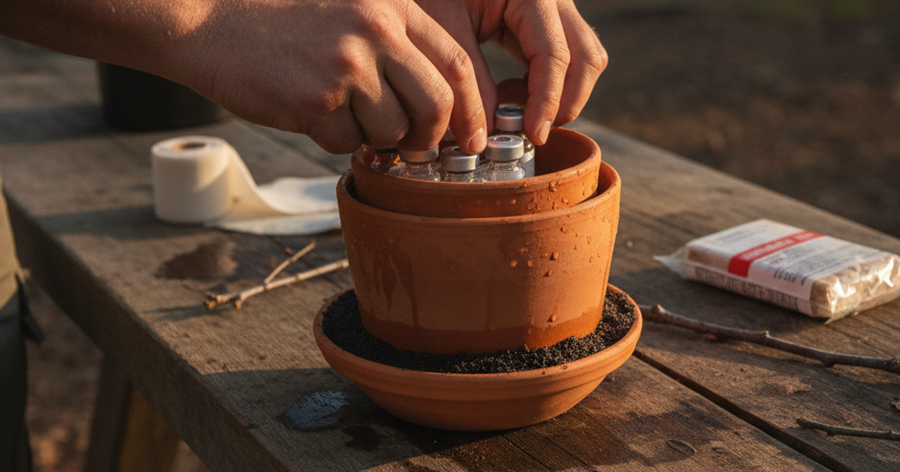
Tools
- Thermometer (digital min/max thermometer for monitoring storage temps)
- VIVO portable medical mini refrigerator 12V
- Goal Zero Yeti portable power station solar
Supplies
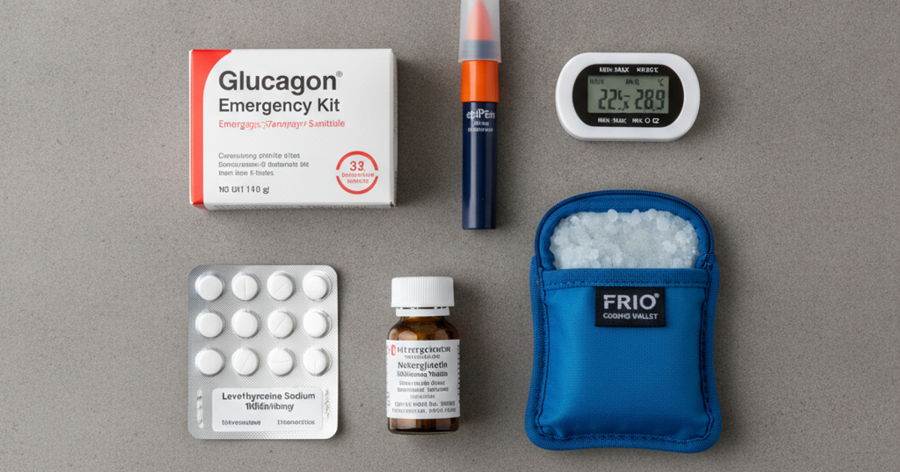
- FRIO insulin cooling wallet case
- EpiPen insulated travel case medication carrier
- Yeti Tundra hard cooler ice chest
- Phase change material (PCM) packs rated for 2°C–8°C range
The Layered Cooling Strategy: Matching Solutions to Scenarios
No single solution works for every situation. A prepper living in a suburban house has different options than someone bugging out on foot or sheltering in a 400-square-foot apartment. The key is building a layered system — primary, secondary, and emergency-level fallbacks — so you're never dependent on a single point of failure.
Layer 1: Powered Cold Storage Solutions
If you have access to any power source — a generator, a solar setup, or a vehicle — a VIVO portable medical mini refrigerator 12V is one of the smartest investments an insulin-dependent prepper can make. These compact units plug into standard 12V DC outlets, making them compatible with your vehicle's cigarette lighter port, a portable power station, or a solar battery bank. They're specifically designed for medication storage, draw minimal power, and maintain consistent temperatures in the 35°F–50°F range.
To power one off-grid indefinitely, pair it with a Goal Zero Yeti portable power station solar. These lithium battery stations can be recharged via solar panels, a wall outlet, or a 12V car adapter. The larger Yeti models hold enough capacity to run a small medical fridge continuously for 12–24 hours between solar recharges — more than enough for most extended outages, especially in sunny climates. This combination represents the gold standard for home-based emergency insulin storage.
Layer 2: Passive Cooling with High-Retention Coolers
When power isn't available, a high-quality insulated cooler becomes your medication's lifeline. Not all coolers are created equal. The Yeti Tundra hard cooler ice chest is legendary in the prepper community for a reason — its 2–3 inch polyurethane foam walls and freezer-style gasket can hold ice for 5–7 days in moderate conditions. For insulin storage, fill the cooler partially with ice, place your medication in a waterproof bag or container on top of the ice (not submerged — you don't want to freeze insulin), and keep the lid closed as much as possible.
The Pelican Elite cooler dry ice compatible offers a similar high-performance option with the added advantage of being rated for dry ice use. Dry ice can be dangerous if used improperly with medications — it will freeze insulin if it comes into direct contact — but when used with a buffer layer (placing your medication in an insulated pouch well above the dry ice), it can extend your cooling window dramatically. Dry ice sublimates at around -109°F, so always use insulating layers and monitor temperature with a thermometer probe.
For a mid-range budget option, the Coleman steel belted cooler ice retention model offers respectable ice retention in the 4-day range, significantly outperforms standard soft-sided coolers, and is far more affordable than rotomolded options. Pre-chill the cooler with a sacrifice bag of ice 24 hours before you load your medications to maximize performance.
Layer 3: No-Power Evaporative and Chemical Cooling
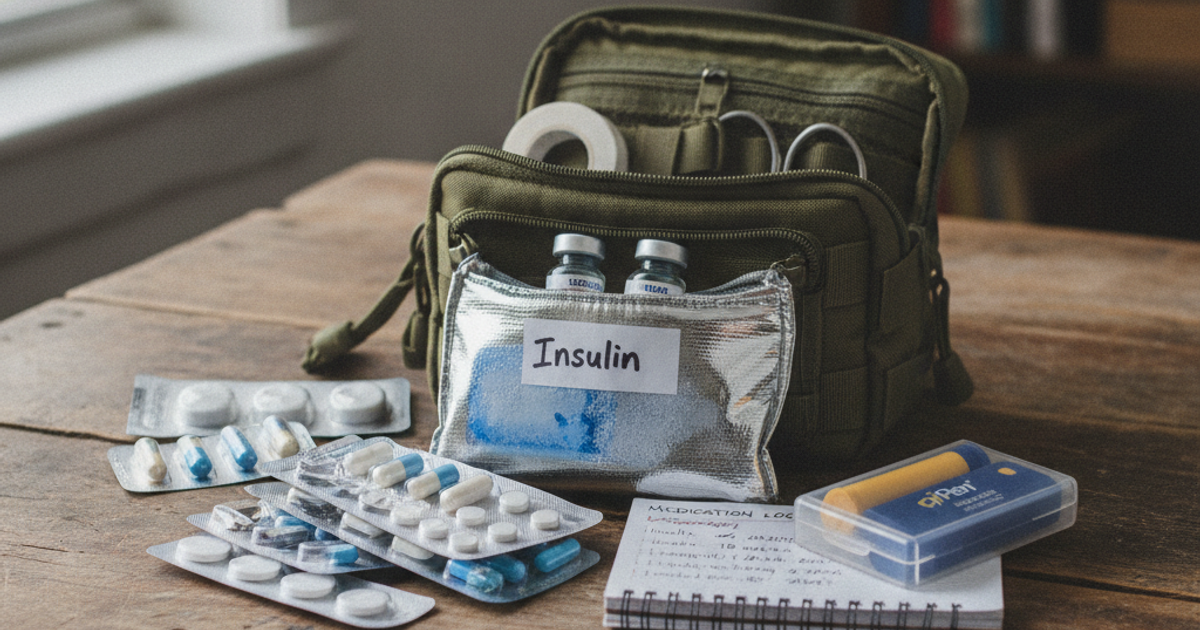
When ice runs out and power isn't available, evaporative cooling technology becomes critical. The FRIO insulin cooling wallet case is a remarkable tool that requires no electricity, no ice, and no refrigeration whatsoever. It works by using a polymer crystal lining that is activated with cold water. As the water evaporates through the breathable outer fabric, it keeps the interior at a safe temperature (between 59°F–77°F) for a minimum of 45 hours, even in ambient temperatures up to 100°F. Re-soak it in cold water every two days and it keeps working. This is the single best option for bugging out on foot, and it fits easily in any bug out bag or survival kit.
Similarly, the Icyball absorption refrigerator medicine cooler represents another non-electric approach — absorption refrigeration technology that uses a heat source to drive a cooling cycle, requiring no moving parts or electricity. These devices have been used in off-grid medicine storage in developing countries and remote homesteads for years. They're worth researching if you're building a long-term off-grid medical preparedness system.
EpiPen and Heat-Sensitive Medication Carriers
EpiPens present a different challenge. They need to stay warm enough to avoid freezing and cool enough to avoid heat degradation. In a bug-out scenario, keeping them on your person is often the best option — body heat in cold weather, a shaded insulated pouch in hot weather. An EpiPen insulated travel case medication carrier is purpose-built for this task — these hard-shell insulated cases protect autoinjectors from both temperature extremes and physical damage. Always carry a minimum of two EpiPens and keep one on your person at all times.
Step-by-Step Instructions
Step 1: Audit Your Medications and Their Temperature Requirements
Before any emergency hits, sit down with your prescribing physician and pharmacist and document the exact storage requirements for every temperature-sensitive medication you take. Note the acceptable temperature range, how long the medication can safely remain at room temperature, and what visual or chemical signs indicate degradation. Write this information on a laminated card and store it in your emergency preparedness binder and bug out bag.
Step 2: Build a 30-Day Emergency Medication Reserve
Work with your doctor to request a 90-day supply prescription and fill it consistently, rotating stock so you always have a 30-day emergency buffer. Many insurance plans now accommodate 90-day supplies. If you're insulin-dependent, ask your physician about prescribing a backup vial of longer-acting insulin (such as NPH) that has a wider temperature tolerance than analogs. Check our guide to stockpiling critical medications for additional strategies.
Step 3: Set Up Your Primary Powered Cooling Solution at Home
Dedicate a 12V medical mini refrigerator specifically to medication storage and pair it with a solar-capable portable power station. Set the fridge to 38°F–42°F, place a min/max digital thermometer inside, and run a brief test during normal conditions to confirm the power station can sustain it for at least 24 hours on a single charge. Integrate this into your overall backup power plan for medical devices.
Step 4: Pre-Chill and Load Your High-Retention Cooler as a Backup
Keep a designated hard-sided cooler ready specifically for medication cooling emergencies. Twenty-four hours before a forecasted outage (hurricane, major storm, known grid event), fill it with ice and let it pre-chill. When the power goes out, transfer your medications to the pre-chilled cooler in a sealed, waterproof bag placed above — not submerged in — the ice. Keep the cooler in the coolest interior room of your home, out of direct sunlight, and minimize how often you open it.
Step 5: Activate No-Power Cooling Solutions for Mobility Scenarios
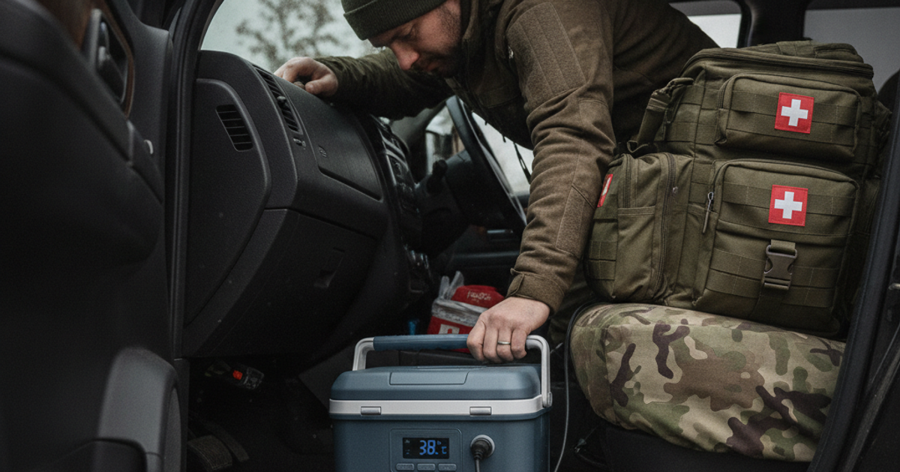
If you must evacuate on foot or by vehicle without reliable power, activate your FRIO insulin cooling wallet by submerging it in cold water for 5–10 minutes until the crystals are fully hydrated and swollen. Place your insulin inside and carry it in a shaded, well-ventilated area of your pack. Carry your EpiPens in an insulated case and keep them on your person when possible. For vehicle evacuation, plug your 12V medical fridge into the vehicle's power outlet and monitor the battery level.
Step 6: Monitor and Log Temperatures Throughout the Emergency
Temperature excursion logging is critical for making informed decisions about whether medication is still viable. Use a digital thermometer with a remote probe to check internal temperatures every 4–6 hours without opening the cooler. Log readings in a notebook with timestamps. If temperatures exceed the safe range, note the duration and consult the medication's temperature excursion data (available from the manufacturer) to assess viability. Never guess — when in doubt, do not use potentially compromised insulin or epinephrine.
Step 7: Establish a Resupply and Communication Plan
Know in advance where your nearest functioning pharmacy, emergency shelter with medical support, or hospital is located relative to your home and your bug-out destination. Carry a printed copy of all your prescriptions, your prescribing physician's contact information, and your insurance card in a waterproof document pouch. Some states allow pharmacists to dispense emergency supplies of maintenance medications without a current prescription during declared disasters — know your state's policy before you need it.
Critical Rules for All Settings: Urban, Suburban, and Rural
Never freeze insulin. Ice packs placed directly against an insulin vial will freeze it. Always use a buffer — a cloth, a foam sleeve, or an insulated medication bag — between ice and your insulin. Frozen insulin cannot be thawed and used safely; it must be discarded.
Never leave EpiPens in a hot car. In summer, a car's interior can reach 130°F–170°F within minutes. At these temperatures, epinephrine degrades rapidly and the auto-injector mechanism can malfunction. Always take your EpiPen with you when leaving a vehicle.
Apartment preppers: If you have no generator access, prioritize FRIO cases and a high-quality hard-sided cooler. Many apartment buildings have basement areas that maintain cooler temperatures year-round — know your building's thermal profile. A community ice machine or shared generator arrangement with neighbors may be worth negotiating in advance.
Rural and homestead preppers have additional options: a root cellar or underground storage area typically maintains temperatures of 40°F–60°F year-round — well within the safe range for many medications during short-term outages. This can serve as an excellent passive backup. For more on underground cooling strategies, see our guide to Cold Storage Survival: How to Keep Food and Medicine Safe When Refrigeration Fails.
For those building out a comprehensive off-grid medical preparedness system, also review our article on Lifesaving Meds Without a Pharmacy: How to Build a Long-Term Drug Supply.
Frequently Asked Questions
How long can insulin stay unrefrigerated during a power outage?
Most modern insulin formulations — including rapid-acting analogs like Humalog, Novolog, and Apidra, as well as long-acting insulins like Lantus and Basaglar — can remain at room temperature (below 77°F or 25°C) for up to 28 days once opened. Unopened vials or pens must remain refrigerated until use. However, in hot weather or during a summer power outage, "room temperature" may quickly climb above the safe threshold, which is why passive cooling solutions like FRIO wallets are essential. Always verify the specific tolerance for your exact formulation with your pharmacist.
What happens if my EpiPen gets too hot or too cold during an emergency?
Both extreme heat and freezing temperatures can render an EpiPen ineffective and potentially dangerous. Heat above 86°F (30°C) can degrade epinephrine, reducing its concentration and potency — meaning it may not stop an anaphylactic reaction quickly enough. Freezing damages both the drug solution and the mechanical components of the auto-injector, causing potential malfunction at the worst possible moment. A compromised EpiPen may still inject, but with reduced or unpredictable effect. Visual signs of heat-damaged epinephrine include discoloration to pink, red, or brown — always carry a backup and inspect regularly.
Can I use a regular cooler from the grocery store to store insulin during a power outage?
A standard foam cooler can work as a short-term emergency solution — typically 12–24 hours with sufficient ice — but it is a poor long-term option due to minimal insulation and rapid ice melt. Higher-quality rotomolded or steel-insulated coolers dramatically extend ice retention to 4–7+ days, giving you a much wider safety window. The critical rule regardless of cooler type: always place insulin in a waterproof bag or container elevated above the ice surface, never in direct contact with ice or ice melt water. Insulin frozen by direct ice contact must be discarded.
Affiliate Disclosure: SHTFPlan.net participates in the Amazon Services LLC Associates Program. Some links are affiliate links — we may earn a small commission at no extra cost to you.