Vehicle Sheltering: How to Survive a Disaster When Your Car Is All You Have
Your car can be a lifesaving shelter when disaster strikes. Here's how to turn any vehicle into a survival base that keeps you alive.
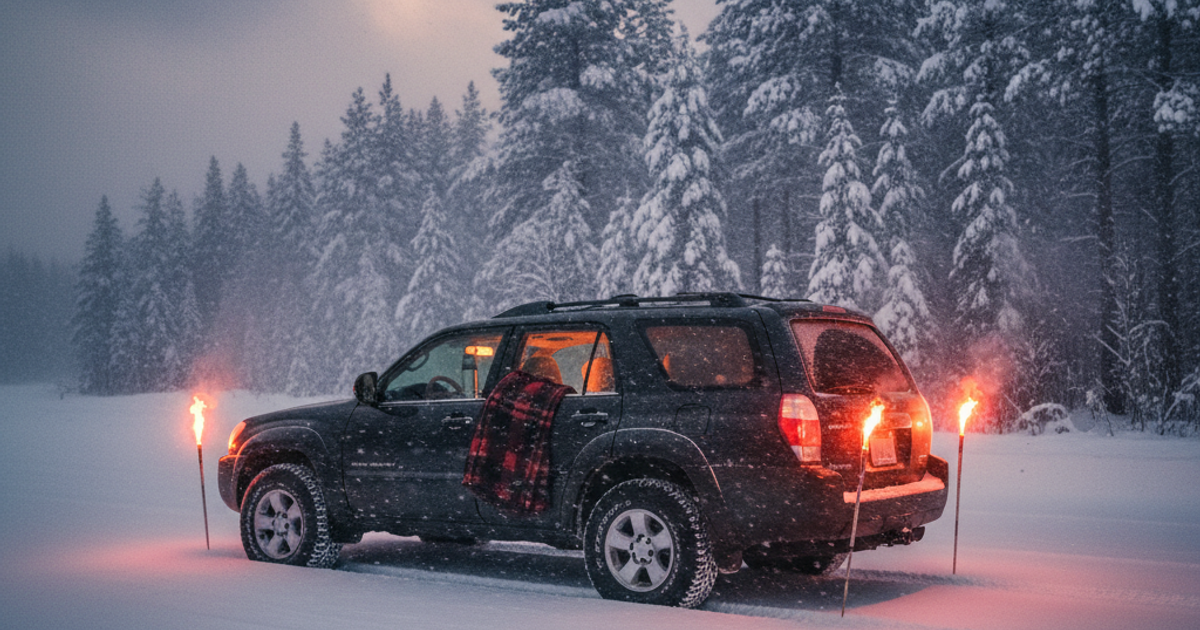
Your car breaks down on a mountain pass during a January blizzard. A flash flood cuts off the road ahead and behind you. A wildfire forces a sudden evacuation and traffic grinds to a standstill for hours. In each of these scenarios, your vehicle becomes something more than transportation — it becomes your survival shelter. Knowing how to use it effectively could be the difference between a close call and a fatality.
According to the American Automobile Association, approximately 37 million motorists experience a vehicle breakdown each year in the United States. When those breakdowns coincide with severe weather, civil unrest, or natural disaster, the stakes escalate dramatically. Whether you're a suburban commuter, a rural rancher, or an urban prepper navigating city streets, vehicle sheltering is a core emergency preparedness skill that too few people develop before they need it.
Why Your Car Is a Better Emergency Shelter Than You Think
Most people dramatically underestimate the survival value of a modern vehicle. A car provides immediate wind and rain protection, a lockable and defensible space, a signaling platform, and — with the right survival gear aboard — a surprisingly effective thermal environment. The average passenger vehicle can retain body heat from occupants for several hours even in subfreezing temperatures, provided the occupants understand how to maximize that effect.
The key word is maximize. A car is not a passive survival system. You have to manage it actively: controlling ventilation, conserving heat, rationing fuel, maintaining situational awareness, and staying visible to rescuers. Each of these requires advance knowledge and the right equipment staged and ready before disaster strikes.
Heat Retention Strategies: Keeping Warm When the Temperature Drops
Cold is the most immediate threat when you're stranded in a vehicle during winter weather. Your body loses heat faster than most people realize, and hypothermia can set in within hours in wet, windy, or extremely cold conditions — even inside a vehicle.
Your first line of defense is insulation. Use every piece of clothing, floor mat, blanket, or fabric available to create a dead-air layer around your body. Pack down into the back seat if possible, which is slightly warmer and more insulated than the front. If you have passengers, share body heat deliberately — huddle together rather than spreading out.
One of the most important items you can keep in any vehicle survival kit is a Mylar emergency thermal blanket. These space-age foil blankets reflect up to 90% of radiated body heat back toward you, weigh almost nothing, and take up less space than a paperback novel. Keep several in your vehicle year-round — they cost almost nothing and can mean everything when temperatures plummet.
If your fuel supply allows, run the engine for 10 minutes every hour to generate heat, then shut it off. This approach conserves fuel while keeping the interior temperature survivable. However, running the engine introduces the most dangerous threat of vehicle sheltering: carbon monoxide poisoning.
Carbon Monoxide Safety: The Invisible Killer Inside Your Car
Carbon monoxide (CO) kills silently and quickly. The Centers for Disease Control and Prevention reports that CO poisoning claims more than 400 lives annually in the United States, and a significant portion of those deaths occur in or around vehicles. When exhaust cannot properly vent — because snow has drifted over the tailpipe, the vehicle is parked in a garage, or you're sheltering in a low-lying area with poor airflow — CO builds up to lethal concentrations inside the passenger cabin within minutes.
Before running your engine for any reason during a sheltering scenario, follow this non-negotiable checklist:
- Clear the tailpipe. Check it every time before starting the engine, especially after heavy snowfall. A blocked tailpipe redirects exhaust directly into the cabin.
- Crack a window. Even a one-inch gap on the downwind side provides enough ventilation to dramatically reduce CO accumulation.
- Never run the engine in an enclosed space. Even a partially open garage is dangerous. This applies equally to urban parking structures and rural outbuildings.
- Use a portable CO detector. A battery-operated Kidde carbon monoxide detector is compact enough to keep in a glove box and will alarm before CO reaches dangerous concentrations. This is not optional survival gear — it's essential equipment for anyone sheltering in a vehicle.
Symptoms of CO poisoning include headache, dizziness, confusion, and nausea. By the time most people recognize these symptoms, impaired cognition is already affecting their judgment. Get out of the vehicle immediately if you suspect CO exposure.
Supplemental Heat Without the Engine Running
When fuel is low or you need to avoid running the engine, supplemental heat sources become critical. Candles are a surprisingly effective low-tech solution in this context. A single candle can raise the interior temperature of a small vehicle by 10–15 degrees Fahrenheit — not comfortable, but survivable.
A UCO Stormproof survival candle is designed specifically for emergency conditions — windproof, long-burning, and stable in a variety of orientations. Keep one in your vehicle emergency kit with a secure candle holder. Even a single flame makes a measurable difference in a confined space, and the psychological warmth of firelight should not be underestimated in a high-stress survival situation. Keep a window cracked slightly when burning any open flame indoors to prevent oxygen depletion and combustion gas buildup.
Signaling for Rescue: Making Sure Someone Finds You
Survival is partly about enduring conditions — and partly about getting found. Your car is a large, visible object, and you should exploit that visibility aggressively. Raise the hood as a universal distress signal. Tie brightly colored fabric to your antenna or door handles. If you have a whistle (and you should — it's in your complete 72-hour bug out bag checklist), use it in the internationally recognized distress pattern: three short blasts repeated.
At night or in low-visibility conditions, light is your most powerful signaling tool. Turn on your hazard lights periodically to conserve battery, and use a flashlight to signal passing aircraft or distant vehicles using the SOS pattern in Morse code: three short flashes, three long flashes, three short flashes.
For more robust emergency signaling, nothing beats road flares. An Orion safety road flare kit provides highly visible distress signals that can be seen for miles in poor weather and are standard equipment on emergency response vehicles for good reason. Place flares upwind and uphill of your position to maximize visibility while keeping the fire hazard away from your vehicle. In urban settings, flares also communicate to other drivers and emergency personnel that your vehicle is stationary and in distress — critical information during a chaotic evacuation scenario.
Building a Vehicle Survival Kit That Actually Works
The most common mistake preppers make with vehicle survival gear is treating it as an afterthought. Your car kit should be as deliberately assembled as your bug out bag. Think in terms of survival priorities: shelter and warmth, water, signaling, first aid, food, and tools.
A quality pre-assembled foundation like an AAA roadside emergency kit gives you jumper cables, tow rope, reflective triangles, and basic tools without having to source each component separately. Use it as your baseline and layer in the additional survival-specific items that a standard roadside kit won't include: food rations, water, the CO detector, thermal blankets, flares, and a first aid kit.
Here's a priority list for your vehicle survival kit:
- Water: At minimum, one gallon per person in sealed containers. Water is heavy and takes up space, but dehydration accelerates the effects of cold and heat stress dramatically.
- Emergency food: High-calorie, no-preparation bars rated for extreme temperature storage. Aim for 1,200–2,400 calories per person per day.
- First aid kit: Focus on trauma — tourniquets, wound packing gauze, and splints. Check out our guide on wilderness medicine for treating life-threatening injuries when help isn't coming for a deeper dive into trauma care under SHTF conditions.
- Navigation tools: A physical road atlas and compass, because GPS fails. See our guide on navigation without GPS for detailed techniques.
- Communication: A battery-powered or hand-crank emergency weather radio to receive NOAA alerts and emergency broadcasts.
- Tools: Multi-tool, glass breaker and seatbelt cutter (mounted where you can reach them while buckled), traction boards or tire chains if you live in snow country, and a small folding shovel.
- Sanitation: Waste bags, hand sanitizer, and a small supply of toilet paper. Extended vehicle sheltering makes sanitation a real concern.
Situational Awareness and Security During Vehicle Sheltering
Urban and suburban preppers face threats that rural stranded motorists often don't: opportunistic crime during disaster conditions. When SHTF in a populated area, a person alone in a disabled vehicle is a visible target. Practicing the grey man principle — reducing your visible profile as a potential target — matters even inside your car.
Keep windows fogged or use a windshield sunshade to reduce visibility into the vehicle. Lock all doors. Keep valuables out of sight. Maintain situational awareness by periodically scanning your surroundings without drawing attention to yourself. Trust your instincts — if a situation feels wrong, it probably is. Review our resource on situational awareness and detecting threats before they become dangerous for a deeper framework on reading your environment under stress.
If confronted, your vehicle itself is a defensive tool — but use it wisely and legally. Know your state's laws regarding self-defense in vehicles before you need to make a decision under pressure.
When to Stay and When to Leave Your Vehicle
The general rule in most survival scenarios is to stay with your vehicle. It's larger and easier to find than a person on foot, it provides protection from the elements, and it contains your supplies. The National Weather Service strongly advises staying in your vehicle during winter storms unless rescue is imminent or the vehicle presents an immediate danger.
Exceptions include: rising floodwater (abandon the vehicle immediately and move to high ground), fire in or immediately adjacent to the vehicle, and situations where you are certain rescue will not come and you have a clear, achievable path to safety on foot with proper gear and navigation tools.
If you must leave, take your bug out bag and survival essentials. Leave a note in the vehicle stating your direction of travel, destination, and the time you departed. This simple action dramatically increases your odds of being found.
What You'll Need
- Sleeping bags or heavy blankets
- Window covers or reflective sunshades
- Portable phone charger or power bank
- Water containers (1 gallon per person per day)
- Non-perishable food items
- Flashlight and extra batteries
- First aid kit
- Portable toilet or sanitation supplies
- Carbon monoxide detector (battery-powered)
- Tools (wrench, screwdriver, duct tape)
Step-by-Step Instructions
Step 1: Position Your Vehicle in a Safe Location
Choose a spot away from potential hazards like flood zones, unstable structures, or heavy traffic areas. Park on level ground whenever possible to ensure comfort and prevent the vehicle from rolling. If you're in extreme heat, seek shade under trees or structures; in cold weather, find a spot sheltered from wind. Always ensure your parking location allows for quick exit if you need to evacuate suddenly.
Step 2: Ventilate Properly While Maintaining Temperature Control
Crack windows slightly (about 1-2 inches) to allow fresh air circulation and prevent carbon monoxide buildup, even when the engine is off. Never run your engine in an enclosed space like a garage. If you must run the engine for heat or cooling, do so for only 10-15 minutes per hour and ensure the exhaust pipe is clear of snow, debris, or obstructions. Use window covers or sunshades to insulate against extreme temperatures while maintaining some airflow.
Step 3: Organize Your Interior Space for Living
Remove unnecessary items from the passenger area to maximize usable space for sleeping and storing supplies. Fold down rear seats if possible to create a flat sleeping surface. Designate specific areas for different purposes: one section for food and water, another for clothing and bedding, and a spot near the door for emergency equipment. Keep essential items like flashlights, first aid supplies, and your phone within arm's reach at all times.
Step 4: Manage Your Resources and Ration Supplies
Inventory all food, water, and fuel immediately and calculate how long your supplies will last. Drink at least 2 liters of water daily per person, and consume high-calorie foods to maintain energy. Run your vehicle's engine sparingly to conserve fuel—use it primarily for critical heating or cooling rather than charging devices. Store perishable items in coolers or, in winter, outside the vehicle in sealed containers to prevent spoilage.
Step 5: Maintain Visibility and Communication
Keep your phone charged using a car charger or portable power bank, limiting non-essential use to preserve battery life. Place brightly colored cloth or reflective materials on your antenna or windows to signal for help if needed. Check in with emergency services or family members when possible to report your location and status. Monitor local radio stations for emergency updates and instructions from authorities.
Step 6: Practice Hygiene and Sanitation
Set up a designated sanitation area outside your vehicle at a safe distance, using portable toilet solutions or improvised facilities. Use hand sanitizer frequently, especially before eating and after bathroom use. Dispose of waste properly in sealed bags, storing them away from your living area. Keep a supply of wet wipes, tissues, and plastic bags for daily hygiene needs when water is limited.
Step 7: Monitor Your Physical and Mental Health
Perform light stretches and exercises inside or near your vehicle daily to prevent stiffness and maintain circulation. Watch for signs of hypothermia (shivering, confusion, drowsiness) or heat exhaustion (dizziness, nausea, rapid heartbeat) and take immediate corrective action. Stay mentally engaged by reading, listening to radio, or planning your next steps. If you're sheltering with others, maintain regular communication and support each other's emotional well-being during the crisis.
Frequently Asked Questions
How long can you survive in a car during a winter storm?
With proper preparation, most people can survive 24–72 hours in a stranded vehicle during winter conditions. The key variables are fuel supply, insulation available (blankets, clothing, Mylar emergency blankets), food and water reserves, and whether you take active steps to conserve heat and avoid CO poisoning. Survival time drops sharply without supplies and preparation. People have survived much longer — and died much faster — depending on their level of emergency preparedness before the event.
What should I keep in my car survival kit year-round?
Your vehicle survival kit should include: thermal blankets, a portable CO detector, a first aid kit with trauma supplies, water and emergency food rations, jumper cables and basic tools, road flares or signal triangles, a flashlight with extra batteries, a multi-tool, a weather radio, and a physical road map of your region. Seasonal additions for winter include tire chains or traction boards, an ice scraper, and extra warm clothing. In summer, add extra water and electrolyte supplements to guard against heat exhaustion.
Is it safe to run your car heater while sleeping in your vehicle during an emergency?
Running the engine and heater while sleeping is one of the most dangerous things you can do during vehicle sheltering. Carbon monoxide buildup while unconscious is often fatal because you cannot recognize the symptoms before losing consciousness. If you must run the engine, do so only while awake and alert, with a window cracked, and with a working portable CO detector in the vehicle. The safer approach is to conserve heat passively using Mylar blankets and layered clothing, using the engine for brief warming periods only while you are fully awake and monitoring conditions.
Affiliate Disclosure: SHTF Plan participates in the Amazon Services LLC Associates Program. Some links are affiliate links — we may earn a small commission at no extra cost to you.