Ammunition Stockpiling: How to Store, Rotate, and Reload Your Ammo When Supplies Run Dry
Ammo is the one prep that disappears from shelves first and never comes back cheap. Learn how to store it against moisture and heat, rotate it properly, and reload your own brass when the supply chain fails.
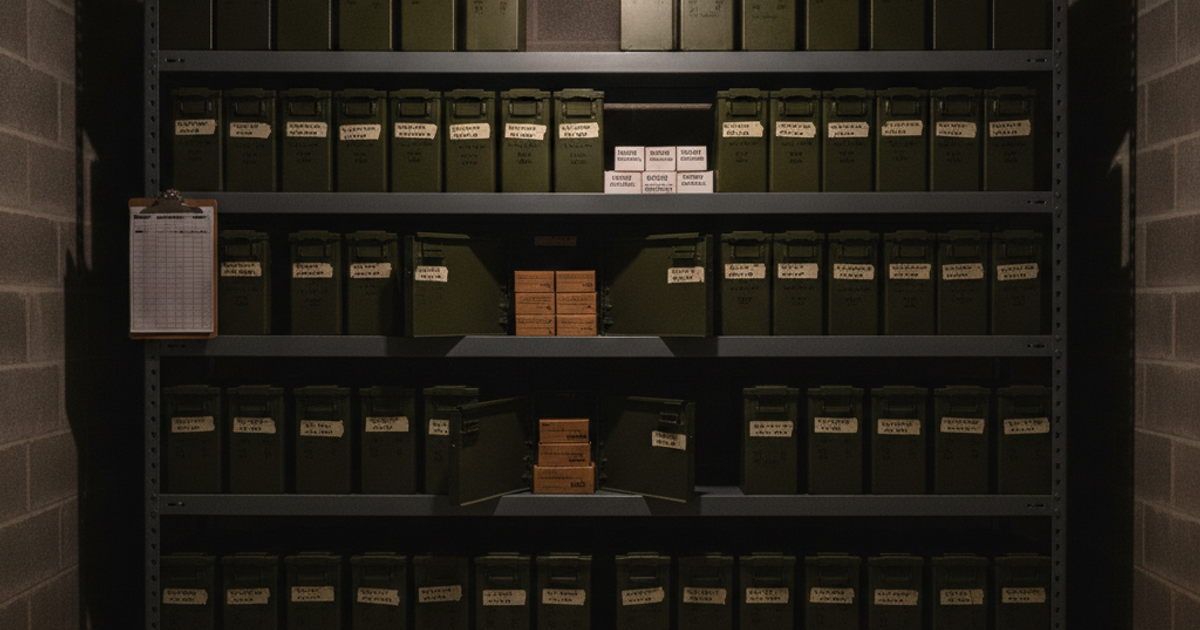
Ammunition is one of the few prepper commodities that cannot be improvised from scratch in a crisis. You can filter dirty water, grow food on a balcony, and barter for medicine — but primers, smokeless powder, and jacketed bullets come from industrial factories. When those factories slow down or distribution collapses, what's on your shelf is what you have. Anyone who lived through the 2013, 2020, and 2021 ammunition shortages remembers empty pegboards and 9mm selling for a dollar a round. According to industry data from the National Shooting Sports Foundation, American manufacturers and importers put roughly 8.7 billion rounds into the U.S. market annually in recent years, yet demand spikes still emptied shelves within days.
The good news: modern ammunition is remarkably durable. Military surplus ammo from the 1940s and 1950s still fires reliably when it was stored properly. The bad news is that "properly" is doing a lot of work in that sentence. Heat, humidity, and neglect will kill a stockpile faster than any shortage. This guide covers long-term storage, corrosion prevention, rotation, and the basics of handloading — for apartment dwellers, suburbanites, and rural preppers alike.
What You'll Need
Tools
- Digital hygrometer/humidity monitor
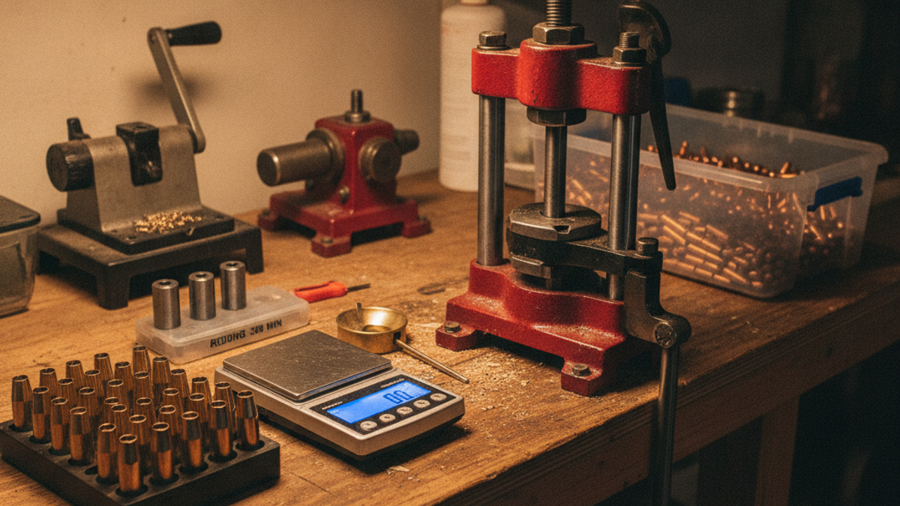
- Single-stage or turret reloading press with dies
- Powder scale (beam or digital) and calipers
- Case tumbler or brass cleaning media
- Inventory logbook or offline spreadsheet
Supplies
- MTM Case-Gard 50-round ammo boxes
- Plano Field Box ammo cans
- Silica gel desiccant canisters
- VCI corrosion inhibitor bags
- Reloading components: primers, powder, bullets, brass
- Permanent marker and waterproof labels
How Long Does Ammunition Actually Last in Storage?
Manufacturers typically print a conservative ten-year shelf life, largely for liability reasons. In reality, ammunition stored at stable temperatures below 80°F and relative humidity under 50% routinely performs after 30 to 50 years. SAAMI (the Sporting Arms and Ammunition Manufacturers' Institute) notes that modern smokeless powder is chemically stabilized and degrades slowly under normal conditions. The failure points are almost never the powder — they're moisture intrusion past the case mouth and primer pocket, and heat cycling that accelerates chemical breakdown.
Rule of thumb from ammunition chemists: every 18°F increase in storage temperature roughly doubles the rate of propellant deterioration. That attic in Phoenix that hits 140°F in August is the single worst place in your home to keep ammo. A closet on the north wall of a conditioned living space is one of the best — and it's available to apartment dwellers and homesteaders alike.
How to Prevent Moisture and Corrosion in Long-Term Ammo Storage
Corrosion is the enemy. Green verdigris on brass cases, rusted steel cases, and dead primers all trace back to humidity. Your defense is layered.
Layer 1: Rigid Containers
Start with plastic ammo boxes that hold rounds individually and prevent bullet tips from deforming. Loose rounds rattling in a bucket will scuff bullets and, in rare cases, loosen crimps. Sealed field boxes with gasketed lids give you a second barrier — a Sheffield 12629 field ammo box stacks well and takes a padlock, which matters if you have kids or roommates. Military-surplus steel cans work too, but check the rubber gasket; dried, cracked gaskets are common on cheap surplus and defeat the entire purpose.
Layer 2: Desiccant
Drop a rechargeable canister into every sealed container. Indicating silica gel dehumidifiers change color when saturated, so you get a visual cue without opening every can. Recharge them in a low oven or plug-in cradle every six to twelve months depending on your climate.
Layer 3: Vapor Corrosion Inhibitors
VCI technology releases a molecular layer that bonds to metal and blocks oxidation. A VCI emitter protects roughly 100 cubic inches for up to two years — perfect for a sealed can. For bulk storage or firearms stored alongside ammo, VCI bags wrap the whole package.
Layer 4: Monitoring
You cannot manage what you don't measure. Keep a hygrometer in your storage area and target 30–50% relative humidity. Basements below grade in humid regions often sit at 65–70% without intervention. The same discipline applies to pest-proofing your emergency food storage — controlled environments protect everything you own.
Building a Rotation System That Actually Works
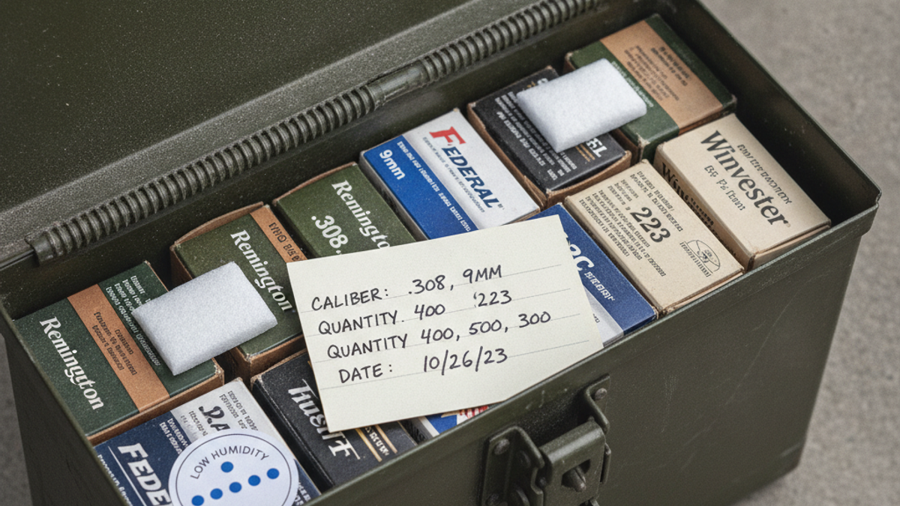
Ammunition doesn't "expire" like canned chili, but rotation still matters. The goal is to shoot your oldest stock at the range and replace it with fresh production, so your deep reserve is never a decade of unverified lots. Adopt first-in, first-out discipline: label every container with caliber, bullet weight, manufacturer, lot number, and purchase date.
Divide your stockpile into three tiers. Training ammo gets consumed and replaced continuously. Defensive ammo gets rotated every two to three years — carry ammo especially, since repeated chambering can set back bullets and moisture from body heat degrades primers. Deep reserve stays sealed and untouched, opened only to verify condition once a year. Track it all in the same system you use for the rest of your supplies; our guide to stockpile inventory management covers audit schedules that scale from a closet to a barn.
Handloading Basics: Making Ammo When Supplies Run Dry
Reloading turns a consumable into a renewable resource. A single brass case can be reloaded five to ten times in most calibers. Component costs typically run 40–60% below factory ammo, and during shortages, components are often available when loaded ammo isn't.
You need four things: brass, primers, powder, and projectiles. Primers are the hardest to make at home and the most important to stockpile deeply — buy them by the thousand when available and store them in original packaging, cool and dry, away from solvents. Powder should stay in its factory container with the original label; never mix lots or decant into unmarked jars. Store powder per NFPA guidelines in a wooden cabinet, not a sealed steel box, so pressure can vent in a fire.
Start with a single-stage press and one caliber. Load ten rounds, measure them, and shoot them before loading a hundred. Buy two reloading manuals and compare data — never exceed published maximum charges. Cast lead bullets from wheel weights or scrap lead extend your capability further, though this requires ventilation and is realistically a garage or rural activity, not an apartment one.
Step-by-Step Instructions
Step 1: Assess Your Storage Environment
Place a hygrometer in each candidate location — closet, basement, under a bed — and log temperature and humidity for two weeks. Reject any space that exceeds 80°F or 60% RH regularly. Interior closets on conditioned floors almost always outperform garages, sheds, and attics.
Step 2: Sort and Inventory Every Round You Own
Separate by caliber, bullet weight, and manufacturer. Inspect for green corrosion, split necks, or bullet setback and cull anything questionable into a "range only" pile. Record totals in an offline log, not a cloud spreadsheet.
Step 3: Package Rounds in Rigid Boxes
Load 50-round plastic boxes for handgun and rifle ammo you'll access regularly, keeping factory boxes intact for deep reserve. Label each box with caliber, load, lot, and date in permanent marker.
Step 4: Seal Containers with Desiccant and VCI
Place boxed ammo into gasketed field boxes with one indicating desiccant canister and one VCI emitter per container. Verify the gasket seats cleanly and latches close under tension.
Step 5: Distribute and Conceal Your Caches
Never store everything in one spot. Split your supply across at least two locations — a primary interior cache and a secondary one at a bug-out location, a relative's home, or a concealed space. Review OPSEC principles before anyone outside your household learns what you have.
Step 6: Establish a Rotation Calendar
Set a recurring quarterly reminder to pull the oldest training ammo for range use and replace it with fresh purchases. Rotate carry ammo annually and re-inspect deep reserve containers each spring.
Step 7: Build Reloading Capability Incrementally
Acquire a press, dies, scale, and manuals for your primary caliber. Save every piece of your own fired brass — even if you don't reload today, brass is the component you cannot buy during a shortage.
Step 8: Verify Function Annually
Shoot 20 rounds from your oldest sealed lot every year. Note any hangfires, squibs, or velocity drops. Documented function is the only real proof your storage system works.
Recommended Gear
For most preppers, the highest-value purchases are unglamorous: rigid 50-round ammo boxes, a stack of gasketed field boxes, bulk silica gel canisters, and Zerust VCI bags for firearms stored alongside. Pair them with a hygrometer and you've solved 95% of long-term storage problems for well under the cost of a single case of premium defensive ammo. If you're still choosing platforms, our guide to choosing the right firearm for home and bug-out survival will help you standardize calibers before you buy in bulk.
Frequently Asked Questions
How much ammunition should a prepper stockpile?
There's no universal number, but a common benchmark is 1,000 rounds per defensive firearm for training and reserve, plus 500 rounds of quality defensive ammunition per platform. Hunters should add 100–200 rounds per hunting rifle. Standardize on common calibers — 9mm, .223/5.56, 12 gauge, .22 LR — because uncommon chamberings become impossible to resupply or barter during a shortage.
Can I store ammunition in an apartment safely and legally?
In most jurisdictions, yes, though some cities and lease agreements impose quantity limits — check local fire code and your lease. Practically, an interior closet is ideal: stable temperature, low humidity, out of sight. Use lockable field boxes, keep quantities discreet, and never store loaded ammunition near heat sources or in a vehicle where summer temperatures can exceed 150°F.
Is old or corroded ammunition dangerous to shoot?
Light tarnish on brass is cosmetic and generally safe. Green verdigris, pitting, cracked case necks, or bullets that push into the case with finger pressure mean the round should be discarded, not fired. Ammunition that's been submerged, exposed to solvents, or stored in extreme heat can produce hangfires or squib loads. If a round doesn't fire, keep the muzzle downrange for 30 seconds before ejecting.
Affiliate Disclosure: SHTFPlan.net participates in the Amazon Services LLC Associates Program. Some links are affiliate links — we may earn a small commission at no extra cost to you.