Beekeeping for Preppers: How to Raise Bees for Food, Medicine, and Barter
Bees produce honey, beeswax, and medicine — and a single hive can become one of your most valuable survival assets when SHTF.
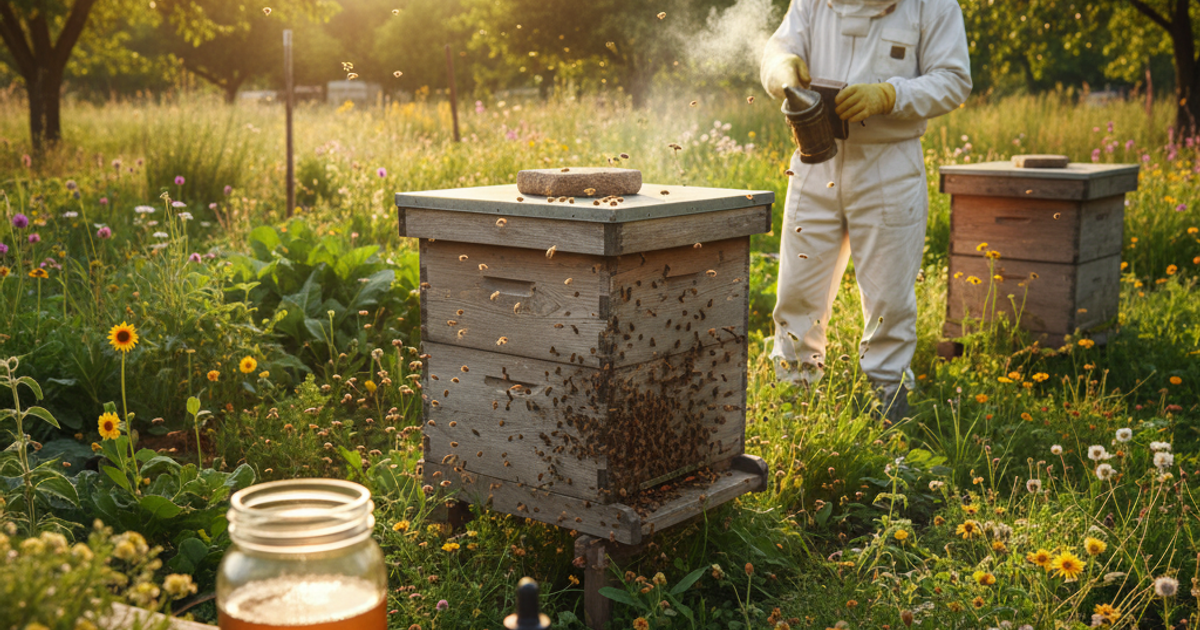
Honey bees have sustained human civilization for over 10,000 years — and in a long-term grid-down or SHTF scenario, they could sustain yours. A single healthy hive produces 60 to 100 pounds of honey per year, a natural sweetener that never expires, has been found in 3,000-year-old Egyptian tombs still perfectly edible. Beyond food, bees produce beeswax, propolis, and royal jelly — all of which have documented medicinal and practical applications. In a post-collapse economy where bartering replaces cash, a jar of raw honey becomes liquid gold.
Beekeeping is not just for rural homesteaders. Urban beekeepers in cities like New York, Chicago, and London successfully maintain rooftop hives. Whether you're living on a suburban quarter-acre or a rural 40-acre spread, there's a beekeeping model that fits your situation. This guide will walk you through everything a serious prepper needs to know to get started.
Why Every Prepper Should Consider Backyard Beekeeping for Long-Term Survival
Most emergency food storage plans focus on calories — rice, beans, freeze-dried meals. What they often miss is flavor, medicine, and trade goods. Bees solve all three problems simultaneously. Honey is calorie-dense (around 60 calories per tablespoon), antimicrobial, and shelf-stable indefinitely when stored properly in airtight containers. Raw honey has been used as a wound dressing in clinical settings, with studies published in the Journal of Wound Care confirming its effectiveness against antibiotic-resistant bacteria including MRSA.
Propolis — the sticky resin bees use to seal their hives — has been shown in peer-reviewed research to have antifungal, antiviral, and anti-inflammatory properties. In a world where pharmacies are empty and supply chains have collapsed, this is not a trivial benefit. It integrates naturally into any medicinal herb and natural medicine strategy you're already developing.
From a barter standpoint, honey, beeswax candles, and propolis tinctures are high-value, low-bulk trade goods. A single hive managed well could produce enough surplus to trade for seeds, tools, or labor. If you're thinking seriously about building a barter economy for SHTF, bees belong in that plan.
Urban and Suburban Beekeeping: What You Need to Know Before SHTF
Don't assume beekeeping requires land. Many municipalities allow backyard or rooftop hives within city limits — though regulations vary widely. Before you acquire bees, check your local ordinances. Cities like San Francisco, Denver, and Washington D.C. have legal urban beekeeping with specific rules about hive placement, number of colonies, and water sources.
For urban and suburban preppers, key considerations include:
- Hive placement: Position hives so the flight path directs bees upward and away from foot traffic. A fence or hedge in front of the hive forces bees to gain altitude before flying over neighbors' yards.
- Water source: Bees need water daily. Provide a shallow dish with corks or stones so bees can land without drowning. This prevents them from annoying neighbors at birdbaths and pools.
- Neighbor relations: A jar of honey goes a long way. Consider gifting neighbors honey early — it builds goodwill and reduces complaints.
- Hive type: Langstroth hives are the most common and compatible with standard equipment. Top-bar hives are lower-profile and may suit urban settings better aesthetically.
- Grey man principle: If you're operating with a grey man philosophy and don't want to draw attention to your preparedness activities, a small rooftop or backyard setup with minimal visible equipment is achievable.
To get started without breaking the bank, the Hoover Hives beekeeping starter kit is one of the most beginner-friendly options available — it includes a pre-assembled Langstroth hive with all the basic components you need to house your first colony, saving you hours of confusing assembly and reducing early mistakes that can cost you a hive.
Getting Your First Bees: Packages, Nucs, and Swarms
There are three primary ways to acquire bees:
- Package bees: Approximately 3 pounds of bees (roughly 10,000 workers) plus a mated queen in a screened box. Available from suppliers in spring. Lower cost but requires more time to establish.
- Nucleus colony (nuc): A small working colony with frames of brood, honey, pollen, and a laying queen. Faster to establish than a package and typically more resilient.
- Swarms: Free bees if you can catch them. Swarms are generally docile and a great way to expand your apiary at zero cost. Contact your local beekeeping association to get on a swarm list.
Order bees early — reputable suppliers sell out fast, often by January for spring delivery. Local bees are preferable because they're already adapted to your regional climate and flora.
Essential Beekeeping Gear for Survival Scenarios
Personal protection is non-negotiable, especially for beginners. A full suit dramatically reduces stings and keeps you calm during hive inspections — panic leads to mistakes that agitate bees further. The Mann Lake beekeeping protective suit is a trusted choice among hobbyists and professional beekeepers alike, offering full-body coverage with a ventilated design that keeps you cooler during summer inspections.
A smoker is your most important hive management tool. Smoke disrupts the bees' alarm pheromone communication, calming the colony during inspections. The Harvest Lane Honey beehive smoker is a solid, durable option that maintains a cool, consistent smoke — critical for keeping your colony manageable without overheating or stressing the bees. Use natural fuel like pine needles, dried herbs, or burlap — all forageable in a grid-down scenario.
Hive Management Through the Seasons: A Prepper's Calendar
Bees are not a set-and-forget resource. They require regular inspection — typically every 7 to 10 days during spring and summer — to monitor for disease, check on queen status, and manage space to prevent swarming.
Spring: Inspect for queen activity and brood patterns. Add supers (additional boxes) as population expands. This is swarm season — watch for queen cells.
Summer: Monitor for varroa mite infestations, the single biggest threat to modern hive health. Organic treatments like oxalic acid and formic acid are available without prescription and should be part of your hive medicine kit alongside your broader long-term emergency medical supplies.
Fall: Harvest surplus honey but leave at least 60 to 80 pounds in the hive for the bees to overwinter on. Reduce the entrance to limit cold drafts and mouse entry. Treat for varroa before populations drop.
Winter: Minimal intervention. Avoid opening the hive in temperatures below 50°F. Check for hive weight by lifting the back — a light hive may need emergency feeding with fondant or dry sugar.
Harvesting Honey and Beeswax in an Off-Grid Environment
Honey extraction doesn't require electricity. A manual radial extractor works by spinning frames to throw honey out by centrifugal force. Before extraction, you must uncap the wax cells sealing the honey. The Goodland Bee Supply uncapping knife honey extractor gives you the tools to do this efficiently, including a heated uncapping knife that slices through wax cappings cleanly — an essential part of any off-grid honey harvest setup.
Wax cappings are not waste. Melt them down and filter through cheesecloth to produce pure beeswax — one of the most versatile survival materials you can produce. Uses include:
- Candle making — light source that requires no batteries or fuel
- Waterproofing leather boots, canvas, and cordage
- Wood preservation and rust prevention on tools
- Lip balm and skin salve base
- Lubricating drawers, saws, and sliding mechanisms
- High-value barter good — 1 pound of beeswax produces roughly 20 small candles
For hive expansion, Smiley Honey beeswax foundation sheets give bees a head start on building comb in new frames, reducing the energy and time required for the colony to establish productive honeycomb — important when you're expanding your apiary or recovering from winter losses.
Propolis: The Prepper's Natural Antibiotic from the Hive
Propolis is the dark, sticky substance bees manufacture from plant resins and beeswax to seal and sterilize their hive. Research published in Evidence-Based Complementary and Alternative Medicine identifies over 300 active compounds in propolis, including flavonoids, phenolic acids, and esters with demonstrated antimicrobial activity. A simple propolis tincture made by soaking raw propolis scrapings in high-proof alcohol for several weeks produces a potent antimicrobial solution useful for wound care, oral infections, and immune support.
Collect propolis by scraping the dark resin from hive frames and surfaces during inspections. Store in a cool, dark place. In a long-term SHTF scenario where pharmaceutical antibiotics are unavailable, propolis tincture belongs in your medical kit alongside your other natural remedies — though it is not a replacement for professional medical care when it's available.
Beekeeping as a Community Survival Skill and Barter Asset
One of the most underrated aspects of beekeeping for preppers is its community value. A single skilled beekeeper in a neighborhood or mutual aid network becomes an irreplaceable resource. Bees also provide a service to the broader community — pollinating gardens and food forests — which builds goodwill and strengthens community ties. Building a community survival team before SHTF means identifying and developing skills like beekeeping that the group doesn't yet have.
In a barter economy, the products of a single hive are extraordinarily diverse. Consider what you can trade from one productive colony in a single year:
- 40 to 60+ pounds of surplus honey
- Several pounds of beeswax
- Propolis tinctures and salves
- Beeswax candles
- Swarms or nucleus colonies to other aspiring beekeepers
That's a comprehensive trade inventory from a box of bees that costs roughly $150 to $200 to establish and requires no fuel, no electricity, and no ongoing purchased inputs once established in a forage-rich environment.
Recommended Gear Summary
To summarize the essential equipment covered in this article: start with a complete hive setup like the Hoover Hives beekeeping starter kit, protect yourself with a quality Mann Lake beekeeping protective suit, manage inspections safely with the Harvest Lane Honey beehive smoker, harvest efficiently with a Goodland Bee Supply uncapping knife and extractor, and expand your apiary productively using Smiley Honey beeswax foundation sheets. These five items form the core of a functional, SHTF-capable beekeeping operation.
What You'll Need
- Beehive boxes (Langstroth hive recommended for beginners)
- Frames with foundation or starter strips
- Bee suit, veil, and gloves for protection
- Smoker and hive tool
- Package of bees or nucleus colony (nuc)
- Feeder and sugar for supplemental feeding
- Honey extractor and strainer
- Queen excluder and entrance reducer
Step-by-Step Instructions
Step 1: Choose and Prepare Your Hive Location
Select a level site with good drainage that receives morning sun and afternoon shade. Position hives facing southeast to catch early sun and encourage foraging activity. Ensure the location has a nearby water source and is at least 50 feet from high-traffic areas. Clear vegetation and place hives on cinder blocks or stands elevated 18 inches off the ground to deter pests and improve ventilation.
Step 2: Assemble Your Hive and Install Your Bees
Build your hive boxes according to manufacturer instructions, ensuring frames are properly spaced and foundation is secure. When your package bees arrive, spray them lightly with sugar water and remove the queen cage. Place the queen cage between two frames in the brood box, then gently pour the remaining bees into the hive. Close the hive and allow 3-5 days for the bees to release the queen and begin building comb.
Step 3: Monitor Colony Health and Manage Pests
Inspect your hive every 7-10 days during the first season, looking for eggs, larvae, capped brood, and pollen stores. Check for signs of disease, parasites like varroa mites, and pest infestations. Use integrated pest management techniques including screened bottom boards, drone frame trapping, and organic treatments like oxalic acid or essential oils. Keep detailed records of inspections to track colony progress and identify problems early.
Step 4: Support Colony Growth Through Feeding and Expansion
Feed colonies sugar syrup (1:1 ratio in spring, 2:1 in fall) when natural nectar is scarce or the colony is newly established. Add honey supers when bees have filled 7-8 frames in the brood box to prevent swarming. Monitor food stores regularly, ensuring the colony has at least 60 pounds of honey reserves heading into winter. Remove feeders once natural forage is abundant to prevent contamination of honey stores.
Step 5: Harvest Honey and Beeswax for Multiple Uses
Harvest honey only from fully capped frames to ensure proper moisture content below 18 percent. Use your smoker to calm bees, remove frames, and brush off remaining bees before extraction. Spin frames in your extractor, then strain honey through cheesecloth into food-grade containers. Save beeswax cappings and burr comb to render into blocks for making candles, salves, and barter goods—beeswax has exceptional shelf life and trade value.
Step 6: Create Medicinal Products from Hive Resources
Collect propolis by scraping it from frames and hive edges, then infuse it in alcohol to make tinctures with antibacterial and antiviral properties. Reserve a portion of raw honey for wound care and cough treatment, as its natural enzymes provide antimicrobial benefits. Mix beeswax with infused oils to create healing salves for cuts, burns, and skin conditions. Store all medicinal preparations in dark glass containers labeled with contents and date for long-term preparedness supplies.
Step 7: Prepare Your Hives for Winter and Plan for Colony Expansion
Reduce hive entrances in fall to help bees defend against robbing and improve heat retention. Ensure colonies have adequate food stores and combine weak colonies with stronger ones to improve survival rates. Wrap hives with insulation or tar paper in cold climates while maintaining ventilation to prevent moisture buildup. In late winter, begin planning for spring expansion by identifying strong colonies for splitting, creating additional hives that increase your honey production and provide valuable nucleus colonies for barter.
Frequently Asked Questions
Can you keep bees in a city or apartment setting for survival preparedness?
Yes — urban beekeeping is legal in many major cities and has grown dramatically over the past decade. Rooftop and backyard hives are common in New York, Chicago, Seattle, and dozens of other cities. You don't need land or a rural property. What you need is a flat, stable surface with sun exposure, a nearby water source, and awareness of local regulations. Check your city or county ordinances before acquiring bees. Even a single rooftop hive can produce 40 or more pounds of honey per year, along with beeswax and propolis — meaningful contributions to any urban survival food and medicine strategy. If you're interested in broader urban food production for resilience, beekeeping pairs naturally with container gardens and vertical growing setups.
How much does it cost to start beekeeping for emergency preparedness?
A complete beginner setup — hive, protective gear, smoker, hive tool, and a nucleus colony of bees — typically runs between $300 and $600 depending on equipment quality and bee source. This is a one-time investment that can pay for itself in honey value alone within the first two to three productive seasons. Ongoing costs are minimal: replacement parts, occasional treatments for varroa mites, and supplemental feeding in poor nectar years. Compared to other long-term preparedness investments, beekeeping has an exceptional return because it is a renewable food and medicine system — unlike static emergency food storage, a hive replenishes itself year after year.
What products from a beehive are most valuable for SHTF barter and survival medicine?
Honey tops the list — it's calorie-dense, antimicrobial, shelf-stable indefinitely, and universally desirable. Raw beeswax is close behind because of its extraordinary range of uses from candle-making to waterproofing and preservation. Propolis tincture is perhaps the most medically significant product, with documented antimicrobial and antifungal properties that make it a viable wound and infection treatment when pharmaceutical options are unavailable. Beeswax candles are high-demand barter items because they burn cleaner and longer than paraffin and require no petroleum inputs. Finally, swarms and nucleus colonies sold or traded to other preppers building their own hives create long-term community relationships and reciprocal trade networks — exactly the kind of mutual aid infrastructure serious emergency preparedness planners should be cultivating now, before any crisis arrives.
Affiliate Disclosure: SHTF Plan participates in the Amazon Services LLC Associates Program. Some links are affiliate links — we may earn a small commission at no extra cost to you.