Mastering Mushroom Cultivation: How to Grow Oyster and Shiitake Mushrooms at Home for Long-Term Food Security
Mushrooms grow in closets, basements, and shady corners where nothing else will — producing protein-rich food in weeks. Here's how to start growing them before you need them.
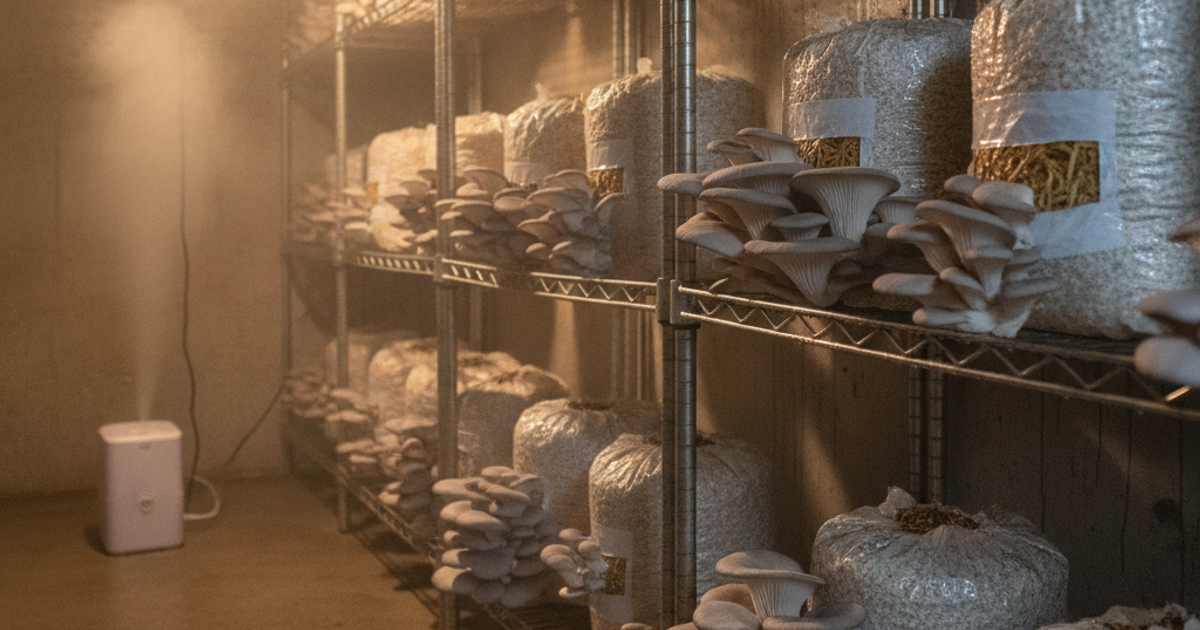
When people plan for long-term food security, they think in terms of buckets of rice, cases of freeze-dried entrées, and rows of canned green beans. What almost nobody plans for is renewable protein and fresh food that keeps producing after the stockpile runs out. Mushrooms fill that gap better than almost any other crop. They don't need sunlight, they don't need soil, they grow in a closet or a shaded corner of the yard, and they turn agricultural waste — straw, sawdust, cardboard, spent coffee grounds, storm-downed hardwood — into edible biomass in a matter of weeks.
Oyster mushrooms (Pleurotus ostreatus and relatives) can go from inoculation to harvest in as little as 3–5 weeks, with biological efficiency rates commonly reported between 75% and 150% — meaning a 10-pound block of substrate can yield 7 to 15 pounds of fresh mushrooms across multiple flushes. Shiitake (Lentinula edodes) takes longer on logs — typically 6 to 18 months to colonize — but a single properly inoculated 40-inch oak log will fruit twice a year for four to six years, producing an estimated 1–3 pounds annually with essentially zero further input. USDA nutrient data puts raw mushrooms at roughly 3 grams of protein per 100 grams, along with meaningful B vitamins, potassium, selenium, and — when sun-dried — substantial vitamin D2. Research from Penn State and others has shown that UV-exposed mushrooms can develop several hundred IU of vitamin D per serving, which matters enormously in a grid-down winter.
This is a skill that scales. An apartment dweller can run oyster blocks in a closet. A suburban homeowner can stack straw buckets behind the garage. A rural prepper can inoculate a cord of logs and walk away.
What You'll Need
Tools
- Drill with 5/16" or 12mm bit and depth stop (for log inoculation)
- Rubber mallet or dead-blow hammer
- Alcohol lamp or propane torch, plus 70% isopropyl alcohol
- Presto 23-quart pressure canner for sterilizing sawdust substrate
- Humidity controller for the fruiting chamber
Supplies
- Blue oyster mushroom grain spawn
- Shiitake plug spawn dowels
- Filter-patch mushroom grow bags
- Wheat or oat straw, hardwood sawdust, and wheat bran
- Food-grade cheese wax and a small brush (log sealing)
- Hydrated lime or a large pot for pasteurizing straw
Choosing Your Species: Why Oyster and Shiitake Beat Everything Else
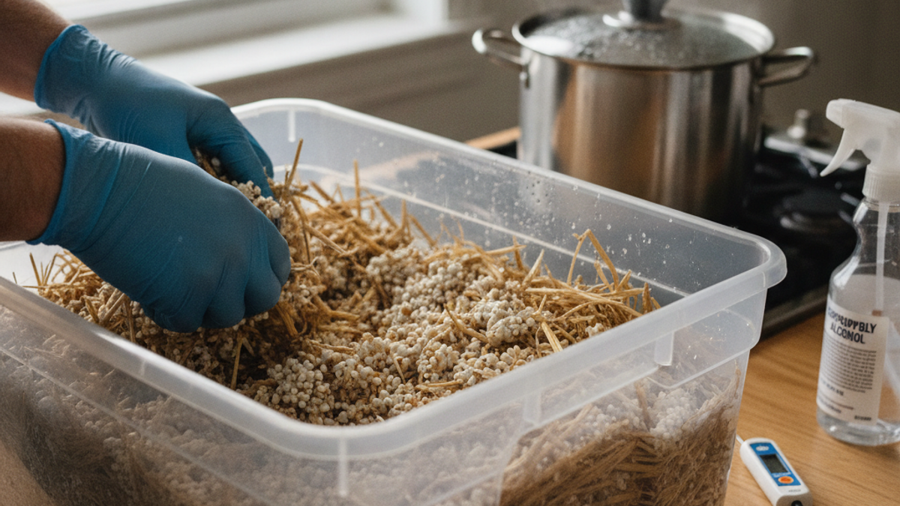
Oysters are the survival species. They are aggressive colonizers, tolerate contamination that would wipe out fussier fungi, and will eat straw, cardboard, coffee grounds, paper, cotton waste, and hardwood sawdust. Blue and pearl oyster strains fruit between 55–75°F; pink and phoenix strains handle summer heat. If you only learn one mushroom, learn this one.
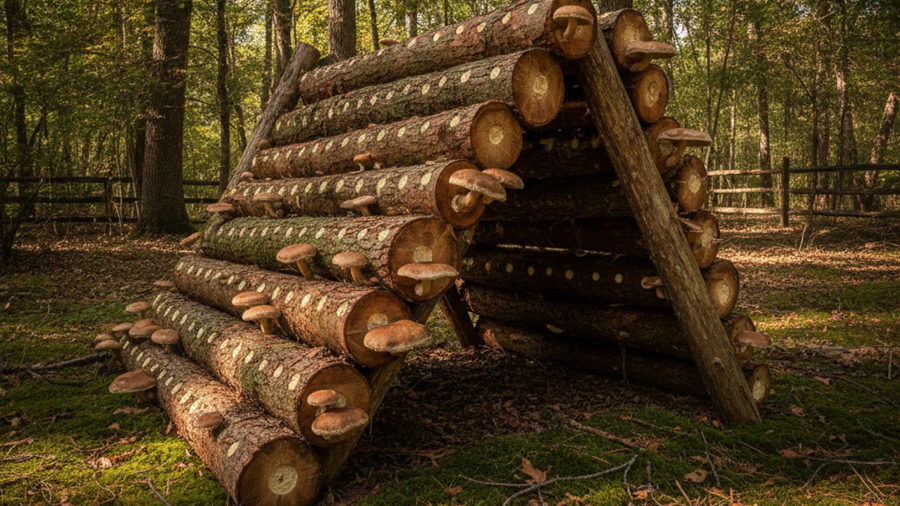
Shiitake is the storage species. It's denser, meatier, and dries into a shelf-stable product that rehydrates into something genuinely close to meat. Shiitake grown on logs requires no electricity, no sterile technique, and no ongoing labor — the definition of an off grid food asset.
How to Grow Oyster Mushrooms on Straw in an Apartment
Straw doesn't require sterilization — only pasteurization. Chop straw to 2–4 inches, submerge it in 160–175°F water for 60–90 minutes, then drain to roughly 65% moisture (a fistful should release a few drops, not a stream). Layer the cooled straw with grain spawn at a 5–10% spawn-to-substrate ratio inside a filter-patch grow bag or a 5-gallon bucket drilled with quarter-inch holes every 4–6 inches.
Incubate in the dark at 65–75°F for 2–3 weeks until the substrate is solid white. Then move it to fruiting conditions: 85–95% humidity, indirect light, and fresh air exchange. A small grow tent with a VIVOSUN humidifier turns a closet into a production chamber. If you're brand new and want a guaranteed first win before investing in equipment, start with a countertop oyster grow kit — it teaches you what healthy mycelium and proper pinning look like. Pair this with your indoor sprout and microgreen operation and you have fresh food year-round in a 600-square-foot apartment.
Growing Shiitake and Oysters on Sawdust Blocks
Sawdust blocks (typically 80% hardwood sawdust, 20% wheat bran, hydrated to 60%) must be sterilized, not pasteurized, because the bran is a magnet for competing molds. Ninety minutes at 15 PSI in a pressure canner does it — the same tool you already own if you pressure can vegetables. Short on time or equipment? Pre-made sterilized hardwood sawdust substrate blocks arrive ready to inoculate and eliminate the highest-failure step for beginners.
How to Inoculate Hardwood Logs for Long-Term Shiitake Production
This is the highest-return, lowest-maintenance option for anyone with trees. Cut oak, sugar maple, ironwood, sweetgum, or beech logs 3–8 inches in diameter and 36–40 inches long, from live dormant trees in late winter. Let them rest 2–4 weeks (fresh wood contains natural antifungal compounds), then inoculate within six weeks. If you're felling your own, review proper chainsaw safety technique first.
Drill holes 1 inch deep in a diamond pattern — 6 inches apart down the log, rows offset and rotated about 2 inches. Hammer in shiitake plug spawn dowels, seal each with melted cheese wax, and stack the logs in deep shade. A 40-inch log takes roughly 40–50 plugs.
Step-by-Step Instructions
Step 1: Select your species and production method
Apartment and urban preppers should start with oyster on straw or pre-made sawdust blocks. Suburban growers can run both. Rural preppers with hardwood should prioritize log-grown shiitake for its multi-year, zero-input yield.
Step 2: Prepare and pasteurize or sterilize the substrate
Pasteurize straw at 160–175°F for 60–90 minutes. Sterilize supplemented sawdust at 15 PSI for 90 minutes. Cool completely to room temperature before adding spawn — hot substrate kills mycelium instantly.
Step 3: Inoculate with grain spawn or plug dowels
Work on an alcohol-wiped surface with clean hands. Break grain spawn apart and mix thoroughly through the substrate at 5–10% by weight. For logs, drill, plug, and wax within the same working session to prevent contamination.
Step 4: Incubate in darkness at the right temperature
Hold indoor blocks at 65–75°F in a dark closet, cabinet, or storage tote for 2–4 weeks (oyster) or 6–10 weeks (shiitake sawdust). Stack logs outdoors in shade and water them during droughts. Discard any block showing green, black, or orange mold.
Step 5: Trigger fruiting with humidity, air, and light
Cut X-shaped slits in fully colonized bags, raise humidity to 85–95%, provide 4–6 hours of indirect light, and ensure fresh air exchange several times daily. An automated humidity controller holds these conditions without constant misting. Shiitake logs can be force-fruited by soaking in cold water for 12–24 hours.
Step 6: Harvest at the right stage
Pick oysters when cap edges are still slightly curled under and before spores drop heavily. Harvest shiitake when caps are 60–70% open. Twist and pull the entire cluster at the base rather than cutting to avoid rot points.
Step 7: Dry and store for long-term food security
Slice thickly, dehydrate at 110–125°F until cracker-dry, and store in Mylar with oxygen absorbers or vacuum-sealed jars. Properly dried mushrooms hold quality for 2–3 years. Sun-drying gill-side up boosts vitamin D dramatically — a technique worth combining with a solar dehydrator.
Step 8: Rest, rehydrate, and re-flush the substrate
After harvest, rehydrate blocks by soaking 4–12 hours and return them to fruiting conditions. Most oyster blocks produce 2–4 flushes; logs rest 8–12 weeks between fruitings.
Recommended Gear
Beyond the essentials above, keep a backup supply of blue oyster grain spawn in the refrigerator — viable for several months and expandable into far more spawn using sterilized grain, which makes mushroom cultivation a renewable rather than consumable resource. Log this alongside your other perishables in your stockpile inventory system, and browse our full recommended survival gear lineup for food-production tools.
Frequently Asked Questions
Can you really grow mushrooms in an apartment without special equipment?
Yes. Oyster mushrooms fruit successfully in a bathroom, closet, or under a kitchen sink using a plastic tote with drilled air holes and twice-daily misting. The species tolerates a wide range of conditions, and a single 10-pound straw bucket can produce several pounds of food in a footprint smaller than a laundry basket.
How long do dried mushrooms last in emergency food storage?
Thoroughly dehydrated mushrooms stored in oxygen-free, moisture-free packaging remain good for 2–3 years, and often longer with acceptable quality loss. Dry them until they snap rather than bend — residual moisture is the number one cause of mold in stored mushrooms. Apply the same pest-proofing discipline you use for the rest of your emergency food storage.
What's the biggest cause of failure for beginner mushroom growers?
Contamination from inadequate substrate treatment and dirty inoculation technique, followed closely by insufficient fresh air exchange during fruiting — which produces long, spindly stems and tiny caps. Start with straw or pre-sterilized blocks, keep your work area alcohol-clean, and fan the chamber several times daily.
Affiliate Disclosure: SHTFPlan.net participates in the Amazon Services LLC Associates Program. Some links are affiliate links — we may earn a small commission at no extra cost to you.