Chainsaw Skills for Preppers: How to Clear Storm Debris and Fell Trees Safely When Help Isn't Coming
After a major storm, blocked roads and downed trees can trap your family for days. Learn how to choose, maintain, and safely run a chainsaw when no crew is coming to clear the way.
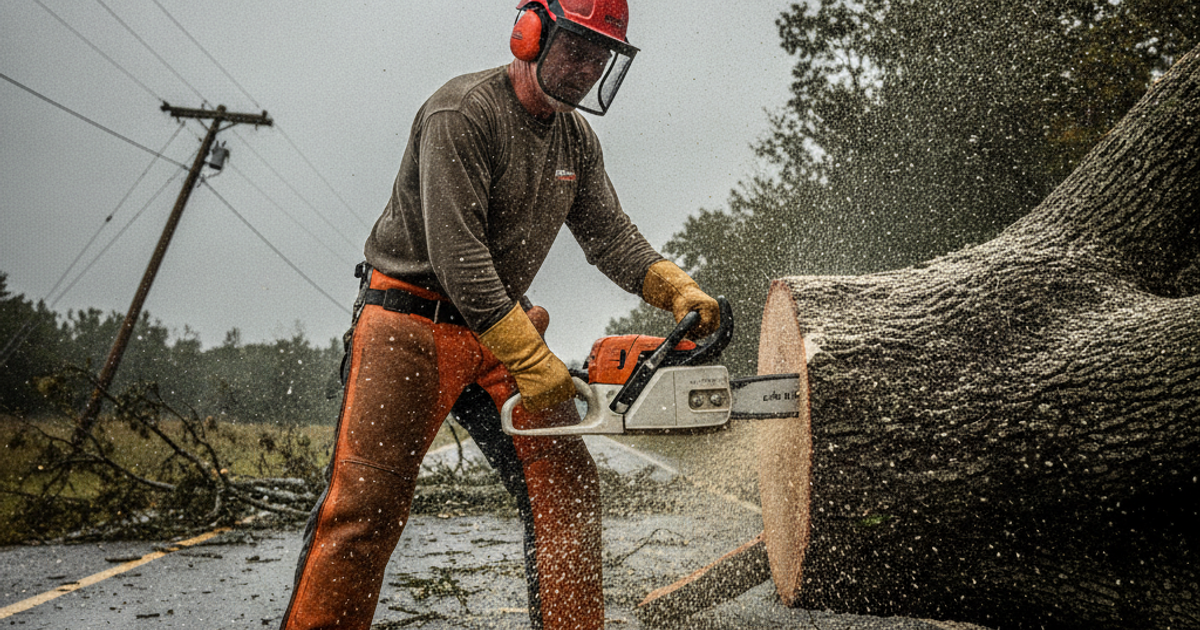
When a derecho, ice storm, or hurricane band rolls through, the first thing that happens after the wind stops is silence — followed by the realization that the road out of your neighborhood is buried under 40 feet of oak. In the 2020 Iowa derecho, some rural residents waited more than two weeks for utility crews to reach them. After Hurricane Helene in 2024, entire western North Carolina communities were cut off for days because downed timber blocked the only access roads. The people who got moving first weren't the ones with the biggest generator. They were the ones who owned a chainsaw and knew how to run it without killing themselves.
That last part matters. The U.S. Consumer Product Safety Commission estimates roughly 30,000 chainsaw injuries treated in emergency rooms annually, with the average chainsaw laceration requiring 110 stitches. A CDC review of post-hurricane injuries found chainsaw wounds among the most common causes of post-storm trauma. In a normal week, that's a bad day and a hospital bill. In a grid-down, roads-blocked scenario where EMS response is measured in days, a femoral artery laceration from a kickback is a death sentence. Knowing how to stop severe bleeding is a mandatory companion skill to running a saw.
What You'll Need
Tools
- Gas chainsaw (50–60cc class)
- Battery chainsaw (urban/suburban backup)
- Round file and depth gauge sharpening kit
- Felling wedges (plastic) and a small sledge
- Scrench, spare bar nuts, and a stump vise
Supplies
- UL-rated chainsaw chaps
- Helmet with face screen and ear muffs
- Two or more spare chains for your bar length
- Bar and chain oil (gallon jugs)
- Ethanol-free pre-mixed 50:1 fuel
- Cut-resistant gloves and steel-toe boots
How to Choose the Right Chainsaw for Your Living Situation
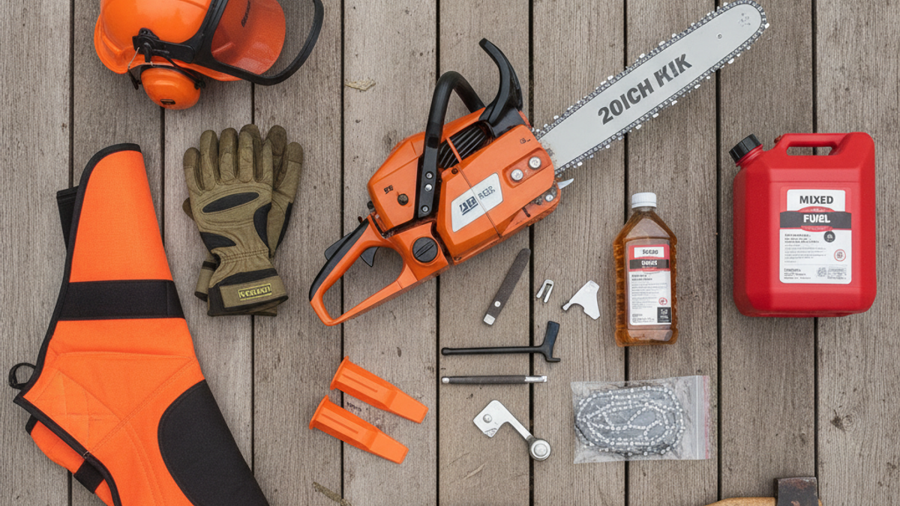
There is no single "best" saw — there's the best saw for your terrain, your storage space, and your fuel logistics.
Rural Property and Heavy Timber
If you own acreage with mature hardwood, you need a mid-size gas saw in the 50–60cc range running an 18–20 inch bar. The Husqvarna 455 Rancher is the classic homeowner-to-semi-pro workhorse: enough torque to bury a 20-inch bar in seasoned oak, but light enough that you can still limb with it after two hours. Field-serviceable carburetors and widely available parts make gas saws the right call for long-term off grid use.
Suburban Lots and Apartment Dwellers
If you live on a quarter acre — or in a third-floor apartment with a storage locker — a battery saw makes more sense. The EGO Power+ 56V cordless chainsaw starts instantly, stores indoors with no fuel-vapor hazard, and pairs with a solar-charged battery bank. It won't fell a 30-inch oak, but it will cut a 12-inch limb off your car or clear a driveway, and it's quiet enough to preserve some measure of OPSEC when a screaming two-stroke would advertise your capability for a half mile.
The serious answer for most preppers is both: gas for the heavy work, battery for the fast, quiet jobs. Whichever you buy, stock at least two spare chains. A quality 20-inch replacement chain costs less than a tank of gas and a fresh chain cuts three times faster than a dull one.
Why Chainsaw Safety Gear Isn't Optional
Chainsaw chaps are the single highest-value item in your survival gear budget. When a moving chain contacts the outer layer, ballistic nylon fibers pull free, jam the drive sprocket, and stop the chain in milliseconds. Field data from the U.S. Forest Service shows leg protection prevents or dramatically reduces the severity of the majority of saw-related leg injuries. Buy UL-certified chaps and wear them every single time — including the "quick cut" that statistically injures more people than long felling jobs.
Above the waist, a combination helmet, face screen, and hearing protection system handles the three real threats: falling limbs (the widow-makers that kill more sawyers than the saw itself), flying chips, and 110 dB of permanent hearing damage. Add cut-resistant gloves and boots with toe protection.
Fuel, Oil, and Maintenance for Long-Term Storage
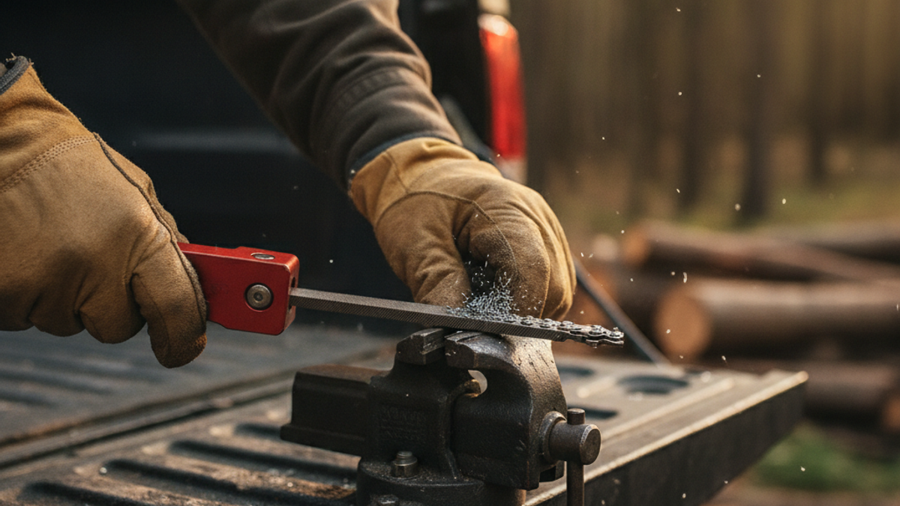
Ethanol-blended pump gas destroys two-stroke carburetors during storage — it absorbs water, phase-separates, and gums jets. Store pre-mixed ethanol-free 50:1 fuel, which has a sealed shelf life of two to five years and needs no mixing math at 2 a.m. by headlamp. Keep at least six quarts on hand plus your bulk gasoline supply.
Bar oil is consumed roughly one tank per tank of fuel. Buy bar and chain oil by the gallon — running a saw dry ruins the bar and chain in minutes. And learn to sharpen. A round-file kit with depth-gauge tool costs under $30, and five minutes of filing restores a chain that would otherwise be scrap. That skill belongs in your prepper survival library right alongside food preservation.
Step-by-Step Instructions
Step 1: Assess the scene before starting the saw
Walk the entire work area. Identify hanging limbs, spring poles under tension, downed power lines, and the direction of any lean. Treat every downed line as energized. Establish two escape paths at 45 degrees away from your cut and clear them of brush.
Step 2: Gear up completely, every time
Chaps, helmet with face screen, hearing protection, gloves, and boots — no exceptions for "one quick cut." Never operate alone if you can avoid it, and keep a trauma kit with a tourniquet within arm's reach of the work zone, not in the truck.
Step 3: Check chain tension, oil, and brake
The chain should snap back against the bar when pulled and still rotate freely by hand. Top off bar oil, verify the chain brake engages, and start the saw on the ground with your boot in the rear handle — never drop-start.
Step 4: Relieve tension in storm debris before cutting through
Downed trees are loaded like springs. Determine which side is in compression and which is in tension, then cut the compression side about one-third through first and finish from the tension side. Cutting blindly through a loaded log causes pinched bars and violent kickback.
Step 5: Limb from the base toward the top on the uphill side
Always keep the trunk between you and the saw when possible. Cut limbs on the far side of the trunk, work with the bottom of the bar, and never cut above shoulder height — that's how bars come back into faces.
Step 6: Fell trees using the open-face notch and hinge
Cut a face notch on the fall side to roughly one-fifth to one-quarter of trunk diameter. Make the back cut about two inches above the notch apex, leaving a uniform hinge of roughly 10% of diameter. Drive plastic wedges before the tree can settle backward, then retreat along your escape path while watching the top.
Step 7: Buck logs into rounds without pinching the bar
Support the log so the cut doesn't close on the bar. Use the saw's bumper spikes as a pivot, cut two-thirds through from the top, then roll or finish from below. Never let the bar tip touch the ground — one contact with dirt destroys a chain's edge.
Step 8: Clean, sharpen, and store the saw after every session
Blow out the air filter, clean the bar groove and oiler port, and file the chain while the details of your dull spots are fresh. Store fuel separately in approved containers per your long-term fuel storage plan.
Recommended Gear
Build your kit in this order: chaps and helmet first, then the saw, then consumables. A complete setup — a gas saw, an Oregon sharpening file kit, spare chains, oil, and pre-mix — runs well under a thousand dollars and pays for itself the first time a tree lands on your driveway. Browse more vetted options on our recommended survival gear page.
Frequently Asked Questions
What size chainsaw do I need for storm cleanup?
For most suburban storm debris — limbs and trunks under 14 inches — a 40–50cc gas saw or a 56V battery saw with a 16-inch bar is plenty. If you regularly deal with mature hardwood over 20 inches, step up to a 55–60cc saw with an 18–20 inch bar. Bar length should exceed the log diameter by about two inches for single-pass cuts.
Can I keep a chainsaw in an apartment?
Yes — but choose battery. Most leases and fire codes prohibit storing gasoline indoors, and two-stroke fuel vapor in a closet is a genuine fire hazard. A cordless saw plus two batteries stores in a closet, weighs about 12 pounds, and can be charged from a portable power station during a blackout, making it a realistic option for urban survival.
How often should I sharpen my chainsaw chain?
Sharpen whenever the saw produces fine dust instead of coarse chips, requires downward pressure to cut, or pulls to one side. In practice, that's every one to two tanks of fuel in clean wood and immediately after any contact with dirt, nails, or fencing wire. Storm-damaged trees are full of embedded debris — expect to sharpen often and keep spare chains ready.
Affiliate Disclosure: SHTFPlan.net participates in the Amazon Services LLC Associates Program. Some links are affiliate links — we may earn a small commission at no extra cost to you.