Carjacking Survival: How to Escape a Vehicle Ambush Before It Traps You
Carjackings and vehicle ambushes happen in seconds at stoplights, driveways, and gas pumps. Learn how to spot the setup early, keep an escape lane, and drive out of a trap alive.
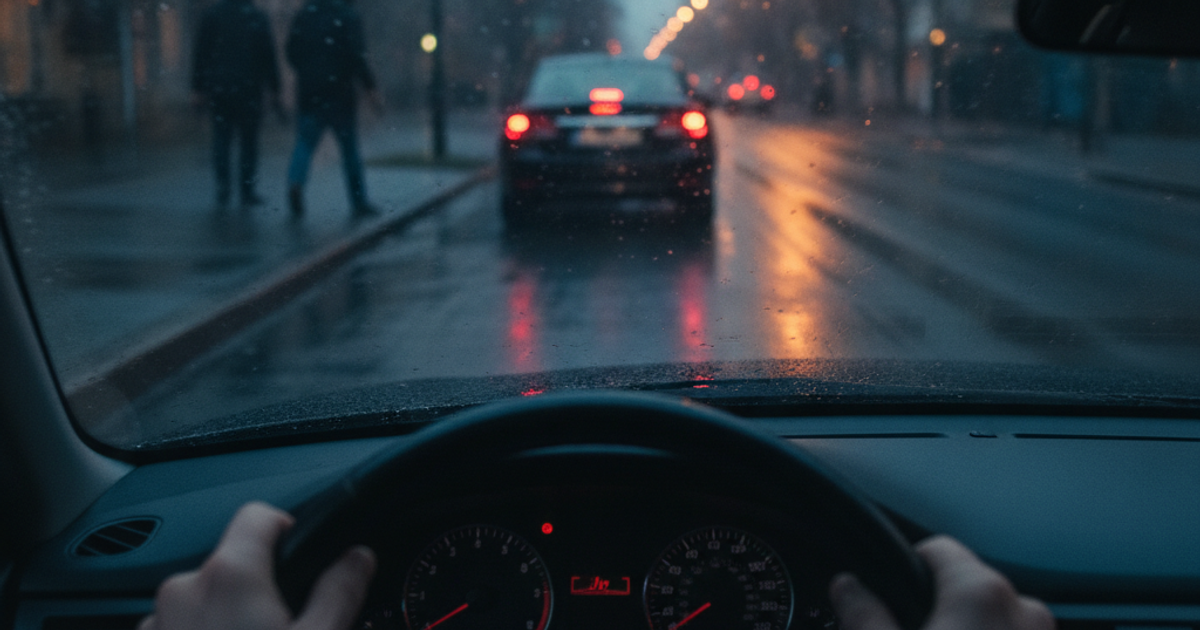
Your vehicle is the single most dangerous place most Americans spend time — not because of crashes, but because a car creates a predictable, repeatable pattern that a predator can exploit. You stop at the same light. You pull into the same driveway. You stand motionless at the same gas pump with your back turned and your wallet out. Carjackers don't pick cars; they pick moments, and almost every one of those moments involves a driver who has stopped moving and stopped paying attention.
Bureau of Justice Statistics data put the long-term national average at roughly 38,000 attempted or completed carjackings per year, with weapons involved in about 74% of incidents and firearms in nearly half. Major metros have seen dramatic spikes in recent years — Chicago, Washington D.C., Philadelphia, and New Orleans have all recorded multi-year surges, with juveniles responsible for a disproportionate share of arrests. And while carjacking is heavily urban, rural and suburban drivers face their own version: the bump-and-rob on a dark county road, the fake breakdown at a rural intersection, the ambush in your own driveway when you're fumbling with groceries and a garage door remote.
The good news is that vehicle ambushes are highly defeatable — but only in the first two seconds, and only if you've already built the habits that keep your exits open.
What You'll Need
Tools
- Spring-loaded window breaker and seatbelt cutter
- Mounted safety hammer for rear-seat passengers
- Three-channel dash camera
- High-lumen tactical flashlight
Supplies
- Pepper gel with vehicle-accessible holster
- Concealed Bluetooth vehicle trackers
- Spare key hidden off-body (not in the vehicle)
- Printed emergency contact and insurance card in a pocket, not the glovebox
How to Maintain Situational Awareness While Driving
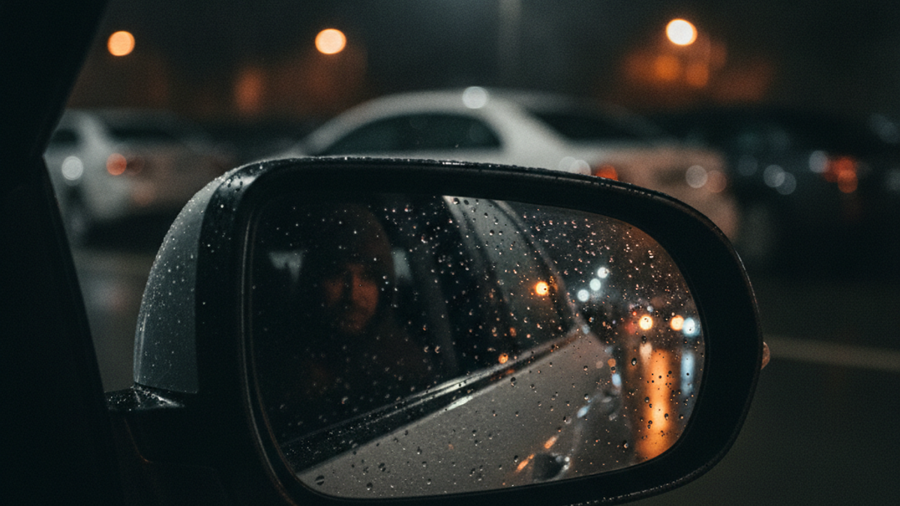
Most drivers operate in a mental state somewhere between autopilot and distraction. Effective situational awareness behind the wheel means scanning on a cycle: mirrors every five to eight seconds, intersections scanned before you arrive, and a deliberate 360-degree sweep every time you come to a stop.
Specific pre-attack indicators to watch for:
- Loitering at choke points. People standing near a stop sign, exit ramp, or driveway entrance with no obvious reason to be there.
- The approach angle. Legitimate pedestrians walk parallel to traffic. Threats walk toward your door at a diagonal, often with hands concealed or hoods up in mild weather.
- Matched pairs. Two or more people splitting to approach from both sides is the classic carjacking setup — one distracts, one opens the door.
- Vehicles that mirror you. A car that makes three or more of your turns is following you. Never drive to your home. Drive to a police station, fire house, or a crowded, well-lit business.
- The light tap. The bump-and-rob relies on your legal instinct to pull over. In an isolated area at night, drive to a populated area before stopping and call 911 while rolling.
Escape Lane Spacing: The Half-Tire Rule That Saves Lives
Here is the single most important habit in this entire article: when you stop behind another vehicle, leave enough room to see the bottom of its rear tires where they contact the pavement. That gap — roughly one car length — is enough room to steer around the vehicle in front of you without reversing.
A boxed-in car is a cage. Attackers count on the fact that 90% of drivers nose right up to the bumper ahead. Combine the half-tire rule with these habits:
- Pick the outside lane at red lights when possible, so you have a shoulder, median, or sidewalk as an escape path.
- Keep the wheels straight when stopped, so a shove from behind doesn't push you into traffic.
- Stay in gear with your foot on the brake — not in park — in any area where you feel uneasy.
- Doors locked, windows up, always. Roughly 44% of carjackings occur in open parking lots or garages, where the attacker expects an unlocked door.
- Back into parking spots so you can pull out forward with full visibility.
Defensive Driving Tactics for a Vehicle Ambush
If someone is at your window and you still have an escape lane, drive. A vehicle is a 4,000-pound weapon and the fastest route out of the kill zone. Accelerate smoothly and decisively rather than panic-stomping — wheelspin wastes your two-second window. If you're blocked front and rear, remember that the softest target is almost always the front bumper of the car behind you; a controlled reverse into it at 5–10 mph creates the gap you need to pull out.
Curbs, medians, and lawns are all legitimate escape surfaces. A damaged tire and an insurance claim are vastly preferable to being forced into a trunk. In degraded conditions where signals are dark and intersections are chaotic, the same rules apply — see our guide to driving when traffic systems fail for route planning under stress.
Record everything. A three-channel dash cam covering front, rear, and interior gives investigators faces, plates, and voices. For a low-profile option that doesn't scream "this car has cameras," the Garmin Dash Cam Mini 2 with parking mode is about the size of a key fob and keeps recording while you're parked — useful for driveway incidents and catching surveillance behavior before an attack.
Gas Station, Parking Lot, and Driveway Security
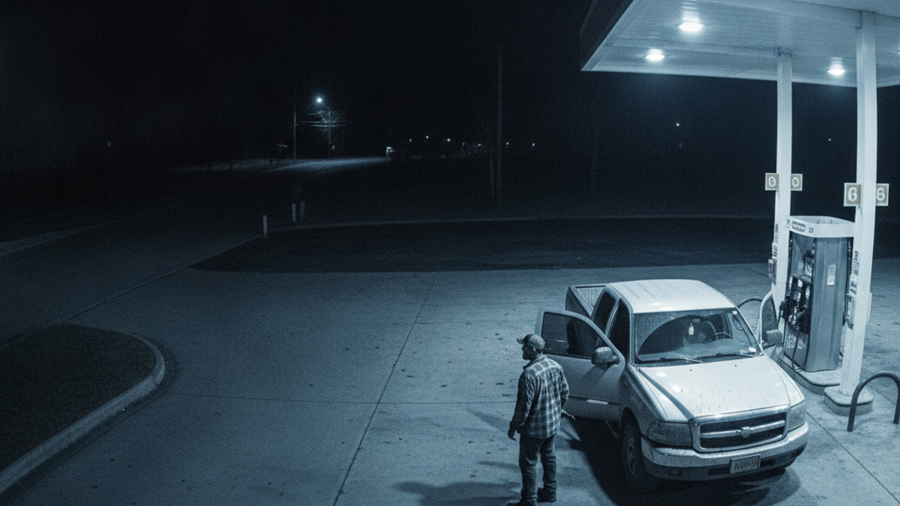
Gas stations are ambush gold: you're stationary, distracted, facing away from traffic, and your vehicle is unlocked. Fix that with a routine.
- Choose pumps closest to the building and under lighting. Avoid the pump nearest the exit — it's the easiest for a car to hit and run.
- Lock the doors while fueling. Sliding-and-grabbing a purse from the passenger seat takes four seconds.
- Keep the nozzle in hand, phone in pocket, and your eyes up and scanning. Don't stare at the pump display.
- Fuel during daylight when possible, and never let the tank drop below half — a habit that also serves any bug-out scenario.
Driveways are the second most common ambush point, especially in suburbs and rural properties where a long approach gives an attacker concealment. Before pulling in, do a slow pass or a scan of the street. If a vehicle is parked oddly near your home or someone is standing near your mailbox, keep driving and loop the block. Install motion-activated lighting that triggers before you arrive, and don't sit in the car sorting mail or texting — that's the "stationary and distracted" pattern again. For rural readers, consider the long gravel drive a chokepoint and clear brush back 20 feet from both sides so no one can stage behind cover.
How to React When an Attacker Is at Your Window
If the car can't move, your decision tree narrows fast. The vehicle is replaceable. You are not. If an armed attacker demands your keys and there is no child in the back seat, throw the keys in one direction and move in the other. Attackers want the car; the FBI consistently notes that compliance in property crime reduces injury rates.
The equation changes completely if children are in the vehicle or the attacker is trying to get you into the car. Never allow a transfer to a second location. Fight, scream, and create chaos immediately — survival rates for abduction victims drop precipitously after transport.
Carrying a defensive tool that works inside a cramped cabin matters. Pepper gel is preferable to spray in a vehicle because it streams rather than aerosolizes, reducing blowback into your own face. A SABRE red pepper gel with a belt holster can be mounted to the center console within reach of your strong hand. A compact POM pepper spray keychain with quick release rides with your keys so you're never disarmed while walking to or from the vehicle. If you'd rather not carry chemical options, review our guide to improvised weapons and defensive tools.
Glass is also an escape route. A spring-loaded resqme escape tool on your keyring cuts a jammed seatbelt and shatters tempered side glass instantly — critical if you're trapped after a bump collision. Keep a LifeHammer Safety Hammer Plus mounted in the rear cabin so passengers aren't dependent on the driver.
Step-by-Step Instructions
Step 1: Audit your vehicle's escape tools and placement
Sit in the driver's seat with your seatbelt on and reach for every defensive item you own. If you can't touch it in under two seconds without looking, relocate it. Escape tools belong on the keyring or door pocket, not the glovebox or trunk.
Step 2: Practice the half-tire spacing rule for one week
Every time you stop in traffic, consciously verify you can see the rear tires of the car ahead touching pavement. After seven days of deliberate repetition, the spacing becomes automatic and you'll never box yourself in again.
Step 3: Install and test a dash camera system
Mount a front-and-rear or three-channel camera, confirm it records in low light, and verify parking mode activates on impact. Format the memory card monthly and know how to pull a clip off it quickly.
Step 4: Build a gas station and parking lot routine
Lock doors, keep keys in hand, face outward, scan every 15 seconds, and never leave the engine running. Teach the same routine to every licensed driver in your household, especially teens.
Step 5: Harden your driveway approach
Add motion lighting, trim concealment within 20 feet of your parking area, and adopt the habit of a drive-by scan before turning in. Pull in, shut off, and go inside — do not linger.
Step 6: Rehearse your reaction decision tree out loud
Verbalize it: blocked or not blocked? Kids in the car or not? Keys demanded or transport demanded? Rehearsed decisions execute two to three times faster than improvised ones under adrenaline.
Step 7: Conceal a tracker and plan your recovery
Hide a Bluetooth tracker in a seat seam, spare tire well, or under carpeting. If the vehicle is taken, give responding officers the live location rather than chasing it yourself.
Recommended Gear
A hidden tracker turns a stolen vehicle into a recoverable one. A set of Apple AirTags lets you place redundant trackers in multiple vehicles and bug-out bags for pennies on the dollar compared to subscription GPS systems. Pair that with a Streamlight ProTac 2L-X rechargeable tactical flashlight — 500 lumens aimed at an approaching stranger's face in a dark parking lot both identifies and disorients, and it's legal everywhere. While you're upgrading, review your overall vehicle emergency kit so the same car that gets you out of an ambush can also get you home during a disaster.
Frequently Asked Questions
Should I give up my car in a carjacking?
Yes — if the demand is for the vehicle and no one you love is inside it. Property is insured; you are not. Throw the keys away from you and move laterally to hard cover. The exception is any attempt to take you or a child to a second location, which must be resisted immediately and violently.
What is the best self-defense tool to keep in a car?
Pepper gel is the most universally legal and vehicle-friendly option because it streams instead of fogging the cabin. Pair it with a window-breaking seatbelt cutter and a bright flashlight. If you carry a firearm, train specifically for seated draws from behind a steering wheel — it is a completely different skill from standing presentation.
How can I tell if I'm being followed while driving?
Use a four-turn test: make four consecutive right turns, which forms a complete square no legitimate driver would follow. If the vehicle stays with you, call 911, stay in motion, drive toward a police station or busy business, and never park at your home or your child's school.
Affiliate Disclosure: SHTFPlan.net participates in the Amazon Services LLC Associates Program. Some links are affiliate links — we may earn a small commission at no extra cost to you.