
Firearm Maintenance for Preppers: How to Clean, Lubricate, and Store Guns So They Still Work Years Into a Crisis
Your defensive firearm is only as reliable as the care behind it. Learn how to build a gun cleaning kit, stock spare parts, prevent rust, and keep every gun running when no gunsmith exists.
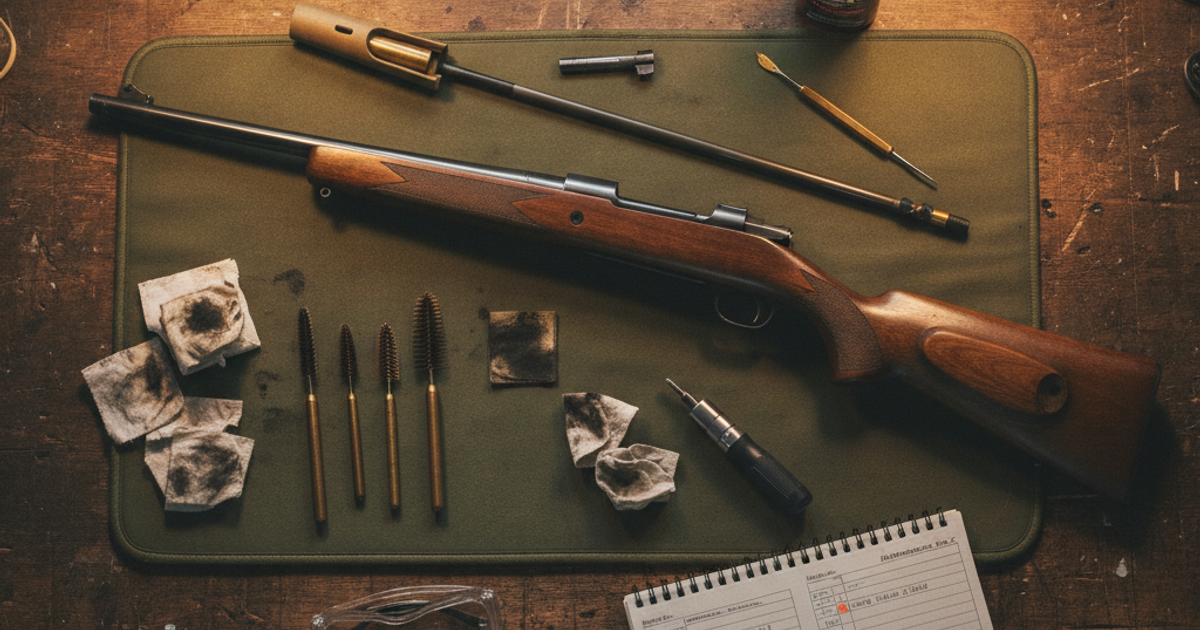
A firearm is the only piece of survival gear that can be rendered useless by a few weeks of humidity and neglect. Food stores quietly, water sits in a barrel, but steel oxidizes, springs take a set, and polymer-safe lubricants gum into varnish. In a long grid-down scenario, there is no gunsmith, no replacement bolt carrier, and no Saturday trip to the sporting goods store. The rifle you own today is very likely the rifle you will own five years from now — and whether it still runs depends almost entirely on maintenance habits you build before SHTF.
This matters more than most preppers admit. The National Institute of Standards and Technology notes that corrosion costs the U.S. economy over $276 billion annually, and the Department of Defense alone spends roughly $20 billion a year fighting rust on equipment. Atmospheric corrosion of carbon steel accelerates sharply above 60% relative humidity — a threshold routinely exceeded in basements, closets, garages, and storage units across most of the country. Your guns are not immune because they live indoors.
What You'll Need
Tools
- Otis Elite gun cleaning kit (bore cables, brushes, jags, picks)
- Hollow-ground gunsmithing screwdriver set
- Nylon utility brushes and dental picks
- Bore light or small LED penlight
- Renewable desiccant dehumidifier and a cheap hygrometer
Supplies
- Hoppe's No. 9 bore solvent
- Break-Free CLP (cleaner, lubricant, protectant)
- Birchwood Casey Barricade rust preventative
- Silicone-treated gun socks
- VCI (vapor corrosion inhibitor) plugs or emitters
- Cotton patches, nitrile gloves, lint-free rags
How Often You Really Need to Clean a Firearm
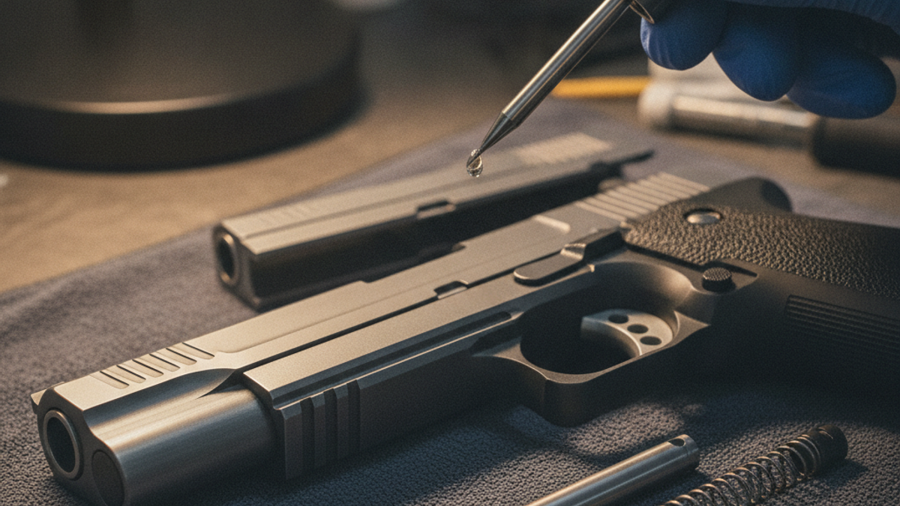
The myth that every gun must be scrubbed spotless after every range trip has caused more damage than dirt ever did. Over-cleaning with steel rods and aggressive brushing wears throats and crowns. Modern firearms run dirty but fail dry. The realistic rule set for preppers:
- After shooting corrosive surplus ammo: clean the same day, with water or ammonia-based solvent first to dissolve salts, then oil.
- After normal range use: wipe exterior, clear the chamber and bolt face, re-lube the rails. A full bore scrub every 300–500 rounds is plenty for most rifles.
- Carry guns: wipe down weekly. Body sweat is salty and will etch a slide in a summer month.
- Stored guns: inspect every 90 days minimum. Set a calendar alert the same way you rotate your prepper stockpile inventory.
Urban, Suburban, and Rural Realities
Apartment dwellers face two problems: ventilation and discretion. Solvent fumes in a small unit are genuinely hazardous — clean near an open window with a box fan exhausting outward, use nitrile gloves, and consider low-odor CLP over strong solvents for routine work. Lay down a mat so no brass shavings or oil stains your floor, and keep the whole operation out of view of windows and delivery drivers. That's basic OPSEC discipline.
Rural owners deal with the opposite challenge: unheated outbuildings, barn humidity, and wide temperature swings that drive condensation cycles. Never store firearms in an unconditioned shed or an uninsulated garage. A closet on an interior wall of a heated house beats a $2,000 safe in a damp detached garage every time.
How to Lubricate a Gun So It Still Runs in a Crisis
Lubrication is about placement, not volume. Oil belongs on sliding, rotating, and locking surfaces: slide rails, bolt carrier cam pin and gas rings, barrel hood, charging handle channel, trigger pivot pins. It does not belong in the firing pin channel, on the striker, in the magazine body, or flooding a bore.
Temperature matters. Oil that works in July can congeal at -10°F and slow a firing pin enough to cause light strikes — a documented cold-weather failure mode. For sub-freezing climates, run a thin synthetic oil or CLP applied sparingly rather than heavy grease. In dusty or ashy environments (think volcanic ashfall or prolonged drought), run guns drier; wet lube turns grit into lapping compound.
Long-Term Gun Storage: Beating Rust for Years, Not Months
Long-term storage has three enemies: moisture, acid, and contact. Control relative humidity to 40–50%. Below 30% can dry out wood stocks and leather; above 60% invites red rust. A hygrometer costs $10 and removes all guesswork.
Keep guns off bare concrete and out of foam-lined hard cases for extended storage — closed-cell foam traps moisture against steel and is a leading cause of "safe queen" rust. Likewise, avoid leather cases; the tanning chemicals are acidic. Silicone-treated gun socks paired with a VCI emitter inside the safe create a protective vapor barrier that coats every surface, including inside the action where your rag can't reach. For a true multi-year seal — a buried or hidden cache — degrease completely, coat with a heavy rust preventative, bag with desiccant, and vacuum seal. The same principles covered in our guide to buried survival caches apply directly.
Spare Parts: The Prep Almost Everyone Skips
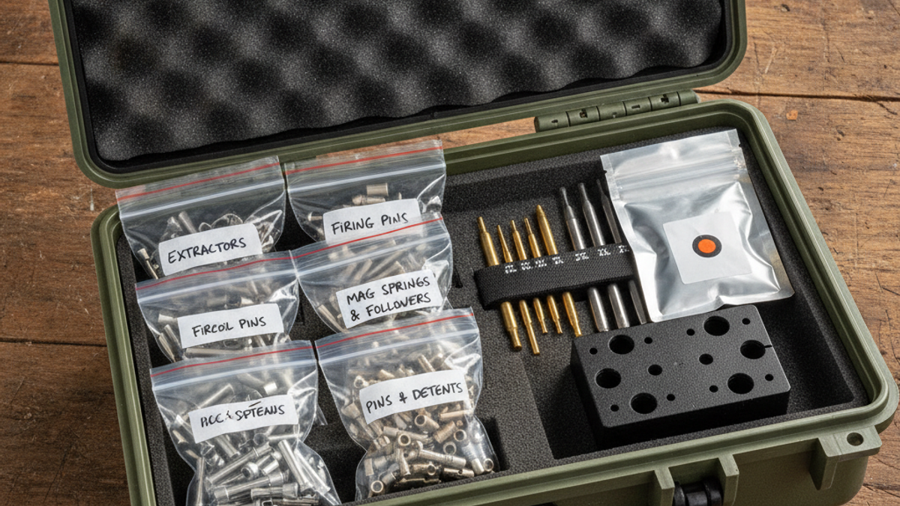
Guns rarely break at the receiver. They break at springs and small parts. Build a parts kit per platform:
- Springs: recoil springs, magazine springs, extractor springs, firing pin springs. Buy 3–5 of each.
- Wear parts: extractors, ejectors, firing pins, gas rings, detents, pins, and for AR-pattern rifles, a complete bolt and a spare bolt carrier group.
- Optics support: spare batteries, backup iron sights, thread locker.
- Magazines: treat them as consumables. Ten per rifle is not excessive.
Standardizing on common platforms — AR-15, Glock, Remington 870, 10/22 — means parts commonality and barter value. Pair this with disciplined ammunition stockpiling and rotation and you have a weapon system, not just a gun.
Step-by-Step Instructions
Step 1: Clear and Verify the Firearm Is Unloaded
Remove the magazine, lock the action open, and visually and physically check the chamber with a finger. Remove all ammunition from the room entirely. Every negligent discharge during cleaning begins with a skipped verification.
Step 2: Field Strip to the Manufacturer's Level
Disassemble only as far as the owner's manual directs. Use hollow-ground screwdrivers for any screw work — hardware-store flatheads cam out and bugger screw slots permanently, which matters when replacements don't exist.
Step 3: Clean the Bore From Breech to Muzzle
Wet a patch with bore solvent, push it through, let it dwell five to ten minutes, then follow with a bronze brush and dry patches until they come out clean. Pull-through cable kits are ideal because they protect the crown — the single most accuracy-critical surface on the barrel.
Step 4: Scrub the Action, Bolt Face, and Chamber
Carbon concentrates on the bolt face, extractor claw, locking lugs, and gas rings. Use picks and nylon brushes, and inspect the extractor claw for chips while you're in there. A clean extractor prevents the most common stoppage in semi-autos.
Step 5: Lubricate Contact Points Sparingly
Apply one drop of CLP to each rail, lug, and pivot, then wipe the excess. The surface should look wet but not drip. Cycle the action a dozen times to distribute the film evenly.
Step 6: Apply Rust Preventative to All Exterior Steel
Wipe down every exposed surface with a rust-inhibiting film, paying attention to fingerprints — skin oils are acidic and etch bluing within days. Handle the gun with a rag or gloves after this step.
Step 7: Store With Humidity Control and a Barrier
Slide the firearm into a silicone-treated sock, insert a VCI plug in the muzzle or action, and place a renewable desiccant unit in the safe. Verify with a hygrometer that the interior stays between 40% and 50% relative humidity.
Step 8: Schedule a Quarterly Inspection and Function Check
Every 90 days, pull each firearm, inspect for surface rust, re-oil, dry-fire function check (using snap caps where appropriate), and cycle magazine springs. Log it alongside your other preparedness audits.
Recommended Gear
If you're building a maintenance kit from zero, start with a compact all-platform kit, a bottle of classic bore solvent, a quality CLP, and a rust preventative — that combination covers 95% of real-world needs. Add silicone socks and VCI emitters for every long gun, a renewable dehumidifier for the safe, and a proper gunsmithing screwdriver set so you can actually install those spare parts without destroying screw heads. For more on selecting the right platforms in the first place, see our guides to choosing the right firearm for home and bug-out survival and comparing shotguns, rifles, and handguns for home defense, or browse the full list of recommended survival gear and equipment.
Frequently Asked Questions
How often should I clean a gun that's just sitting in storage?
Inspect every 90 days and re-apply protectant at least twice a year. A stored firearm doesn't accumulate fouling, but it does accumulate moisture and lose its protective oil film as it evaporates and migrates. In coastal, humid, or basement environments, shorten that to monthly inspections until you've proven your humidity control works.
Can I use motor oil or WD-40 to lubricate a firearm if gun oil runs out?
In a true emergency, yes — light motor oil, automatic transmission fluid, or even vegetable oil will beat running a gun dry for a short period. But WD-40 is a water displacer, not a lubricant; it gums up over time and can migrate into primers and deaden ammunition. Store at least a gallon of proper CLP or a case of small bottles. It's cheap insurance and an outstanding barter item.
What's the best way to store a firearm in an apartment without a large safe?
Use a quality under-bed or closet-mounted lockbox anchored to structure with through-bolts or heavy cable, placed on an interior wall away from exterior moisture. Add a small rechargeable desiccant unit and a silicone sock for each gun. Avoid foam-lined cases for long-term storage, and keep the location out of sight of anyone entering the home — concealment and access control matter as much as the lock itself.
Affiliate Disclosure: SHTFPlan.net participates in the Amazon Services LLC Associates Program. Some links are affiliate links — we may earn a small commission at no extra cost to you.