Improvised Weapons and Defensive Tools: How to Protect Yourself When You Can't Carry a Firearm
When firearms aren't an option, your life may depend on what you can improvise. Learn which everyday objects make the most effective defensive tools and how to use them.
When SHTF, your firearm may not always be within reach — or even legal to carry. Whether you're navigating a gun-free zone, traveling internationally, living in a state with restrictive carry laws, or simply caught off guard without your primary defensive tool, the ability to defend yourself without a firearm is a core survival skill that every serious prepper should develop. According to the Bureau of Justice Statistics, the majority of violent crimes are committed with weapons other than firearms — meaning your attacker may not even have a gun, and your response doesn't require one either.
This isn't about promoting violence. It's about emergency preparedness in the truest sense: being ready for the full spectrum of threats, not just the ones that fit neatly into your preferred defensive plan. Urban apartment dwellers, suburban homeowners, and rural off-grid preppers alike face moments when improvised defensive tools may be all that stand between safety and serious harm.
Understanding both the legal landscape and the practical tools available to you is the foundation of a complete urban survival strategy. Before we get into specific tools and techniques, one critical point: always know and comply with the laws in your jurisdiction. What's legal in one state may be a felony in another. This article is for informational and educational purposes only.
Why Every Prepper Needs Non-Firearm Defensive Options
Even the most committed concealed carrier encounters situations where their firearm isn't available. Courthouses, federal buildings, hospitals, schools, and many workplaces prohibit carry. If you're serious about self-defense for preppers, you need layered options — not a single point of failure. Our article on Concealed Carry for Preppers: How to Choose, Train, and Carry a Handgun Every Day covers the firearm side in depth, but what happens when that option is off the table?
The answer lies in a combination of situational awareness, legal carry tools, improvised implements, and trained physical techniques. A layered defense doesn't rely on any single tool — it uses each layer to buy time, create distance, or deter aggression before the situation escalates to lethal force.
What You'll Need
Tools
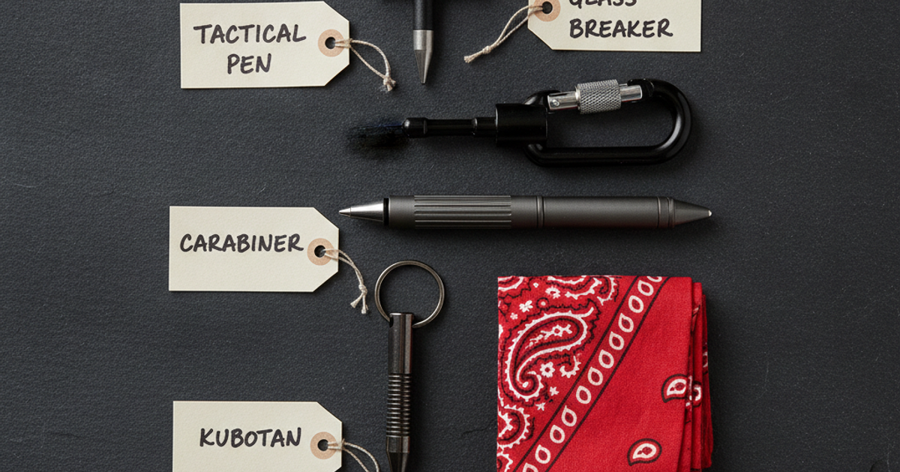
- Kubotan self defense keychain
- Tactical pen (Smith & Wesson self defense)
- Benchmade folding knife everyday carry
- Cold Steel Expandable Baton
Supplies
- SABRE Red Pepper Spray keychain
- MACE Brand personal alarm keychain
- Monkey Fist paracord self defense
Legal Everyday Carry Tools That Can Save Your Life
Pepper spray is arguably the single most effective non-lethal defensive tool available to the general public. SABRE Red, one of the most trusted brands in law enforcement, offers a compact SABRE Red Pepper Spray keychain that attaches directly to your keys for instant access. Studies have shown OC (oleoresin capsicum) spray to be effective in over 90% of defensive applications — it incapacitates attackers by causing intense burning, temporary blindness, and respiratory distress, buying you critical seconds to escape.
A tactical pen is one of the most versatile tools in the grey man prepper's arsenal. It looks like an ordinary writing instrument but is constructed from aircraft-grade aluminum or steel with a hardened tip designed for pressure-point strikes, glass breaking, and joint manipulation. The Tactical pen by Smith & Wesson self defense line is purpose-built for exactly this role. It passes through most metal detectors and is legal virtually everywhere, making it ideal for workplace or travel carry. Our dedicated guide on Tactical Pen and Everyday Carry Weapons: How to Defend Yourself When You Can't Carry a Gun goes deeper on this topic.
The Kubotan — a short, rod-shaped pressure-point tool developed by Tak Kubota for law enforcement — is another low-profile option that clips to a keychain. The Kubotan self defense keychain allows you to amplify the force of strikes to vulnerable nerve clusters, pressure points, and joints. Like the tactical pen, it rewards training — a few hours with an instructor dramatically increases effectiveness.
For those in environments where a folding knife is legally permitted, a quality blade is one of the most versatile pieces of survival gear a prepper can carry. The Benchmade folding knife everyday carry series represents the gold standard in EDC blades — precision-engineered, reliable, and capable of serving dual duty as a utility tool and last-resort defensive instrument. Know your state and local laws regarding blade length before carrying.
Improvised Defensive Tools From Everyday Objects
The truly prepared mind sees defensive potential in everyday items. This is the heart of SHTF improvisation — using what you have when you don't have what you want.
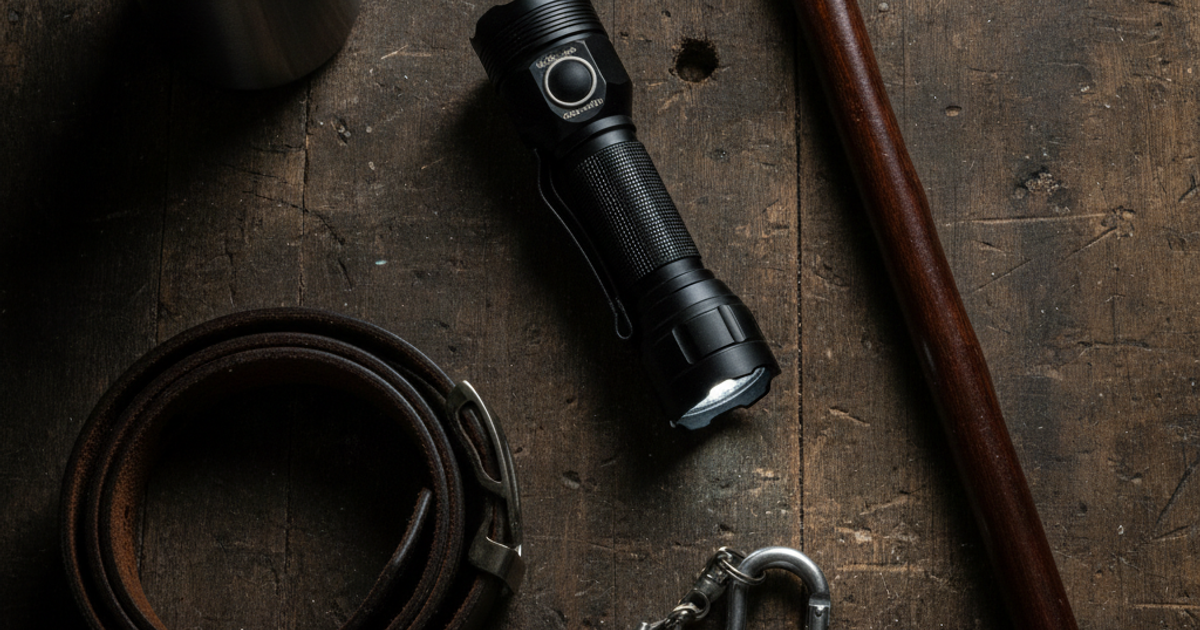
- Walking stick or umbrella: A stout wooden walking stick or heavy umbrella functions identically to a traditional bo staff or cane in Filipino Kali and Escrima fighting arts. These are legal everywhere, attract zero attention, and provide reach advantage against unarmed attackers.
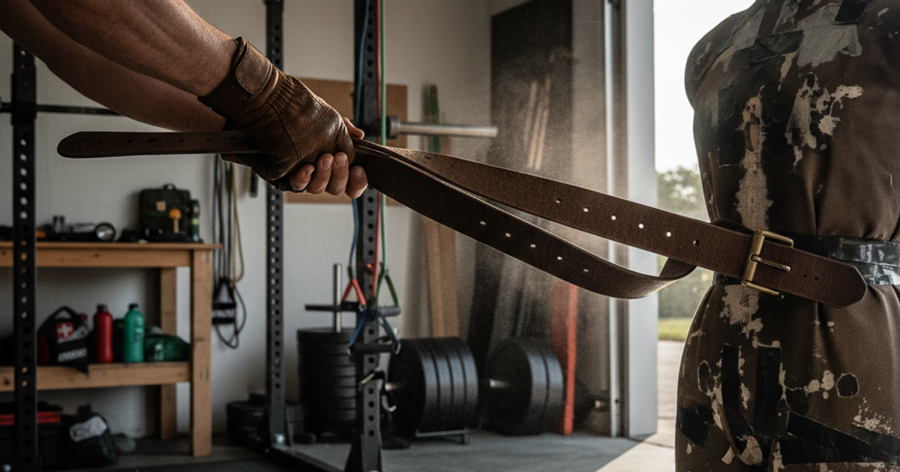
- Belt: A heavy leather or rigger's belt, swung by the buckle end, creates a striking and entangling tool with significant range. Military rigger's belts are especially stout and purpose-built for this kind of stress.
- Keys: Held in a fist with one or two keys protruding between fingers, your keyring becomes a makeshift striking tool. While effectiveness is debated in self-defense circles, the psychological deterrence and minor augmentation of a hammer fist strike has real value in a close-quarters struggle.
- Backpack or bag: A loaded bug out bag or even a school backpack serves as both a shield (absorbing strikes) and a swinging impact weapon at short range.
- Pen or pencil: Even an ordinary pen, held in a reinforced grip, can be driven into soft tissue, pressure points, or the eyes in a life-threatening situation.
- Hot liquid: In an indoor environment, a cup of hot coffee or tea thrown into an attacker's face can create a pain-based distraction and buying precious escape time.
- Wasp spray or aerosol: While controversial and never the first choice, many preppers keep aerosol cans accessible in workshop or garage areas. A burst to the face — while not equivalent to OC spray — can disorient and temporarily blind an attacker.
The Monkey Fist paracord self defense tool deserves special mention here. A monkey fist is a paracord-wrapped ball (often containing a steel ball bearing) on a lanyard — it's a legitimate maritime knot that doubles as a devastating impact weapon. Swung with speed, it concentrates enormous force on a small surface area. Check your local laws, as some jurisdictions classify these as prohibited weapons.
Electronic and Acoustic Deterrents
Not every defensive tool needs to cause physical harm. Noise and light can be extraordinarily effective deterrents — particularly in urban environments where drawing attention to an attacker is itself a powerful threat.
The MACE Brand personal alarm keychain emits a piercing 130dB alarm when activated — roughly equivalent to a jet engine at close range. Most opportunistic criminals will immediately disengage when this kind of noise draws public attention. This is especially valuable for women, elderly preppers, and anyone in an urban environment where bystanders are present. It requires no skill, no training, and is legal everywhere.
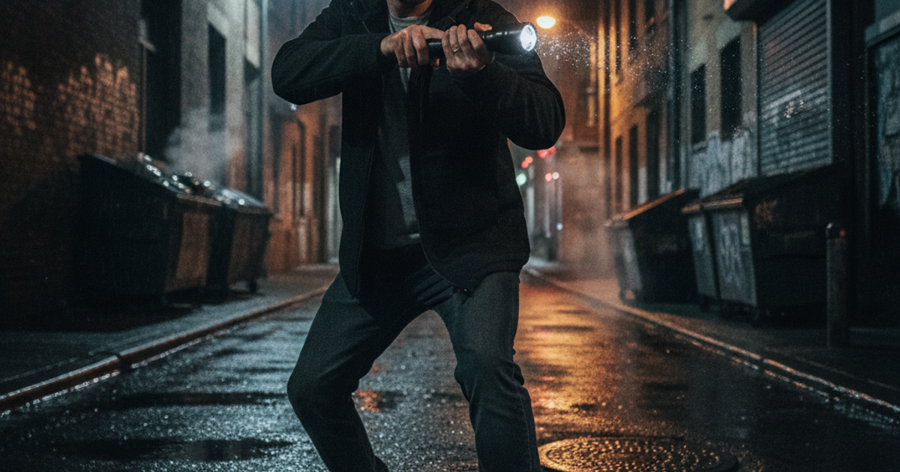
Stun guns and TASERs represent another category worth considering where legal. The Streetwise stun gun flashlight self defense combines two critical EDC functions into one unit — a high-lumen tactical flashlight and a high-voltage stun device. This dual-purpose approach aligns perfectly with everyday carry philosophy: every item should serve multiple roles. Note that stun guns are regulated differently than firearms but are still restricted or prohibited in several states and countries.
Impact Weapons: When You Need More Force
In a true SHTF scenario where rule of law has broken down, impact weapons become essential tools for rural homesteaders and urban survivors alike. The Cold Steel Expandable Baton is a law enforcement-grade collapsible ASP-style baton that deploys instantly with a flick of the wrist and collapses for compact carry. Constructed from heavy-duty steel, it delivers significant kinetic force and is legal to own in many states — though restrictions on carry vary widely. In a grid-down scenario, this tool provides a meaningful deterrent without requiring ammunition or recharging.
For those building a comprehensive home defense strategy that integrates non-firearm tools with physical security, our guide on Reinforcing Doors and Windows: How to Harden Your Home's Weakest Entry Points Before SHTF is essential reading. Physical barriers reduce the scenarios where you'll need to use any defensive tool at all.
The Role of Situational Awareness in Non-Firearm Defense
Situational awareness is the force multiplier that makes every other tool on this list more effective. The OODA Loop — Observe, Orient, Decide, Act — developed by military strategist John Boyd describes how humans process and respond to threats. The prepper who detects a threat early has more options: avoidance, de-escalation, escape, or engagement. The one who is surprised has only one option left.
Practice the grey man approach in daily life: move confidently without drawing attention, identify exits when you enter any space, and maintain awareness of the two to three people closest to you at all times. The FBI's Law Enforcement Bulletin has consistently noted that most violent criminals select victims based on perceived vulnerability — confident, aware individuals are less frequently targeted. Our full breakdown of Situational Awareness: How to Detect Threats Before They Become Dangerous covers this in detail.
In any environment — urban apartment, suburban neighborhood, or rural homestead — the prepper who avoids the fight entirely has won without spending a single calorie of energy or risking a single injury.
Step-by-Step Instructions
Step 1: Audit Your Current Everyday Carry for Defensive Gaps
Walk through a typical day and identify every environment you enter where a firearm would be prohibited or impractical. For each gap, identify which legal non-firearm tool — pepper spray, tactical pen, personal alarm, folding knife — fills that role. The goal is to ensure you are never completely unarmed in any environment you regularly occupy.
Step 2: Select and Legally Verify Your Primary Non-Firearm Tools
Research your state, county, and municipal laws regarding pepper spray concentration limits, blade length restrictions, stun gun legality, and baton carry rules before purchasing or carrying any tool. Laws vary dramatically — what's a misdemeanor in one county may be a felony in another. When in doubt, consult a local attorney or law enforcement resource.
Step 3: Build Muscle Memory Through Regular Dry Practice
Drawing and deploying your pepper spray, tactical pen, or kubotan under stress requires practiced motor skills — not intellectual knowledge. Spend five minutes per day doing dry-run draws from your actual carry position (pocket, keychain, bag) until the motion is automatic. Under adrenaline, you will default to your training, not your intentions.
Step 4: Identify Improvised Weapons in Every Environment You Enter
Practice environmental scanning as part of your situational awareness routine. When you enter a room, briefly catalog what objects could serve a defensive function: fire extinguishers, heavy objects within reach, chairs, tools. This mental rehearsal takes seconds and dramatically speeds up your response if a threat materializes.
Step 5: Learn at Least One Physical Defense Framework
Enroll in a basic self-defense course focused on practical techniques rather than sport competition — Krav Maga, Filipino Martial Arts (Kali/Escrima), or a combatives program are excellent choices. Even a single 8-hour course provides a framework for using improvised tools effectively and introduces you to distance management, which is the foundation of non-firearm defense.
Step 6: Integrate Personal Alarms and Deterrents Into Your Home Security Plan
Place a personal alarm or stun device in every primary room of your home — bedroom, living area, and any room where you spend significant time. In a SHTF scenario or home invasion, seconds matter, and having a defensive tool within arm's reach regardless of where the threat presents is basic emergency preparedness. Supplement this with door and window hardening as described in the reinforcement guide linked above.
Step 7: Practice Escape and Avoidance Scenarios Regularly
Run through mental and physical "what if" scenarios: What do you do if someone follows you from the parking garage? How do you exit a building if a threat emerges near the main entrance? Practicing escape routes and avoidance behaviors makes you dramatically harder to target. Review our article on Escape and Evasion: How to Move Undetected When SHTF and Society Breaks Down for advanced techniques.
Step 8: Reassess and Rotate Your Defensive Tools Seasonally
Pepper spray has a shelf life — typically 2-4 years — after which propellant pressure may degrade. Stun gun batteries lose charge over time. Inspect all defensive tools every 90 days, replace expired OC spray, recharge electronic devices, and verify that mechanical tools (folding knives, batons) operate smoothly. Treat this like rotating your emergency food storage — a tool that fails when you need it is worse than no tool at all.
Recommended Gear
For preppers building a comprehensive non-firearm defensive kit, the tools above represent the core of a practical loadout. The Cold Steel Expandable Baton provides significant reach and impact capability for home defense and rural environments. Pair it with a Streetwise stun gun flashlight for dual-purpose utility and close-quarters deterrence. Your daily carry should include a SABRE Red Pepper Spray keychain and either a Kubotan self defense keychain or Smith & Wesson tactical pen for environments where even OC spray is restricted. Add a MACE Brand personal alarm keychain for deterrence in public spaces, a Monkey Fist paracord self defense tool to your bug out bag, and a quality Benchmade folding knife for both utility and last-resort defense. This layered kit covers the full spectrum of threat environments and legal contexts a prepared individual is likely to encounter. For more on building your complete EDC kit, visit our Recommended Survival Gear & Equipment page.
Frequently Asked Questions
What is the best non-lethal self-defense weapon for everyday carry?
For most people in most legal environments, a combination of OC pepper spray and a personal alarm represents the highest-value, lowest-legal-risk defensive loadout. Pepper spray is effective against the vast majority of human attackers and most aggressive dogs, is legal in some form in all 50 states (though with varying restrictions on concentration and container size), and requires minimal training to deploy effectively. A personal alarm adds acoustic deterrence that functions even if the spray fails or is inaccessible. Add a tactical pen or kubotan for environments where aerosols are prohibited, and you have a genuinely capable layered kit that fits in a pants pocket.
Are improvised weapons legal to use in self-defense?
In most U.S. jurisdictions, the legal standard for self-defense does not distinguish between purpose-built weapons and improvised ones — what matters is whether the force used was reasonable and proportional to the threat faced. Using a chair, a walking stick, or a pen to defend yourself from an imminent violent attack is generally protected under the same self-defense statutes that cover firearms. However, laws vary significantly by state and locality, and some improvised weapons (like certain weighted striking tools) may themselves be classified as illegal weapons regardless of defensive intent. Always know the specific laws in your jurisdiction and consult a legal professional for guidance specific to your situation.
How can I defend myself without a weapon if I'm caught completely unprepared?
Your body is always your last line of defense, and even minimal training dramatically improves your odds. The most important principle in unarmed self-defense is de-escalation first, escape second, physical engagement as a last resort. If forced to engage physically, target the attacker's most vulnerable areas — eyes, throat, groin, and knees — using improvised tools or open-hand strikes. Maintaining distance (staying outside arm's reach) is the single most important tactical principle. Even a single session with a qualified self-defense instructor, combined with the situational awareness practices described in this article, will put you ahead of the vast majority of potential victims. For apartment dwellers and those with limited training options, our guide on Apartment Prepping: How to Build a Serious Emergency Stockpile in a Small Space includes home-defense considerations relevant to confined living environments.
Affiliate Disclosure: SHTFPlan.net participates in the Amazon Services LLC Associates Program. Some links are affiliate links — we may earn a small commission at no extra cost to you.