Tactical Pen and Everyday Carry Weapons: How to Defend Yourself When You Can't Carry a Gun
When firearms aren't an option, the right EDC tools can still save your life. Here's what to carry and how to use it.
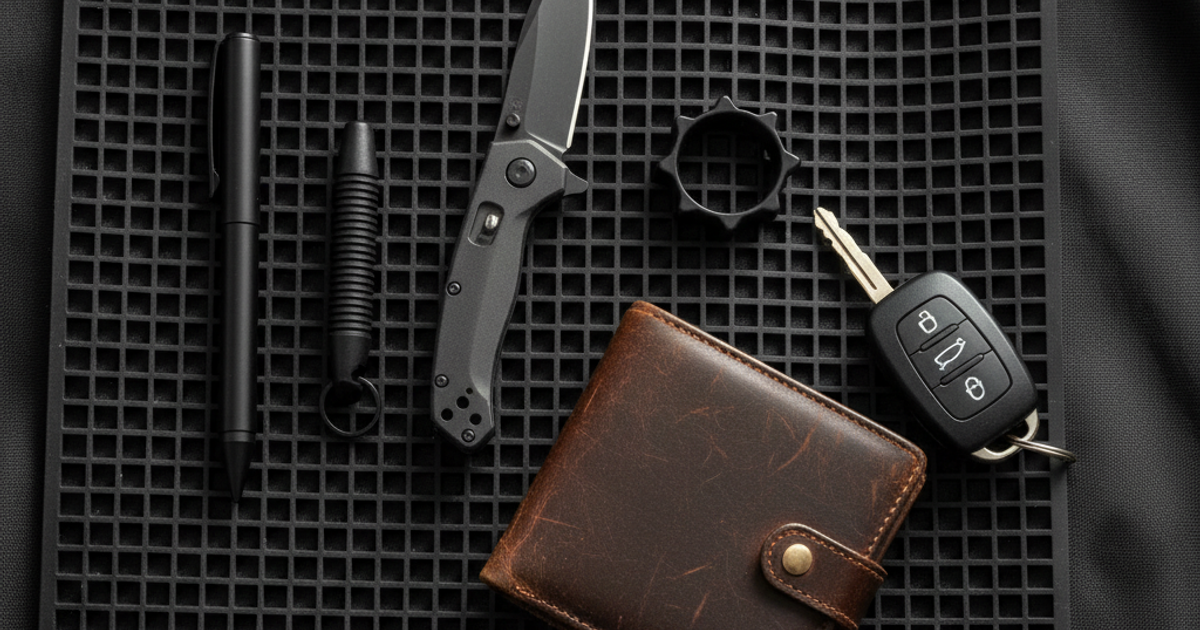
Not everyone can carry a firearm everywhere they go. Office buildings, courthouses, schools, hospitals, and public transit all restrict or prohibit firearms. Some states and cities impose strict regulations that make everyday concealed carry a legal minefield. Others live in jurisdictions where getting a carry permit takes months — or isn't an option at all. And even the most prepared prepper occasionally finds themselves in a situation where a gun simply isn't accessible.
That's the reality. And ignoring it doesn't make you safer — it leaves you defenseless.
The solution isn't to give up on self-defense. It's to build a layered approach to personal protection that includes tools you can legally carry almost anywhere. Tactical pens, kubatons, and other non-firearm everyday carry (EDC) tools give you meaningful defensive options when lethal force isn't available or appropriate. Whether you're navigating an urban environment, commuting through the suburbs, or working a job with strict firearm restrictions, these tools deserve serious consideration in your personal security plan.
Why Non-Firearm EDC Self-Defense Tools Matter for Urban Survival and Everyday Preparedness
According to the Bureau of Justice Statistics, the majority of violent crimes occur in situations where victims have no time to react — parking lots, stairwells, transit stations, and office environments. In urban survival scenarios and even routine daily life, the gap between threat recognition and response is measured in seconds. Having a tool in your hand — or immediately accessible — dramatically improves your odds.
Non-firearm defensive tools fill critical gaps in your personal protection matrix. They're not replacements for firearms — if you have the legal right and practical ability to carry a handgun, you should. Our guide on Concealed Carry for Preppers: How to Choose, Train, and Carry a Handgun Every Day covers that topic in depth. But tactical pens and kubatons are tools that complement your broader emergency preparedness strategy, especially in restricted environments.
The grey man principle applies here too. A tactical pen looks exactly like a pen. A kubaton looks like a keychain fob. These tools don't telegraph your preparedness mindset, which is a significant advantage in environments where standing out creates its own risks.
What Is a Tactical Pen and How Does It Work as a Self-Defense Weapon?
A tactical pen is a fully functional writing instrument constructed from aircraft-grade aluminum, titanium, or reinforced polymer. Unlike a standard pen, it's engineered to survive rough use — and to inflict targeted pain compliance strikes when necessary.
The defensive application relies on basic impact weapon principles. The dense, rigid body concentrates force into a small contact area, allowing strikes to pressure points, nerve clusters, and joints to produce immediate pain and create distance from an attacker. Common targets include the radial nerve on the forearm, the common peroneal nerve at the knee, the brachial plexus in the neck, and the solar plexus. When applied correctly, even a glancing strike to these areas can interrupt an attacker's motor function long enough for you to escape.
The Schrade Tactical Pen is a popular option that blends durability with a low-profile design — it writes smoothly, clips discreetly to a pocket or shirt, and provides a solid striking platform in a defensive situation. It's the kind of tool that disappears in plain sight until you need it.
For those who want a brand name with deep law enforcement roots, the Smith & Wesson Tactical Pen carries that credibility. Built to S&W's specifications, it's a rugged, reliable EDC option that also functions as a glass breaker — a feature that becomes critical in vehicle emergencies or building evacuations.
How to Use a Tactical Pen Effectively: Grips, Strikes, and Target Selection
Owning a tactical pen without training in how to use it is like buying a first aid kit and never opening it. The tool only works if you know the technique. Here are the fundamentals:
Primary Grips
- Standard grip: Pen gripped naturally in writing position, cap end protruding from the bottom of the fist. Good for hammerfist-style downward strikes and stabbing motions.
- Reverse grip: Pen reversed so the tip protrudes from the top of the fist near the thumb. Effective for upward strikes and close-quarters hooking motions.
- Reinforced grip: Index finger wrapped over the clip or body for added control during joint locks and pressure point applications.
High-Value Strike Targets
- Radial nerve — outer forearm, midpoint
- Peroneal nerve — outer knee and upper shin
- Brachial tie-in — junction of neck and shoulder
- Ulnar nerve — inner wrist
- Instep of the foot
- Bridge of the nose (last resort)
The goal in most defensive situations is not incapacitation — it's creating enough pain and disruption to escape. Strike, create distance, and move. Don't stand and fight when you can run.
The Gerber Impromptu Tactical Pen is worth highlighting here because of its ergonomic design — the textured grip and flat strike cap make it particularly well-suited to these techniques. Gerber designed it specifically with defensive application in mind, not just as a pen with marketing language slapped on it.
Kubatons: The Keychain That Could Save Your Life
The kubaton (also spelled kubatan) was developed in the early 1970s by Soke Takayuki Kubota as a law enforcement compliance tool. It's a short, cylindrical rod — typically 5 to 6 inches long and roughly half an inch in diameter — designed to be gripped in the fist and used to amplify joint locks, pressure point techniques, and strikes.
What makes the kubaton so effective as an everyday carry tool is its complete legal ambiguity in most jurisdictions. It's a keychain. It holds your keys. Unless you're in one of the handful of states that have specifically banned them (California restricts them in some contexts — always check your local laws), you can carry one almost anywhere. It passes through security checkpoints. It sits on your desk at work. Nobody looks twice at it.
The standard kubaton keychain self-defense stick is available in aluminum, steel, and polymer versions. Aluminum is the sweet spot for most users — light enough to forget it's there, dense enough to matter in a defensive situation.
For a more refined option, the Cold Steel Pocket Shark takes the kubaton concept and builds it out of Cold Steel's signature Griv-Ex polymer — practically indestructible, airport-friendly in most cases, and shaped with a pointed tip that makes pressure point work significantly more effective. Cold Steel has been making serious defensive tools for decades, and the Pocket Shark reflects that expertise.
Legal Considerations: What You Need to Know Before You Carry
This section is not legal advice — consult an attorney for your specific jurisdiction. That said, here are the general principles every prepper should understand before adding these tools to their EDC loadout:
- Tactical pens are legal in virtually all U.S. jurisdictions as writing instruments. However, using one as a weapon creates legal liability if the force wasn't legally justified — the same standard that applies to any defensive tool or technique.
- Kubatons are banned or restricted in a small number of jurisdictions. California, New York City, and some other municipalities have specific laws. Research your state, county, and city ordinances before carrying.
- Intent matters. Carrying a tactical pen to write with is legal. Telling the TSA agent "it's my weapon" is not. Use common sense about what you say and where you carry.
- Air travel: Tactical pens are generally prohibited in carry-on luggage by TSA due to their potential as striking weapons. Pack them in checked bags.
- Any use of force — regardless of the tool — must be legally justified under your jurisdiction's self-defense statutes. Knowing the law is part of being prepared.
Building a Layered Non-Firearm EDC Self-Defense System
Tactical pens and kubatons are most effective as part of a layered personal security system, not as standalone solutions. Here's how to think about building that system:
Layer 1: Situational Awareness
No tool substitutes for situational awareness. The ability to detect and avoid threats before they materialize is your most powerful defensive capability. Check out our detailed guide on Situational Awareness: How to Detect Threats Before They Become Dangerous to develop this foundational skill. Most defensive situations can be avoided entirely with proper environmental scanning and threat recognition.
Layer 2: Avoidance and De-escalation
Physical confrontation — even one you win — carries legal, physical, and psychological costs. The verbal and behavioral skills to de-escalate or disengage from a developing threat are essential. Practice assertive body language, boundary-setting language, and exit identification as part of your regular awareness training.
Layer 3: Non-Lethal Force Tools
This is where tactical pens, kubatons, and similar tools fit. Also consider:
- OC spray (pepper spray): Legal in most jurisdictions with varying concentration restrictions. Highly effective but situationally dependent (wind, enclosed spaces, blowback).
- Personal alarms: 120+ dB alarms draw attention and can deter opportunistic attackers. Excellent for all demographics and virtually all legal environments.
- Tactical flashlights: A high-lumen tactical light can temporarily blind an attacker and serves as a striking tool in the same way as a kubaton. Our guide on Tactical Flashlights for Preppers: How to Choose the Best EDC and Survival Light for Any Emergency covers the best options in detail.
Layer 4: Lethal Force
For those who can legally carry, a firearm remains the most effective personal defense tool available. Layers 1 through 3 exist to handle situations that don't warrant lethal force — and to give you time to access a firearm when they do.
Training: The Non-Negotiable Requirement
A tactical pen carried by an untrained person is marginally better than nothing. A tactical pen carried by someone who has drilled with it regularly under stress is a genuinely effective defensive tool. The difference is training.
Seek out instruction in:
- Krav Maga or combatives: Both systems emphasize gross motor strikes and real-world applicability under stress — exactly what you need.
- Filipino martial arts (FMA): Arnis, Escrima, and Kali have extensive curricula for short impact weapons. Kubaton and tactical pen techniques map directly onto FMA stick-fighting principles.
- Pressure point training: Tuite (joint manipulation) and kyusho (pressure point) concepts enhance the effectiveness of both kubatons and tactical pens significantly.
Even one or two sessions with a qualified instructor will dramatically improve your baseline competence. Practice draws, grips, and basic strikes regularly so the movements are automatic under stress.
Recommended Gear Summary
To build a solid non-firearm EDC self-defense kit, consider starting with these proven options. The Schrade Tactical Pen offers excellent build quality at an accessible price point. The Smith & Wesson Tactical Pen adds glass-breaking capability for vehicle emergencies. The Gerber Impromptu Tactical Pen is purpose-built for defensive use with superior ergonomics. For kubaton options, the standard kubaton keychain self-defense stick is an affordable entry point, while the Cold Steel Pocket Shark represents the premium end of the category. Pair any of these with OC spray, a tactical light, and consistent training for a complete non-firearm EDC system. You'll also want to check out our comprehensive guide on Everyday Carry (EDC) Essentials: What Every Prepper Should Have on Them at All Times to round out your full loadout.
Personal security doesn't stop at the door. In a SHTF scenario or even a routine criminal encounter, the tools and skills you carry with you every day are what determine the outcome. Mental resilience is also a component — knowing how to stay calm under threat is as important as any physical tool, and our article on Stress, Fear, and Panic: How to Build Mental Resilience Before and After SHTF is essential reading for any serious prepper.
Carry smart, train consistently, and stay aware. The best defensive encounter is the one you walk away from without ever having to deploy your tools.
What You'll Need
- Tactical pen with hardened steel or aircraft-grade aluminum construction
- High-intensity LED flashlight (300+ lumens)
- Sturdy EDC belt with reinforced buckle
- Personal alarm device (120+ decibels)
- Keychain kubotan or similar striking tool
- Pepper spray or defensive spray (where legal)
- Reinforced everyday bag or briefcase
Step-by-Step Instructions
Step 1: Select a Quality Tactical Pen for Daily Carry
Choose a tactical pen made from aircraft-grade aluminum or hardened steel that can function as both a writing instrument and defensive tool. The pen should have a reinforced tip designed for glass breaking and pressure point strikes, with a secure grip texture. Test the pen's balance and weight in your hand, ensuring it feels natural and can be deployed quickly from your pocket or bag. Verify that the pen meets TSA guidelines if you travel frequently, as most tactical pens are allowed on aircraft.
Step 2: Master Proper Grip and Striking Techniques
Hold the tactical pen in an ice-pick grip with the striking end protruding from the bottom of your fist for maximum power and control. Practice striking vulnerable target areas including the eyes, throat, solar plexus, and major nerve clusters on the arms and legs. Focus on quick, repetitive strikes rather than single powerful blows, as multiple impacts are more effective for creating escape opportunities. Train regularly with a heavy bag or striking pad to build muscle memory and confidence in your technique.
Step 3: Integrate a Tactical Flashlight into Your EDC Setup
Carry a compact tactical flashlight with at least 300 lumens output and a strobe function for temporarily disorienting potential threats. Position the flashlight in an easily accessible pocket or belt holster so you can deploy it within one second. Learn to use the flashlight as both an illumination tool and impact weapon by holding it in a reverse grip with the bezel forward. Practice the technique of shining the beam directly into an aggressor's eyes while maintaining awareness of your surroundings and escape routes.
Step 4: Weaponize Your Everyday Carried Items
Identify common items you already carry that can serve defensive purposes, such as keys held between fingers, a heavy water bottle, or a reinforced belt that can be used for striking or control techniques. Your smartphone can be gripped firmly and used as an impact weapon against vulnerable areas when held in your fist. A rolled magazine or newspaper becomes a surprisingly effective striking tool when tightly compressed. Train yourself to recognize improvised weapons in any environment, from chairs and bags to pens and laptops.
Step 5: Establish Layered Defensive Positioning and Awareness
Maintain constant situational awareness by scanning your environment and identifying potential threats before they escalate. Position your EDC weapons strategically on your body with the tactical pen in your strong-side pocket, flashlight on your support side, and pepper spray in an immediately accessible location. Practice the "interview stance" where you angle your body at 45 degrees to a potential threat, keeping your hands up in a non-threatening but defensive posture. Create distance whenever possible, keeping at least two arm-lengths between yourself and unknown individuals in uncertain situations.
Step 6: Train Targeting High-Value Vulnerable Points
Focus your defensive strikes on areas that will cause maximum disruption with minimum force, including the eyes, nose, throat, groin, and knee joints. Learn the locations of major nerve clusters such as the brachial plexus origin in the neck, the radial nerve on the forearm, and the common peroneal nerve on the outer leg. Practice transitioning between targets rapidly, as your initial strike may miss or be blocked during a high-stress encounter. Understand that your goal is always to create an opportunity to escape, not to win a prolonged fight.
Step 7: Develop Your Legal Knowledge and Escape Mindset
Research your local and state laws regarding self-defense tools, understanding what you can legally carry and the circumstances under which you can use force. Document your training and ensure you can articulate a reasonable fear for your safety if you ever need to defend yourself. Always prioritize de-escalation and escape over physical confrontation, using your EDC weapons only as a last resort when retreat is impossible. Practice verbal boundary-setting and create a personal safety plan that includes awareness of exit routes, safe locations, and emergency contacts in the areas you frequent most.
Frequently Asked Questions
Are tactical pens legal to carry on an airplane or through TSA security?
Generally, no. The TSA classifies tactical pens as potential weapons and prohibits them in carry-on baggage. While a standard writing pen is permitted, tactical pens with hardened strike caps or glass-breaking tips are typically confiscated at the checkpoint. Always pack tactical pens in checked luggage when flying. Some travelers carry a standard pen in their carry-on and pack the tactical version separately. When in doubt, check the TSA's official prohibited items list before your flight.
What is the difference between a kubaton and a tactical pen for self-defense?
A kubaton is a dedicated impact and pressure point tool — its only function is defensive. A tactical pen serves dual purpose: it's a functioning writing instrument and a defensive weapon. In practical terms, the kubaton is typically more ergonomic for joint locks and pressure point work due to its cylindrical shape and key ring attachment. The tactical pen is more versatile for daily carry in professional environments where a keychain fob might look out of place. Many experienced EDC practitioners carry both — a tactical pen clipped to a pocket and a kubaton on their keychain.
Can a tactical pen or kubaton actually stop an attacker?
These tools are designed to create pain compliance and opportunities to escape — not to incapacitate or "stop" an attacker in the way a firearm might. Against a determined, intoxicated, or adrenaline-flooded attacker, their effectiveness depends heavily on accurate targeting and trained delivery. Research on impact weapons consistently shows that proper training dramatically increases their effectiveness. Against an opportunistic attacker — which describes the majority of street crime — a sharp pain compliance strike to a nerve cluster is often enough to create a decisive window for escape. They are not substitutes for firearms in high-threat scenarios, but they fill an important gap in environments where firearms aren't an option.
Affiliate Disclosure: SHTF Plan participates in the Amazon Services LLC Associates Program. Some links are affiliate links — we may earn a small commission at no extra cost to you.