The Prepper's Guide to Emergency Dental Care: How to Handle Tooth Pain, Infections, and Extractions Without a Dentist
When SHTF, dental emergencies won't wait. Here's how to manage tooth pain, abscesses, and extractions when professional dental care is gone.
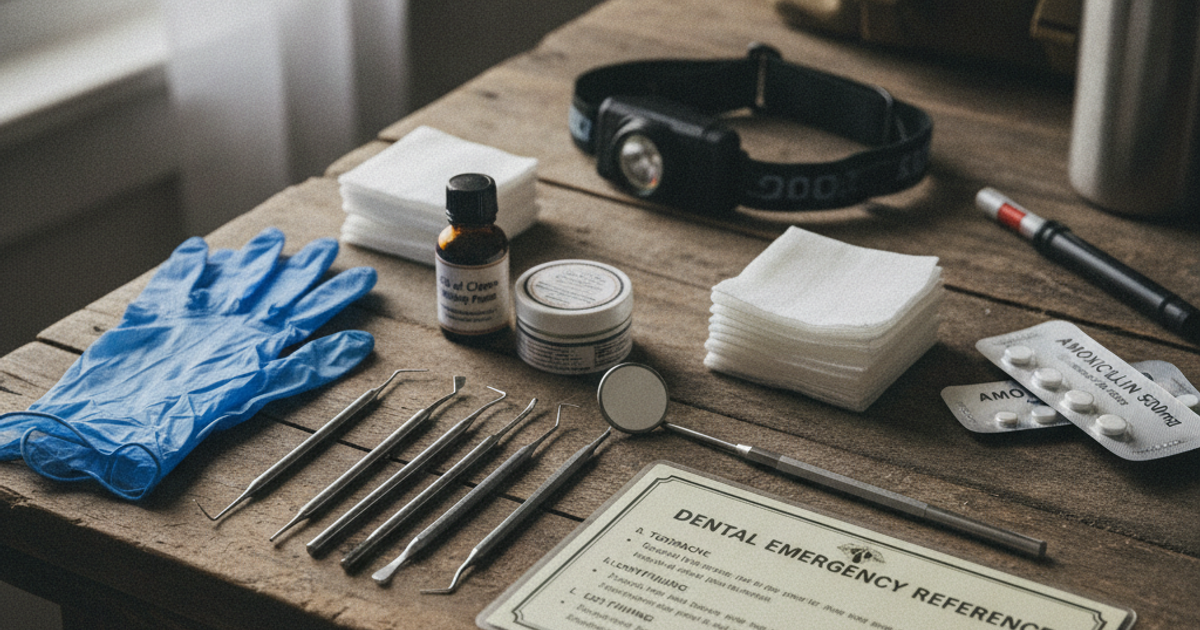
According to the American Dental Association, dental emergencies account for over 2 million emergency room visits annually in the United States — and that's under normal conditions when dentists and ERs are both available. When SHTF and professional dental care disappears, a toothache that you'd normally treat with a same-day appointment can spiral into a life-threatening infection within days. Jaw infections, specifically Ludwig's angina and dental abscesses spreading to the throat, are historically documented killers — and they're entirely preventable with the right knowledge and preparation.
This guide is designed for every prepper — whether you're managing a dental crisis in a high-rise apartment, a suburban home, or a remote rural homestead. Dental emergencies don't care where you live, and neither does sepsis. Understanding how to manage tooth pain, infections, and in extreme cases, extractions, could be the skill that keeps you alive when no dentist is coming.
This article complements our broader coverage of emergency medical preparedness. If you're serious about building medical self-sufficiency, also read our guide on Field Medicine: How to Treat Cuts, Burns, and Infections When There's No Hospital and our deep dive on Stockpiling Antibiotics and First Aid Supplies: What to Hoard Before a Medical Crisis Hits.
Why Dental Emergencies Are a Serious Survival Threat
Most preppers spend significant time planning for gunshot wounds, broken bones, and water purification — and rightfully so. But dental emergencies are consistently underestimated in emergency preparedness planning. A cracked molar or infected gum doesn't seem as dramatic as a chest wound, but the consequences can be equally fatal if left untreated in a grid-down scenario.
The anatomy of a dental infection is what makes it so dangerous. The roots of your upper and lower teeth sit in close proximity to critical anatomical spaces — the sinuses, the airway, the jaw, and the bloodstream. An untreated abscess can track along fascial planes, creating a spreading cellulitis that closes the airway or seeds the bloodstream with bacteria, causing septicemia. Studies published in the Journal of Endodontics estimate that dental-origin sepsis carries a mortality rate between 10% and 40% when untreated in resource-limited environments.
The pain dimension also matters from a survival standpoint. Severe, unmanaged tooth pain impairs decision-making, disrupts sleep, and degrades your ability to perform critical tasks — whether that's maintaining situational awareness, standing watch, or executing your bug out bag plan. A prepper doubled over with toothache is a liability to themselves and their group.
What You'll Need
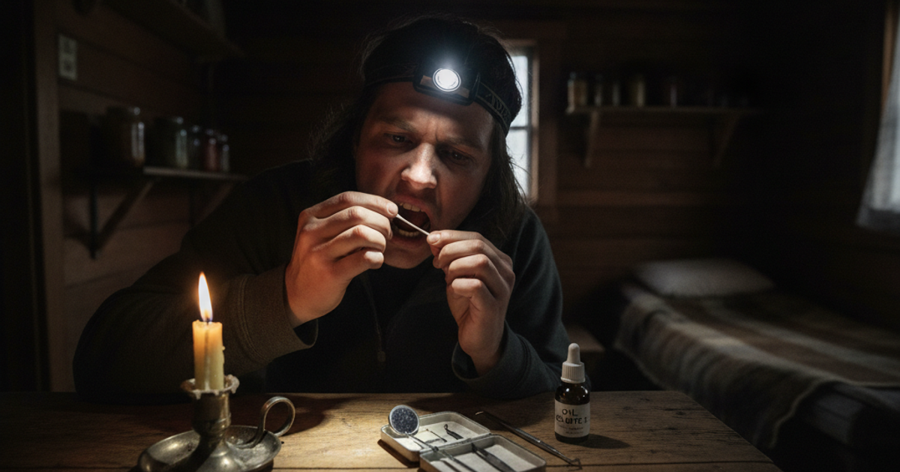
Tools
- Ranir dental pick and mirror tool kit
- Sterile gloves (nitrile, multiple pairs)
- Flashlight or headlamp for oral examination
- Sterile gauze pads
Supplies
- Dentemp emergency dental repair kit
- Red Cross toothache complete medication kit
- Clove oil for toothache pain (NOW essential oils)
- Orajel severe toothache pain relief gel
- Cavit dental temporary filling material
- Ibuprofen and acetaminophen (stockpiled OTC)
Understanding the Types of Dental Emergencies You'll Face
Toothache Without Obvious Cause
Diffuse tooth pain without a visible crack or lost filling usually indicates pulpitis — inflammation of the inner nerve of the tooth, often caused by deep decay. This is the earliest stage of what can become an abscess. Pain is typically throbbing, worsened by heat, and may radiate to the jaw, ear, or temple. At this stage, aggressive pain management and infection control are your priorities.
Lost Filling or Broken Tooth
A lost filling exposes the dentin and possibly the nerve of the tooth, causing sharp, immediate sensitivity to temperature and touch. DenTek temporary tooth filling repair mix is an excellent over-the-counter product that can seal the cavity and dramatically reduce pain while protecting the exposed pulp from further bacterial invasion. These temporary materials are rated to last several weeks and are a cornerstone of any prepper dental kit.
Dental Abscess
An abscess is a pocket of infection — either at the tip of the root (periapical abscess) or in the gum tissue (periodontal abscess). Signs include a visible swelling on the gum, a pimple-like bump on the gum that may drain foul-tasting fluid, severe pain, swollen lymph nodes, and fever. This is a medical emergency even in normal times. In a SHTF scenario, you must treat it aggressively with the tools you have.
Cracked or Fractured Tooth
Cracks often cause sharp, spontaneous pain when biting. Without treatment, bacteria colonize the crack and the tooth eventually abscesses. Temporary filling material can stabilize a fractured tooth and reduce bacterial entry.
Pain Management: Every Option in Your Arsenal
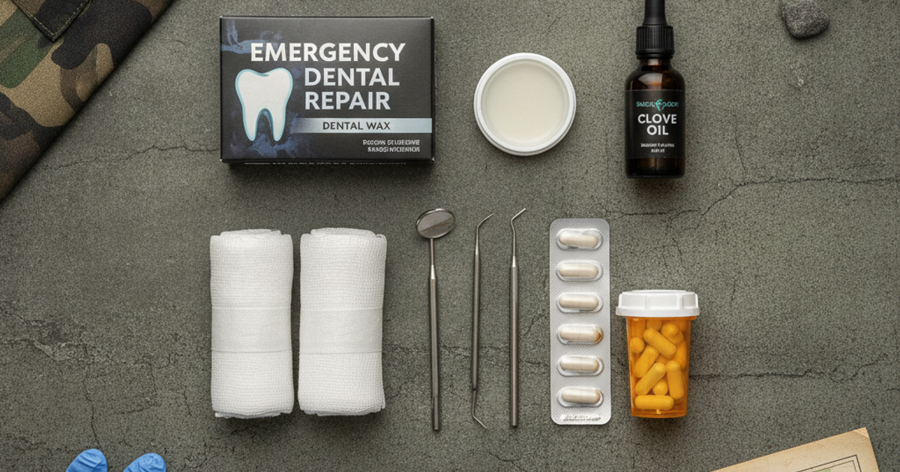
Managing dental pain effectively is both a comfort and a survival skill. Here are your options, from first-line to last resort:
- Ibuprofen + Acetaminophen combination: Research published in the Journal of the American Dental Association confirms that alternating 400–600mg ibuprofen with 500–1000mg acetaminophen every 4–6 hours provides pain relief comparable to opioids for dental pain. This should be your first approach.
- Topical benzocaine: Orajel severe toothache pain relief gel contains 20% benzocaine, a fast-acting topical anesthetic that numbs the affected area within minutes. Apply directly to the tooth and surrounding gum with a clean cotton swab. Effects last 15–30 minutes and can be reapplied.
- Eugenol (clove oil): Eugenol is the active ingredient in clove oil and has been used as a dental anesthetic for over a century — it's still used in professional dental offices today. Clove oil from NOW Essential Oils is pharmaceutical grade and highly effective. Apply a small amount with a cotton ball directly to the painful tooth. Do not swallow and avoid contact with soft tissue — undiluted eugenol can irritate gums.
- Red Cross kit: The Red Cross toothache complete medication kit combines eugenol-based medication with cotton pellets and instructions — a complete, field-ready dental pain solution that belongs in every survival kit and bug out bag.
- Salt water rinse: A warm salt water rinse (1 teaspoon salt per 8 oz warm water) reduces bacterial load and can help drain a superficial abscess. Rinse vigorously for 30–60 seconds, 3–4 times daily.
- Antiseptic oral rinse: Colgate Peroxyl antiseptic mouth sore rinse uses hydrogen peroxide to kill oral bacteria and reduce inflammation. It's particularly useful for managing early-stage gum infections and post-extraction wound care.
Treating a Dental Abscess Without Professional Care
If a dental abscess is present, you face a genuine life-or-death situation in a long-term grid-down scenario. Here is what you can do:
Do not lance the abscess yourself unless it is pointing (forming a visible, soft head on the gum surface) and you have sterile instruments. If it is pointing and draining on its own, encourage drainage with warm salt water rinses. If you have access to antibiotics, this is when you use them. Amoxicillin (500mg three times daily for 7–10 days) or metronidazole are dentists' first-line choices for dental infections. Preppers who have followed our guidance on Lifesaving Meds Without a Pharmacy: How to Build a Long-Term Drug Supply will have these in their stores.
Warning signs that require any available emergency care — even in a crisis — include: swelling spreading to the neck or floor of the mouth, difficulty swallowing or breathing, high fever (over 103°F), and eye or facial swelling. These indicate a spreading infection that can be fatal within hours.
Temporary Filling: Sealing Exposed Teeth in the Field
Sealing an exposed cavity or lost crown is one of the most valuable skills in emergency dental care. The Dentemp emergency dental repair kit is specifically designed for this purpose and is trusted by millions of users for at-home dental repair. It can re-cement loose crowns, fill gaps left by missing fillings, and provide significant pain relief by sealing exposed nerve tissue.
For a more professional-grade temporary material, Cavit dental temporary filling material is actually used in dental offices as an intermediate-term filler. It sets hard in the presence of moisture and is far more durable than consumer kits. Stockpile both for your prepper medical supplies.
Emergency Extraction: A True Last Resort
Emergency tooth extraction without professional equipment or anesthesia is extremely dangerous and should only be considered when an infection is life-threatening, no antibiotics are available, and the tooth is clearly the source of a spreading infection. If you find yourself in this position, understand the following:
- You cannot replicate dental anesthesia without lidocaine injections — this will be extraordinarily painful.
- Improper technique can fracture the root, driving infection deeper into the jaw.
- Dental elevators and forceps are required — improvised tools dramatically increase complication risk.
- Bleeding, dry socket, and post-extraction infection are serious complications.
If you are serious about learning this skill, take a wilderness medicine or combat medicine course that includes dental emergencies. Books such as Where There Is No Dentist by Murray Dickson provide detailed illustrated guidance. This is not a YouTube skill — preparation and training matter enormously here.
Step-by-Step Instructions
Step 1: Assess the Dental Emergency and Identify the Problem
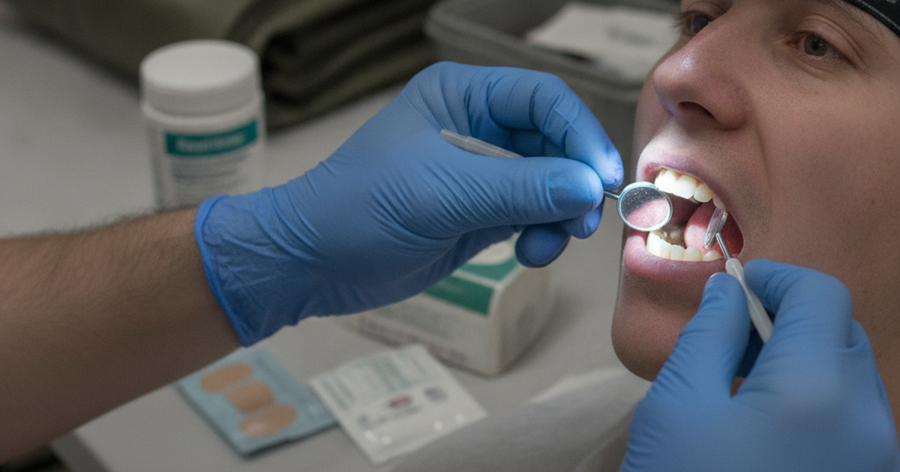
Put on sterile gloves and use a dental mirror and pick to examine the affected area under good lighting — a headlamp works well for this. Look for visible decay, cracks, missing fillings, swelling, or a draining abscess. Identifying the specific problem guides every decision that follows.
Step 2: Control Pain Immediately Using Available Medications
Take 400–600mg of ibuprofen and 500–1000mg of acetaminophen simultaneously — this combination is clinically proven to outperform either drug alone for dental pain. Apply topical benzocaine gel or eugenol-soaked cotton to the affected tooth for rapid localized relief while systemic medications take effect.
Step 3: Rinse and Disinfect the Oral Cavity
Mix one teaspoon of salt in eight ounces of warm water and rinse vigorously for 60 seconds to reduce bacterial load. Follow with Colgate Peroxyl antiseptic rinse if available. This step is especially critical if there is any sign of infection, abscess, or bleeding gum tissue.
Step 4: Seal Lost Fillings or Exposed Cavities with Temporary Material
Dry the affected tooth with gauze as thoroughly as possible — moisture control improves adhesion. Prepare your Dentemp, DenTek, or Cavit material per package instructions and press firmly into the cavity with a gloved finger or clean dental tool. Have the patient bite down gently on damp gauze to shape the material to their bite.
Step 5: Begin Antibiotic Therapy If Infection Is Present
If there is swelling, fever, or signs of abscess, begin a course of antibiotics from your emergency medical stores. Amoxicillin 500mg three times daily or clindamycin 300mg three times daily are the standard dental infection protocols. Continue for a minimum of 7 days even if symptoms improve after 2–3 days.
Step 6: Monitor for Signs of Spreading Infection
Check the patient every 4–6 hours for worsening swelling, particularly in the neck or under the jaw. Monitor body temperature regularly. Any swelling that spreads toward the throat, floor of the mouth, or eye socket requires the most aggressive treatment available and immediate evacuation if any form of medical care exists within reach.
Step 7: Manage Post-Procedure Care and Maintain Oral Hygiene
Continue warm salt water rinses at least three times daily. Change gauze as needed if there is bleeding. Avoid hot, hard, or chewy foods on the affected side. Keep the patient hydrated and maintain nutrition — both are critical for fighting infection and recovery.
Building Your Prepper Dental Kit
A dedicated dental emergency kit is as essential as your trauma kit. Whether it lives in your home, your bug out bag, or your vehicle emergency kit, it should include the following: temporary filling material, topical anesthetic, eugenol/clove oil, dental mirror and pick set, sterile gauze, nitrile gloves, OTC pain relievers, and antiseptic rinse. The entire kit can be assembled for under $60 and stored in a small waterproof pouch.
For broader trauma preparedness, also review our article on When EMS Is Gone: How to Build a Trauma Kit That Keeps Your Family Alive to ensure your full medical preparedness picture is covered.
Prevention: The Best Emergency Dental Care Is Avoiding the Emergency
Every prepper should visit a dentist before a crisis hits. Get any outstanding dental work completed — fill cavities, replace cracked crowns, address gum disease. Ask your dentist for a prescription-strength fluoride toothpaste and get a full set of X-rays to understand your current dental health baseline. Stock up on floss, toothbrushes, and toothpaste as part of your emergency food storage and hygiene supplies. Good oral hygiene dramatically reduces your risk of emergency in a grid-down scenario.
Frequently Asked Questions
What is the best natural remedy for a toothache when there's no dentist available?
Clove oil (eugenol) is the most evidence-based natural remedy for dental pain and has been used clinically for over a century. Apply it with a cotton ball directly to the affected tooth. Combine this with alternating ibuprofen and acetaminophen for the most effective pain management protocol available without a prescription. Warm salt water rinses also reduce bacterial load and can provide mild relief.
Can a dental infection kill you in a survival situation?
Yes — untreated dental infections are potentially fatal. Bacteria from an oral abscess can spread along fascial planes to the throat (Ludwig's angina), the chest (descending necrotizing mediastinitis), or the bloodstream (septicemia). Historically, dental infections were a leading cause of death before the antibiotic era. In a SHTF scenario without medical care, this remains a real and serious risk. Treat dental infections aggressively and early.
What should I include in a bug out bag dental emergency kit?
Your bug out bag dental kit should include: temporary filling material (Dentemp or Cavit), topical benzocaine gel (Orajel), eugenol/clove oil, a Red Cross toothache kit, dental mirror and pick, sterile gauze, nitrile gloves, ibuprofen, acetaminophen, and antiseptic mouth rinse. The entire kit weighs less than half a pound and takes up minimal space. If you have access to prescription antibiotics through your prepper medical stores, include amoxicillin or clindamycin as well.
Affiliate Disclosure: SHTFPlan.net participates in the Amazon Services LLC Associates Program. Some links are affiliate links — we may earn a small commission at no extra cost to you.