Flood Survival Guide: How to Prepare, Evacuate, and Recover When Floodwaters Rise
Floods are the most common natural disaster in the U.S. Here's how to prepare your home, plan your escape, and rebuild after the water recedes.
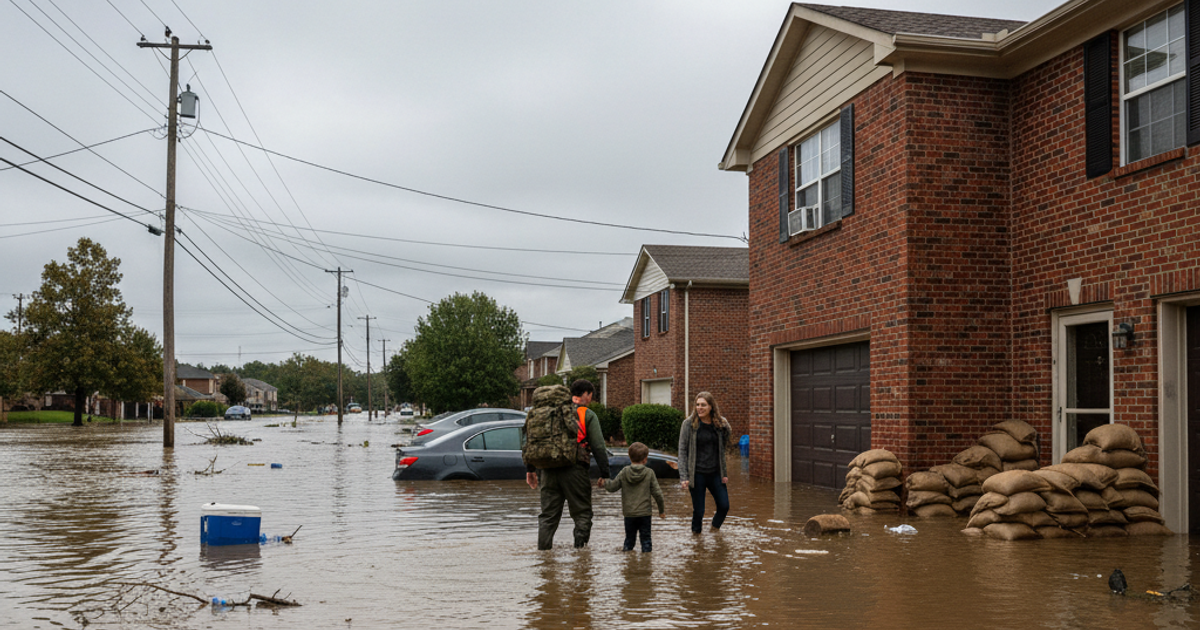
Floods are the most common and costly natural disaster in the United States, responsible for more deaths each year than tornadoes, hurricanes, or lightning. According to FEMA, just one inch of floodwater can cause up to $25,000 in damage to a home. And unlike earthquakes or wildfires, floods can strike virtually anywhere — flash floods can transform a dry creek bed into a raging torrent in minutes, and storm surge can push ocean water miles inland. Whether you're in a high-rise apartment, a suburban neighborhood, or a rural homestead, flood preparedness isn't optional — it's survival planning.
This guide covers everything a serious prepper needs to know: how to protect your home before the water rises, how to build a flood-ready survival kit, when and how to evacuate, and how to recover safely after floodwaters recede.
Understanding Flood Risk: Situational Awareness Before the Water Comes
The foundation of any effective flood plan is understanding your specific risk. FEMA's Flood Map Service Center (msc.fema.gov) lets you search your property's flood zone designation — a critical piece of intelligence every prepared household should already know. If you're in Zone A or Zone AE, you're in a high-risk area. But don't be lulled into complacency by a lower-risk designation — roughly 25% of flood insurance claims come from properties outside designated high-risk zones.
Strong situational awareness means monitoring weather alerts before they become emergencies. Sign up for your county's emergency alert system, install a NOAA weather radio, and know the difference between a Flood Watch (flooding is possible) and a Flood Warning (flooding is imminent or occurring). By the time officials issue mandatory evacuation orders, the window for safe departure may already be narrowing.
Urban preppers face unique challenges — storm drains overwhelmed by impervious pavement, subway tunnels that flood with terrifying speed, and streets that channel water like rivers. Rural residents deal with rapidly rising creeks, culvert failures, and washed-out roads that can cut off entire communities for days. Know your terrain. Know your exit points. Do this before the rain starts.
How to Flood-Proof Your Home Before Disaster Strikes
Home flood protection falls into two categories: passive measures that are always in place, and active measures you deploy when a threat is imminent. Start with the passive systems.
Inspect and maintain your gutters and downspouts — clogged gutters are a leading cause of basement flooding. Grade your yard so water drains away from your foundation. Install a sump pump with a battery backup (power outages are common during major storms). Consider a backwater valve on your main sewer line to prevent sewage from backing up into your home during heavy rain events.
When a flood threat is approaching, active deployment matters. Sandbags are the traditional answer, but they're heavy, messy, and slow to deploy. A far better solution for most households is a Flood Barrier water gate dam sandbag alternative — these self-activating or quick-deploy water barriers can protect doorways, garage entrances, and low-lying areas in a fraction of the time it takes to fill traditional sandbags. For apartment dwellers, door-mounted flood barriers and threshold seals can prevent water intrusion from hallways and building entrances.
Move critical documents, irreplaceable valuables, and electrical equipment to upper floors or elevated shelves. Shut off electricity to lower levels if flooding is imminent — electrical hazards in floodwater kill people every year. Disconnect and elevate major appliances if time permits.
Building a Flood-Ready Emergency Kit and Bug Out Bag
A standard bug out bag is a solid starting point, but flood scenarios introduce specific requirements that demand customization. Water is both the threat and a critical resource — paradoxically, floods often leave survivors without safe drinking water because municipal systems become contaminated.
Your flood-specific survival kit should include:
- Water and purification: At minimum three days of water (one gallon per person per day), plus reliable purification capability
- Food: Three to seven days of emergency food storage — waterproof packaging or sealed containers only
- Waterproof document storage: Copies of IDs, insurance policies, deeds, medical records, and financial documents in a waterproof bag or hard case
- Dry clothing: Sealed in heavy-duty garbage bags or dry bags inside your pack
- First aid kit: Including waterproof bandages and any prescription medications
- Emergency communication: Hand-crank NOAA weather radio, fully charged power bank
- Flashlights and batteries: Headlamps are preferable — keep your hands free
- Cash: ATMs go down during disasters; small bills matter
- Life jackets or personal flotation devices: Especially if you live near rivers, in low-lying areas, or have young children
For a complete starting point, the Ready America 72-hour emergency kit covers the foundational bases and is a solid core to build upon for flood-specific scenarios. Supplement it with the flood-specific items listed above. Our Complete 72-Hour Bug Out Bag Checklist for Urban Survival goes deeper on customizing your loadout.
Water purification deserves special emphasis in flood scenarios. Floodwater is a toxic soup — it carries sewage, agricultural chemicals, industrial runoff, and biological hazards. Even if the water looks clear, it isn't safe to drink. The LifeStraw personal water filter is one of the most field-proven tools in the emergency preparedness arsenal — compact enough for every bag, capable of filtering up to 1,000 gallons while removing 99.9999% of waterborne bacteria and parasites. Every member of your household should have one accessible.
Flood Evacuation Planning for Urban, Suburban, and Rural Preppers
The number-one rule of flood survival is deceptively simple: don't wait. The majority of flood fatalities in the U.S. occur in vehicles — people who underestimated moving water or tried to drive through flooded roadways. Just six inches of fast-moving water can knock an adult off their feet. Two feet of water will carry away most vehicles, including SUVs and pickup trucks.
Your evacuation plan must be established before disaster strikes. Identify at least two routes out of your area — one primary and one alternate in case roads are impassable. For urban residents, our article on Urban Evacuation Routes: How to Escape the City When SHTF covers the tactical considerations in detail. Know your local shelter locations, but also have a secondary destination — a friend or family member outside the flood zone, a pre-booked hotel, or a predetermined rally point.
If you have pets, plan for them explicitly. Many emergency shelters don't accept animals, which means pet owners sometimes refuse to evacuate at all — a fatal mistake. Read our guide on Prepping with Pets: How to Keep Your Animals Alive When SHTF and make sure your evacuation plan includes your animals.
If you are caught by rapidly rising water and cannot safely evacuate by vehicle, move to higher ground immediately. Go to the highest floor of a sturdy building. If you're outdoors and swept into moving water, angle your body downstream feet-first to protect your head from obstacles. Never attempt to swim against a strong current — conserve energy and work your way toward shore or a fixed object at an angle.
Post-Flood Recovery: The Dangers Most Preppers Overlook
When the water recedes, the danger is far from over. Post-flood environments present serious hazards: structural damage that isn't visible to the naked eye, contaminated surfaces that require protective equipment to handle, mold that begins colonizing within 24 to 48 hours of water exposure, and compromised electrical systems that can spark fires or electrocute the unwary.
Before re-entering any flooded structure, confirm utilities are shut off and have the building assessed for structural integrity if you have any doubt. Wear rubber boots, heavy gloves, and an N95 or better respirator. Document all damage thoroughly with photos and video before cleaning anything — your insurance company will require documentation.
Moisture management is the most critical post-flood task. Mold is not just a property damage problem — it's a serious health threat, particularly for children, the elderly, and anyone with respiratory conditions. Begin drying out your space as quickly as possible using fans, dehumidifiers, and open windows when outdoor humidity permits. DampRid flood damage moisture absorber products are highly effective for drawing residual moisture out of enclosed spaces, closets, and areas where air circulation is limited — an essential part of any post-flood recovery toolkit.
Identifying hidden moisture is equally important. Water migrates behind walls, under flooring, and into insulation — where it quietly cultivates mold for weeks before becoming visible. A FLIR thermal camera for moisture detection and water damage allows you to see temperature differentials that reveal hidden wet areas behind drywall and under subflooring. This is a professional-grade tool that can save you thousands of dollars in remediation costs by catching problems early — and it doubles as a valuable piece of survival gear for security and off-grid applications.
Be extremely cautious about your water supply after a flood. Even if municipal water service is restored, boil water advisories may be in effect. Well owners should assume their well is contaminated until tested — floodwater infiltration of a well casing is common and difficult to detect visually. Use your water purification gear and follow all official advisories before consuming tap water.
Community Preparedness and the SHTF Flood Scenario
Individual preparedness matters enormously, but community resilience is a force multiplier. Neighbors who coordinate before a flood — sharing equipment, establishing check-in systems, and identifying vulnerable community members who need assistance — fare dramatically better than isolated households. Building those relationships now, before crisis strikes, is one of the highest-return investments you can make as a prepper. Our deep-dive on Neighborhood Mutual Aid Networks: How to Build a Community Survival Team Before SHTF provides a practical framework for organizing your neighbors.
In a true SHTF scenario — regional flooding that overwhelms emergency services, extended grid-down conditions, or cascading infrastructure failures — your emergency preparedness depth determines your options. This means having more than 72 hours of supplies, having redundant communication methods, and having established relationships with people you can rely on when government help is days away or simply not coming.
What You'll Need
- Emergency kit with water, non-perishable food, and medications
- Waterproof document container with insurance policies and IDs
- Battery-powered weather radio and flashlights
- First aid kit and personal hygiene supplies
- Plastic sheeting, sandbags, or water barriers
- Fully charged mobile phone and portable battery packs
- Sturdy shoes, rain gear, and extra clothing
Step-by-Step Instructions
Step 1: Monitor Weather Alerts and Flood Warnings
Sign up for local emergency alerts through your community's notification system and download weather apps that provide real-time flood warnings. Keep your battery-powered radio tuned to NOAA Weather Radio or local news stations for continuous updates. Understand the difference between a flood watch (conditions are right for flooding) and a flood warning (flooding is occurring or imminent), as this determines how quickly you need to act.
Step 2: Prepare Your Home and Property Before Waters Rise
Move valuable items, electronics, and important documents to upper floors or elevated areas above potential water levels. Install check valves in plumbing to prevent floodwater from backing up into drains, and use sandbags or plastic sheeting to create barriers at doorways and low entry points. Turn off utilities at main switches if authorities instruct evacuation, but only if you can do so safely without stepping in water.
Step 3: Evacuate Immediately When Authorities Issue Orders
Never ignore mandatory evacuation orders—delaying can trap you in rapidly rising waters and put rescue workers at risk. Follow designated evacuation routes and avoid shortcuts, as roads may be washed out or submerged in areas you can't see. Bring your emergency kit, important documents, medications, and pets, and let family or friends outside the flood zone know where you're going.
Step 4: Avoid Floodwaters and Never Attempt to Cross Them
Remember that just six inches of moving water can knock you off your feet, and two feet can sweep away most vehicles. Do not walk, swim, or drive through floodwaters, as they may be deeper than they appear, contain hidden debris, or be electrically charged from downed power lines. If your vehicle stalls in water, abandon it immediately and move to higher ground, as water levels can rise rapidly.
Step 5: Stay in a Safe Location Until Officials Declare It Safe
Remain at your evacuation shelter or safe location until local authorities announce that it's safe to return home. Floodwaters may take days to recede, and conditions can change quickly with additional rainfall or dam releases. Continue monitoring emergency broadcasts for updates on road conditions, water quality, and re-entry procedures for your neighborhood.
Step 6: Document Damage and Begin Safe Cleanup
Before entering your home, photograph all damage from multiple angles for insurance claims and check for structural damage, gas leaks, and electrical hazards. Wear protective clothing including rubber boots, gloves, and masks when cleaning, as floodwater contains sewage, chemicals, and other contaminants. Discard any food, cosmetics, or medicines that came into contact with floodwater, and remove waterlogged materials like carpeting and drywall within 24-48 hours to prevent mold growth.
Step 7: Access Recovery Resources and Rebuild Safely
Contact your insurance company immediately to file claims, and apply for federal disaster assistance through FEMA if a disaster has been declared in your area. Save all receipts for cleanup, repairs, and temporary housing expenses, as these may be reimbursable. Work with licensed contractors for major repairs, ensure all electrical and gas systems are inspected by professionals before use, and consider flood mitigation improvements like elevating utilities or installing flood vents to protect against future events.
Frequently Asked Questions
What should I put in my bug out bag specifically for flooding?
A flood-specific bug out bag should prioritize waterproofing above all — use dry bags or heavy-duty garbage bags inside your pack to protect everything. Key additions beyond a standard survival kit include a personal water filter like a LifeStraw (floodwater is heavily contaminated), a personal flotation device or compact life vest, waterproof copies of critical documents, dry change of clothing sealed in plastic, rubber-soled waterproof boots, and a hand-crank NOAA weather radio. Prescription medications, phone chargers, and cash in small bills are non-negotiable. Aim for at least 72 hours of self-sufficiency, but seven days is a more realistic target for serious flood events.
How long does it take for mold to grow after a flood?
Mold can begin growing within 24 to 48 hours of water exposure under typical indoor conditions — and it spreads rapidly from there. This is why post-flood drying must begin immediately, before you've even finished your damage assessment. Remove standing water, pull up wet carpet and padding (which cannot be salvaged in most cases), run dehumidifiers and fans continuously, and use moisture absorbers in enclosed spaces. If you find mold growth larger than 10 square feet, the EPA recommends professional remediation. For smaller areas, a solution of one cup of bleach per gallon of water is effective on non-porous surfaces, but always wear appropriate respiratory protection.
Is it safe to drive through flooded roads during an emergency evacuation?
No — and this cannot be stressed strongly enough. "Turn Around, Don't Drown" is not just a slogan; it's the survival rule that would prevent the majority of flood fatalities in the U.S. each year. As little as six inches of moving water can knock an adult off their feet. One foot of water can cause you to lose control of most vehicles. Two feet of moving water will sweep away SUVs, trucks, and vans. You cannot accurately judge the depth of a flooded roadway by looking at it, and roads can be structurally compromised or entirely washed away beneath the surface. If your primary evacuation route is flooded, use your alternate route — or shelter in place on an upper floor and call for rescue rather than attempting to drive through floodwater.
Affiliate Disclosure: SHTF Plan participates in the Amazon Services LLC Associates Program. Some links are affiliate links — we may earn a small commission at no extra cost to you.