Mastering the Hand Grain Mill: How to Store Whole Grains and Grind Your Own Flour When SHTF
Whole grains outlast flour by decades, but only if you can grind them. Here's how to buy, store, and mill wheat, corn, and rice at home when the supply chain fails.
Flour has a shelf life measured in months. Whole wheat berries have a shelf life measured in decades. That single fact is why serious preppers — whether they're stacking buckets in a rural barn or under an apartment bed in Chicago — build their emergency food storage around whole grains and a hand-crank mill rather than sacks of all-purpose flour from the grocery store.
When wheat is milled, the germ is crushed and its oils are exposed to oxygen. Those oils begin oxidizing immediately, which is why white flour typically goes rancid within 6 to 12 months and whole wheat flour can turn in as little as 3 months at room temperature. Intact wheat berries, by contrast, keep their protective bran layer sealed. Brigham Young University's food storage research has documented properly stored hard wheat remaining palatable and nutritionally viable after 30 years in sealed containers with oxygen absorbers. The USDA and multiple university extension programs place the practical shelf life of low-moisture whole grains at 20 to 30 years under cool, dry, oxygen-free conditions.
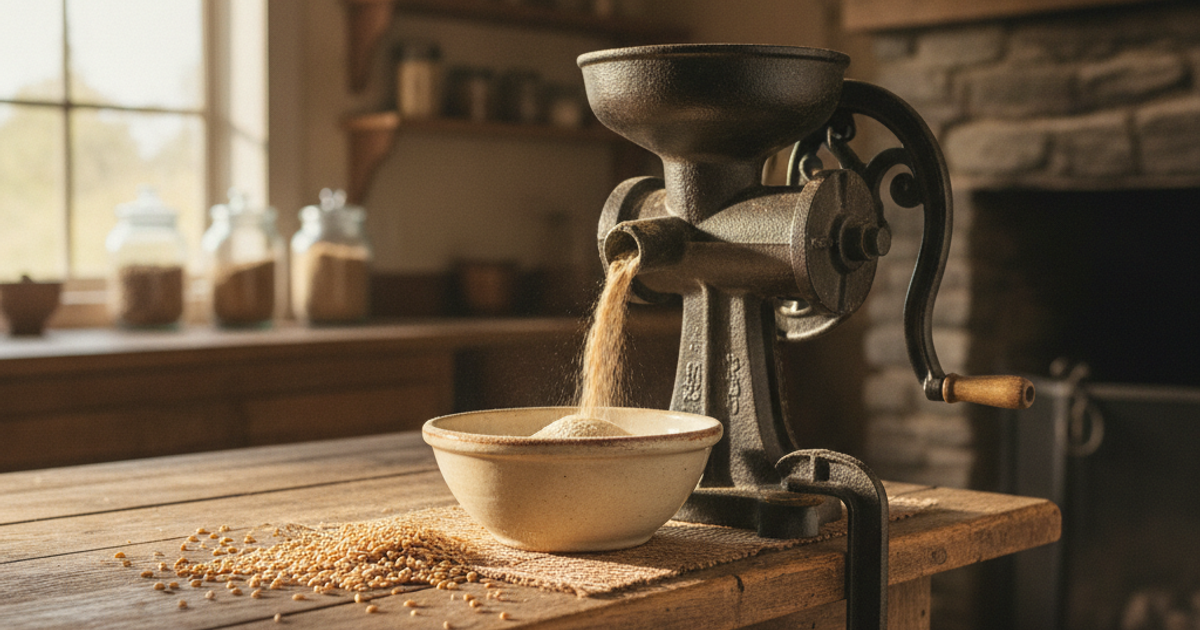
The catch is obvious: wheat berries are inedible rocks until you grind them. And electric grain mills are worthless during a grid-down SHTF scenario. That gap between "I have 400 pounds of wheat" and "I can feed my family bread" is bridged by one piece of survival gear — a quality hand mill.
What You'll Need
Tools
- Victorio VKP1012 hand grain mill
- WonderMill Junior Deluxe hand grain mill
- Country Living Grain Mill hand crank
- Flour sifter and kitchen scale
Supplies
- Hard red winter wheat in sealed pails
- 5-gallon Mylar bags with oxygen absorbers
- 2000cc oxygen absorbers
- Gamma Seal lids for 5-gallon buckets
- Food-grade 5-gallon buckets and diatomaceous earth (optional pest control)
Which Grains to Store for Long-Term Emergency Food Storage
Hard red winter wheat is the backbone of most stockpiles. It runs 12–15% protein, produces strong gluten for yeast breads, and stores exceptionally well. Hard white wheat is milder and better for picky eaters and children. Beyond wheat, diversify:
- Corn (dent or flint): cornmeal, grits, masa. Naturally gluten-free and grinds easily.
- Oat groats: whole, unrolled oats store far longer than rolled oats and can be cracked or flaked.
- Rye and spelt: hardy, flavorful, and useful for sourdough.
- Rice (white only): brown rice's oil-rich bran limits it to about 6 months; white rice hits 25–30 years.
- Dry beans and lentils: ground into flour, they extend and complete the protein profile of grain-based meals.
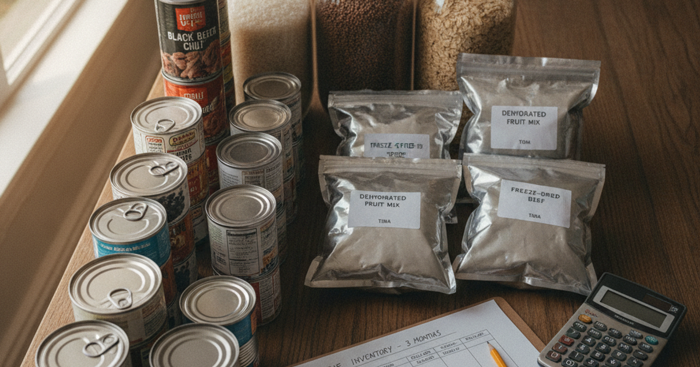
Plan on roughly 300 pounds of grain per adult per year — that's the classic LDS baseline, about 25 pounds a month. A family of four needs about 1,200 pounds, which fits in roughly 34 five-gallon buckets. That's a lot for a homestead pantry but manageable in an apartment if you think creatively; see our guide to building a serious emergency stockpile in a small space for stacking and concealment strategies.
How to Store Bulk Grain So It Lasts 30 Years
Three enemies destroy stored grain: oxygen, moisture, and pests. Beat all three and grain becomes nearly immortal.
Moisture content must sit at or below 10%. Grain purchased already packed in nitrogen-flushed pails — like Augason Farms hard red winter wheat in 6-gallon pails — arrives at the right moisture level and requires zero repackaging. For preppers buying 50-pound feed-store or co-op bags at a fraction of the price, repackaging is where the savings live.
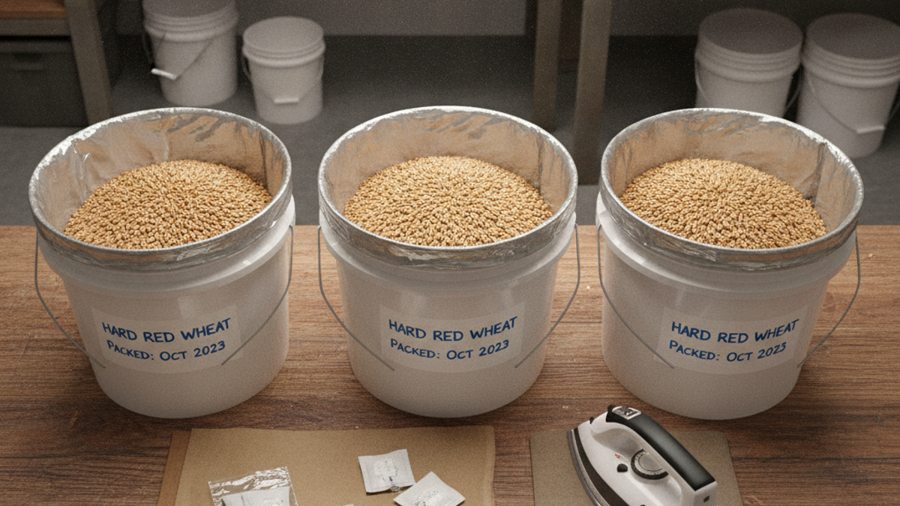
The gold standard is a food-grade bucket lined with a 5-mil Mylar bag, dosed with a 2000cc oxygen absorber, heat-sealed, and capped. A single 2000cc absorber will pull residual oxygen in a filled 5-gallon bucket below 0.1% — low enough to suffocate insect eggs that arrived with the grain. Once you open a bucket for daily use, swap the snap lid for a Gamma Seal lid, which threads on and off in seconds while maintaining an airtight, rodent-resistant gasket.
Store at 70°F or below. Every 10°F reduction roughly doubles shelf life. Basements, interior closets, and under-bed spaces beat garages and attics. Elevate buckets on pallets or 2x4s, keep them off concrete, and inspect quarterly. Our deep dive on pest-proofing your emergency food storage covers weevil and rodent defense in detail.
How to Choose a Hand Grain Mill That Won't Fail You
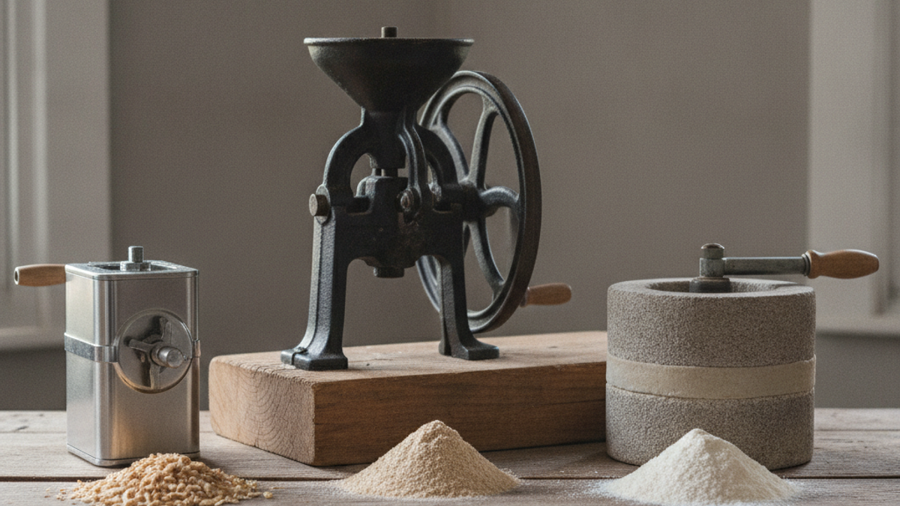
Mills fall into two camps. Burr mills (steel or stone) crush grain between plates and produce true flour. Impact mills require electricity and are irrelevant for off grid planning.
Entry-level cast-iron mills like the CGOLDENWALL manual grain grinder are affordable, clamp to any countertop or table edge, and handle corn, coffee, nuts, and coarse cracked wheat well. They're an excellent first mill and a smart backup even if you own something better.
Mid-range machines like the Victorio VKP1012 offer adjustable steel burrs, a large hopper, and light weight — ideal for apartment dwellers with limited counter space and no interest in bolting hardware to a rental countertop.
For families planning to eat bread daily for years, step up. The WonderMill Junior Deluxe ships with both stone and stainless burrs, letting you mill fine bread flour or grind oily items like peanuts and flax. The Country Living Grain Mill is the heirloom option — cast aluminum body, sealed industrial bearings, an 18-inch flywheel, and a lifetime warranty. It can be belt-driven off a bicycle or small motor, which makes it a genuine multi-generational tool.
Step-by-Step Instructions
Step 1: Calculate your household grain requirement
Multiply 25 pounds of grain per adult per month by your household size and target duration. A family of four prepping for one year needs roughly 1,200 pounds. Split it 60% wheat, 20% corn, 20% oats/rice/rye so you aren't eating identical bread every day for a year.
Step 2: Inspect and dry the grain before packing
Pour a sample onto a white towel and look for insect frass, webbing, or live weevils. If grain feels cool and clammy, spread it on sheet pans and dry at 150°F for 30 minutes, then cool completely before packing. Packing warm grain traps condensation and invites mold.
Step 3: Line buckets with Mylar and add oxygen absorbers
Drop a 5-mil Mylar bag into a food-grade bucket, fill to within three inches of the top, toss in a 2000cc oxygen absorber, and immediately seal the bag with a hair straightener or clothing iron against a board. Work in batches of one bucket at a time so your absorbers aren't burning out in open air.
Step 4: Label, date, and store in a cool dark location
Write contents, weight, and pack date on the lid and the side with a permanent marker. Store below 70°F, off bare concrete, away from sunlight, fuel, and cleaning chemicals. Add Gamma Seal lids to the two or three buckets you'll open first.
Step 5: Mount and season your hand mill
Clamp or bolt the mill to a sturdy surface at hip-to-waist height so you can crank with your body, not your shoulder. Run one cup of cheap wheat through and discard it — this removes machining oils and residue from new burrs.
Step 6: Dial in your grind and mill flour
Start with the burrs at a coarse setting and tighten progressively. For bread flour, run grain through once on coarse and a second time on fine; double-passing is faster and easier than forcing a single fine pass. Expect 8–12 minutes of cranking per pound of flour on most mid-range mills.
Step 7: Use flour within days, not months
Mill only what you need for the next 2–3 days. Fresh flour loses vitamin E and develops rancid off-flavors quickly. Refrigerate or freeze any surplus in a sealed jar.
Step 8: Practice the full cycle before you need it
Mill and bake at least once a month. Learn how your mill behaves, how much wheat a loaf consumes, and how your family responds to 100% whole-grain bread. Pair this practice with blackout cooking methods so you can bake without an electric oven.
Recommended Gear
A complete grain system needs redundancy. Own one primary mill and one cheap backup — a broken burr with no spare turns 1,200 pounds of wheat into 1,200 pounds of birdseed. Stock replacement burrs, a spare handle, and food-grade lubricant. Round out your survival kit with a sifter, a scale, and at least one manual bread pan setup. Browse more vetted options on our recommended survival gear page.
Frequently Asked Questions
How long does wheat last in Mylar bags with oxygen absorbers?
Properly packed hard wheat at under 10% moisture, sealed in 5-mil Mylar with an oxygen absorber and stored below 70°F, reliably lasts 25–30 years. BYU testing found wheat stored this way remained acceptable to taste panels after three decades. Heat is the biggest variable — grain stored in a 90°F garage may only last 8–10 years.
Can I grind wheat in a blender or food processor instead of a grain mill?
High-powered blenders with dry grain containers can produce a coarse flour, but they require electricity, overheat quickly, and can't produce fine bread flour. In a grid-down scenario they're useless. A hand-crank burr mill is the only reliable answer, which is why it belongs in every long-term prepper plan, urban or rural.
How much wheat do I need per person per year?
The standard planning figure is 300 pounds of grain per adult per year, which supplies roughly 1,500 calories daily from grain alone. Supplement with beans, fats, and produce from indoor sprouts and microgreens to avoid nutritional gaps and the notorious "appetite fatigue" that sinks bland stockpiles.
Affiliate Disclosure: SHTFPlan.net participates in the Amazon Services LLC Associates Program. Some links are affiliate links — we may earn a small commission at no extra cost to you.