Neighborhood Mutual Aid Networks: How to Build a Survival Community Before SHTF
A lone prepper is a vulnerable prepper. Learn how to organize your neighbors into a resilient mutual aid network before disaster strikes.
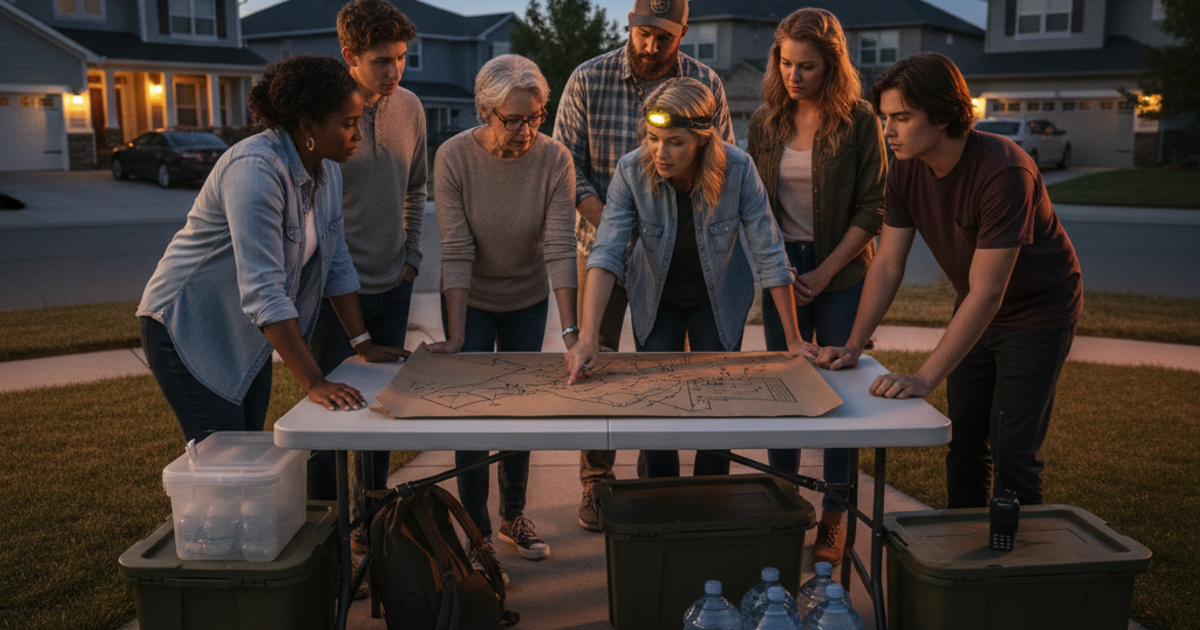
When the grid goes down, the roads get blocked, or civil order starts to fray, your neighborhood becomes your world. The lone-wolf prepper fantasy — one person, one bunker, unlimited ammo — makes for good television but terrible survival strategy. Research consistently shows that communities outperform individuals in disaster scenarios. According to FEMA's Community Resilience data, neighborhoods with pre-existing social ties and organized mutual aid recover significantly faster from major disasters than isolated households. The numbers don't lie: your neighbors may be your most valuable survival asset.
Building a neighborhood mutual aid network isn't about turning your block into a militia or broadcasting your emergency food storage to strangers. It's about quietly, methodically creating a web of trusted relationships and shared resources before SHTF — so that when it does, you're not starting from zero.
Why Mutual Aid Networks Are the Core of Real Emergency Preparedness
The prepper community has long debated bug out versus bug in. But here's the reality most survival guides skip: the vast majority of disasters — hurricanes, ice storms, grid failures, civil unrest — don't require evacuation. They require endurance. And endurance in place is exponentially easier when you have organized neighbors around you.
Think about what a functional mutual aid network actually provides:
- Distributed resources — No single household needs to stockpile everything
- Rotating watch schedules — Security without exhaustion
- Pooled skills — Medical, mechanical, agricultural, and tactical knowledge
- Psychological support — Critical during extended SHTF scenarios
- Early warning networks — Eyes and ears across a wider perimeter
This applies whether you live in a Manhattan high-rise, a Phoenix suburb, or a rural homestead in Montana. The scale and structure change — the principle doesn't.
How to Start Building a Survival Community Without Revealing Your Prepper Status
One of the first concerns many preppers raise is operational security. You don't want to become a target by advertising your survival gear stockpile to the neighborhood. This is where the grey man methodology becomes critical. You can build relationships and gather intelligence about your neighbors' skills without ever mentioning your bug out bag or your three-month emergency food storage reserve.
Start with normal community-building activities:
- Attend or organize a neighborhood block party or potluck. Casual social events reveal a tremendous amount about who lives near you — their occupations, personalities, and skill sets.
- Join or create a neighborhood watch group. This is one of the most socially acceptable first steps toward organized community security.
- Use existing platforms like Nextdoor to identify who has relevant skills — nurses, electricians, veterans, mechanics.
- Start conversations about "general emergency preparedness" rather than SHTF scenarios. Most people are receptive to discussions framed around hurricanes or winter storms.
Urban apartment dwellers face unique challenges but have real advantages too. A single apartment building can house dozens of potential allies. Focus on floor captains — trusted neighbors who can relay information and coordinate within a specific section of the building. Practice situational awareness to identify who comes and goes, who seems capable under stress, and who has professional backgrounds in medicine, security, or logistics.
Mapping Skills and Resources Across Your Neighborhood Network
Once you've identified willing participants, the next step is a discreet skills and resources audit. You don't need to formalize this with spreadsheets — casual conversations work fine. What you're looking for:
- Medical professionals — Nurses, paramedics, doctors, military medics
- Trades — Plumbers, electricians, carpenters, mechanics
- Agricultural knowledge — Gardeners, hunters, farmers, livestock owners
- Security backgrounds — Law enforcement veterans, military, security professionals
- Communication skills — Ham radio operators, IT professionals
- Food production resources — Chest freezers, canning equipment, root cellars, gardens
- Power resources — Generators, solar panels, battery banks
Rural preppers often have a significant advantage here — neighbors in rural areas are frequently already skilled in self-reliance. Suburban neighborhoods tend to have the widest variety of professional skills concentrated in a small geographic area. Urban environments have sheer numbers working in their favor.
Establishing Communication Protocols Before the Grid Goes Down
Communication is the backbone of any mutual aid network. When cell towers fail and internet goes dark, your neighborhood needs a functional communications plan. This is non-negotiable.
For short-range communication within your immediate neighborhood, the Midland T77VP5 two-way radios are an excellent choice — they offer solid range, weather alerts, and multiple channels that can be assigned to different neighborhood zones or response teams. Keep a pair in every household that's part of your network.
For broader area communication and inter-neighborhood coordination, consider investing in ham radio infrastructure. The Baofeng UV-5R ham radio is one of the most cost-effective entry points for community-level emergency communication — it's programmable, durable, and widely used in the prepper and emergency services communities. Encourage at least two or three members of your network to get licensed and learn to operate one. Check out our guide on HAM Radio for Preppers for a deeper dive into building a reliable emergency communication network.
For households with children or elderly members who need simple, reliable communication, the Motorola T460 walkie talkie multipack gives you multiple units at once — ideal for distributing across several households in your network without requiring technical knowledge to operate.
Beyond radio, establish:
- Signal protocols — Agreed visual signals (specific lights, flags, or chalk marks) indicating status at each home
- Meeting points — A primary and secondary rally point within walking distance
- Check-in schedules — Twice-daily radio check-ins during active emergencies
- Runner systems — Designated individuals (often older teens) who can physically move messages between households
Organizing Shared Emergency Food Storage and Supply Rotation
One of the most practical advantages of a mutual aid network is shared emergency food storage logistics. No single family needs to carry the full burden. A coordinated approach might look like this:
- Three families maintain 30-day water purification supplies
- Two families maintain medical and first aid stockpiles
- Four families rotate freeze-dried and canned food reserves
- One family with a generator maintains a central charging and power station
For community-level food reserves, Mountain House freeze-dried food bulk buckets are an ideal anchor for shared emergency food storage — they have a 30-year shelf life, require only water to prepare, and can be stored in any climate-controlled space. Coordinating a group purchase allows your network to build a substantial reserve without any single household bearing the full cost. Pair this with individual household 6-month food storage systems for a genuinely resilient supply chain.
Developing a Neighborhood Security and Watch Structure
In a prolonged SHTF scenario, security becomes a community responsibility. This doesn't mean armed patrols on day one — it means having a plan before you need it.
A functional neighborhood security structure includes:
- Perimeter awareness — Identified observation points covering all entry routes into your neighborhood
- Rotating watch shifts — Two-hour blocks prevent fatigue and keep coverage continuous
- Escalation protocols — Clear, agreed-upon responses to different threat levels
- Rules of engagement — Discussed and agreed upon before tensions are high
For households that haven't yet addressed personal defense as part of their preparedness planning, our article on Self-Defense for Preppers: How to Choose the Right Firearm covers the core considerations for both home defense and community security roles.
Recommended Gear for Neighborhood Emergency Response Teams
Beyond communications and food, your network should maintain shared emergency response equipment. A Tactical Tailor neighborhood emergency response kit can serve as a centralized trauma and first aid resource — the kind of comprehensive kit that goes well beyond a standard home first aid box and equips your network to handle genuine medical emergencies while waiting for professional help. Store one at your designated neighborhood meeting point, and ensure at least two people in your network know how to use everything inside it.
Additional shared equipment worth pooling resources to acquire:
- Water filtration and purification systems (filters, purification tablets, UV purifiers)
- Portable power stations and solar charging panels
- Hand tools — chainsaws, bolt cutters, pry bars, rope
- Stretcher or emergency litter for casualty evacuation
- Fire suppression equipment beyond standard extinguishers
Maintaining Your Network: The Long Game of Community Preparedness
The hardest part of building a mutual aid network isn't starting — it's sustaining. People move, priorities shift, and without regular reinforcement, networks dissolve. Keep yours alive by:
- Hosting quarterly skills-sharing events (canning days, first aid refreshers, radio drills)
- Conducting annual resource audits to identify gaps and update contact lists
- Running tabletop exercises — "What would we do if X happened tomorrow?"
- Onboarding new neighbors quickly and organically
- Celebrating small wins — a successful neighborhood food drive builds the same muscles as disaster response
A network that never activates during a real emergency is still a success — it means nothing catastrophic happened on your watch. The investment pays dividends in community cohesion, individual skill development, and the peace of mind that comes from knowing you are not alone.
What You'll Need
- Neighborhood contact list template or spreadsheet
- Skills and resources inventory forms
- Communication tools (two-way radios, phone tree contact sheets)
- Meeting space (community center, church, or rotating homes)
- Basic supplies for initial group meetings (notepads, pens, refreshments)
- Maps of your neighborhood with marked homes and resources
Step-by-Step Instructions
Step 1: Identify and Map Your Immediate Neighbors
Start by creating a detailed map of your immediate area, including at least 20-30 households within a few blocks. Walk your neighborhood and note which homes appear occupied, well-maintained, or have visible preparedness indicators like gardens or solar panels. Make initial contact with your immediate next-door neighbors first, introducing yourself casually without overwhelming them with survival talk. Document names, addresses, and basic contact information in a secure format that you can expand as trust builds.
Step 2: Assess Skills and Resources Within Your Network
Create a confidential skills inventory that catalogs the talents and resources available in your growing network. Include practical abilities like medical training, mechanical skills, gardening experience, construction knowledge, and emergency response backgrounds. Also document physical resources such as generators, water filtration systems, tools, medical supplies, and communication equipment. Keep this information secure and share it only among vetted network members to protect privacy and security.
Step 3: Establish Regular Communication Channels
Set up multiple redundant communication methods including a phone tree, encrypted messaging group, and offline alternatives like two-way radios. Test these systems monthly to ensure everyone knows how to use them and that they function properly. Create a simple code system for different emergency levels so members can quickly understand the severity of situations. Designate primary and backup communication coordinators who will initiate contact chains during emergencies.
Step 4: Organize Initial Planning Meetings
Host a casual neighborhood gathering framed as community building rather than "prepping" to avoid stigma and increase participation. Start with a potluck or barbecue where you can introduce the concept of mutual aid and gauge interest levels. Follow up with structured meetings every 4-6 weeks to discuss specific preparedness topics like water security, food storage, or evacuation planning. Keep meetings focused, time-limited, and action-oriented to maintain engagement and demonstrate value.
Step 5: Develop Mutual Aid Agreements and Protocols
Work together to create clear, written agreements about how your network will function during emergencies, including resource sharing, security protocols, and decision-making processes. Define specific scenarios and responses, such as who provides medical care, how food will be distributed, and how perimeter security will be organized. Establish boundaries about what each member is willing and able to contribute without overcommitting. These agreements should be reviewed and updated annually as circumstances and membership change.
Step 6: Conduct Practice Drills and Skills Training
Schedule quarterly exercises that test your network's readiness and identify gaps in your plans. Start with simple communications drills, then progress to more complex scenarios like neighborhood lockdowns, power outages, or medical emergencies. Organize skill-sharing workshops where members teach their expertise to others, creating redundancy in critical capabilities. These drills build muscle memory, reveal weaknesses, and strengthen relationships under controlled pressure.
Step 7: Expand and Strengthen Network Resilience
Gradually grow your network by having established members invite trusted neighbors, maintaining quality over quantity. Create specialized sub-teams focused on areas like medical response, security, communications, and logistics with designated leaders for each. Establish connections with adjacent neighborhood networks to create broader community resilience while maintaining your core group's integrity. Continuously refine your plans based on lessons learned from drills, changing circumstances, and new member contributions.
Frequently Asked Questions
How do I start a neighborhood emergency preparedness group without scaring people off?
Frame your outreach around widely accepted, non-controversial scenarios like severe weather, extended power outages, or natural disasters. Most people are receptive to practical preparedness conversations when they're grounded in realistic local hazards. Start small — even two or three committed neighbors is a functional beginning. Formal structure can come later, once trust is established. Avoid using terms like SHTF or prepper in early conversations with people you don't yet know well.
What's the most important thing to establish first in a neighborhood mutual aid network?
Communication infrastructure should be your first priority. Before you coordinate food, security, or medical resources, you need a reliable way to reach every member of your network when normal communication channels are unavailable. Establish a radio protocol, assign channels, and conduct at least one practice check-in exercise before you think the gear is needed. Everything else — resource sharing, security, logistics — depends on the ability to communicate reliably under stress.
Can apartment dwellers realistically participate in a mutual aid network?
Absolutely. Apartment buildings are actually high-density community assets — dozens of potential allies within a few floors of each other. Focus on building relationships within your building first, then coordinate with neighboring buildings. Key roles in an urban mutual aid network include floor wardens, medical liaisons, communication nodes, and resource coordinators. Urban residents face different challenges than rural preppers — less storage space, higher density, more complex evacuation considerations — but the core principles of trust, communication, and distributed resources apply equally.
Affiliate Disclosure: SHTF Plan participates in the Amazon Services LLC Associates Program. Some links are affiliate links — we may earn a small commission at no extra cost to you.