Wildfire Smoke and Toxic Air: How to Filter Indoor Air and Protect Your Lungs When SHTF
When the freezer dies and the fridge warms up, every decision about what to eat or toss could save your life — or end it.
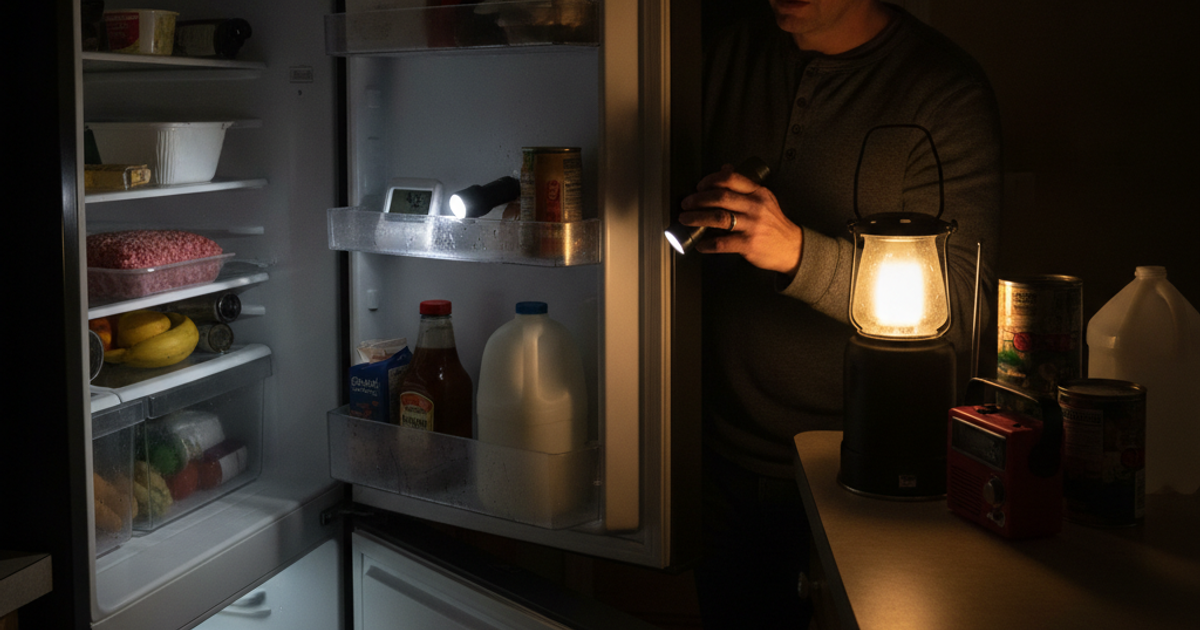
The power goes out. No big deal — it happens. But six hours later, the grid is still down, and you start wondering: Is the food in my fridge still safe? Twelve hours in, you're sweating the freezer full of meat you've been building up for months. By the 24-hour mark, with no end in sight, a wrong decision could put your family in the hospital — or wipe out hundreds of dollars of emergency food storage you can't replace.
Power outage food safety is one of the most underestimated skills in emergency preparedness. The rules aren't complicated, but most people don't know them — and in a real SHTF scenario, that ignorance is dangerous. Whether you're an apartment dweller in a high-rise or a rural homesteader, the biology of bacterial growth doesn't care where you live. This guide will walk you through exactly what to eat first, what to discard, and how to protect your emergency food stockpile when refrigeration fails.
What You'll Need
Tools
- Thermometer (food safety refrigerator/freezer type)
- Permanent marker for labeling containers and bags
- Large coolers (high-quality insulated models)
Supplies
- Mylar bags and oxygen absorbers for long-term food storage
- Block ice or dry ice
- Cooler ice packs (pre-frozen)
- Augason Farms emergency food storage bucket
Understanding the Danger Zone: What Bacteria Does to Your Food
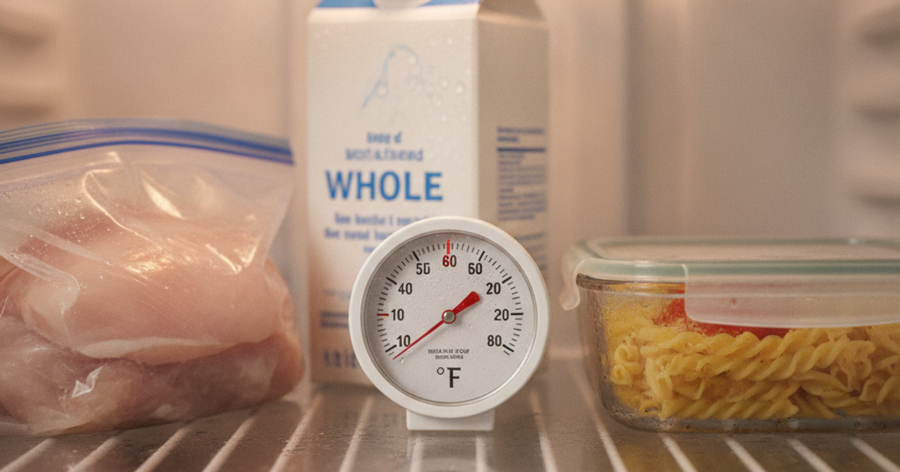
The USDA defines the "danger zone" as temperatures between 40°F and 140°F (4°C–60°C). Within this range, bacteria like Salmonella, E. coli, and Listeria can double in population every 20 minutes. According to the CDC, foodborne illness hospitalizes approximately 128,000 Americans every year — and that's under normal conditions with functioning healthcare. In a grid-down scenario, food poisoning isn't just miserable. It can be life-threatening.
Your refrigerator, when the door stays closed, will hold safe temperatures for approximately 4 hours. A full freezer stays safe for 48 hours (24 hours if it's only half full). These aren't suggestions — they're hard biological timelines that determine what's safe to eat and what needs to go.
The most important tool you can own for this situation is a reliable food safety refrigerator/freezer thermometer. Keep one in both your fridge and freezer at all times — not just during emergencies. Without an accurate reading, you're guessing, and guessing wrong with meat or dairy can put your family down hard.
The Eat-First Priority List: What to Consume Before It Spoils
When the power goes out, your eating strategy must shift immediately. You're no longer eating based on preference or meal planning — you're eating based on spoilage speed. Follow this order:
First 0–4 Hours: Fresh Perishables in the Fridge
Eat or cook any opened leftovers, cooked meats, soft cheeses, and cut fruits or vegetables first. These have the shortest safe window. If you have a propane grill, camp stove, or any off-grid cooking method, cook raw meats now while they're still cold. Cooking kills bacteria that may have begun to multiply.
Hours 4–24: Freezer Items and Refrigerator Stragglers
Hard cheeses, butter, whole uncut fruits and vegetables, and condiments like mustard, ketchup, and vinegar-based sauces are more forgiving. Meanwhile, begin cooking and consuming any partially thawed freezer items — steaks, chicken breasts, fish fillets. If it still has ice crystals and feels refrigerator-cold (below 40°F), it's safe to cook. If it's fully thawed but was below 40°F the whole time, cook and eat it immediately.
After 24 Hours: Pantry and Shelf-Stable Foods Take Over
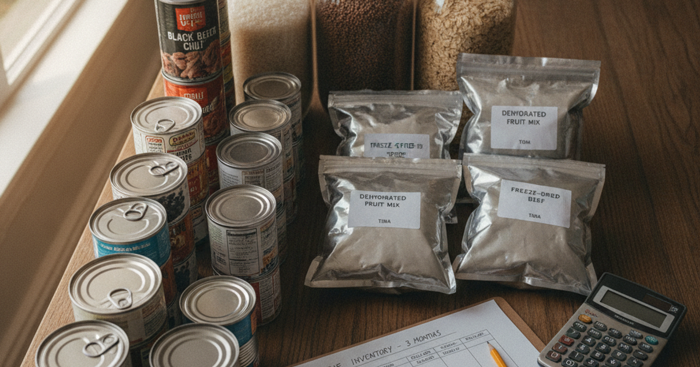
Transition to your emergency food storage: canned goods, dried beans, rice, pasta, and freeze-dried meals. This is where a well-built prepper pantry pays dividends. A Mountain House freeze-dried meals 72-hour kit is ideal here — these meals require only hot water, store for up to 30 years, and provide complete nutrition when your fresh food is gone. Every prepper's emergency food storage should include at least a 72-hour supply of freeze-dried options as a bridge during exactly this kind of transition.
What to Discard Without Hesitation
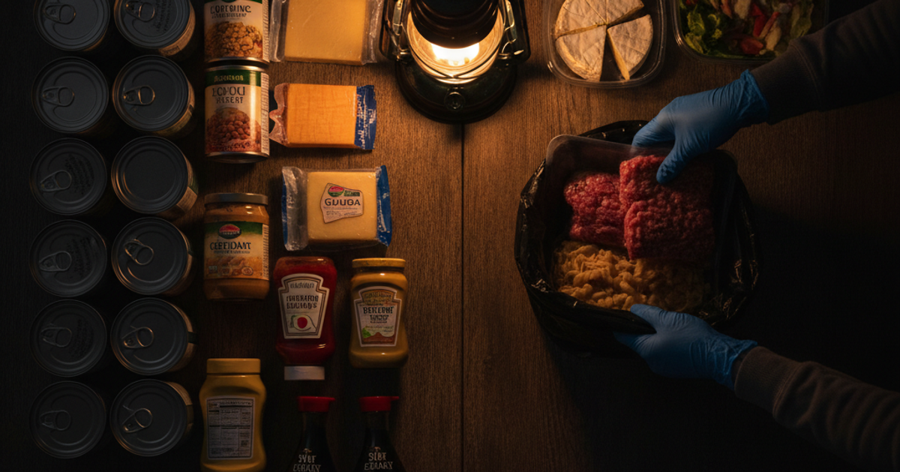
This is the hard part — especially if you've invested significant money in quality food. But the rule is simple: when in doubt, throw it out. Never smell or taste food to determine safety. Many dangerous bacteria produce no odor, no visible mold, and no taste change. You cannot detect them without laboratory equipment.
Discard these items if they've been above 40°F for more than two hours:
- Raw or cooked meat, poultry, and seafood
- Milk, cream, soft cheeses (ricotta, brie, cream cheese)
- Opened mayonnaise, tartar sauce, and creamy dressings
- Cooked pasta, rice, and potato dishes
- Custards, puddings, and pies with egg or cream fillings
- Casseroles, stews, and soups
- Cut fruits and vegetables
- Opened tofu or soy products
Items that are generally safe even without refrigeration: whole uncut fruits and vegetables, hard and processed cheeses, butter and margarine, fruit juices, fresh herbs, and most condiments (ketchup, mustard, soy sauce, vinegar-based items). Commercially canned goods are safe indefinitely at room temperature until opened.
How to Extend Refrigeration During a Power Outage
Your first defensive move is to keep refrigerator and freezer doors closed as much as possible. Every time you open that door, you bleed cold air and accelerate the clock. Organize your fridge now — before any emergency — so you know exactly where things are without rummaging.
Next, deploy coolers immediately. A quality cooler is one of the most underrated items in a prepper's gear arsenal. The Coleman 54-quart steel belted cooler is a proven performer that maintains ice for several days and is built to handle rough conditions — exactly what you need when the grid is down and you're managing limited ice resources.
For larger families or longer outages, the Igloo MaxCold ice chest offers exceptional insulation capacity and large storage volume to consolidate your most critical perishables when the freezer starts to fail. Pre-chill your coolers before an emergency by keeping frozen water bottles inside them during normal times.
Dry ice is an extremely effective option for preserving frozen foods. Five to ten pounds of dry ice will keep a standard cooler below freezing for 24 hours. If you can source it, place dry ice for food preservation on top of frozen items (cold air sinks), and always handle it with gloves — direct skin contact causes frostbite. Never store dry ice in a sealed container or an unventilated space, as it releases CO2 gas.
Protecting Your Long-Term Emergency Food Stockpile
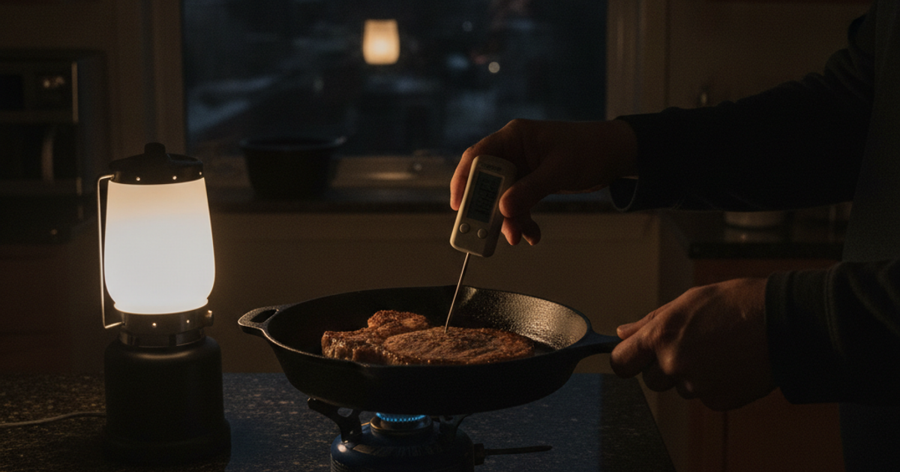
If you've built a serious prepper pantry, a power outage isn't just about what's in your fridge — it's about protecting the shelf-stable stockpile that could keep your family alive for weeks or months. Heat, humidity, and oxygen are the enemies of long-term food storage, and a prolonged grid-down scenario can affect all three.
The gold standard for long-term dry food storage is Mylar bags with oxygen absorbers. When properly sealed, Mylar bags create an oxygen-free, moisture-resistant environment that extends the shelf life of grains, rice, beans, and pasta to 25+ years. This isn't just for homesteaders — apartment preppers can store Mylar-sealed buckets in closets, under beds, or in storage units.
For pre-packaged long-term food solutions, the Augason Farms emergency food storage bucket provides a comprehensive, calorie-dense supply with a 25-year shelf life. These buckets are sealed at the factory with oxygen absorbers and nitrogen flushing — the same protective principle as Mylar bags, done for you. They're ideal for both urban and rural preppers who want reliable emergency food storage without the DIY process.
Consider also investing in a FoodSaver vacuum sealer machine as part of your food preservation toolkit. Vacuum sealing removes oxygen from packaging, dramatically slowing spoilage and freezer burn. Use it now to extend the life of bulk purchases, and keep it as part of your long-term food preservation strategy. A good vacuum sealer works hand-in-hand with your freeze-dried and canned goods for a complete, layered approach to emergency food storage. For more depth on building out your pantry, see our guide on how to build a long-term food stockpile that actually keeps you alive.
Step-by-Step Instructions
Step 1: Check Your Refrigerator and Freezer Temperatures Immediately
The moment power goes out, check your thermometers. If your fridge is at or below 40°F and freezer at or below 0°F, you have time. Record the time the outage started so you can track how long food has been in the danger zone. Do not open the doors again until you have a plan.
Step 2: Deploy Coolers and Consolidate Critical Perishables
Fill your best cooler with ice or frozen ice packs and transfer the highest-priority perishables: raw meats, dairy, medications requiring refrigeration, and infant formula. Pack items tightly — air gaps accelerate warming. A Coleman or Igloo MaxCold cooler with block ice can buy you an additional 24–72 hours of safe storage.
Step 3: Cook Perishable Proteins Before They Spoil
If you have a camp stove, propane grill, wood fire, or other off-grid cooking method, cook all raw meats within the first few hours of the outage. Cooking neutralizes bacteria and effectively "resets the clock" — cooked food will last longer than raw in the same conditions. Prioritize chicken and ground beef, which spoil fastest.
Step 4: Sort Remaining Refrigerator Contents by Safety Category
Go through your fridge methodically. Group items into three categories: definitely safe (condiments, hard cheeses, whole produce), eat now (opened dairy, leftovers, soft cheeses), and discard if temperature threshold is crossed (raw meats, cut fruit, cooked starches). Label anything uncertain with the time it was last confirmed cold.
Step 5: Source Additional Ice or Dry Ice from Local Suppliers
Gas stations, grocery stores, and convenience stores often still have ice available in the early hours of a regional outage. Send someone out immediately if the outage is widespread. Dry ice, available at many grocery stores and suppliers, is more efficient for preserving frozen items. Handle with insulated gloves and ensure ventilation.
Step 6: Transition Your Meals to Shelf-Stable Emergency Food Storage
By the 4–6 hour mark, shift your primary meals to pantry staples: canned goods, dried rice and beans, freeze-dried meals, and peanut butter. This preserves any remaining cold items for snacks or side dishes and takes the pressure off your cooling situation. Rotate through canned goods and supplemental freeze-dried meals systematically.
Step 7: Document What You Discard and Restock Your Emergency Food Supply
After the power returns, take a full inventory of what you lost. Note quantities, costs, and categories. Use this information to identify gaps in your emergency food storage and restock strategically — prioritizing shelf-stable items, freeze-dried proteins, and Mylar-sealed bulk grains that won't be vulnerable to the next outage. For a comprehensive approach to long-term preservation, read our guide on pressure cooker canning for meat, beans, and soups.
Step 8: Audit Your Stockpile Storage Conditions
Inspect your emergency food storage area for heat exposure, moisture intrusion, and pest activity following any extended outage. If temperatures in your storage space exceeded 85°F for extended periods, the shelf life of even sealed goods may be reduced. Reorganize storage to optimize for coolness, darkness, and low humidity — conditions that are as important as the food packaging itself.
Special Considerations for Urban and Apartment Preppers
If you're in an apartment or urban environment, you face unique constraints. You may not have a garage to store large coolers, limited freezer space, and no access to a grill or outdoor fire. The solution is a tiered approach: a compact high-performance cooler under your bed or in a closet, a supply of freeze-dried meals that require only boiled water, and a butane camp stove for indoor-safe cooking. Review our article on apartment prepping and building a serious emergency stockpile in a small space for space-specific strategies that work in high-density living situations.
Urban preppers should also be aware that in a citywide or regional power outage, the situational awareness game changes. Neighbors may not have food reserves. Stores may be overwhelmed within hours. Your grey man instincts should kick in — be discreet about cooking, avoid broadcasting that you have food reserves, and use your resources quietly and methodically.
Frequently Asked Questions
How long can food stay safe in the refrigerator without power?
A refrigerator that stays closed will keep food safe for approximately 4 hours after the power goes out. After that, if the interior temperature rises above 40°F, perishable items like meat, dairy, and cooked foods enter the danger zone and should be consumed, cooked, or discarded within 2 hours of exceeding that threshold. Always verify with a refrigerator thermometer rather than estimating.
Can you refreeze meat that has thawed during a power outage?
It depends entirely on temperature. If the meat still contains ice crystals and the interior temperature has remained at or below 40°F, it is safe to refreeze — though there may be some quality loss. If the meat has fully thawed and been above 40°F for more than 2 hours, do not refreeze it. Cook it immediately and consume it, or discard it. Never refreeze meat that smells off or has been at room temperature for an unknown period.
What emergency foods should I stockpile that don't require refrigeration?
The most practical emergency food storage for grid-down scenarios includes commercially canned goods (meats, beans, vegetables, fruits), freeze-dried meals with long shelf lives, white rice and dried beans sealed in Mylar bags with oxygen absorbers, peanut butter, honey, rolled oats, hard crackers, and instant coffee or tea. These items require no refrigeration, have shelf lives ranging from 2 to 30+ years, and provide the calories and nutrition your family needs when the grid is down. Aim to build at least a 30-day supply, with a 72-hour rapid-access kit as your first layer.
Affiliate Disclosure: SHTFPlan.net participates in the Amazon Services LLC Associates Program. Some links are affiliate links — we may earn a small commission at no extra cost to you.