Coffee, Chocolate, and Playing Cards: Why Morale Items Belong in Your Prepper Stockpile
Beans and bullets keep you alive, but morale keeps you sane. Here's how to choose, store, and ration the comfort items that hold a family together through a long emergency.
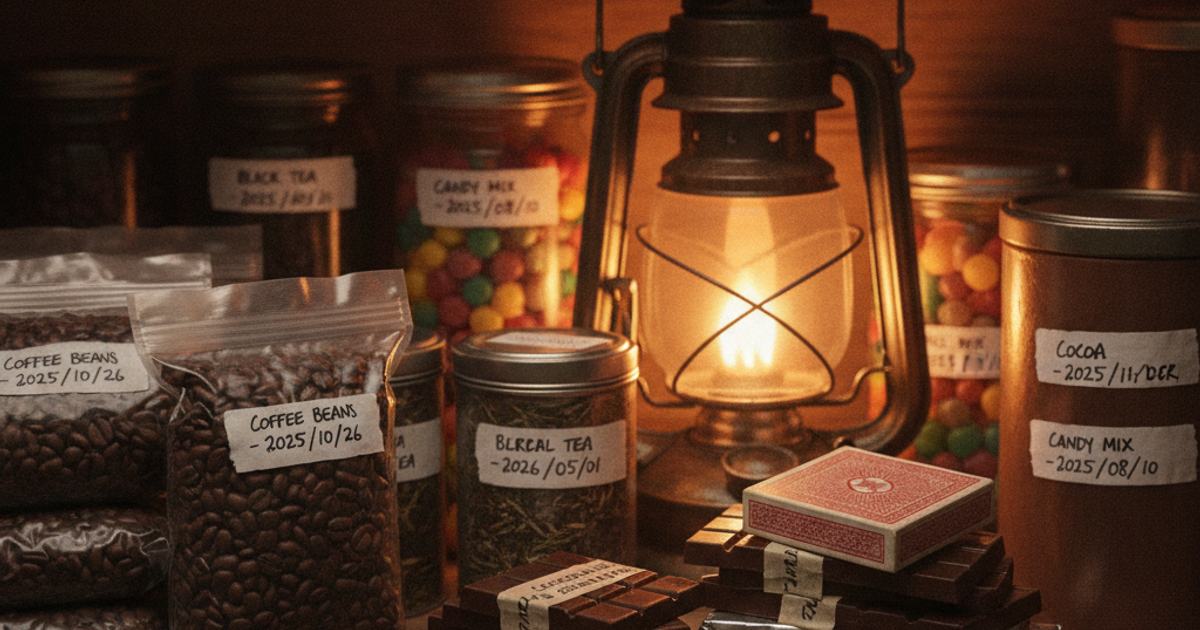
Every prepper checklist starts the same way: water, food, shelter, security, medical. Those are the pillars, and nobody should argue with them. But ask anyone who has actually lived through a long grid-down event — the Texas freeze of 2021, Puerto Rico after Hurricane Maria, Sarajevo during the siege, or any of a hundred smaller regional disasters — and you'll hear the same thing. After the first week, the hardest part wasn't the calories. It was the grinding, gray monotony. The boredom. The silence where normal life used to be.
Morale items are the most underrated category in emergency preparedness. Coffee, tea, chocolate, hard candy, tobacco, liquor, playing cards, and paperback books cost almost nothing, store for years, and deliver a psychological return that no amount of rice and beans can match. They're also, pound for pound, some of the most valuable barter goods on earth when the stores stop restocking.
Why Comfort Items Matter for Psychological Resilience in a Crisis
Research backs this up. FEMA and the CDC have both documented that disaster survivors experience elevated rates of depression, anxiety, and PTSD. After Hurricane Katrina, studies published in the Archives of General Psychiatry found that the prevalence of serious mental illness in the affected population nearly doubled, from roughly 6% to 11%. A 2008 review of Katrina survivors found PTSD rates above 30% in the hardest-hit parishes. Prolonged confinement and isolation during COVID lockdowns produced similar findings — a 2020 Lancet rapid review of quarantine studies identified boredom, loss of routine, and reduced social contact as primary drivers of psychological distress.
Small comforts interrupt that spiral. A hot cup of coffee at dawn re-establishes routine. A piece of chocolate handed to a frightened child changes the emotional temperature of an entire room. These aren't luxuries — they're cheap, shelf-stable psychological medicine. If you want to go deeper on the mental side of survival, read our guides on building mental resilience before and after SHTF and surviving weeks of home confinement.
What You'll Need
Tools
- Vacuum sealer or mylar bag heat sealer
- Manual coffee grinder (if storing whole beans)
- French press or percolator that works without electricity
- Permanent marker and inventory notebook
Supplies
- Folgers Classic Roast instant coffee crystals
- Lipton black tea bags, bulk 312 count
- Jolly Rancher hard candy bulk bag
- Mylar bags, oxygen absorbers, and food-grade buckets
- Playing cards, dice, and paperback books
How to Stockpile Coffee and Tea for Long-Term Emergency Storage
Coffee is the single most requested comfort item in nearly every documented disaster relief operation. Caffeine withdrawal is real — headaches, irritability, and fatigue hit regular drinkers within 12 to 24 hours of their last cup. In a crisis where you need clear thinking and situational awareness, that's a self-inflicted handicap you can avoid for about twenty dollars.
Instant coffee is the prepper's best option because it requires no grinder, no filter, and no brewing equipment — just hot water. Folgers Classic Roast instant crystals in a sealed jar will stay drinkable for years past the printed date, and the large containers are cheap enough to buy several at a time. For portability, single-serve sticks are superior: Starbucks VIA packets are nitrogen-flushed, individually sealed, and tuck into a bug out bag or survival kit without adding meaningful weight. Nescafé Taster's Choice single-serve sticks serve the same role at a lower price point and make excellent small-denomination barter units.
Tea is the quieter workhorse. Dry tea bags stored in a sealed container easily last five-plus years, take up almost no space, and offer variety that keeps morale from flatlining. A 312-count bulk box of Lipton black tea costs less than a tank of gas and represents nearly a year of daily cups for one person. For households that want options, a Twinings English Breakfast variety pack adds the simple pleasure of choice — which matters more than you'd think when every other decision has been taken away from you.
Chocolate, Candy, and the Morale Economy
Chocolate is calorie-dense, universally loved, and historically proven as a morale tool. The U.S. military's D-ration bar and the Hershey's Tropical Bar were issued specifically because chocolate worked. Plain milk chocolate stores about 12 months at room temperature; dark chocolate with higher cocoa content can go two years or more. Store it cool and dark — above 75°F it blooms and softens. A bulk Hershey's variety pack gives you rotating stock you'll actually eat and replace. M&M's in bulk are a better long-haul choice because the candy shell resists melting and the individual pieces divide easily for rationing or trade.
Hard candy is the undisputed champion of shelf life. Pure sugar is hygroscopic but essentially non-perishable — properly sealed, Jolly Ranchers in a bulk bag will outlast most of your freeze-dried food. They also do practical work: sucking on hard candy suppresses hunger, combats dry mouth during water rationing, and gives you something to hand a child during a long walk out of a city.
Tobacco, Alcohol, and High-Value Barter Goods
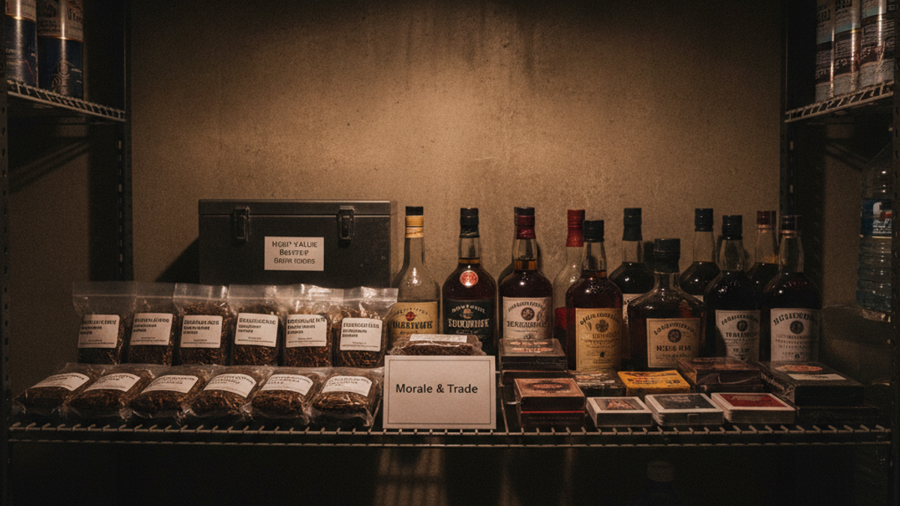
You don't have to smoke or drink to stock these. In every documented post-collapse economy — Weimar Germany, Yugoslavia in the 1990s, Venezuela in the 2010s — cigarettes and liquor functioned as de facto currency. Tobacco stores reasonably well vacuum-sealed and frozen; pouch tobacco and rolling papers trade better than cartons because they divide into smaller units.
Alcohol is even better. Distilled spirits above 40% ABV never spoil, serve as a disinfectant and solvent, help with pain management, and trade at absurd premiums during shortages. Small 50ml airline bottles are the ideal barter denomination — easy to transport, easy to value, and easy to hand over without revealing the size of your supply. Keep your trading stock separate and concealed, and read our guides on what goods actually have value when SHTF and prepper OPSEC before you start trading anything.
Entertainment for Apartments, Suburbs, and Rural Retreats
Entertainment is the cheapest prep in existence and the easiest to overlook. A deck of playing cards weighs 3.5 ounces and supports hundreds of games. Add dice, a cribbage board, a chess set, and two or three board games that don't require electricity. For families, this is the difference between a tense week and a tolerable one.
Books matter just as much. Paperbacks need no batteries, no bandwidth, and no permission. Build a mix of entertainment reading and reference material — see our guide to building a prepper survival library. Apartment dwellers with limited space should prioritize paperbacks, cards, and instant beverages over bulky board games; our apartment prepping guide covers small-space storage strategies in depth. Rural households with more room can add musical instruments, hobby supplies, and craft materials.
Step-by-Step Instructions
Step 1: Inventory what your household actually consumes
Track coffee, tea, candy, tobacco, and alcohol use for two weeks. Multiply daily consumption by 30, 90, and 365 days. A two-coffee-per-day household needs roughly 180 servings for a three-month supply — plan from real numbers, not guesses.
Step 2: Buy in bulk and build depth, not variety
Start with 90 days of the items your family uses every single day, then expand outward. Depth in coffee and tea beats a shallow spread of twelve exotic items nobody drinks.
Step 3: Repackage for maximum shelf life
Transfer tea bags, hard candy, and ground coffee into mylar bags with oxygen absorbers, or vacuum seal them. Keep everything below 70°F in a dark, dry location. Heat and oxygen are what kill these items, not time.
Step 4: Separate your barter stock from your personal stock
Store trade goods in small, uniform units in a different location than your household supply. Never let a trading partner see the full extent of what you hold.
Step 5: Label, date, and rotate on a schedule
Mark purchase dates on every container and use first-in, first-out rotation. Audit twice a year — chocolate and ground coffee need faster turnover than hard candy or liquor.
Step 6: Store a non-electric brewing method
A percolator, French press, or simple pour-over cone plus a way to boil water means your coffee stockpile still works during a blackout. Test it before you need it.
Step 7: Build an analog entertainment box
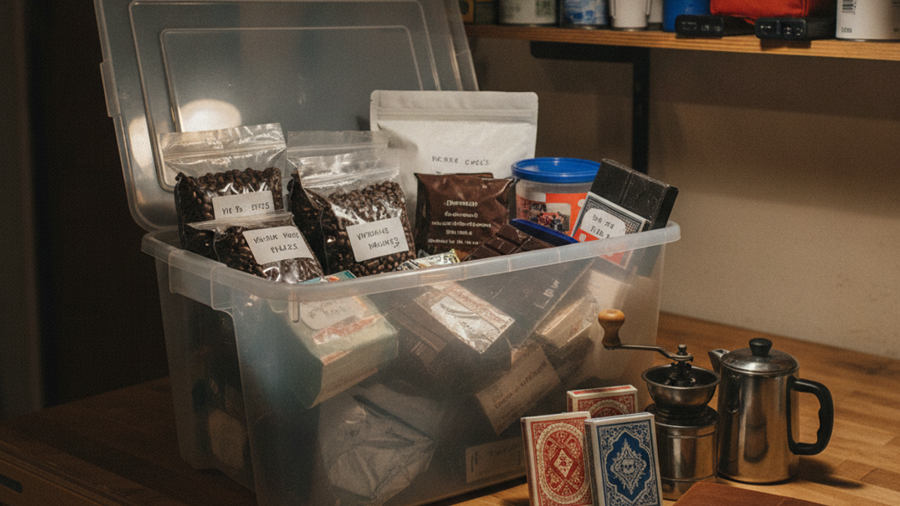
Fill a sealed tote with two decks of cards, dice, a chess or checkers set, puzzle books, pencils, and eight to ten paperbacks. Store it with your emergency supplies, not in the hall closet where it gets raided.
Recommended Gear
Round out your morale stockpile with the basics covered above — Folgers instant crystals for bulk home storage, Starbucks VIA and Nescafé Taster's Choice sticks for your bug out bag, bulk Lipton tea and a Twinings variety pack for daily routine, plus Hershey's bars, bulk M&M's, and Jolly Rancher hard candy for morale and barter. Browse more recommended survival gear and equipment to fill the gaps in your kit.
Frequently Asked Questions
How long does instant coffee last in storage?
Unopened instant coffee in a sealed glass jar or foil packet typically stays palatable for two to twenty years depending on packaging. Freeze-dried crystals in nitrogen-flushed single-serve packets last longest. Flavor degrades gradually, but the caffeine and safety remain intact well past the "best by" date.
What are the best morale items for barter after SHTF?
Small, divisible, universally desired items trade best: single-serve coffee sticks, individually wrapped hard candy, cigarettes, 50ml liquor bottles, and tea bags. Avoid trading from large containers — it reveals your supply depth and invites targeting.
Should I stockpile alcohol and tobacco if I don't use them?
Yes, if you have space and legal storage. Distilled spirits never expire and have medical and disinfectant uses beyond barter. Tobacco requires vacuum sealing and cool storage but holds extraordinary trade value in prolonged shortages. Both should be stored discreetly and securely.
Affiliate Disclosure: SHTFPlan.net participates in the Amazon Services LLC Associates Program. Some links are affiliate links — we may earn a small commission at no extra cost to you.