Vitamin Deficiency on a Survival Diet: How to Prevent Scurvy and Malnutrition When You're Living on Stored Food
Rice, beans, and wheat will keep you alive for months — and slowly make you sick. Here's how to build micronutrients into your long-term food storage before deficiency diseases set in.
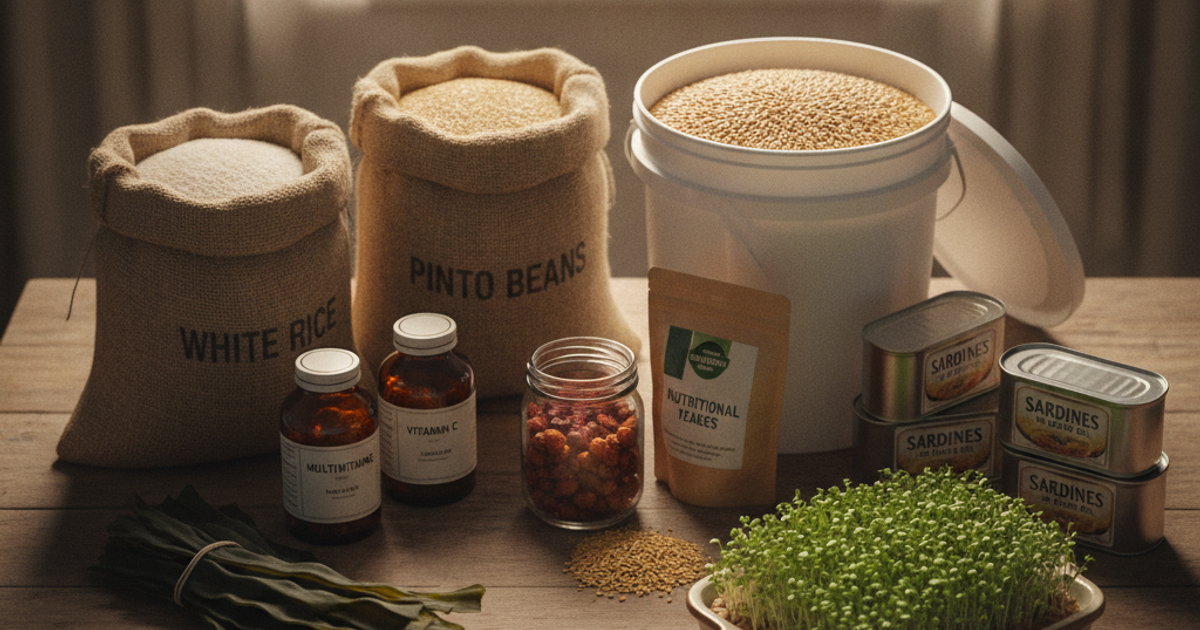
Most preppers measure their food storage in calories. That's the right starting point — but calories alone won't keep you healthy. History is brutally clear on this: the sailors, soldiers, and settlers who starved to death on full stomachs died because their food had energy but no micronutrients. British Royal Navy records estimate that scurvy killed more sailors between 1500 and 1800 than combat, storms, and shipwrecks combined. In the American South, pellagra — a niacin deficiency driven by a corn-heavy diet — sickened roughly 3 million people and killed over 100,000 between 1906 and 1940.
Your bucket of white rice, your Mylar bags of pinto beans, your case of ramen and your five-gallon pail of all-purpose flour have one thing in common: they're calorie-dense, shelf-stable, and nutritionally incomplete. Three weeks into a grid-down event you'll feel fine. Three months in, you may be dealing with bleeding gums, wounds that won't close, numbness in your extremities, and a crushing fatigue that makes every survival task twice as hard. This article shows you how to close that gap — whether you live on 40 acres or in a 600-square-foot apartment.
What You'll Need
Tools
- Stackable tray sprouter
- Mason jar sprouting lids
- Wide-mouth quart Mason jars (4–6)
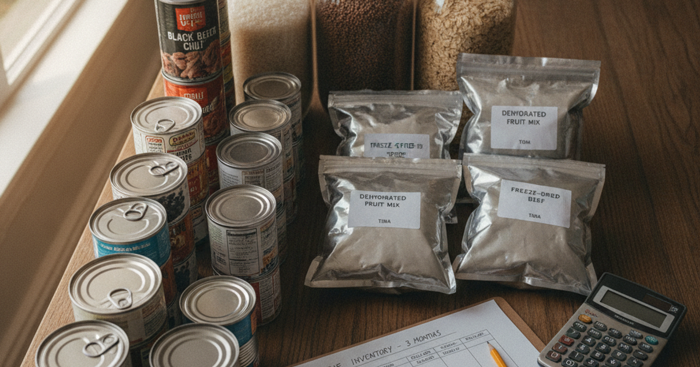
- Permanent marker and inventory log or spreadsheet
Supplies
- Sprouting seed variety kit
- Long-count multivitamin
- Vitamin C tablets
- Bulk ascorbic acid powder
- Canned or freeze-dried fruits, vegetables, and organ meats
- Iodized salt and cod liver oil
Why Long-Term Food Storage Creates Vitamin Deficiencies
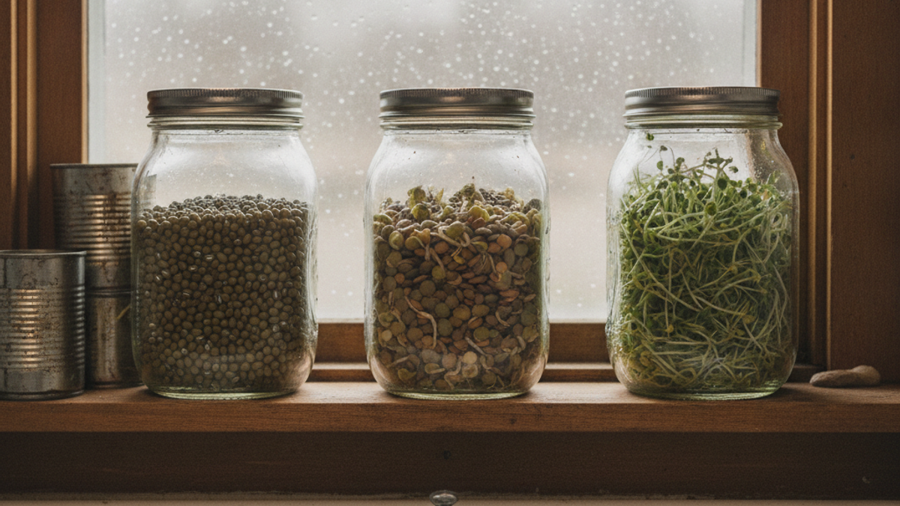
Three forces strip nutrients out of a stockpile. First, processing: polishing brown rice into white rice removes most of its thiamine, niacin, and magnesium; refining wheat into white flour strips roughly 70–80% of several B vitamins. Second, heat and oxygen: canning and retort pouching destroy a large share of vitamin C and folate. Third, time. Even in perfect Mylar-and-oxygen-absorber conditions, vitamin A, thiamine, and vitamin C degrade steadily. A 25-year bucket of food may still be calorie-good and vitamin-dead at year ten.
This is why anyone building a long-term food stockpile needs to plan for micronutrients separately from calories. Running the calorie math for your stockpile is step one; nutrient math is step two.
How to Prevent Scurvy When You Have No Fresh Produce
Scurvy is the deficiency most likely to hit a prepper first, because vitamin C is water-soluble, heat-sensitive, and not stored in the body. The adult body pool is roughly 1,500 mg; symptoms appear when it falls below about 350 mg, which takes 4 to 12 weeks on a vitamin C–free diet. The good news: it takes only about 10 mg per day to prevent scurvy outright, and 75–90 mg daily for full health.
Reliable storage sources include rose hips, dried or canned citrus, canned tomatoes and tomato paste, sauerkraut and other lacto-fermented vegetables, potatoes, bell peppers, and freeze-dried berries (freeze-drying preserves far more vitamin C than canning). The cheapest insurance by far is pure ascorbic acid powder — a one-pound jar contains roughly 450,000 mg, which is years of scurvy prevention for a family at a cost of pennies per person per day. Tablets like Nature Made Vitamin C 1000mg are easier to ration and barter.
B-Vitamin Deficiency: Beriberi and Pellagra in a Grain-Heavy Diet
If your stockpile is mostly white rice, white flour, cornmeal, and sugar, you are replicating the exact diets that produced beriberi in Asia and pellagra in the American South. Thiamine (B1) deficiency causes nerve damage, swelling, and heart failure. Niacin (B3) deficiency produces the classic "four Ds" — dermatitis, diarrhea, dementia, and death.
Practical defenses:
- Store whole grains, not refined ones. Whole wheat berries, brown rice (shorter shelf life), oats, and corn retain their B vitamins. Pair them with a hand grain mill so you can grind fresh.
- Nixtamalize your corn. Soaking corn in lime (calcium hydroxide) water releases bound niacin — the traditional process that prevented pellagra in Mesoamerica.
- Stock enriched products and legumes. Beans, peanuts, sunflower seeds, and nutritional yeast are B-vitamin powerhouses with long shelf lives.
- Keep a B-complex supplement. A whole-food option like Garden of Life Vitamin Code Raw B-Complex covers thiamine, niacin, B6, folate, and B12 in one capsule — critical for anyone storing food without meat or dairy.
Fat-Soluble Vitamins: A, D, E, and K in an Off-Grid Diet
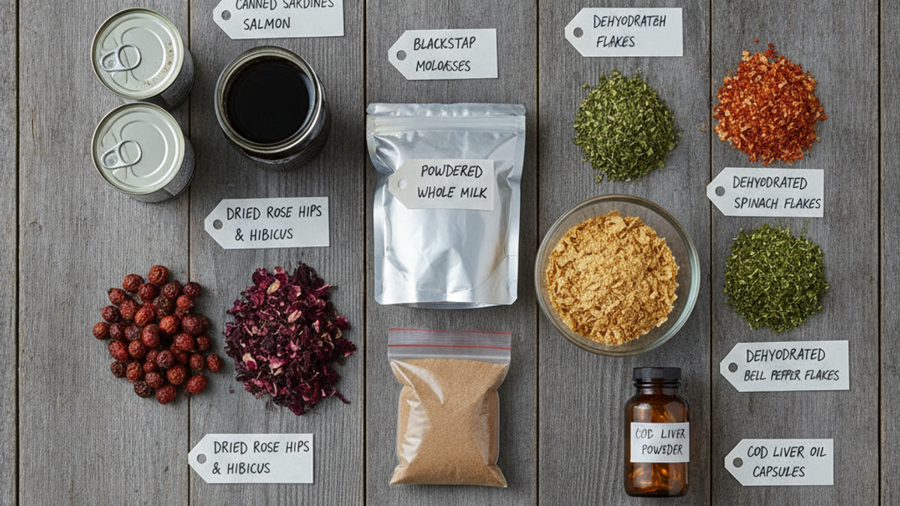
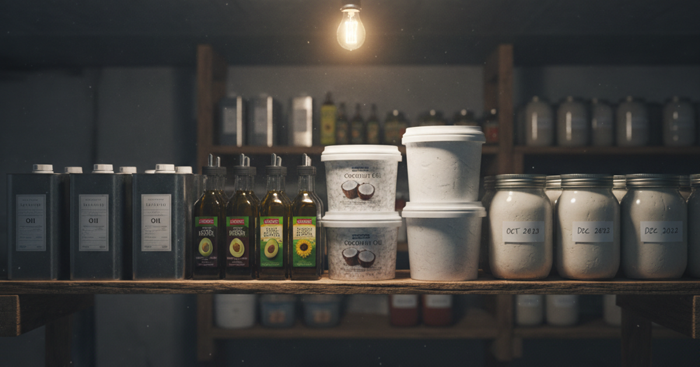
Fat-soluble vitamins require dietary fat for absorption, which is one more reason to read up on stockpiling cooking oils, lard, and tallow. Vitamin A deficiency causes night blindness — a serious liability if you're pulling security watch. Canned pumpkin, sweet potatoes, carrots, and dried leafy greens cover beta-carotene; liver and cod liver oil cover retinol directly.
Vitamin D is the sleeper threat. NHANES data suggest roughly 40% of American adults are already insufficient, and that number climbs fast for people sheltering indoors, living in high-rise apartments, or hunkering down through a winter blackout. Sunlight is free when you can get it; when you can't, a bottle of Vitamin D3 5000 IU softgels stores compactly and supports immune function and bone health. Vitamin E comes from stored nuts, seeds, and vegetable oils; vitamin K from greens, sprouts, and fermented foods.
Sprouting: Fresh Nutrition in Any Apartment, Any Season
Sprouting is the single highest-return nutrition skill for preppers, and it works identically in a Manhattan studio and a Montana cabin. It needs no soil, no sunlight, and no electricity — just seeds, water, and a jar. Germination dramatically increases vitamin C (near zero in dry seed to meaningful levels in 3–5 days), boosts B vitamins, and breaks down phytic acid so minerals absorb better.
A pound of alfalfa, broccoli, radish, mung bean, or lentil seed yields many pounds of fresh greens. Start with a sprouting seed variety kit and either stainless Mason jar sprouting lids or a stackable Victorio 4-tray sprouter for higher volume. For a deeper dive, see our guide to growing sprouts and microgreens indoors.
Step-by-Step Instructions
Step 1: Audit your stockpile for micronutrient gaps
List every food category you store and note which vitamins each actually provides. If your list is dominated by white rice, pasta, flour, sugar, and oil, you have a severe vitamin C, A, and B-vitamin gap. Use a stockpile inventory system to track it.
Step 2: Calculate a one-year vitamin C reserve
Multiply 100 mg per person per day by 365 days by household size. A family of four needs roughly 146,000 mg annually — well under half a pound of ascorbic acid powder. Store it cool, dark, and sealed.
Step 3: Add whole grains and legumes to replace refined staples
Shift at least half your grain storage to whole wheat berries, oats, and corn, packed in Mylar with oxygen absorbers. Add beans, lentils, and peanuts for B vitamins, protein, and minerals.
Step 4: Build a six-month supplement reserve
Stock a broad-spectrum multivitamin, vitamin C, vitamin D3, and a B-complex. Multivitamins typically carry a 2–3 year expiration but remain largely potent beyond it when stored in a cool, dry, dark place.
Step 5: Set up and run a sprouting rotation
Start one jar every two days so you always have fresh sprouts coming off the line. Rinse twice daily, drain thoroughly, and keep them out of direct sun to avoid mold.
Step 6: Store fats to unlock fat-soluble vitamins
Keep coconut oil, lard, tallow, ghee, and cod liver oil. Without fat, your vitamin A, D, E, and K intake largely passes through unabsorbed.
Step 7: Rotate and re-test annually
Supplements and vitamin-rich canned goods degrade. Set a calendar reminder to rotate vitamin stocks every 24 months and eat down the oldest canned produce first.
Recommended Gear
If you only buy one nutritional insurance policy, make it a high-count multivitamin. A bottle of Centrum Silver 325-count multivitamin covers nearly a year for one adult and includes vitamin A, D, E, K, the full B complex, iron, zinc, and iodine. Pair it with vitamin C, D3, a B-complex, and a sprouting setup, and you've covered the deficiencies that historically killed more people than violence ever did. Browse more vetted options on our recommended survival gear page.
Frequently Asked Questions
How long can you live on stored food before vitamin deficiency sets in?
Vitamin C runs out first — clinical scurvy typically appears after 4 to 12 weeks on a diet with essentially zero vitamin C. B-vitamin deficiencies like beriberi and pellagra generally take 2 to 6 months on a refined-grain diet. Fat-soluble vitamins A and D are stored in the liver and fat tissue, so deficiency can take 6 months to 2 years to become symptomatic.
Do expired vitamins still work in an emergency?
Generally yes. Expiration dates on supplements indicate guaranteed full potency, not safety cutoffs. Stored cool, dry, and dark, most tablets retain substantial potency for years past the printed date — though vitamin C and B vitamins degrade faster than minerals. The exception is anything that smells rancid, especially fish oil softgels, which should be discarded.
Can you prevent scurvy without any supplements at all?
Yes. Sprouts, sauerkraut and other fermented vegetables, rose hips, pine needle tea, potatoes, and fresh-killed animal organ meats all supply usable vitamin C. Indigenous peoples and experienced trappers prevented scurvy for centuries using these sources. Supplements are simply the most compact, reliable, and foolproof option for a stockpile.
Affiliate Disclosure: SHTFPlan.net participates in the Amazon Services LLC Associates Program. Some links are affiliate links — we may earn a small commission at no extra cost to you.