Feminine Hygiene After SHTF: How to Stockpile Menstrual Supplies and Stay Healthy Without Running Water
Menstrual supplies vanish from shelves fast and no one plans for them. Here's how to build a multi-year feminine hygiene stockpile, use reusable options, and prevent infection without running water.
When preparedness lists get written, they overwhelmingly cover beans, bullets, and band-aids. What gets skipped — almost every time — is the fact that roughly half the population bleeds for three to seven days a month, every month, for about 40 years of their life. A woman who menstruates from age 12 to age 51 will go through somewhere between 5,000 and 15,000 disposable pads or tampons in her lifetime, and the average cycle involves 30 to 80 milliliters of blood loss. That doesn't stop because the grid went down, the supply chain broke, or the water main burst.
Worse, menstrual hygiene is a genuine medical issue during a disaster, not just a comfort issue. The 2010 Haiti earthquake and the 2005 Hurricane Katrina response both produced documented shortages of menstrual products in shelters, and relief workers have reported women rationing pads, using rags, newspaper, or leaves, and developing urinary tract infections, bacterial vaginosis, and toxic shock syndrome as a direct result. The CDC lists toxic shock syndrome (TSS) as rare but potentially fatal, with roughly half of menstrual-related cases tied to extended tampon wear. In a grid-down scenario where there's no urgent care and no antibiotics, a preventable infection can turn into a life-threatening one.
This guide covers how to build a menstrual supply stockpile that will actually hold up, how to stay clean when the tap runs dry, and how to prevent infection whether you're riding out a crisis in a fourth-floor apartment or on 40 acres.
What You'll Need
Tools
- Small dedicated pot or stainless steel cup for boiling/sterilizing
- 5-gallon bucket with gasket lid (wash basin or waste containment)
- Portable camp wash basin or collapsible sink
- Hand-crank or battery lantern for low-light bathroom use
Supplies
- DivaCup menstrual cup
- Rael reusable cloth menstrual pads
- Always Maxi pads bulk pack
- Thinx period underwear
- Monistat 7 yeast infection treatment
- Unscented bar soap, nitrile gloves, and 70% isopropyl alcohol
How to Stockpile Disposable Menstrual Supplies for Long-Term Storage
Disposables are the easy win. Pads and tampons have no true expiration date — manufacturers typically stamp a 5-year "best by" on tampons, but that date reflects packaging integrity and sterility assurance, not decomposition. Stored properly, cotton and polymer products remain usable far longer.
Storage rules are simple: cool, dark, dry, and sealed. Humidity is the enemy, because moisture breeds mold in cellulose fibers. Vacuum-seal or mylar-bag your supplies if you live in a humid climate or plan to cache them in a garage, shed, or vehicle. Avoid attics, which cycle through extreme heat.
Math out your true need. One person averages 15 to 20 absorbent products per cycle. For a one-year supply: 240 products. For three years: about 720. A bulk pack of Always Maxi pads stores flat under a bed and costs little relative to its value, and a bulk box of Tampax Pearl tampons compresses into surprisingly little space. Tampons also double as improvised wound packing and fire tinder, which makes them a legitimate dual-use item for a 72-hour bug out bag.
Apartment dwellers: this is dense, lightweight, vertically stackable inventory. If space is tight, see our guide to building a serious emergency stockpile in a small space. Log everything in your stockpile inventory system so you rotate rather than hoard.
Why Reusable Menstrual Supplies Are the Real Long-Term Solution
Disposables run out. Reusables don't. A medical-grade silicone menstrual cup has a manufacturer-stated lifespan of up to 10 years and holds 25 to 30 ml — roughly three to five tampons' worth — meaning fewer changes, less water used, and no waste stream to manage. The DivaCup is the most widely available option and comes in sizing based on age and childbirth history. If you've found firmer cups uncomfortable or you have a sensitive bladder, the Saalt Soft menstrual cup uses a more flexible silicone that many users tolerate better. Buy two per person — one in use, one as a backup — and practice with them now. A crisis is the worst possible time to learn insertion technique.
Cloth pads are the other half of the system. Rael reusable cloth menstrual pads snap around the gusset of normal underwear, wash out with cold water and soap, and last years. Thinx period underwear absorbs the equivalent of two tampons and works as a backup layer against leaks when you're on the move, sleeping rough, or can't change on schedule. Keep three to five pairs per person.
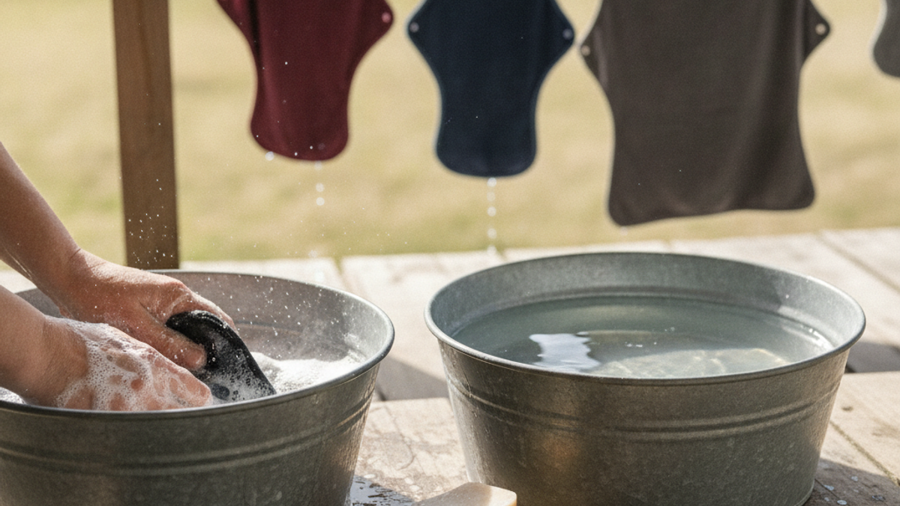
Washing reusables off-grid is manageable — rinse in cold water first (hot water sets blood stains), then wash in warm soapy water, then line dry in direct sunlight, which provides free UV disinfection. Our guide to doing laundry without running water covers bucket-and-plunger methods that work on a balcony or a back porch.
How to Stay Clean Without Running Water
Handwashing is the single highest-value hygiene behavior during a crisis. Before and after every product change, wash with soap and treated water — a tippy-tap or a pump bottle works, and you need less than a cup per wash. If water is severely rationed under a one-gallon-per-day plan, use 70% isopropyl alcohol or hand sanitizer on clean-looking hands, and save the soap and water for visibly soiled hands.
For the body: the vagina is self-cleaning. Do not douche, and do not scrub inside with soap — that destroys the lactobacillus population that keeps pH around 3.8 to 4.5 and prevents overgrowth of yeast and anaerobic bacteria. Clean the external area only, front to back, with plain water or unscented soap. Summer's Eve feminine cleansing cloths are a practical way to manage external cleaning when a full wash isn't possible — keep a pack in your vehicle kit, your work bag, and your bug out bag.
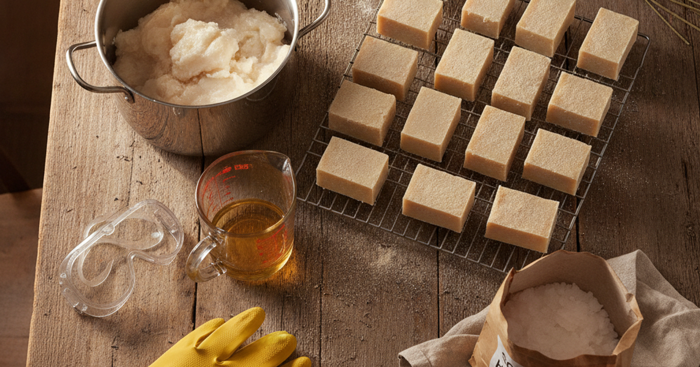
Know how to make more soap when the store shelves are empty. Our walkthrough on making lye soap and disinfectants is a skill worth having before you need it.
Preventing Infection When There's No Doctor
Three conditions dominate menstrual-related illness in disasters: yeast infections (candidiasis), bacterial vaginosis, and urinary tract infections. All three are driven by the same root causes — prolonged moisture, infrequent changes, and disrupted pH.
- Change on schedule. Tampons: every 4 to 8 hours, never longer than 8. Cups: empty every 8 to 12 hours. Pads: every 4 to 6 hours. This is the TSS prevention rule, and it doesn't relax during an emergency.
- Stay dry. Cotton underwear, breathable layers, and changing out of sweat-soaked clothing prevent most yeast overgrowth.
- Hydrate. Dehydration concentrates urine and raises UTI risk sharply.
- Watch for red flags. Sudden high fever, vomiting, a sunburn-like rash, low blood pressure, or confusion during or just after menstruation can signal toxic shock. Remove any internal product immediately and seek medical help by any means available.
Stock treatment, not just prevention. Monistat 7 is an over-the-counter antifungal that resolves most uncomplicated yeast infections, and the 7-day formulation is the one clinicians prefer when conditions are rough. Pair it with cranberry extract, AZO-type urinary analgesics, and whatever antibiotics you've legitimately obtained — see our guide to stockpiling antibiotics and first aid supplies.
Step-by-Step Instructions
Step 1: Calculate your household's true annual need
Count every menstruating person in your household, multiply by 15 to 20 products per cycle, then by 13 cycles per year. A two-woman household needs roughly 450 to 500 disposable products annually. Add 20% margin for stress-induced cycle irregularity, which is extremely common during disasters.
Step 2: Buy one year of disposables in bulk
Purchase pads and tampons in warehouse-sized packs during sales. Split the purchase across pad and tampon types so you have options if water is scarce or movement is restricted.
Step 3: Seal and store supplies in a climate-stable location
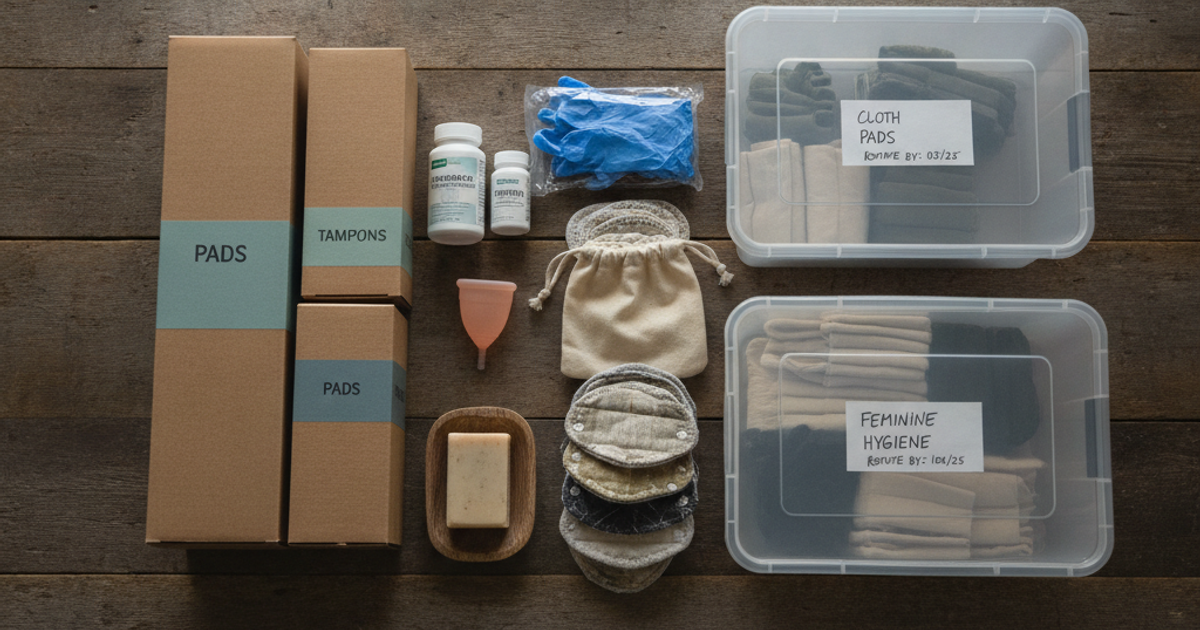
Vacuum-seal or mylar-bag disposables and store them in an interior closet, under a bed, or in a basement — never an attic or an uninsulated shed. Label each container with the purchase date.
Step 4: Buy and practice with reusable systems now
Purchase two menstrual cups, five cloth pads, and three pairs of period underwear per person. Use them for at least two full cycles under normal conditions so the learning curve happens with hot water and a working bathroom available.
Step 5: Build a dedicated hygiene water and wash station
Set aside a 5-gallon bucket, a wash basin, unscented soap, and a pour spout or pump bottle. Budget a half-gallon per person per day for hygiene above and beyond drinking water.
Step 6: Establish a sterilization routine for reusables
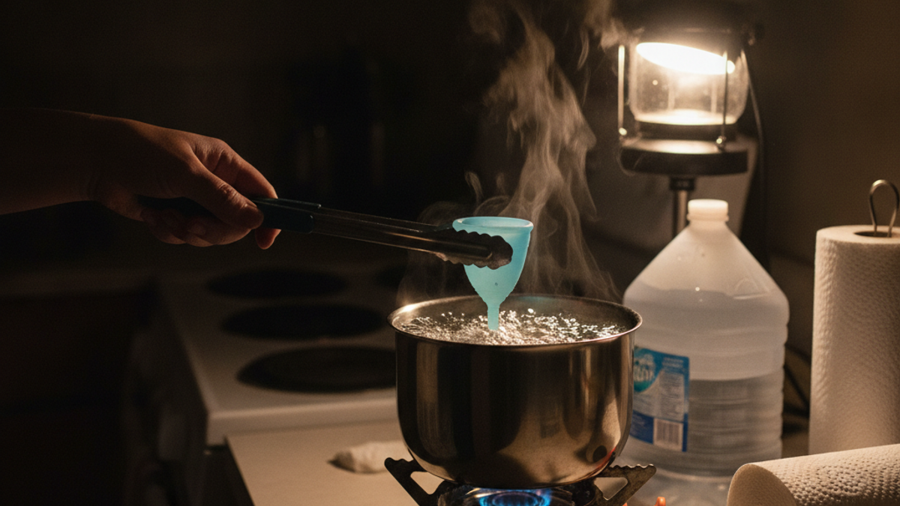
Boil silicone cups for 5 to 10 minutes at the start and end of each cycle in a dedicated pot. Between uses, rinse with treated water and wipe with 70% isopropyl alcohol if boiling isn't practical.
Step 7: Set up sanitary waste disposal
Line a bucket with heavy contractor bags, add a scoop of wood ash, lime, or kitty litter after each deposit to control odor and bacteria, and keep the lid gasketed. Blood-soiled waste attracts animals and insects — review our guide on managing waste when the sewers stop working.
Step 8: Audit the stockpile twice a year
Inspect packaging for moisture damage, rotate older disposables into daily use, replace cups past the 10-year mark, and check that cloth pads haven't degraded.
Recommended Gear
A complete feminine hygiene module fits in a single plastic bin: two Saalt Soft cups or DivaCups, a set of Rael cloth pads, three pairs of Thinx period underwear, a year of Always Maxi pads and Tampax Pearl tampons, a stack of Summer's Eve cleansing cloths, and a box of Monistat 7. For more hygiene and sanitation equipment, browse our recommended survival gear and equipment page.
Frequently Asked Questions
How long do tampons and pads last in storage?
Manufacturers print a 5-year date on tampons and often no date at all on pads, but these reflect sterility assurance rather than spoilage. Kept dry, sealed, and out of heat, both remain functional well beyond that window. Discard anything with visible discoloration, mold, water staining, or a musty smell — when in doubt, don't use it internally.
Can you use a menstrual cup without clean running water?
Yes, and it's one of the best off-grid options available. Wash your hands thoroughly, empty the cup, wipe it clean with toilet paper or a clean cloth, and reinsert. Rinse it with treated or boiled water at the end of the day and boil it for 5 to 10 minutes between cycles. A cup uses dramatically less water over a full period than washing cloth pads does.
What should women add to a bug out bag for menstrual needs?
Pack a menstrual cup, a pair of period underwear, 10 to 15 tampons or pads, a small bottle of hand sanitizer, a pack of cleansing cloths, nitrile gloves, zip-top bags for waste containment, and ibuprofen for cramping. The entire kit weighs under a pound and should live permanently in the pack, not be added at the last minute.
Affiliate Disclosure: SHTFPlan.net participates in the Amazon Services LLC Associates Program. Some links are affiliate links — we may earn a small commission at no extra cost to you.