Blind Spot in Your Prep: How to Stockpile Spare Eyeglasses and Vision Care Supplies Before SHTF
One cracked lens can turn a capable prepper into a liability. Here's how to build a vision care stockpile of backup glasses, repair kits, and eye injury supplies before the optometrist is gone.
Most preppers can tell you exactly how many pounds of rice are in the basement and how many rounds sit in the ammo can. Ask them how they'd read a prescription label, thread a fishhook, or identify a trail marker three weeks after their only pair of glasses snapped in half, and the room goes quiet. Vision is the single most load-bearing sense in nearly every survival task — and for the majority of American adults, that sense is rented from an optical industry that depends on global supply chains, licensed exams, and electricity.
The numbers are sobering. According to the Vision Council and CDC data, roughly 166 million U.S. adults use some form of vision correction, and about 45 million Americans wear contact lenses. The CDC also reports that approximately 2.4 million eye injuries occur annually in the United States, and NIOSH estimates that 90% of workplace eye injuries are preventable with proper eye protection. In a grid-down or supply-disrupted scenario, where you'll be chopping wood, handling chemicals, and scavenging through debris without an ER down the street, both of those risk categories spike at once.
This is a blind spot in most preparedness plans — and it's one of the cheapest to fix.
What You'll Need
Tools
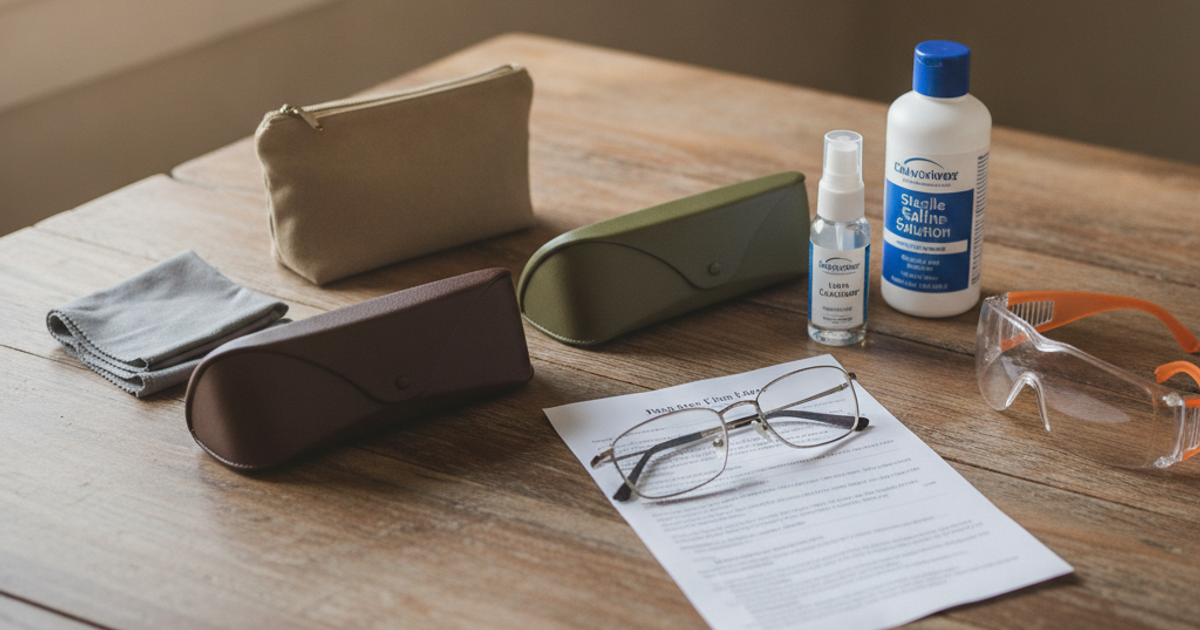
- Eyeglass repair kit with precision screwdriver, screws, and nose pads
- Loctite super glue gel in small single-use tubes
- Needle-nose pliers and fine tweezers
Supplies
- Reading glasses multipack in your diopter strength
- Multipurpose contact lens solution
- Anti-fog safety glasses
- Sterile eyewash, saline bullets, and a rigid eye shield
- Microfiber cloths and hard-shell storage cases
How Many Spare Eyeglasses Should a Prepper Stockpile?
The working rule among preparedness-minded optometrists is one primary pair, one backup at home, one in your bug out bag, one in the vehicle, and one at work or in a cache. That sounds extravagant until you price it out. Online optical retailers routinely sell complete single-vision prescription glasses for $7 to $25 per pair. Five pairs can cost less than a case of freeze-dried entrées.
To order online you need your prescription (your optometrist must legally provide it) plus your pupillary distance — measure it yourself with a millimeter ruler in a mirror, or have someone measure for you. Order your spares in cheap, durable plastic frames rather than rimless or semi-rimless designs, which fail catastrophically and cannot be field-repaired. Choose polycarbonate lenses: they're impact-resistant and roughly ten times tougher than standard plastic.
If you're over 40 and presbyopia has set in, over-the-counter readers are your friend. Buy a multipack of blue light blocking readers in +1.50, +2.00, and +2.50 so you have a range covering both your current and future needs — vision degrades with age, and a crisis is no time to discover you've outgrown your strength. Stash readers in your first aid kit, your tool bag, and near your prepper survival library, because reference books are useless if you can't read them.
Contact Lens Supplies: How to Stockpile Solution and Lenses Safely
Contacts are tempting for preppers — no fogging, no slipping, good peripheral vision under a respirator. But they are also a serious infection risk. CDC research found that roughly one in three contact lens wearers has reported a related eye infection requiring a doctor visit, and microbial keratitis can blind you in days without antibiotics.
If you wear contacts, stockpile daily disposables whenever possible. They eliminate the cleaning cycle entirely, and unopened blister packs typically carry shelf lives of three to five years. Order a year's supply at a time, store them cool and dark, and rotate by expiration date using the same system you'd use for food — see our guide to tracking and auditing prepper supplies before they expire.
For reusable lenses, stock sealed bottles of multipurpose solution bought in bulk, plus spare cases (replace every three months). Never, under any circumstances, rinse lenses with tap water, well water, or filtered water — Acanthamoeba survives most standard water purification methods and causes a brutal, often sight-destroying infection. Critically: contacts are a fair-weather prep. When water for handwashing is rationed, switch to glasses.
Building an Eyeglass Repair Kit That Actually Works

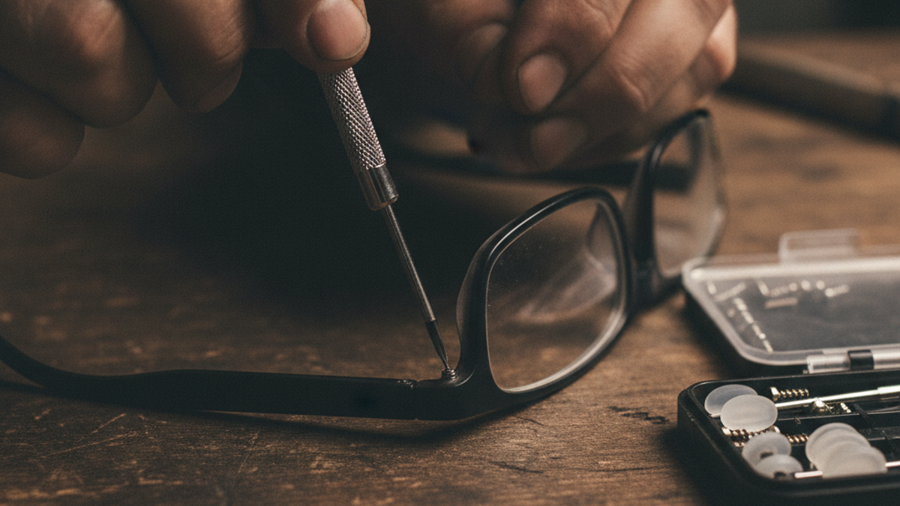
Frames fail in predictable ways: hinge screws back out, nose pads crumble, temple arms snap, and lenses pop out of rimless mountings. A $6 repair kit solves 80% of these. Add a few single-use tubes of gel-formula super glue — gel resists running into lenses — plus a short length of thin steel wire, heat-shrink tubing, and a few inches of duct tape wound around a card. Pair this with your broader survival gear repair kit so repairs happen in one place with one set of tools.
Eye Protection and Eye Injury First Aid When There's No ER
Post-disaster environments are eye-injury factories: flying debris, broken glass, splashed fuel, lye from soapmaking, sawdust, and wood ash. Keep a pair of ANSI Z87.1-rated anti-fog safety glasses with every tool kit — one in the garage, one in the vehicle, one with the chainsaw gear. For chemical work, grinding, and ashfall conditions you need a seal, not just a shield: sealed anti-fog goggles that fit over prescription glasses are the correct tool.
For first aid, memorize three protocols. Chemical splash: irrigate immediately with clean saline or potable water for a minimum of 15–20 minutes, holding the lid open. Foreign body under the lid: irrigate and sweep with a moistened cotton swab — never rub. Penetrating injury or suspected globe rupture: do not remove the object, do not apply pressure. Cover with a rigid shield (a paper cup bottom works), patch the other eye to limit sympathetic movement, and evacuate. These supplies belong in the same kit described in our guide to building a trauma kit that keeps your family alive.
Step-by-Step Instructions
Step 1: Request and copy your current prescription
Schedule an eye exam and ask for a printed copy of your prescription — federal rules entitle you to it. Photograph it, store a copy in your emergency document kit, and write the values on a card inside each glasses case.
Step 2: Measure your pupillary distance accurately
Stand 8 inches from a mirror with a millimeter ruler across your brow and measure center-pupil to center-pupil. Repeat three times and average. An error of 2mm or more causes eye strain and headaches.
Step 3: Order four to five spare pairs in durable frames
Choose full-rim acetate or TR90 frames with polycarbonate lenses. Order at least one pair with a photochromic or tinted lens so you have sun protection without a second device.
Step 4: Distribute spares across locations
Place one pair in your bug out bag, one in your vehicle kit, one at your workplace or a buried supply cache, and keep two at home in hard cases. Single-point storage is single-point failure.
Step 5: Assemble and test the repair kit
Before you need it, practice tightening a hinge screw and replacing a nose pad on an old pair. Confirm the screwdriver actually fits your frames' screw heads — many kits don't.
Step 6: Stock eye protection and irrigation supplies
Buy safety glasses in multipacks and station them where work happens. Add at least 1 liter of sterile eyewash or saline, two rigid eye shields, and nonstick pads to your medical supplies.
Step 7: Rotate and audit annually
Each year, check prescriptions for drift, inspect contact lens expiration dates, replace cracked nose pads, and confirm that saline and solution bottles are unopened and in date.
Recommended Gear: For a complete vision prep, start with an inexpensive reading glasses multipack for every location you spend time, add a full eyeglass repair kit and sealed contact solution if you wear lenses, and finish with impact-rated eyewear. Browse more vetted options on our recommended survival gear page, and if your household includes older members, pair this with our guide to emergency planning for elderly and disabled family members.
Frequently Asked Questions
How many spare glasses should I keep in my survival kit?
Minimum two spares per corrected-vision household member, ideally four to five. Keep one pair permanently in your bug out bag in a hard case, one in your vehicle, and the rest at home. Because online prescription glasses often cost under $20, redundancy here is one of the cheapest resilience upgrades in all of emergency preparedness.
Do contact lenses and contact solution expire?
Yes. Unopened lens blister packs typically last three to five years from manufacture, and multipurpose solution usually carries a two- to three-year shelf life unopened — but only about 30 to 90 days once the bottle is opened. Never use expired solution; its disinfecting preservatives degrade and infection risk climbs sharply.
What should I do for an eye injury when there's no doctor available?
Flush chemical exposures immediately for 15–20 minutes with sterile saline or clean drinking water. For embedded objects or a suspected ruptured globe, never remove the object or press on the eye — shield it rigidly, cover both eyes to reduce movement, keep the person upright and calm, and seek any available medical help. Persistent pain, vision loss, or visible blood in the eye is always an evacuation-level emergency.
Affiliate Disclosure: SHTFPlan.net participates in the Amazon Services LLC Associates Program. Some links are affiliate links — we may earn a small commission at no extra cost to you.