The Prepper's Guide to Psychological Manipulation: How to Recognize and Resist Social Engineering When SHTF
When SHTF, con artists and predators exploit panic. Learn to recognize manipulation tactics and protect your family, supplies, and security.
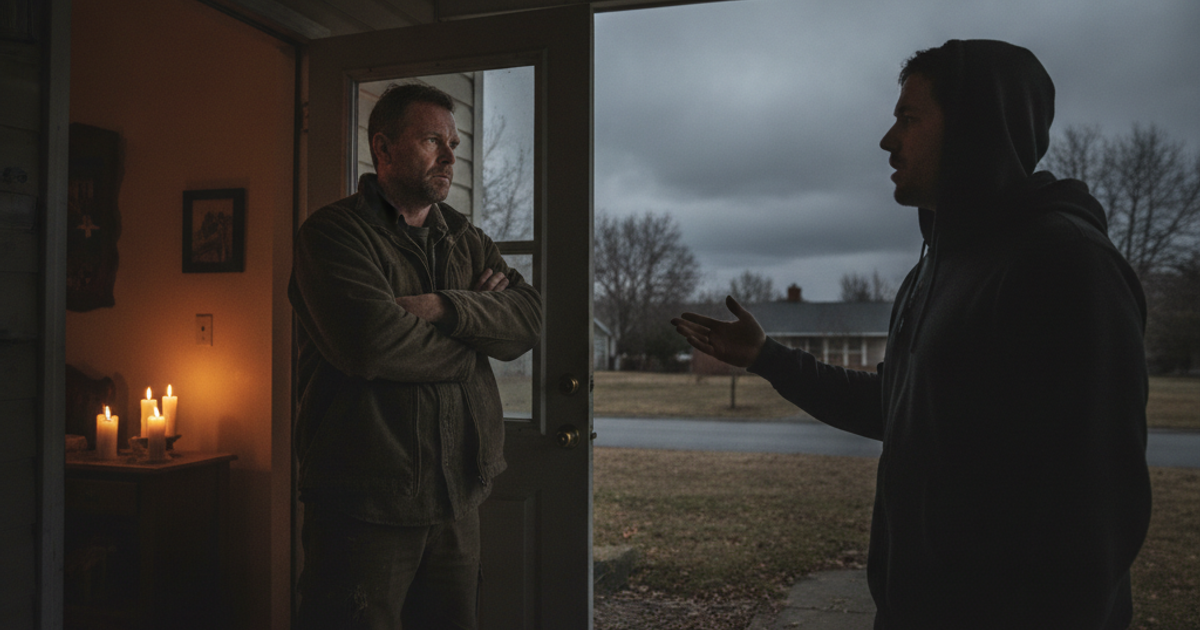
When the grid goes down, the supply chains break, and civil order starts to fray, most preppers focus on tangible threats — armed intruders, food shortages, medical emergencies. But one of the most dangerous vulnerabilities in any SHTF scenario isn't a physical one. It's psychological. Social engineering — the art of manipulating people into giving up information, resources, or access — becomes a primary weapon in the hands of bad actors during a crisis. Understanding how to recognize and resist these tactics could be just as important as any item in your bug out bag or survival kit.
Research from the U.S. Department of Homeland Security confirms that social engineering accounts for over 90% of successful security breaches in normal times. In a collapse scenario, where desperation is high and institutions are absent, that percentage only climbs. Whether you're sheltering in an apartment in Chicago, bugged in at a suburban home in Texas, or hunkered down at a rural homestead in Montana, psychological predators will use the same playbook — and you need to know it.
To understand the mechanics of manipulation, start with the foundational text on the subject. Robert Cialdini's Influence: The Psychology of Persuasion is the definitive guide to the six principles bad actors exploit: reciprocity, commitment, social proof, authority, liking, and scarcity. Reading it before SHTF is one of the most underrated forms of emergency preparedness.
Why Psychological Manipulation Spikes During Societal Collapse
In stable times, people have institutional buffers — police, courts, banks, social services. These structures deter manipulation because consequences exist. When those structures collapse, the only deterrent is your own awareness and resolve. Desperation also increases both the number of people willing to manipulate and the sophistication of their attempts. A neighbor who was perfectly trustworthy when grocery stores were open may become a very different person after three weeks without food.
In a collapse environment, manipulators don't need to pick locks or fire weapons. They need only convince you to open the door. Understanding the psychology behind these tactics is the first line of defense — and Gavin de Becker's The Gift of Fear is essential reading on this subject. De Becker, a world-renowned security consultant, explains how predators signal their intentions before they act — and how most victims ignore those signals. This book will teach you to trust your instincts and read people more accurately under pressure.
The Most Common Social Engineering Tactics Used When SHTF
The Distress Play
Someone — often a stranger, sometimes someone you know — presents themselves as being in extreme danger or need. A crying woman at the door, a child asking for water, a man claiming to be injured. The emotional urgency is designed to override your critical thinking. This doesn't mean you should become heartless. It means you must verify before you open the door, share your location, or reveal your resources. Compassion is a virtue; naivety is a vulnerability.
False Authority
In a crisis, people crave authority figures. Manipulators exploit this by impersonating FEMA workers, National Guard soldiers, law enforcement, or medical personnel. Without functioning communications infrastructure, you have no way to verify credentials. Anyone can print a badge or wear a uniform. Legitimate authorities in a true SHTF scenario will rarely need to force their way into your home or demand your supplies.
Reciprocity Traps
Someone does you a small favor — shares a bit of food, provides information, helps with a minor task — then later leverages that goodwill into a much larger ask. This is one of Cialdini's core principles weaponized in survival context. Small gifts create psychological debt. Be aware of it, especially with people you don't know well.
Information Harvesting
Casual conversation is often anything but casual in a collapse scenario. Questions about your water supply, food stores, group size, or security arrangements are intelligence gathering. Maintain a grey man profile: give away as little as possible about your capabilities, resources, and plans. For more on this strategy, see our guide on OPSEC for Preppers: How to Keep Your Stockpile and Plans Secret When SHTF.
Manufactured Urgency
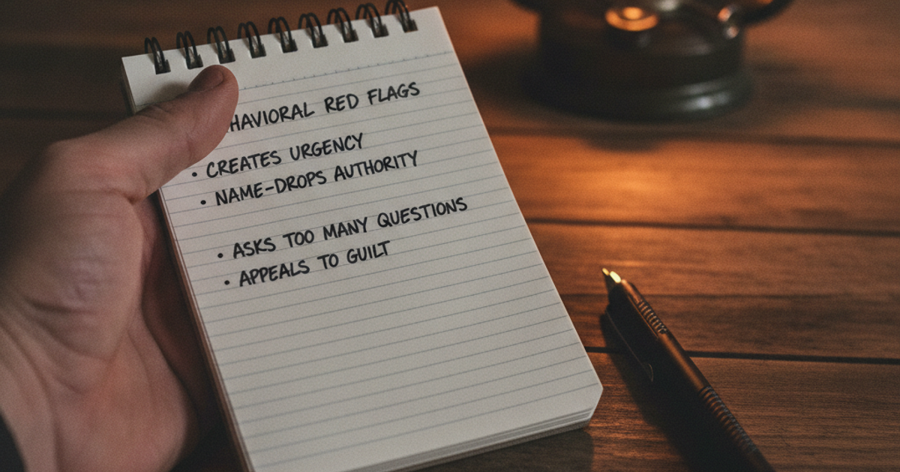
Manipulators compress your decision-making time on purpose. "We need to leave NOW." "Give me the supplies or we'll all die." "There's no time to think." Urgency shuts down rational analysis. Whenever someone is pressuring you to decide immediately, that pressure itself is a red flag. Slow down, step back, and assess.
Kevin Mitnick, the legendary social engineer and former FBI Most Wanted hacker, documented these tactics in detail. The Art of Deception by Kevin Mitnick is a masterclass in how manipulation works at the operational level — how lies are constructed, how trust is manufactured, and how even smart people get fooled. It's mandatory pre-SHTF reading.
Reading People: Detecting Deception Through Body Language and Behavior
Most people are poor lie detectors — studies suggest humans perform at only slightly better than chance (around 54%) when trying to identify deception. But trained observers can do significantly better. Paul Ekman's Emotions Revealed teaches you to read microexpressions — the brief, involuntary facial movements that reveal true emotional states even when someone is lying. Ekman's work has been used by the FBI, CIA, and TSA. It's a practical, learnable skill that takes on life-or-death significance when you can't call the police.
Former CIA officers also developed structured deception detection protocols — and Spy the Lie by former CIA officers Philip Houston, Michael Floyd, and Susan Carnicero gives you a field-applicable framework for detecting deception in real conversations. The techniques are systematic, reproducible, and don't require equipment — just training and practice.
Key behavioral signals to watch for include:
- Inconsistency between verbal and non-verbal cues — someone smiling while describing a tragedy
- Overloaded detail — liars often over-explain to compensate for fabrication
- Deflection — answering questions with questions, or changing the subject
- Stress signals — pupil dilation, accelerated blinking, throat clearing, hand-to-face touching
- Unnecessary distancing language — referring to a claimed family member as "the child" instead of "my daughter"
Verbal Defense: What to Say and How to Say It

Knowing manipulation is happening is one thing. Shutting it down without escalating to violence is another skill entirely. Verbal Judo by George Thompson, a former police officer and martial arts expert, teaches tactical communication — how to defuse confrontation, redirect aggression, and maintain control of an interaction without drawing a weapon. In SHTF scenarios where every confrontation carries the risk of violence, the ability to de-escalate verbally is a genuine force multiplier.
Key verbal defense principles include:
- Never argue or match emotion with emotion — stay calm and ask clarifying questions
- Use "we" language to reduce adversarial framing: "What can we do to solve this?"
- Offer face-saving exits so manipulators don't feel cornered
- Never reveal more than the minimum necessary to end the interaction
- Practice the phrase: "I'll need to think about that" — it's a complete sentence
Group Dynamics and Survival Teams: Internal Manipulation Threats
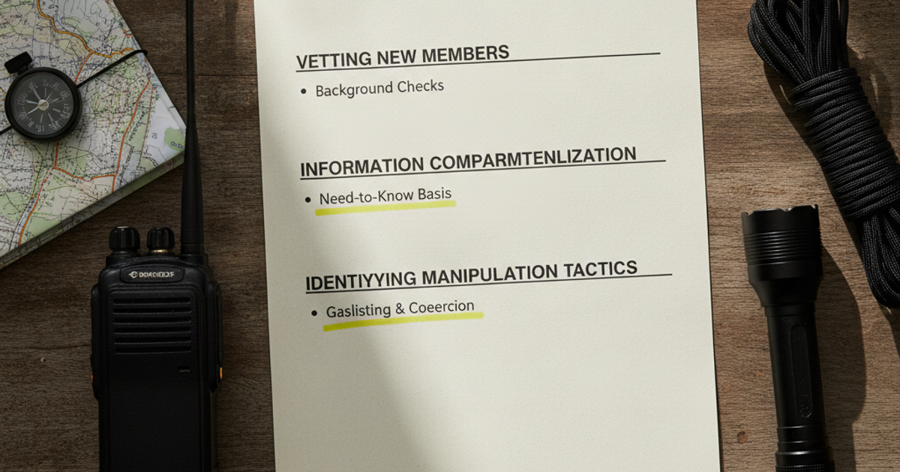
The manipulation threat doesn't always come from outside. Survival groups are particularly vulnerable to internal social engineering — charismatic members who accumulate disproportionate influence, individuals who create artificial divisions to consolidate power, or infiltrators who join the group before SHTF to exploit it later. Establishing clear governance, rotating leadership roles, and creating transparent decision-making processes before a crisis hits makes your group more resistant to internal manipulation. See our guide on how to set up a rotating security watch schedule for your survival group for the kind of structured thinking that also protects against internal power plays.
One of the most important concepts for group resilience is the pre-commitment strategy: agree on rules, resource distribution, and decision-making processes now, in writing, before pressure and desperation cloud judgment. Groups with established protocols are dramatically harder to manipulate than those making it up as they go.
Situational Awareness as Your Primary Defense
All psychological defense starts with situational awareness — the ongoing process of observing your environment, identifying anomalies, and projecting likely outcomes. Colonel John Boyd's OODA Loop (Observe, Orient, Decide, Act) is a military decision-making framework that applies directly to social engineering resistance. Before someone can manipulate you, they need to catch you off-guard. An aware prepper is a far harder target.
For urban and suburban preppers, this means paying attention to who's been watching your building or block, noting who asks too many questions, and being alert to coordinated activity among strangers. For rural preppers, it means monitoring vehicles that slow near your property, strangers who appear during unusual hours, and individuals who seem to be gathering intelligence. Our in-depth piece on how to detect threats before they become dangerous breaks this down further.
What You'll Need
Supplies
- Cialdini's Influence: The Psychology of Persuasion
- Gavin de Becker's The Gift of Fear
- Spy the Lie by former CIA officers
- Verbal Judo by George Thompson
- Critical thinking skills workbook for adults
- Dedicated notebook for logging suspicious interactions and behavioral patterns
Step-by-Step Instructions
Step 1: Establish Your Personal Information Baseline Before SHTF
Conduct an audit of what information about you and your group is publicly available — social media posts, conversations with neighbors, community meeting disclosures. Tighten your operational security now, before a crisis reveals your vulnerabilities. Delete or restrict access to any posts that reveal your preparedness levels, storage capacity, or security measures.
Step 2: Create a Group Code Word and Verification Protocol
Agree on a code word or challenge-response system with your trusted group members before SHTF. This allows you to verify identity and detect coercion — for example, a person who says a distress phrase signals they're being forced to act. This applies equally to apartment preppers with a trusted neighbor network and rural homesteaders with an extended family group.
Step 3: Develop and Practice a Stranger Interaction Protocol
Write down and rehearse exactly how you will handle an unknown person approaching your shelter, vehicle, or perimeter. Decide in advance: What questions will you ask? What information will you never volunteer? What conditions must be met before you allow someone closer? Practice this with your group until it's automatic, because stress degrades decision-making.
Step 4: Train Your Brain to Recognize Cialdini's Six Influence Triggers
Study reciprocity, commitment, social proof, authority, liking, and scarcity until you can identify them in real conversations. When someone triggers one of these mechanisms — especially under pressure — treat it as a yellow flag that demands slower, more deliberate evaluation. Consider using a critical thinking skills workbook to sharpen your analytical instincts before a crisis occurs.
Step 5: Practice Deception Detection with Trusted Partners
Using techniques from Paul Ekman and the CIA's Spy the Lie methodology, run structured exercises with trusted group members where one person lies and others attempt to detect it. This isn't a game — it's a trainable skill. Regular practice measurably improves detection accuracy and builds the habit of observation during high-stress interactions.
Step 6: Establish Hard Rules Your Group Will Not Violate Under Pressure
Pre-commitment decisions — rules established before crisis hits — are far more resistant to manipulation than in-the-moment choices. Examples: "We do not open the primary entry point for unknown individuals." "We do not disclose our food storage quantities to anyone outside the group." "All resource-sharing decisions require consensus, not unilateral action." Write these down and review them regularly.
Step 7: Conduct Regular OPSEC Reviews as the Situation Evolves
Information that was safe to share at Day 3 of a crisis may be catastrophically dangerous at Day 30. Regularly reassess what information has leaked, what interactions have occurred, and whether any member of your network has been compromised. Adjust your protocols accordingly and treat every new piece of information as a potential intelligence operation by an outside actor.
Step 8: Build Psychological Resilience Through Stress Inoculation
The best time to build resistance to manipulation is before you're hungry, scared, and exhausted. Read widely on the psychology of influence and persuasion. Run tabletop exercises simulating manipulation scenarios. Discuss ethical dilemmas about resource sharing in advance. Neil Strauss explored exactly this kind of psychological preparation in his Emergency preparedness and survival book, documenting his own journey to becoming psychologically and physically prepared for societal collapse.
The Psychological Toll: Staying Mentally Sharp When It Counts
Resistance to social engineering isn't just about knowledge — it's about cognitive function. Sleep deprivation, hunger, fear, and grief all dramatically reduce your ability to detect deception and make rational decisions. This is not a weakness; it's human biology. Predators know this and will time their approaches accordingly. Maintaining sleep rotations, caloric intake, and emotional stability within your group is therefore a direct counter-manipulation strategy. For a deeper look at managing mental function under extreme stress, see our article on how to stay calm and make smart decisions when a crisis hits.
It also helps to actively work on the cognitive habits that make you manipulation-resistant: practicing slow deliberate decision-making, cultivating healthy skepticism without paranoia, and maintaining the emotional intelligence to distinguish between genuine distress and manufactured distress. These are learnable skills — not personality traits — and they are every bit as much a part of your emergency preparedness toolkit as your water purification system or your emergency food storage.
Recommended Gear and Resources
Beyond the titles already mentioned, every prepper serious about psychological defense should have a library that covers the full spectrum of influence and deception. The Art of Deception by Kevin Mitnick remains one of the most practical manuals on how social engineering is actually executed — understanding the attacker's playbook is essential to defending against it. Pair it with Paul Ekman's Emotions Revealed for the behavioral science side, and you'll have a comprehensive understanding of both the strategy and the tactics of psychological manipulation. These aren't abstract academic texts — they're operational manuals for anyone who needs to read people accurately under pressure.
Frequently Asked Questions
How do I tell the difference between someone who genuinely needs help and someone who is manipulating me during a disaster?
There is no perfect test, but several indicators help. Genuine distress tends to be consistent across verbal and non-verbal channels — the story matches the body language. Manipulators often over-explain, apply urgency, or request specific resources rather than general help. Verify claims where possible, never allow unknown individuals into your secure space immediately, and always trust the instinctive alarm described in Gavin de Becker's work. Offer help from a distance — food through a window, directions to a shelter — rather than granting access to your space or revealing your resources.
What is the grey man strategy and how does it protect preppers from being targeted?
The grey man concept refers to the practice of being deliberately inconspicuous — blending into your environment so thoroughly that no one identifies you as a person worth targeting. In an urban survival context, this means not wearing tactical gear in public, not discussing your preparations openly, and not behaving in ways that signal you are better resourced than those around you. The grey man strategy reduces your profile as a target for both opportunistic criminals and sophisticated social engineers who are specifically looking for preppers with stockpiles to exploit.
Can I really train myself to detect lies and resist manipulation, or do you have to be naturally gifted at reading people?
Research from Paul Ekman and others confirms that deception detection is a trainable skill. While some individuals show natural aptitude, structured training measurably improves accuracy for virtually everyone. Regular practice with the frameworks in Spy the Lie, Emotions Revealed, and Verbal Judo — combined with active exercises using trusted partners — can significantly improve your ability to identify deceptive behavior and resist psychological pressure. Like any survival skill, it requires deliberate, repeated practice before a crisis, not during one.
Affiliate Disclosure: SHTFPlan.net participates in the Amazon Services LLC Associates Program. Some links are affiliate links — we may earn a small commission at no extra cost to you.