Preserving Eggs Without Refrigeration: How to Water Glass Fresh Eggs to Last a Year
Fresh eggs can stay edible for 12 months or more with no power at all. Here's how water glassing, oiling, and freeze-drying keep protein on your table when refrigeration disappears.
A dozen eggs contains roughly 72 grams of complete protein, every essential amino acid the human body needs, plus fat-soluble vitamins A, D, E, and K. It is arguably the most nutritionally dense food a prepper can store. The problem is that the USDA gives refrigerated eggs a shelf life of just three to five weeks — and in a grid-down scenario, your refrigerator is a very expensive plastic box.
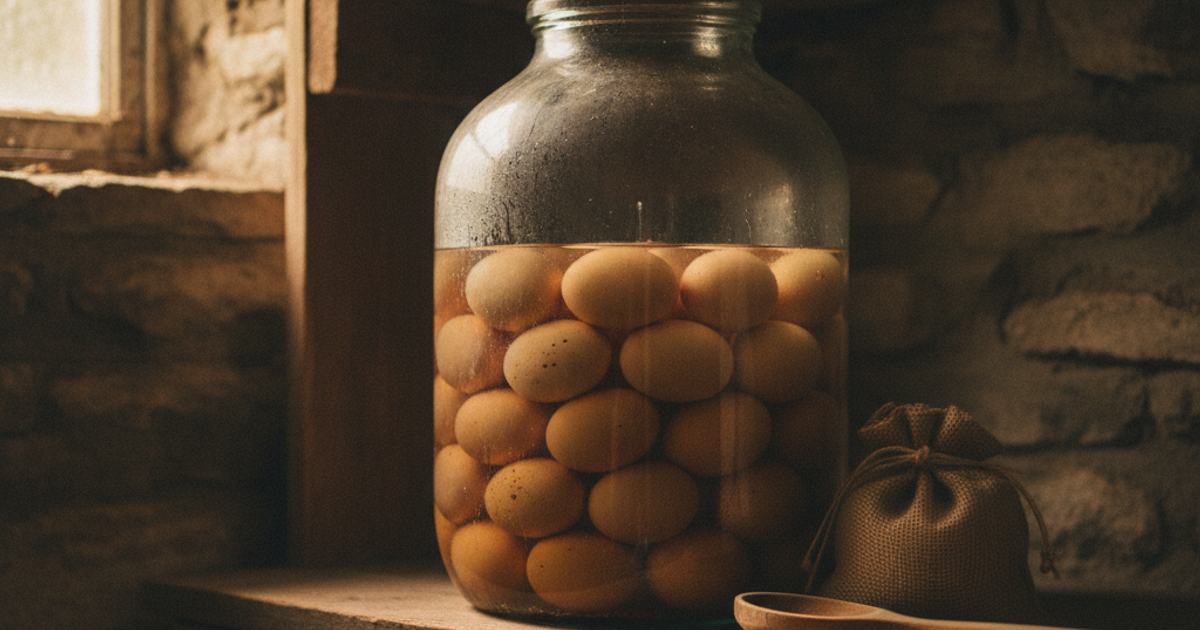
Long before electricity reached rural America, farm families routinely carried spring eggs through winter using a technique called water glassing. USDA farm bulletins from the early 20th century recommended both sodium silicate solution and limewater for exactly this purpose. Done correctly, water glassing keeps fresh, unwashed eggs edible for 12 to 18 months at room temperature — no power, no canning, no freezer. This guide covers water glassing with pickling lime, the simpler mineral oil method, and freeze-dried egg products for those who can't source farm-fresh eggs at all.
Why Store-Bought Eggs Usually Won't Work
Every egg is laid with a natural antimicrobial coating called the bloom or cuticle. It seals roughly 7,000 microscopic pores in the shell, blocking bacteria and slowing moisture loss. Commercial egg processing in the United States washes that bloom off — which is why American eggs must be refrigerated while European eggs sit on unrefrigerated shelves.
Water glassing requires unwashed eggs with the bloom intact. That means backyard hens, a neighbor's flock, a farmers market, or a local farm stand. If you're in an apartment, this is where neighborhood mutual aid networks pay dividends — one suburban household with six hens can supply several families. If you have yard space, even a small flock is worth considering; our guide to raising backyard chickens for food security covers the basics.
Use only clean, uncracked eggs collected within the past seven days. Never wash them. Brush off debris with a dry cloth or fine sandpaper. A single dirty or cracked egg can spoil an entire jar.
What You'll Need
Tools
- One-gallon glass jar with lid
- Half-gallon wide-mouth Mason jars
- Kitchen scale or measuring cups
- Long-handled spoon or whisk for stirring
Supplies
- Mrs. Wages Pickling Lime
- Food-grade calcium hydroxide (pickling lime)
- Distilled or boiled-and-cooled water
- Food-grade mineral oil (for the alternate method)
- Nitrile gloves and eye protection
How Water Glassing Eggs With Pickling Lime Actually Works
Pickling lime is food-grade calcium hydroxide. Dissolved in water, it creates a highly alkaline solution (pH around 12.4) that is saturated with calcium. The lime reacts with carbon dioxide passing through the shell and deposits calcium carbonate, effectively sealing the pores. The high pH simultaneously suppresses bacterial growth. The egg inside stays sealed, hydrated, and dormant.
The standard ratio is 1 ounce of pickling lime per 1 quart of water — roughly 2 tablespoons per quart, or 1/2 cup per gallon. Mrs. Wages Pickling Lime is the most widely available brand and one 16-ounce bag treats about four gallons of solution. For bulk preservation, Hoosier Hill Farm food-grade calcium hydroxide comes in larger quantities at a lower cost per pound. Do not substitute quicklime, garden lime, agricultural lime, or dolomitic lime — those are not food safe.
Step-by-Step Instructions
Step 1: Gather Fresh, Unwashed, Uncracked Eggs
Collect eggs that are less than a week old with the bloom intact. Inspect each one in strong light or with a flashlight for hairline cracks. Wipe visible dirt away with a dry cloth only — moisture removes the bloom. Set aside any questionable eggs for immediate use.
Step 2: Sanitize and Select Your Storage Vessel
Use food-grade glass, ceramic, or HDPE plastic. Never use metal — the alkaline solution reacts with aluminum and galvanized containers. A one-gallon Anchor Hocking glass jar holds about 18 to 24 large eggs and lets you inspect the contents without opening it. Apartment preppers should favor several half-gallon wide-mouth Mason jars instead — smaller vessels fit under beds and in closets and limit your loss if one batch fails.
Step 3: Mix the Pickling Lime Solution Correctly
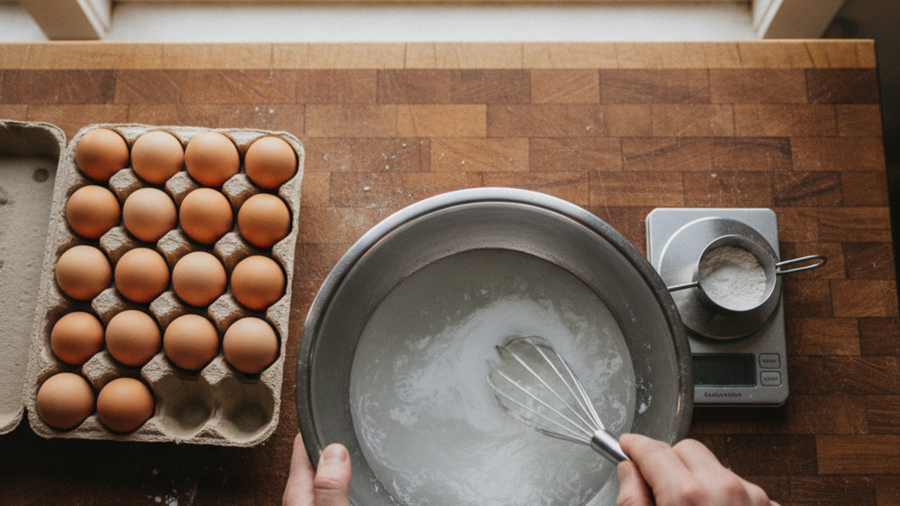
Wearing gloves and eye protection, dissolve 1 ounce of pickling lime into 1 quart of distilled or boiled-and-cooled water. Stir thoroughly for a full minute. The solution will look milky and some lime will settle out — that's normal and actually desirable, since it means the water is fully saturated with calcium hydroxide. Mix enough to cover your eggs by at least two inches.
Step 4: Pack Eggs Pointed End Down
Place eggs in the jar with the narrow end facing down and the air cell at the top. Stack them in layers, handling gently so no shells crack. Leave enough headspace that every egg will be completely submerged with two inches of solution above the top layer.
Step 5: Cover, Seal, and Label the Container
Pour the stirred solution over the eggs until fully submerged. Any egg that floats to the surface or touches air will spoil. Put the lid on loosely — no vacuum seal needed — and label with the packing date. Do not add eggs to an existing jar weeks later; date each batch separately.
Step 6: Store in a Cool, Dark, Stable Location
Target 50–70°F. A basement, root cellar, interior closet, or the back of a pantry all work. Avoid garages and attics where temperature swings above 75°F. Urban preppers can tuck jars into a closet floor — the same principle behind other small-space emergency stockpile strategies.
Step 7: Test Every Egg Before You Eat It
Remove an egg, rinse it thoroughly under clean water to wash off the lime, and float-test it in a bowl of water. Sinkers are good. Floaters get discarded. Then crack it into a separate bowl and smell it before it goes anywhere near your pan.
The Mineral Oil Method for Shorter-Term Storage
If pickling lime isn't available, coating eggs in food-grade mineral oil is a simpler fallback. Warm the oil slightly, apply about 1/4 teaspoon per egg with gloved hands or a paper towel, coating the entire shell. Store pointed end down in a carton at 60–68°F. Research from Kansas State University and older USDA studies found oiled eggs maintained interior quality significantly longer than untreated ones — expect roughly 6 to 9 months of usable storage, versus 12 to 18 for water glassing. Oiled eggs also behave more normally in the kitchen; water-glassed shells become brittle and tend to crack when boiled.
Freeze-Dried and Powdered Eggs for the Deep Pantry
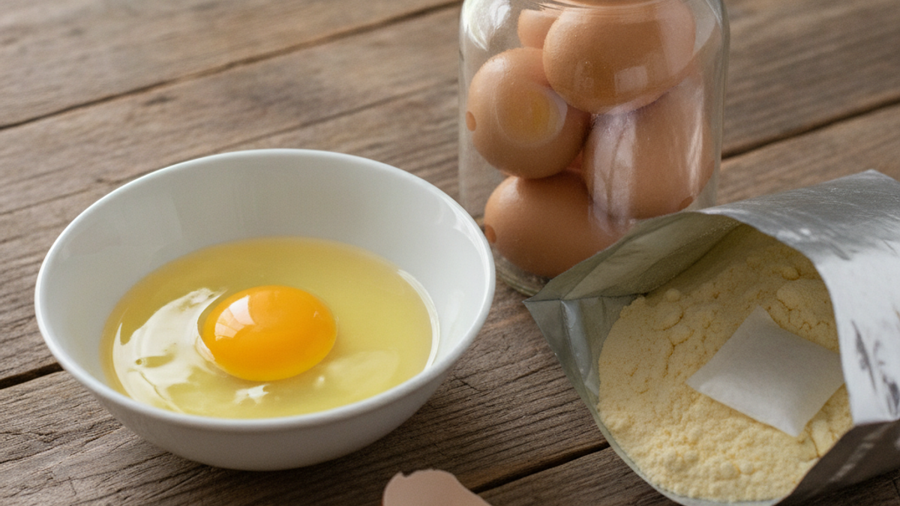
Water glassing is a one-year solution. For the true deep pantry, freeze-dried whole eggs stored in sealed cans last 10 to 25 years. Thrive Life freeze-dried whole eggs reconstitute with water for scrambling and baking, and Augason Farms dried whole egg powder offers one of the lowest costs per serving in the category. If you run a home freeze dryer, Harvest Right mylar bags and oxygen absorbers let you process your own surplus eggs into shelf-stable powder — see our breakdown of freeze-dried vs. dehydrated vs. vacuum-sealed storage for method selection.
Recommended Gear
Pest protection matters more than most preppers realize. Opened cans of egg powder and bulk pickling lime both belong in something rodent-proof — a Vittles Vault 5-gallon airtight container keeps moisture and vermin out of your supplies indefinitely. Pair your egg storage with lacto-fermented vegetables and shelf-stable fats for a balanced no-refrigeration pantry, and browse our recommended survival gear for more emergency food storage equipment.
Frequently Asked Questions
How long do water glassed eggs really last without refrigeration?
Properly packed unwashed eggs in a saturated pickling lime solution, held at 50–70°F, reliably last 12 to 18 months. Homesteaders regularly report edible eggs at the two-year mark, though yolk membranes weaken and whites thin over time. Always float-test and smell each egg before use.
Can I water glass store-bought eggs from the grocery store?
No. Commercial eggs are washed and sanitized, which strips the protective bloom and leaves the shell pores open to bacteria. Source unwashed eggs directly from a backyard flock, farm stand, or farmers market instead, and ask the seller specifically whether the eggs were washed.
Is water glassing eggs safe according to food safety authorities?
The USDA no longer issues recommendations on water glassing, though it was published in government farm bulletins for decades. Modern testing by the University of Alaska Fairbanks Cooperative Extension found lime-preserved eggs maintained acceptable quality for months. Mitigate risk by using only pristine unwashed eggs, keeping temperatures below 70°F, cooking eggs thoroughly, and discarding anything that floats or smells off.
Affiliate Disclosure: SHTFPlan.net participates in the Amazon Services LLC Associates Program. Some links are affiliate links — we may earn a small commission at no extra cost to you.