Backyard Chickens for Preppers: How to Raise a Flock for Food Security
Chickens are the ultimate survival livestock — providing eggs, meat, and fertilizer. Here's how to start and sustain a flock before SHTF.
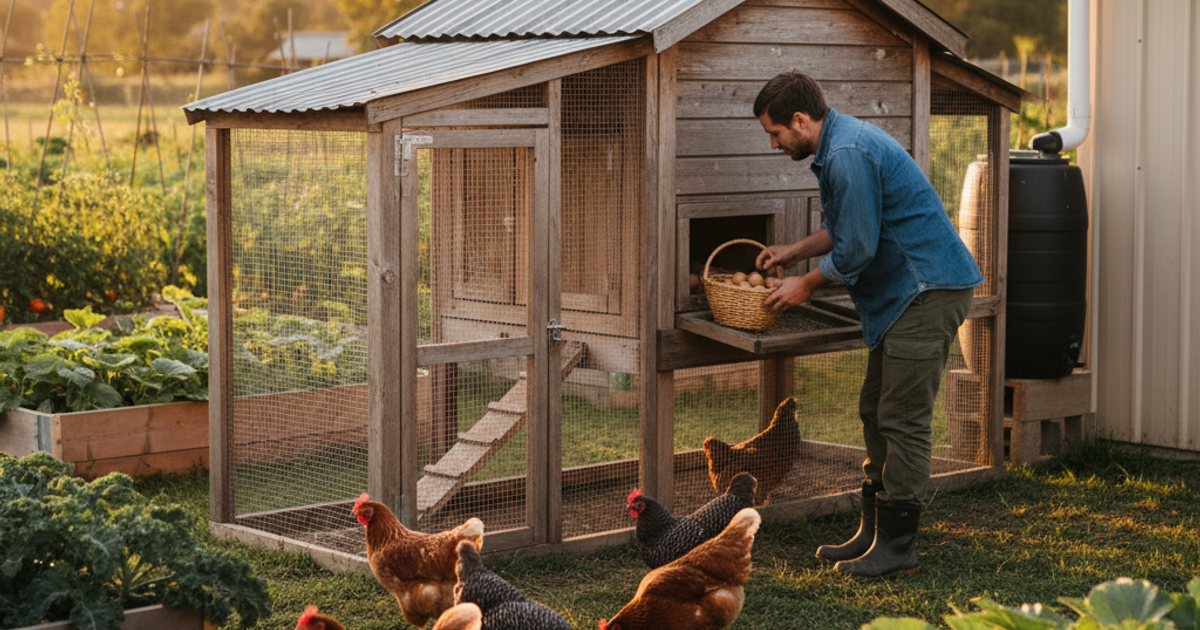
When the grocery store shelves go empty — whether from a supply chain collapse, a regional disaster, or a full-scale SHTF scenario — the people who eat are the ones who planned ahead. Emergency food storage and a well-stocked survival kit can carry you through the first weeks, but for true long-term food security, you need a living food source. Backyard chickens are one of the most practical, cost-effective, and scalable solutions available to the modern prepper — whether you're on a quarter-acre suburban lot or a 40-acre rural homestead.
A small flock of six laying hens can produce four to five eggs per day under normal conditions. That's enough protein to feed a family, barter with neighbors, and stretch your emergency food storage significantly further. And when egg production slows, the birds themselves become a meat source. This isn't hobby farming — this is strategic food production for people who take preparedness seriously.
Why Backyard Chickens Are a Cornerstone of Off-Grid Food Security
Chickens are remarkably efficient converters of feed into protein. According to the American Egg Board, a single hen produces approximately 250 to 300 eggs per year under optimal conditions. Compare that to the space requirements and cost of larger livestock, and chickens are almost unbeatable for suburban and urban survival setups. They require minimal square footage — as little as 4 square feet per bird inside a coop and 10 square feet in an outdoor run — making them feasible even in densely populated areas.
Beyond eggs, chickens provide:
- Meat production — dual-purpose breeds like Plymouth Rock and Rhode Island Red yield significant carcass weight at processing time
- Pest control — chickens consume insects, grubs, and ticks, reducing your pest pressure naturally
- Fertilizer — chicken manure is high in nitrogen and an invaluable asset for off-grid garden production
- Barter currency — in a grid-down scenario, eggs and live birds become high-value trade commodities, as outlined in our guide to Financial Preparedness: Building a Cash Reserve and Barter Economy for SHTF
How to Choose the Right Chicken Breed for Survival and Prepper Use
Breed selection is one of the most important decisions you'll make. Not all chickens are created equal, and the wrong breed can leave you with poor egg production, fragile birds, or animals that won't forage efficiently in a collapse scenario.
Best Dual-Purpose Breeds for Preppers
- Rhode Island Red — Hardy, cold-tolerant, prolific layers (250–300 eggs/year), good meat bird
- Plymouth Rock (Barred Rock) — Calm temperament, excellent foragers, reliable year-round layers
- Sussex — Cold-hardy, docile, good meat-to-egg ratio, adaptable to confinement or free range
- Orpington — Excellent cold weather tolerance, dual-purpose, goes broody (will hatch eggs naturally — critical for self-sustaining flocks)
- Australorp — World-record egg layers, heat tolerant, disease resistant
Avoid highly commercial breeds like Leghorns if you want meat production and self-sustaining capability. They're egg machines, but they won't go broody, meaning you'll need an incubator to reproduce your flock. Speaking of which — if you want to hatch your own chicks without depending on a broody hen, the Brinsea Mini II Advance egg incubator is one of the most reliable options on the market, featuring automatic turning, precise temperature control, and humidity management for hatch rates that rival professional hatcheries.
Setting Up a Chicken Coop for Urban, Suburban, and Rural Preppers
Your coop doesn't need to be elaborate, but it does need to be predator-proof, ventilated, and appropriately sized. For preppers in urban and suburban environments, the coop also needs to maintain a low profile — situational awareness means understanding that visible food resources attract unwanted attention in a crisis.
Coop Essentials
- Minimum 4 sq ft per bird inside, 10 sq ft per bird in the run
- Hardware cloth (NOT chicken wire — predators tear through chicken wire easily) on all openings
- Automatic ventilation or manual vents near the roofline
- Nesting boxes — one per 3-4 hens
- Roosting bars at least 2 inches wide, elevated off the floor
- Locking latches on all doors — raccoons are disturbingly good at opening standard latches
For security and convenience — especially important during grid-down scenarios where your attention is divided — the RentACoop automatic chicken coop door opener is a worthwhile investment. It operates on a timer or light sensor, automatically closing the coop at dusk to protect your birds from nocturnal predators without requiring you to be present — a critical advantage when your time and energy are stretched thin.
If you're integrating chickens into a broader homestead security plan, pair your flock with perimeter awareness strategies detailed in our article on Perimeter Security: Protecting Your Retreat Property. Predator pressure on your chickens often signals broader security concerns worth monitoring.
Feeding Your Flock When Commercial Feed Is Unavailable
Under normal conditions, quality layer feed is the foundation of egg production. Purina Layena Plus Omega-3 layer pellets are a top-tier commercial option — fortified with flaxseed for enhanced omega-3 content in eggs, balanced for optimal calcium and protein ratios that keep hens producing consistently. Stock several hundred pounds in sealed containers as part of your emergency food storage rotation.
But here's the prepper-critical question: what do you feed chickens when commercial feed runs out?
- Free-ranging — Chickens on open pasture can source 20-30% of their diet independently through insects, seeds, and greens
- Kitchen scraps — Vegetable peelings, cooked grains, bread, fruit — almost anything you eat, they can eat (avoid avocado, onion, and raw potato)
- Black soldier fly larvae — Cultivating larvae from compost is a high-protein feed supplement you can produce indefinitely
- Fodder systems — Sprouting barley, wheat, or sunflower seeds multiplies feed volume and nutritional value significantly
- Garden surplus and crop waste — Pair your flock with a productive garden and almost nothing goes to waste
For reliable daily feeding without waste, the Harris Farms chicken poultry feeder is a solid, durable option that reduces spillage and keeps feed dry — important for preventing mold and disease in your flock. Pair it with a Little Giant galvanized poultry waterer, which is rust-resistant, holds several gallons of water, and keeps your birds hydrated without constant refilling. Dehydration kills egg production within 24 hours — don't underestimate the waterer.
Health, Disease Prevention, and Long-Term Flock Management
A sick flock is a dead food source. In a SHTF scenario, veterinary care won't be available, so prevention is everything. Basic biosecurity practices can prevent 90% of common poultry diseases.
Core Health Practices
- Quarantine all new birds for 30 days before introducing them to your existing flock
- Keep the coop dry — moisture is the primary driver of respiratory illness and coccidiosis
- Provide grit (small stones) so birds can properly digest whole grains
- Supply crushed oyster shell separately for calcium — critical for strong eggshell production
- Dust bath access prevents mites and lice naturally
- Rotate pasture access to break parasite cycles
- Learn to recognize Marek's disease, Newcastle disease, and egg-bound hens — early intervention is the difference between one sick bird and a dead flock
Stock basic poultry medications in your preparedness supplies: electrolyte powder, Corid (for coccidiosis), Vetericyn wound spray, and diatomaceous earth for parasite control. Building a flock that can sustain itself also means selecting breeds that go broody and keeping a rooster — a single rooster can fertilize eggs for up to a dozen hens, making your flock self-reproducing. If you're raising meat birds alongside layers, pair chickens with other small livestock covered in our guide on DIY Rabbit Hutch and Backyard Livestock: Raising Meat Animals for Long-Term Food Security for a diversified protein production system.
Urban and Apartment Prepper Considerations
Not every reader has a backyard. If you're in an apartment or urban setting, here's the honest assessment: full-time chicken keeping isn't feasible in a standard apartment. However, urban preppers can:
- Partner with suburban or rural members of their mutual aid network who keep flocks
- Advocate for and participate in community chicken coops in urban gardens
- Check local municipal codes — many cities now allow 4-6 hens (no rooster) in residential zones
- Plan now to acquire birds as part of a bug-out or relocation strategy — know where you're going and who has livestock infrastructure
Urban survival planning should account for the reality that animal protein will be scarce in prolonged emergencies. Building relationships with people who produce food is itself a preparedness strategy, as we outline in our guide to Neighborhood Mutual Aid Networks: How to Build a Community Survival Team Before SHTF.
Processing Chickens for Meat: What Every Prepper Needs to Know
When a hen's egg production drops off at 2-3 years of age, or when you have surplus cockerels from hatching, processing for meat is the logical next step. This is a skill most modern people lack — and that gap becomes critical in a collapse scenario.
Learn and practice these skills before you need them:
- Humane dispatch methods (cervical dislocation or sharp knife — practice matters)
- Scalding and plucking (155-160°F water for 45-60 seconds loosens feathers effectively)
- Evisceration — knowing what to remove and how to do it cleanly prevents contamination
- Preservation — fresh chicken should be chilled immediately; learn to smoke or can meat for storage without refrigeration
What You'll Need
- Chicken coop (minimum 4 square feet per bird inside, 10 square feet per bird outside)
- Nesting boxes (one box per 3-4 hens)
- Feeders and waterers
- Quality layer feed or starter feed
- Bedding material (straw, pine shavings, or sand)
- Heat lamp for chicks (if starting from chicks)
- Fencing and predator-proofing materials
- Grit and oyster shells for digestion and egg production
Step-by-Step Instructions
Step 1: Select the Right Breed for Your Preparedness Goals
Choose dual-purpose breeds that provide both eggs and meat, such as Rhode Island Reds, Plymouth Rocks, or Orpingtons. Consider your climate when selecting breeds, as some handle heat or cold better than others. For maximum food security, aim to start with 4-6 hens and one rooster if you plan to breed your own replacement birds. Research each breed's temperament, egg production rates, and meat yield to ensure they align with your survival strategy.
Step 2: Build or Purchase a Secure Coop
Construct a predator-proof coop with hardware cloth (not chicken wire) on all openings, including ventilation areas. Ensure the coop has proper ventilation, roosting bars 2-3 feet off the ground, and easy access for cleaning and egg collection. Elevate the coop off the ground to prevent moisture and predator access underneath. Include a covered run area where chickens can safely forage while protected from aerial predators like hawks.
Step 3: Acquire Your Starter Flock
Purchase chicks from a reputable hatchery, adopt started pullets (young hens) from local farmers, or rescue chickens from battery cage operations. If buying chicks, you'll need a brooder setup with a heat lamp maintaining 95°F for the first week, decreasing by 5°F each week. Started pullets cost more but begin laying eggs within weeks rather than months. Always quarantine new birds for at least two weeks before introducing them to an existing flock to prevent disease transmission.
Step 4: Establish a Feeding and Care Routine
Provide layer feed with 16-18% protein for adult hens, and ensure constant access to fresh, clean water. Supplement with kitchen scraps, garden waste, and allow foraging time to reduce feed costs and improve nutrition. Offer crushed oyster shells free-choice for calcium and grit for digestion. Check feed and water twice daily, collect eggs at least once daily, and observe your flock for signs of illness or distress.
Step 5: Implement Biosecurity and Health Management
Keep the coop clean by removing droppings weekly and doing a complete bedding change monthly to prevent disease and parasites. Watch for common chicken ailments like respiratory infections, mites, and egg-binding, and keep a basic poultry first aid kit on hand. Limit visitor access to your flock and avoid bringing wild birds' diseases to your chickens by washing hands and changing shoes after contact with other poultry. Consider natural preventatives like apple cider vinegar in water and diatomaceous earth for parasite control.
Step 6: Prepare for Egg Collection and Storage
Collect eggs daily to prevent broodiness and reduce the chance of eggs being eaten or damaged. Clean dirty eggs with a dry cloth or fine sandpaper rather than washing, as water removes the protective bloom that keeps bacteria out. Store eggs pointed-end-down in a cool location where they'll keep for 3-4 weeks, or learn preservation methods like water glassing or freezing for long-term storage. Track which hens are laying by monitoring nesting box activity to identify and cull non-productive birds if necessary.
Step 7: Plan for Flock Sustainability and Breeding
Keep a rooster if local ordinances allow and you want to hatch your own replacement chickens for true food independence. Learn to identify fertile eggs and incubate them using a broody hen or a mechanical incubator to maintain your flock size. Cull older hens (typically after 2-3 years when egg production declines) for meat to maximize your food resources. Maintain detailed records of hatching dates, lineage, and production to selectively breed the most productive and hardy birds for your specific conditions.
Frequently Asked Questions
How many chickens do I need to feed my family during an emergency?
For a family of four, a flock of 8-12 laying hens provides a reliable daily egg supply, accounting for seasonal production drops in winter and molting periods. Each hen averages 4-5 eggs per week during peak production. For a mixed egg-and-meat strategy, add 10-15 meat breed birds raised in batches each season. This gives you consistent protein production without requiring large amounts of feed or space.
How long can chickens survive without commercial feed in a SHTF scenario?
Chickens can survive indefinitely without commercial feed if they have access to adequate foraging space, supplemental kitchen scraps, and cultivated feed alternatives like fermented grains or black soldier fly larvae. Egg production will likely drop 20-40% during a feed transition period, but birds on a varied whole-food diet can remain productive long-term. The key is starting the transition gradually before a crisis forces it abruptly — integrate alternative feeding methods now while commercial feed is available.
Are backyard chickens legal in cities, and what do I need to know before starting?
Legality varies significantly by municipality. As of recent years, cities including Los Angeles, New York, Chicago, Denver, and Seattle allow backyard hens with permit requirements ranging from flock size limits (typically 4-6 birds) to coop setback distances from property lines. Roosters are almost universally prohibited in residential zones due to noise ordinances. Check your city's zoning code directly — many have updated ordinances in recent years. Even where chickens are currently prohibited, building your knowledge base, sourcing your equipment, and networking with rural contacts is the smart prepper move, so you can act immediately when circumstances change.
Affiliate Disclosure: SHTF Plan participates in the Amazon Services LLC Associates Program. Some links are affiliate links — we may earn a small commission at no extra cost to you.