Grip, Rack, Aim: How to Choose and Train with a Shotgun for Home Defense When SHTF
A shotgun can be the most effective home defense weapon you own — but only if you choose the right one and actually know how to use it under pressure.
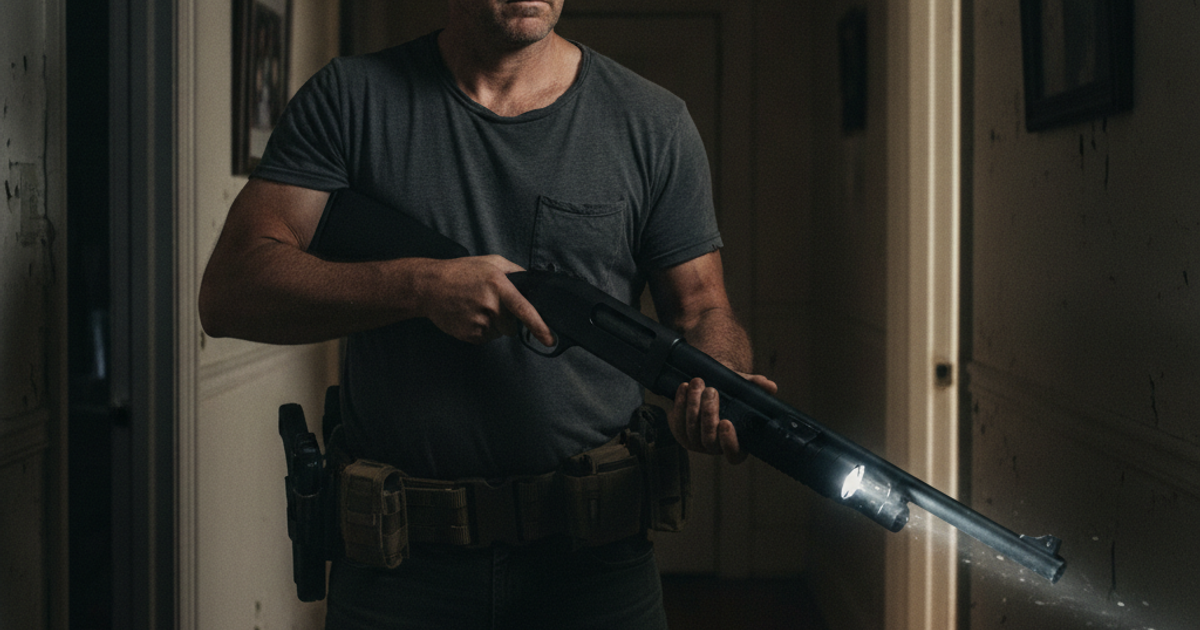
When the grid goes down, law enforcement response times stretch from minutes to hours — or disappear entirely. In that gap, your home becomes your castle, and you become its sole defender. For generations, the shotgun has been the go-to tool for that role, and for good reason. It delivers devastating stopping power at close range, functions reliably under stress, and requires less precise aim than a rifle. But picking the right shotgun off the shelf and actually being ready to use it in a life-or-death scenario are two very different things. This guide covers both — from choosing your platform and configuring it for your environment, to building the training habits that could save your life and the lives of everyone sheltering with you.
Whether you're a suburban homeowner defending a split-level, a rural prepper protecting acreage, or an apartment dweller on the third floor with thin walls and neighbors on all sides, this guide will help you make smarter decisions about your most important piece of home defense survival gear. And if you're still weighing your options on firearm selection, check out our breakdown of Shotgun vs. Rifle vs. Handgun: How to Choose the Right Long Gun for Home Defense When SHTF before you commit.
What You'll Need
Tools
- Mossberg 500 shotgun cleaning kit
- Wheeler Engineering gunsmithing armorer tool kit
- Bore light or flashlight for chamber inspection
Supplies
- Mesa Tactical shotgun shell side saddle carrier
- Allen Company shotgun shell bandolier ammunition holder
- 00 buckshot (primary defensive load)
- Reduced-recoil buckshot (for smaller-framed shooters or tight-quarters environments)
Choosing the Right Shotgun for Home Defense in a SHTF Scenario
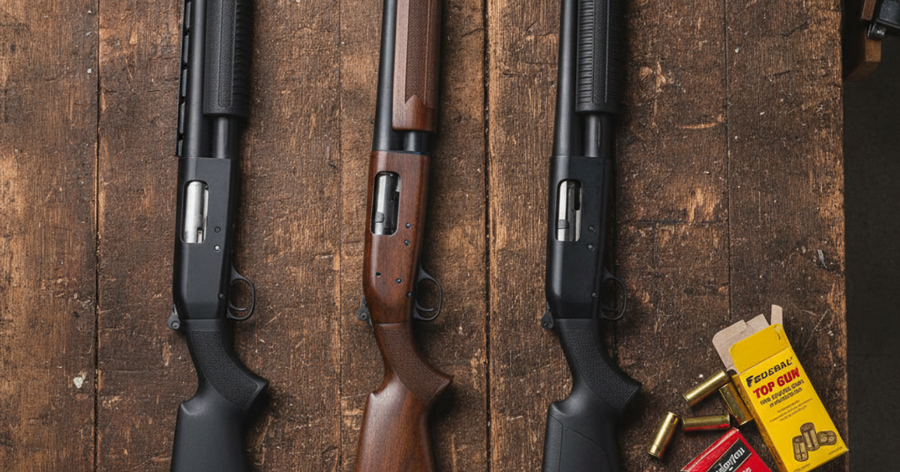
The two dominant action types for defensive shotguns are pump-action and semi-automatic. Each has real-world advantages. Pump-action shotguns — like the Mossberg 500/590 or Remington 870 — are mechanically simple, tolerant of dirty ammunition and neglect, and less expensive. Semi-automatic shotguns — like the Beretta A300 or Mossberg 930 — offer faster follow-up shots and reduced felt recoil, but they can be more finicky about ammunition selection and require more maintenance.
For most preppers, especially those new to shotguns, a pump-action is the smarter starting point. Under extreme stress, the manual cycling motion actually provides tactile confirmation that the gun is ready to fire — something experienced trainers frequently recommend for high-stress defensive contexts.
Barrel Length and Gauge Considerations
For home defense, an 18–20 inch barrel is the sweet spot. It's maneuverable in hallways, lighter than longer hunting barrels, and still legal in all 50 states without special licensing (barrels under 18 inches require an NFA Short-Barreled Shotgun classification). The 12-gauge is the dominant defensive choice because of ammunition availability and terminal performance. The 20-gauge is a legitimate option for smaller-framed shooters — modern defensive loads have made it far more effective than it was a generation ago. Avoid the .410 for primary home defense; the ballistic data simply doesn't support it as a stopping-power platform.
Choke selection also matters more than most people realize. A tight full choke will pattern your buckshot too densely at close range, potentially missing vital stops at typical indoor distances. A Carlson choke tube designed specifically for home defense — typically an improved cylinder or specialized buckshot choke — will optimize your pattern spread for 5–25 yard engagements without sacrificing pellet grouping.
How to Set Up a Defensive Shotgun for Urban and Rural Environments
A stock shotgun from the factory is rarely optimized for home defense. A few targeted upgrades make a dramatic difference in performance and control.
Stock and Grip
A proper stock fit is foundational. If the length of pull is wrong for your body, your mount will be inconsistent and your accuracy will suffer under stress. The Magpul SGA stock for Mossberg is one of the most popular upgrades in the prepper and defensive shooting community for good reason — it offers adjustable length of pull, an improved cheek weld, and a textured grip surface that holds even with sweaty or gloved hands. Avoid pistol grip-only configurations for home defense; they reduce control and accuracy significantly in real-world shooting scenarios.
Lighting
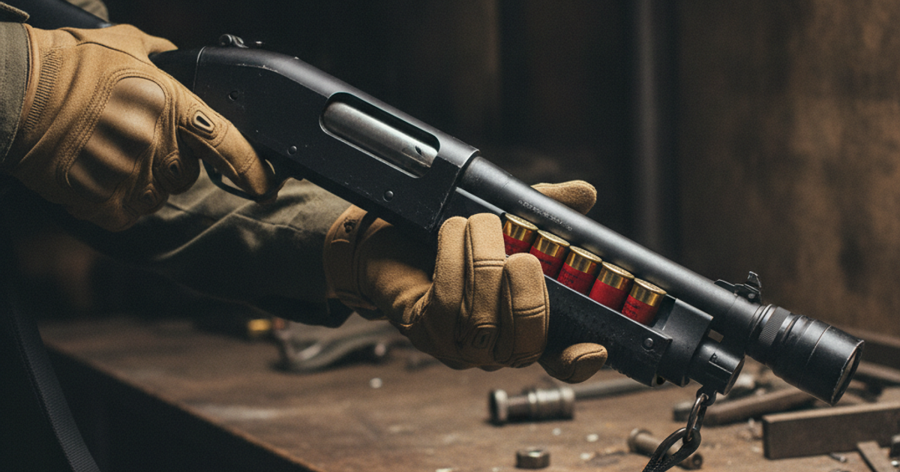
You cannot shoot what you cannot positively identify. In a low-light or no-light SHTF scenario, this is not optional — it is a moral and tactical necessity. The Streamlight TLR-1 weapon-mounted tactical flashlight is a mil-spec-rated, 300-lumen unit that mounts securely to your shotgun's accessory rail and activates with a momentary or constant-on pressure switch. A weapon-mounted light keeps both hands on the gun while you illuminate threats — a critical advantage during a home invasion.
Ammunition Carriers
A standard shotgun holds 4–8 shells. In a prolonged defensive scenario, that may not be enough. A Mesa Tactical side saddle shell carrier mounts directly to your receiver and keeps 4–6 additional rounds within immediate reach for rapid reloading. For extended operations or rural scenarios where you might be moving through a property, the Allen Company shotgun shell bandolier gives you a wearable ammunition reserve that keeps shells accessible across your chest without hampering movement.
Sling
A sling is often the first upgrade people skip and the one they regret most. In a two-handed defensive scenario, there will be moments when you need a free hand — to open a door, assist an injured family member, or apply first aid. A Blackhawk two-point adjustable shotgun sling lets you transition the weapon safely and quickly without setting it down. Speaking of injury — if a defensive situation goes sideways, knowing how to respond to trauma is just as important as the firearm itself. Our guide on building a gunshot wound kit with chest seals, tourniquets, and hemostatic gauze is required reading for anyone serious about home defense preparedness.
Ammunition Selection: What to Load and Why
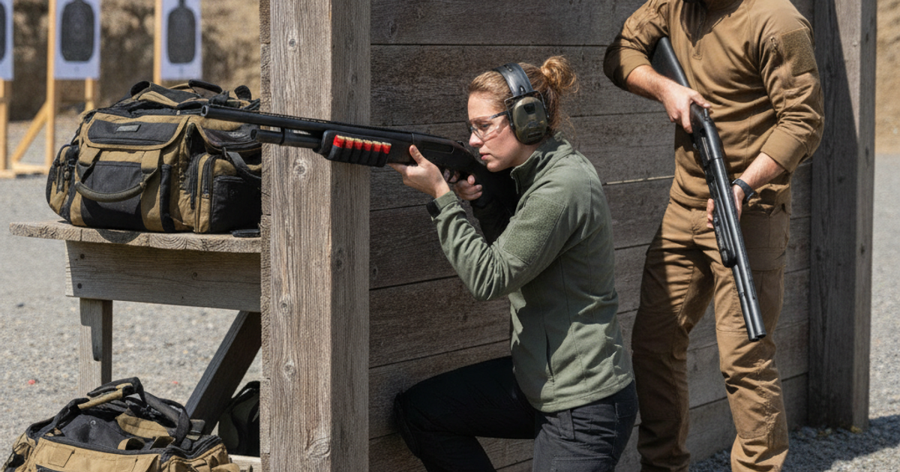
For home defense, 00 buckshot is the gold standard. Each shell fires 8–9 pellets of approximately .33 caliber lead, creating multiple wound channels simultaneously. At 10 yards — a typical indoor defensive distance — Federal Premium reduced-recoil 00 buckshot patterns approximately 4–6 inches, which is devastating to soft tissue while remaining manageable in terms of recoil and overpenetration risk.
Apartment and urban dwellers should take overpenetration seriously. Standard 00 buckshot will pass through standard drywall multiple times. Reduced-recoil loads help somewhat, but no buckshot load is truly "safe" in shared-wall environments. Some experts recommend #4 buckshot (which contains up to 27 pellets of .24 caliber) as a compromise — still highly effective at close range but with reduced penetration through walls. Birdshot is not a reliable defensive load despite common belief — it lacks the penetration depth required to reach vital organs through clothing and body tissue at realistic defensive distances.
Store your defensive ammunition in a sealed container in a cool, dry location and rotate it every few years. Moisture is the enemy of reliable ignition — a critical consideration in long-term emergency preparedness.
Step-by-Step Instructions
Step 1: Select the Right Shotgun Platform for Your Living Environment
Assess your home's layout before purchasing. Measure your hallways, stairwells, and likely engagement distances. Homes under 1,500 square feet with tight hallways favor an 18-inch barrel; larger rural properties may benefit from a 20-inch barrel for slightly improved pattern consistency at extended range. Choose pump-action for reliability and budget, or semi-auto if you're an experienced shooter who can commit to regular maintenance.
Step 2: Fit the Shotgun to Your Body and Establish a Proper Mount
Shoulder the unloaded shotgun and check your eye alignment with the bead sight or ghost ring. Your trigger finger should naturally reach the trigger with the pad — not the crease — of your index finger. Adjust your stock length (or upgrade to the Magpul SGA for adjustable fit) until the mount is consistent and the recoil pad seats firmly against your shoulder pocket without gaps. A poorly fitting stock causes flinching, which degrades accuracy and control under stress.
Step 3: Install and Configure Your Defensive Accessories
Mount your weapon light to the accessory rail at the 12 o'clock or 9 o'clock position, depending on your dominant hand. Install your side saddle with the shell carrier oriented so you can thumb rounds into the loading port smoothly. Attach your sling and adjust it so the gun hangs at mid-chest level when unsupported. Practice activating the weapon light with your support thumb without breaking your grip.
Step 4: Pattern Your Shotgun at Defensive Distances
Take your shotgun to a range and fire your chosen defensive load at 5, 10, 15, and 25 yards at a full-size silhouette target. Document the pattern size at each distance. This tells you exactly how much aim precision you need at each range — and whether your choke tube selection is appropriate. Replace your choke if the pattern is too tight at close range (under 5 inches at 10 yards) or too wide (more than 12 inches at 10 yards) for reliable center-mass hits.
Step 5: Practice the Four Fundamental Defensive Shotgun Skills
Build your training around four core skills: the combat mount (consistent, fast shouldering from a low-ready position), trigger management (smooth press without disturbing the bead), tactical reload (topping off the magazine tube before it's empty), and emergency reload (loading a single shell directly into the chamber when the gun is empty under threat). Dry-fire practice all four skills at home before burning live ammunition at the range.
Step 6: Train for Low-Light and Confined-Space Scenarios
Most home invasions happen at night. Practice your weapon-light activation and target identification drills in low-light conditions at the range if your facility permits. At home, walk your defensive lanes with an unloaded shotgun to understand how the barrel clears corners, doorways, and stairwells. Practice "slicing the pie" — exposing only a small part of your body around a corner while clearing the space before you fully commit to an angle.
Step 7: Establish a Safe Storage and Ready-Access Plan
Your shotgun is useless if it's locked in a case in the closet when you need it in 30 seconds. A quick-access shotgun vault or mounted retention rack keeps the firearm secured but immediately accessible to you and only you. Store it with the magazine tube loaded but the chamber empty (the "cruiser ready" or "condition 3" configuration) so a threat-appropriate, conscious decision is required before firing. This is especially important in homes with children.
Step 8: Clean and Maintain Your Shotgun on a Regular Schedule
A defensive firearm that malfunctions when you need it has a value of exactly zero. After every range session and at least quarterly if stored, run a complete cleaning cycle. A quality Mossberg 500 shotgun cleaning kit includes bore brushes, patches, solvent, and lubricant sized specifically for your platform. Pay particular attention to the bolt, action bars, and magazine tube spring — all areas where fouling and corrosion accumulate and cause feeding failures. For deeper disassembly and armorer-level maintenance, the Wheeler Engineering gunsmithing armorer tool kit gives you the precision tools to swap stocks, adjust trigger groups, and maintain every component without damaging your firearm.
Urban, Suburban, and Rural Considerations for Shotgun Home Defense
Situational awareness and environmental context shape how you configure and deploy your defensive shotgun. Apartment dwellers face the dual challenge of overpenetration risk and neighbors who may be alarmed or endangered by stray pellets. In dense urban environments, a shotgun may not always be the primary choice — but if it is your platform, reduced-recoil #4 buckshot and a disciplined awareness of what's behind your target are essential. Review our guide on choosing the right firearm for home and bug-out survival to ensure your platform matches your threat environment.
Suburban homeowners generally have more flexibility. Standard 00 buckshot in a 12-gauge with an 18–20 inch barrel represents the ideal balance of stopping power and handling in a single-family home. Rural preppers defending larger properties should consider that they may face threats at greater distances — a modified choke and larger shot sizes like #1 buckshot extend effective range while maintaining multi-pellet terminal effect. Rural residents should also build their defensive plan around perimeter awareness; our guide on perimeter alarms and trip wires covers early warning systems that give you time to get your shotgun in hand before the threat reaches your door.
The Training Mindset: Why Equipment Is Only 20% of the Equation
Studies of law enforcement and military training consistently show that under extreme stress, fine motor skills degrade and gross motor skills dominate. This means complex manipulations — like operating a safety, performing a tactical reload, or managing a malfunction — become dramatically harder when adrenaline is maxed out. The only antidote is repetition. FBI research on officer-involved shootings has consistently identified training volume and realistic scenario practice as the primary differentiator between officers who perform effectively under fire and those who do not.
For civilian preppers, this translates to a simple standard: dry-fire 10 minutes per day, live-fire at least 50 rounds per month. Join a local USPSA or 3-Gun club even if competition isn't your goal — the movement, reloading under pressure, and target transitions provide more realistic defensive training than static square-range shooting. Take a formal shotgun defensive course from a reputable trainer at least once. The investment pays dividends that no amount of gear upgrades can match.
Frequently Asked Questions
Is a shotgun really the best choice for home defense when SHTF?
For many preppers, yes — especially those who are not highly experienced shooters. The shotgun delivers superior terminal performance at close range without requiring the precision aim that a handgun or rifle demands under stress. At typical indoor distances of 5–15 yards, a properly patterned 00 buckshot load is extremely effective. However, the "best" choice is always the firearm you are most competent with, have trained on most extensively, and can reliably maintain. A handgun you shoot weekly is more effective than a shotgun you've fired twice.
How do I safely store a shotgun for home defense if I have children in the house?
The safest approach that preserves quick access is a biometric or keypad-access quick-access vault mounted to the wall, inside a nightstand, or under a bed. Store the shotgun in "cruiser ready" configuration — magazine tube loaded, chamber empty, safety on. This means an adult can make it ready in under two seconds, but a child who accesses the firearm cannot fire it without a deliberate racking motion that requires physical strength and knowledge. Never store a defensive firearm loaded and unsecured in a home with children. Consider also talking to older children about firearm safety using the Eddie Eagle or similar age-appropriate programs.
What's the difference between defensive shotgun training and just going to the range and shooting?
Standard range shooting typically involves standing still, shooting at a stationary target at a fixed distance, with unlimited time between shots. Real defensive scenarios involve movement, low light, stress, and decisions made in fractions of a second. Effective defensive training should include drawing from a ready position, moving while shooting, shooting from unconventional positions (kneeling, around cover), performing reloads under time pressure, and practicing malfunction clearances. If your range only allows static shooting, supplement with dry-fire drills at home and seek out practical shooting courses or defensive shotgun seminars from certified instructors.
Affiliate Disclosure: SHTFPlan.net participates in the Amazon Services LLC Associates Program. Some links are affiliate links — we may earn a small commission at no extra cost to you.