Signal Mirror, Whistle, and Smoke: How to Signal for Rescue When No One Can Hear You
When communication tech fails, primitive signaling skills can save your life. Learn the methods rescuers actually respond to.

When everything goes wrong — when your phone is dead, your radio is silent, and civilization feels a thousand miles away — the ability to signal for rescue could be the only thing standing between you and becoming another tragic statistic. According to the National Search and Rescue Committee, ground search and rescue teams in the United States conduct over 60,000 operations per year. The survivors who get found fastest aren't always the strongest or the most experienced. They're the ones who know how to be seen and heard.
Whether you're a rural prepper who spends weekends in the backcountry, a suburbanite whose bug out bag needs a signaling kit, or an urban dweller worried about getting trapped after an earthquake or building collapse, the fundamentals of survival signaling belong in your emergency preparedness toolkit. These techniques require minimal gear, cost almost nothing, and could buy you everything.
Why Survival Signaling Is a Critical But Overlooked Emergency Preparedness Skill
Most preppers spend thousands of hours — and thousands of dollars — on food storage, water purification, and defensive tools. Signaling gear gets an afterthought. That's a mistake. In a true SHTF scenario where you're injured, lost, or stranded, your ability to attract rescue is worth more than almost anything else in your survival kit.
Signaling isn't just a wilderness skill either. Urban survivors trapped under rubble after earthquakes, tornado victims stranded in isolated vehicles, and flood survivors cut off from roads all depend on visual and auditory signals to get rescued. If you want to round out your understanding of how to move and operate when infrastructure collapses, check out our guide on Escape and Evasion: How to Move Undetected When SHTF — because knowing when to hide and when to be found are two sides of the same coin.
How to Use a Signal Mirror to Flag Down Aircraft and Rescuers from Miles Away
A signal mirror is arguably the most powerful low-tech rescue tool ever devised. Under direct sunlight, a quality glass signal mirror can project a flash visible to aircraft at over 10 miles — sometimes up to 100 miles under ideal atmospheric conditions. That's extraordinary range for a device that weighs less than two ounces and costs under $10.
The technique matters as much as the tool. Here's how to use a signal mirror correctly:
- Face the sun — you need sunlight to create a reflection. Cloudy days reduce effectiveness, but even diffuse light from overcast skies can produce a usable flash.
- Extend one arm and form a V-shape with two fingers, framing your target (an aircraft or distant rescuer) between them.
- Hold the mirror close to your face with your other hand and tilt it until reflected sunlight appears on your outstretched fingers.
- Slowly sweep the reflection from your fingers toward your target, keeping it aimed in that direction. Repeat the sweep continuously.
- If your mirror has a sighting hole, use it — it makes aiming dramatically more precise.
The SOL Rescue Flash signal mirror is one of the most trusted options on the market, featuring a retroreflective aiming system that makes accurate targeting far easier than old-fashioned improvised mirrors. It's compact enough to slip into any bug out bag or everyday carry kit.
For a slightly different design, the UST StarFlash signal mirror offers a durable acrylic construction with a StarFlash retroreflector — meaning you can aim it accurately even when you can't see your own reflection clearly. This is especially valuable when you're injured, disoriented, or operating in bright desert conditions where glare makes standard mirrors difficult to use.
If you're building out a family emergency preparedness kit or supplying multiple people, the Coghlan's emergency signal mirror kit provides an affordable multi-piece option that lets you put signaling capability in every bag without breaking the budget. At its price point, there's no excuse not to have one in every vehicle emergency kit and every go-bag in the house.
If you prefer a military-grade option with a precision aiming hole, the SE Military signal mirror with sighting hole delivers exactly that — rugged construction, glass reflective surface, and an aiming system modeled after the mirrors used by armed forces personnel for decades.
The Survival Whistle: Your Loudest Voice When You Can't Yell Anymore
The human voice gives out fast. Yelling for help in a dusty collapse scenario, a dense forest, or a raging storm can leave you hoarse and exhausted within minutes — right when you need your energy most. A quality survival whistle produces sound at 100–120 decibels, carries over distances of a mile or more, and requires almost no physical effort to operate.
The universal distress signal is three short blasts, repeated at regular intervals. Rescuers and hikers worldwide recognize this pattern. Blow it, wait, listen. Repeat.
The Fox 40 Classic survival whistle is the gold standard for emergency signaling. It's pea-less — meaning no moving parts to freeze, clog with dirt, or malfunction under pressure — and produces a piercing, consistent tone in any weather condition. Search and rescue professionals, lifeguards, and military personnel use this whistle. It belongs in every survival kit, bug out bag, and vehicle emergency kit you own.
For urban survivors, a whistle is just as critical as for wilderness preppers. If you're trapped under building debris after an earthquake, smoke inhalation will shut down your voice fast. A whistle attached to your keychain or survival vest could keep you signaling for hours on almost zero energy. Our guide on Earthquake Preparedness: How to Survive Before, During, and After the Big One covers this scenario in detail — but the short version is this: a whistle on your keychain costs $5 and takes up no space. Carry one.
Smoke Signals: How to Create Visible Daytime Distress Signals
Smoke is one of the oldest and most effective daytime signaling methods known to humanity. The principle is simple: contrast. Dark smoke shows up against a bright sky; light smoke shows up against dark terrain or forest canopy. Skilled survivors control both.
To create dark, visible smoke, add rubber, plastic, oil-soaked rags, or green leafy vegetation to a fire. These materials produce thick black or dark gray plumes that are highly visible from aircraft.
To create white or light-colored smoke — better for signaling against dark forest backgrounds — add green fresh-cut grass, damp leaves, or pine boughs to a hot fire. The moisture creates pale, billowing smoke that stands out against dark terrain.
Key smoke signal tactics:
- Build three fires in a triangle pattern approximately 100 feet apart — this is the universally recognized distress signal from the air.
- Keep your signal fire ready to light fast. Have dry tinder and fuel pre-staged so you can ignite within seconds of hearing an aircraft.
- Open clearings are everything. A fire in dense forest is nearly invisible from above. Get your fire into an open meadow, hilltop, beach, or parking lot if possible.
- Urban survivors can use signal fires in parking structures, rooftops, or open lots — but practice extreme fire safety awareness and have a clear escape route.
For starting those fires reliably, our article on Primitive Fire Starting: Methods That Work walks through techniques that function even when your lighter runs dry.
Ground-to-Air Signals: How to Build Patterns That Pilots and Rescuers Will Recognize
If you're stranded in an open area and have time to prepare, ground-to-air signal patterns are enormously effective. These are large symbols constructed from whatever materials are available — rocks, logs, debris, clothing, or trampled vegetation — designed to be read from aircraft altitudes.
The internationally recognized signals used by search and rescue (and codified in aviation survival training) include:
- X — Need medical assistance; unable to proceed
- V — Need help
- → (arrow) — Traveling in this direction
- LL — All is well
- F — Need food and water
For maximum visibility, make your symbols at least 10 feet tall and 3 feet wide, with as much contrast as possible against the ground surface. Rocks on sand, dark wood on snow, bright fabric on grass — contrast is the goal. Lay a line of rocks or logs in the correct pattern, then fill it in solidly. From 1,000 feet altitude, a 10-foot symbol is barely visible; bigger is always better.
Urban application: After a major disaster like a hurricane or earthquake, survivors stranded on rooftops have successfully attracted helicopter rescuers using bedsheets, spray paint on flat roofs, and improvised symbols. Keep this in mind when building your Complete 72-Hour Bug Out Bag Checklist — a few yards of bright orange or yellow fabric weighs almost nothing and could make you visible from a passing rescue helicopter.
Night Signaling Techniques for SHTF and Rescue Scenarios
Darkness eliminates visual signals but creates new opportunities. Fire is the dominant night signal, but there are other options preppers should know.
- A flashlight or headlamp aimed at an aircraft and flashed in the international SOS pattern (three short, three long, three short) is recognizable and effective.
- Chemlights or glow sticks swung in a circle overhead create a visible signal that search aircraft are trained to look for.
- Signal fires at night need to be bright and steady rather than smoky — add dry wood and fuel for flames rather than damp material for smoke.
- Signal mirrors can still work at night with a bright artificial light source, though effectiveness is significantly reduced.
Good situational awareness — knowing when aircraft or vehicles are likely to be in your area — dramatically improves your signaling success rate. Our deep-dive on Situational Awareness: How to Detect Threats Before They Become Dangerous covers the broader skill set, but in a rescue context, listening for engines, watching for lights, and timing your signals to active search windows can double your chances of being found.
Recommended Signaling Gear for Your Survival Kit and Bug Out Bag
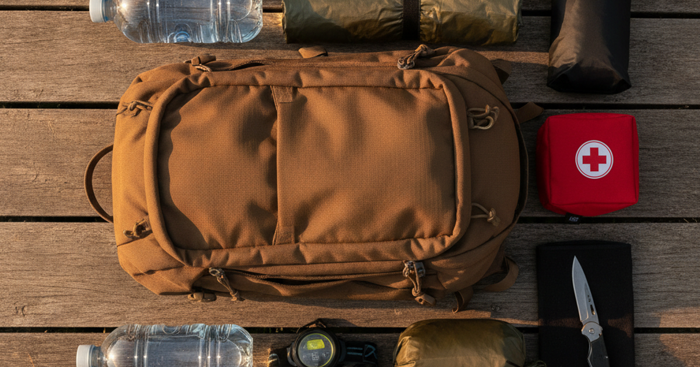
Every bug out bag and emergency preparedness kit should include at minimum a whistle, a signal mirror, and a small piece of bright fabric or space blanket. Here's what to prioritize:
- A pea-less whistle like the Fox 40 Classic — attach it to a zipper pull on every bag you own.
- A glass signal mirror with aiming hole — the SE Military mirror or SOL Rescue Flash are both excellent choices.
- A space blanket or orange panel — doubles as ground-to-air signal and thermal shelter.
- Waterproof matches and fire-starting tools for smoke and night fire signals.
- A quality tactical flashlight for night signaling — check our guide to Tactical Flashlights for Preppers for recommendations.
Signaling gear is lightweight, inexpensive, and has an indefinite shelf life. There is no rational argument for leaving it out of any survival kit. If you're building out a comprehensive survival gear loadout, signaling tools should be among the first additions — not an afterthought.
What You'll Need
- Signal mirror (or any reflective surface like a CD, phone screen, or aluminum foil)
- Emergency whistle (or metal whistle)
- Materials for smoke signals (green branches, leaves, or rubber for dark smoke; damp grass for white smoke)
- Fire-starting equipment (matches, lighter, or ferro rod)
- Bright colored cloth or tarp (optional, for ground signals)
Step-by-Step Instructions
Step 1: Assess Your Situation and Choose the Right Signal Method
Before signaling, evaluate your environment and the most likely rescue approach. Use a signal mirror during daylight hours when aircraft or distant rescuers might spot reflected light. Reserve your whistle for when you hear voices or engines nearby, as sound travels differently through terrain. Smoke signals work best in clear weather conditions when visibility is good and wind is minimal.
Step 2: Master the Signal Mirror Technique
Hold the signal mirror close to your face and extend your other arm toward your target (aircraft or distant point). Make a V-shape with your fingers and position your target between them. Reflect sunlight through the V onto your face, then adjust the mirror angle until the bright spot passes through your fingers toward the target. Flash the mirror in sets of three, the universal distress signal, sweeping slowly across the horizon even if you don't see anyone.
Step 3: Use Your Whistle with the Three-Blast Pattern
Blow three short, loud blasts on your whistle, wait one minute, then repeat. This three-signal pattern is internationally recognized as a distress call. A whistle carries much farther than the human voice and requires less energy, making it ideal when you're exhausted or injured. Continue the pattern at regular intervals, and increase frequency if you hear responding sounds or see movement.
Step 4: Build a Smoke Signal Fire
Create a solid base fire using dry kindling and fuel until you have strong flames and hot coals. Once established, add green branches, fresh leaves, or damp vegetation to create thick white smoke visible for miles. For contrast against snow or clouds, add rubber, plastic, or oil-soaked materials to produce black smoke. Build your fire in an open area away from tree cover for maximum visibility.
Step 5: Create the Three-Fire Triangle Pattern
If you have the resources and time, build three fires in a triangle pattern with each fire approximately 100 feet apart. This geometric arrangement is an internationally recognized distress signal that distinguishes your signal from natural fires. Keep materials ready to quickly ignite all three fires when you hear or see potential rescuers approaching.
Step 6: Combine Multiple Signaling Methods Simultaneously
When you detect potential rescuers, use all available signaling methods at once to maximize your chances of being spotted. Flash your signal mirror toward aircraft while maintaining smoke signals and blowing your whistle in three-blast patterns. Multiple signals from different sensory channels (visual and auditory) greatly increase your detection probability and confirm you need assistance rather than being a casual camper.
Step 7: Maintain Signals and Conserve Energy Between Attempts
Signal actively during peak rescue hours (early morning and late afternoon when search aircraft typically fly) and when you hear engines or voices. Between active signaling periods, conserve your energy and keep signal materials prepared for rapid deployment. Keep your whistle attached to your clothing for instant access, position your mirror where you can grab it quickly, and maintain your fire with minimal smoke until you need to generate a signal plume.
Frequently Asked Questions
What is the best survival signaling device to carry in a bug out bag?
The best combination for most preppers is a pea-less signal whistle (like the Fox 40 Classic) and a glass signal mirror with a sighting hole. Together, they cover both auditory and visual signaling across long distances, weigh almost nothing, require no batteries or fuel, and work in nearly any environment — urban rubble, wilderness, desert, or open water. If you can only add one item, the whistle edges out the mirror because it works in any direction and requires zero technique to operate effectively.
How do you make a smoke signal for rescue if you don't have proper supplies?
You don't need special gear to create an effective smoke signal. Build a hot fire first using dry wood, then add green vegetation, damp grass, or rubber and plastic materials to control smoke color. Green material produces white smoke (better against dark backgrounds); rubber and oil produce black smoke (better against bright skies or snow). Build your fire in the most open, visible location available — a hilltop, clearing, rooftop, or open field — and aim for at least three fires in a triangle pattern to signal aircraft overhead. The key is contrast: whatever color your smoke, it needs to stand out against its background to be spotted from altitude.
Do survival signaling techniques work in urban environments after a disaster?
Absolutely — and urban survivors should think about signaling from day one of any emergency. After major urban disasters like earthquakes, hurricanes, and building collapses, aerial search operations are often the primary rescue method in the first 24–72 hours. Survivors on rooftops have been found using bedsheets, spray-painted SOS messages on flat surfaces, signal mirrors aimed at passing helicopters, and even the reflected flash from cell phone screens. A signal whistle is critically important in collapse scenarios where voice communication is impossible and rescuers are working systematically through debris. Even apartment preppers and urban dwellers should carry a whistle and include a signal mirror and space blanket in their go-bag.
Affiliate Disclosure: SHTF Plan participates in the Amazon Services LLC Associates Program. Some links are affiliate links — we may earn a small commission at no extra cost to you.