Wildfire Smoke and Toxic Air: How to Filter Indoor Air and Protect Your Lungs When SHTF
When wildfire smoke or industrial disaster fills the air outside, your home becomes a trap. Here's how to filter indoor air and protect your family's lungs.
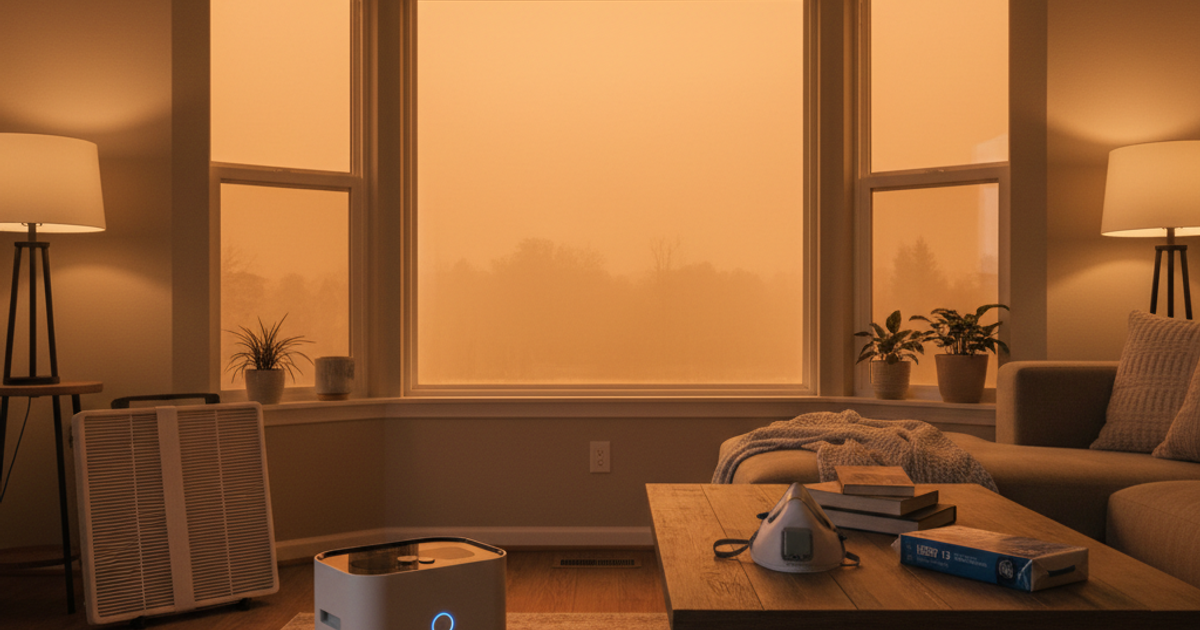
When wildfires sweep across the landscape, or when a chemical plant disaster sends toxic plumes drifting into residential neighborhoods, the air inside your home becomes one of the most critical survival variables you'll face. According to the EPA, wildfire smoke contains a complex mixture of gases and fine particles — including PM2.5 particulate matter so small it penetrates deep into lung tissue and enters the bloodstream. During the 2020 Western wildfires, air quality in cities like Portland, Oregon reached AQI levels above 500 — off the standard measurement scale entirely. This wasn't a rural problem. Apartment dwellers, suburban families, and rural homesteaders all faced the same invisible threat.
The bad news: your home is not airtight. Every gap around windows, doors, electrical outlets, and HVAC returns is a pathway for contaminated air to enter. The good news: with the right filtration equipment, sealing strategies, and respiratory protection gear, you can dramatically reduce your exposure — even in a prolonged SHTF scenario where evacuation isn't an option. If you haven't already reviewed our guide on shelter-in-place survival and home confinement, do that now — it pairs directly with what we're covering here.
This guide covers what every prepper, apartment dweller, suburban homeowner, and rural off-gridder needs to know about filtering indoor air and protecting their lungs when the outside atmosphere becomes lethal.
What You'll Need
Tools
- Box fan (20-inch, for DIY Corsi-Rosenthal filter box)
- Utility knife or scissors
- Tape measure
- Duct tape or box tape
Supplies
- Filtrete 1900 MPR maximum allergen air filter (smoke-rated)
- 3M 6502QL half facepiece respirator
- Painter's tape or weatherstripping foam tape
- Plastic sheeting (heavy mil)
- N95 or P100 respirator masks
- HEPA air purifier (room-rated)
Understanding What You're Up Against: Wildfire Smoke vs. Chemical Contamination
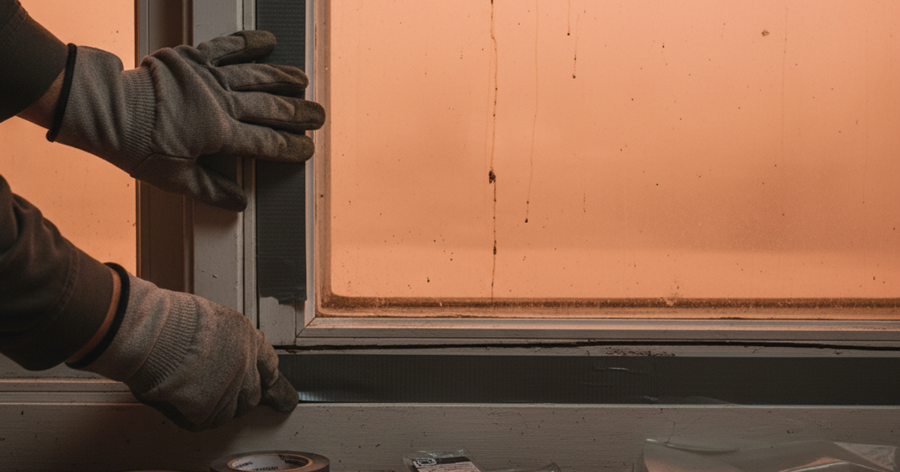
Not all toxic air events are the same, and your filtration approach needs to match the threat. Wildfire smoke is primarily a particulate matter problem — billions of microscopic particles that need to be physically captured. A high-quality HEPA filter excels at this. Chemical spills, industrial accidents, and certain SHTF scenarios, however, introduce gaseous compounds — volatile organic compounds (VOCs), ammonia, hydrogen sulfide, chlorine gas — that pass right through HEPA filters as if they weren't there. For chemical threats, you need activated carbon filtration in addition to particulate filtration.
According to the CDC and NIOSH, exposure to PM2.5 at concentrations above 35 micrograms per cubic meter constitutes an unhealthy air quality level. During major wildfire events, outdoor concentrations regularly exceed 500 micrograms per cubic meter. Long-term exposure causes cardiovascular disease, worsens asthma and COPD, and can trigger acute respiratory failure in vulnerable individuals. Children and the elderly are particularly at risk, but even healthy adults suffer measurable lung damage after prolonged exposure.
For preppers dealing with chemical emergencies, the stakes are even higher. Consult our article on identifying and treating toxic exposures without emergency services if you suspect chemical contamination in your area.
Sealing Your Home: The Foundation of Indoor Air Defense
Before a single dollar gets spent on air purifiers, you need to address infiltration. Air purifiers only work on the air already inside your home — they can't compensate for a high rate of contaminated outdoor air constantly leaking in. Research from Lawrence Berkeley National Laboratory shows that a typical home has enough leakage to replace the entire air volume roughly once per hour under normal conditions. During a toxic air event, you need to cut that number drastically.
Priority sealing targets include:
- Window and door gaps — apply foam weatherstripping or painter's tape around all edges
- Mail slots, pet doors, and window-mounted AC units — seal or cover with plastic sheeting and tape
- Electrical outlets on exterior walls — use childproof plug covers or tape behind faceplates
- Fireplace dampers — close and tape with heavy plastic if not in use
- HVAC air intakes — switch your system to recirculation mode only, or tape over fresh-air intakes
- Bathroom and kitchen exhaust vents — cover from inside with plastic sheeting during active events
Apartment dwellers: pay special attention to gaps under your front door and the space around pipe penetrations under sinks. A rolled-up towel or door draft stopper at the base of your front door makes a meaningful difference. Rural homesteaders dealing with older construction should check crawlspace vents and attic access points as well.
HVAC Filters: Your First Line of Indoor Filtration
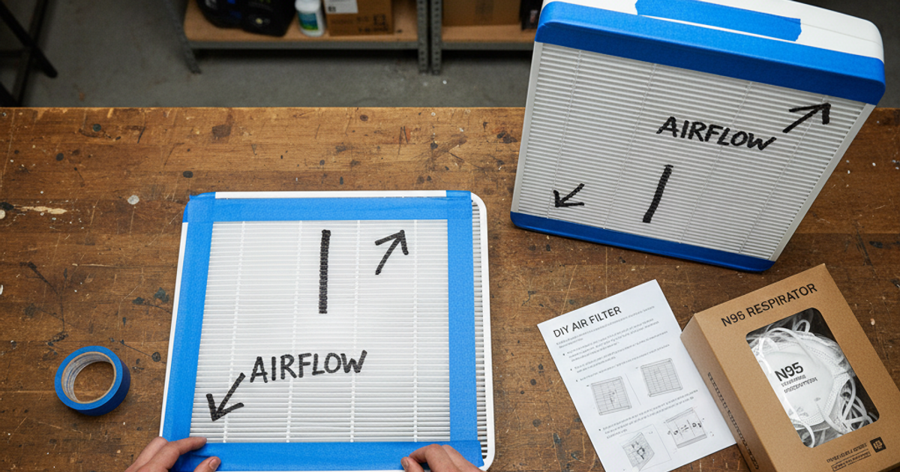
Your central HVAC system's air filter is working every time the system runs — and upgrading that filter is one of the highest-leverage, lowest-cost moves a prepper can make. Standard MERV 8 filters capture large dust particles but do almost nothing against wildfire smoke particles. You need a minimum of MERV 13 for meaningful smoke filtration, with MERV 16 being near-HEPA performance.
The Filtrete 1900 MPR Maximum Allergen air filter is rated for smoke and fine particles and is widely available in standard HVAC sizes. At MPR 1900 (equivalent to roughly MERV 13-14), it captures particles down to 0.3 microns — the most penetrating particle size range for both smoke and biological aerosols. Stock at least 3-4 of these in your emergency preparedness supplies and change them more frequently during heavy smoke events, as they load up fast.
Important caveat: Higher MERV-rated filters restrict airflow and can strain older HVAC systems. If your system is more than 15 years old, check with the manufacturer's MERV rating limit before upgrading. Running your system on fan-only (no heating or cooling) periodically during a smoke event can help circulate and filter air without straining the equipment.
Standalone HEPA Air Purifiers: Choosing the Right Unit for Your Space
A standalone HEPA air purifier is non-negotiable survival gear for anyone serious about indoor air quality during a crisis. The key metric is CADR — Clean Air Delivery Rate — measured in cubic feet per minute. Match the CADR rating to your room size: a 200 square foot bedroom needs roughly 130 CFM or higher. Run it on the highest speed setting during active smoke events, regardless of noise.
For budget-conscious preppers or apartment dwellers with limited space, the Levoit Core 300 air purifier is a compact, capable unit with a genuine H13 HEPA filter that handles wildfire smoke well in rooms up to 219 square feet. It's a practical choice for a bedroom shelter-in-place setup when you need to keep one room as clean as possible.
For mid-sized living spaces and family rooms, the Coway AP-1512HH Mighty air purifier has earned a strong reputation in the prepper and emergency preparedness community. It features a four-stage filtration system including a pre-filter, activated carbon layer, and true HEPA filter capable of capturing 99.97% of particles down to 0.3 microns. The real-time air quality indicator is particularly useful when you can't trust outdoor AQI readings.
If you're protecting a larger home — or want a more capable unit for your primary living area — the Winix 5500-2 air purifier covers up to 360 square feet with a CADR of 243 and includes both HEPA and activated carbon filtration, making it effective against both particulate smoke and some gaseous chemical compounds. The PlasmaWave technology helps neutralize odors and VOCs as a secondary layer of protection.
For the most serious threat environments — particularly where chemical contamination is a possibility — the IQAir HealthPro Plus represents the gold standard in residential air purification. It uses a HyperHEPA filter rated to capture particles down to 0.003 microns — 100 times smaller than what standard HEPA filters catch — and includes a substantial activated carbon/potassium permanganate filter for gases and VOCs. This is the unit hospitals and clean rooms rely on, and it's worth every dollar if your risk environment justifies it.
The DIY Corsi-Rosenthal Box: Emergency Air Filtration When You Have No Purifier
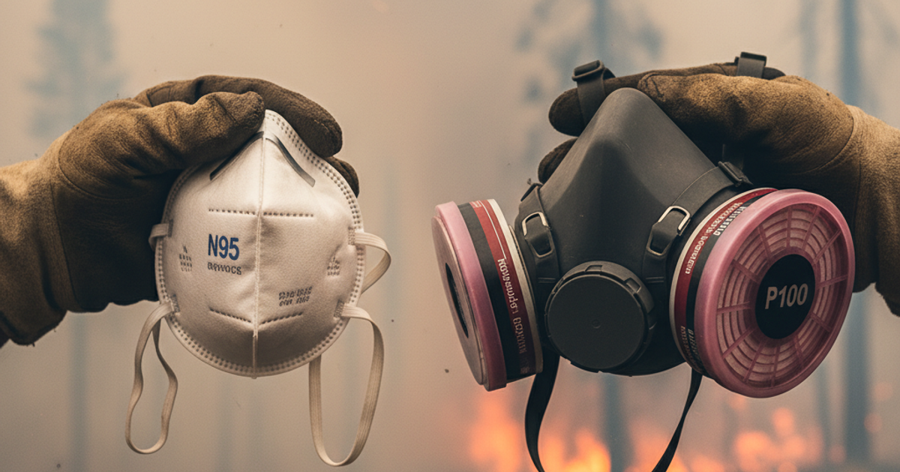
If SHTF catches you without a commercial air purifier, the Corsi-Rosenthal box — developed by Dr. Richard Corsi and Jim Rosenthal during the COVID-19 pandemic — delivers surprisingly effective filtration from hardware store materials. Multiple studies, including those from UC Davis, confirmed these DIY units can achieve air cleaning equivalent to commercial purifiers costing hundreds of dollars.
The build is simple: tape four MERV 13 or higher furnace filters into a cube, open-face-out, with a 20-inch box fan on top blowing upward. Air is drawn in through all four filter faces and exhausted upward by the fan. A five-filter variant (adding a filter on the bottom) is even more effective. Total cost at hardware store prices: $60-100. During a wildfire smoke event, this setup can clean the air in a medium-sized room multiple times per hour.
Respiratory Protection: What Goes on Your Face Matters Enormously
Air purifiers protect the space. Respirators protect you — especially when you need to move between rooms, check on other household members, venture briefly outside, or when your filtration system hasn't yet cleaned the air. The difference between a surgical mask, an N95, and a half-face respirator is enormous and frequently misunderstood.
Surgical masks and cloth masks provide essentially no protection against wildfire smoke. They are not rated for fine particulate filtration and don't seal to the face. They're not appropriate respiratory PPE for smoke emergencies.
N95 respirators filter 95% of airborne particles and provide a meaningful improvement — but only when properly fitted. Any gap at the nose bridge or sides defeats the seal. For extended shelter-in-place use, a proper half-face respirator is far superior.
The 3M 6502QL half facepiece respirator with appropriate cartridges is a serious piece of respiratory survival gear that every prepared household should have. The 6502QL features a quick-latch mechanism for easy on/off use and creates a proper facial seal that disposable masks cannot match. It works with a wide range of 3M cartridges, allowing you to address different threat types by swapping cartridges.
For particulate-only threats like wildfire smoke, pair any half-face respirator with 3M 2091 P100 particulate filter cartridges. The P100 designation means 99.97% filtration efficiency — identical to HEPA. These pink disc-shaped filters screw onto the respirator facepiece and provide genuine protection against smoke particles. They're inexpensive, have a long shelf life when stored sealed, and belong in every survival kit and bug out bag.
For chemical spill scenarios involving organic vapors, ammonia, or other gaseous compounds, you'll need a combination cartridge that includes both P100 particulate filtration and activated carbon for gas absorption. The North 7700 series half mask respirator with organic vapor cartridges is a well-regarded option in this category and should be considered for preppers in areas with industrial facilities, chemical plants, or significant agricultural chemical storage nearby.
For everyone in the household, including children and elderly family members, you should have appropriately sized respirators stored and ready. Fit-test your respirators before an emergency — not during one. A respirator that doesn't seal properly is barely better than nothing.
Step-by-Step Instructions
Step 1: Designate a Clean Room as Your Primary Shelter Space
Choose one room in your home — ideally an interior bedroom — to function as your primary clean air refuge. This room should have the fewest exterior wall penetrations and windows, as these are the main infiltration points. Concentrate your sealing efforts and air purification resources in this single room rather than trying to clean the entire home's air volume at once.
Step 2: Seal All Air Infiltration Points in Your Designated Clean Room
Apply foam weatherstripping or painter's tape around all window frames and the door to your clean room. Place a rolled towel or door draft stopper at the base of the door. Cover any electrical outlets on exterior walls with plug covers. If the room has an air vent, close it and tape a piece of plastic sheeting over the register to prevent smoke from entering through the ductwork.
Step 3: Upgrade Your HVAC Filter and Set System to Recirculate
Replace your existing HVAC filter with a high-MERV smoke-rated filter (MERV 13 or higher). Switch your thermostat to fan-only or recirculation mode to prevent drawing in contaminated outdoor air through fresh-air intakes. If your system has a dedicated outdoor air damper, close it manually. Run the fan periodically to push air through the upgraded filter.
Step 4: Deploy Your HEPA Air Purifier in the Clean Room
Place your HEPA air purifier in the center of the clean room or near the door (where infiltration is highest). Set it to the highest fan speed. Allow 30-60 minutes for the unit to process the room's air volume before considering the space adequately cleaned. Keep doors closed to prevent contaminated air from entering from other parts of the home.
Step 5: Fit and Test Your Respirator Before You Need It
Put on your half-face respirator and perform a user seal check: cover the exhalation valve and exhale gently — the mask should slightly pressurize with no air leaking at the edges. Then cover the cartridges and inhale — the mask should collapse slightly against your face. Any leakage means the seal is inadequate. Trim facial hair, adjust straps, or try a different size until you achieve a proper seal.
Step 6: Monitor Air Quality with Reliable Indicators
Don't rely solely on outdoor AQI readings, which may lag or not reflect conditions at your specific location. Use your air purifier's built-in air quality sensor if it has one. Consider a dedicated indoor air quality monitor (PM2.5 sensor) to track contamination levels inside your home. When indoor PM2.5 readings remain elevated despite purification efforts, your sealing strategy needs improvement.
Step 7: Establish Protocols for Necessary Movement Outside the Clean Room
Before leaving your clean room — even to use a bathroom or kitchen — put on your respirator. If you must go outside briefly, add eye protection (sealed safety goggles) and cover exposed skin. Upon returning, remove outer clothing in a transition area (hallway or garage) before entering the clean room, as smoke particles cling to fabric. Shower if possible to remove particles from hair and skin.
Step 8: Maintain and Rotate Your Filtration Supplies
HEPA purifier filters have a finite lifespan — during active smoke events, pre-filters may need cleaning or replacement within days. Inspect your HVAC filter every 48 hours during a smoke emergency and replace it when it appears visually clogged. Rotate respirator cartridges as recommended by the manufacturer or when you detect odors through the filter (indicating saturation). Keep a minimum 30-day supply of replacement filters in your emergency preparedness stockpile.
Special Considerations for Urban, Suburban, and Rural Preppers
Urban apartment dwellers face the additional challenge of shared ventilation systems and limited control over building HVAC. If you live in an apartment, you may not be able to upgrade the building's central air filter. Focus on your unit's air quality by sealing your apartment door aggressively and running a quality standalone purifier. Our guide on apartment prepping and emergency stockpiling in small spaces covers additional strategies for urban emergency preparedness.
Suburban homeowners generally have the most flexibility — you control your HVAC system, can seal your home aggressively, and have space for multiple purifiers. Prioritize upgrading your HVAC filter system and designating a clean room for the family.
Rural preppers and homesteaders face unique risks: older construction with more leakage, proximity to agricultural chemical spraying, and potentially longer distances from emergency services and accurate air quality monitoring. Invest in a quality indoor PM2.5 monitor and don't assume rural air is automatically safe during a wildfire or industrial incident. If you're planning a bug-out due to approaching wildfire, review the wildfire evacuation bag guide so you're not making those decisions under pressure.
Recommended Gear
Beyond what's covered above, a complete indoor air defense setup for emergency preparedness should include a layered approach. For whole-home protection, the IQAir HealthPro Plus paired with the Winix 5500-2 in high-traffic areas gives you exceptional coverage. The Coway AP-1512HH Mighty and Levoit Core 300 offer excellent value for bedrooms and small clean rooms. On the respiratory protection side, the 3M 6502QL half facepiece respirator with 3M 2091 P100 cartridges handles smoke, while the North 7700 series with organic vapor cartridges extends your protection to chemical threats. Browse our full recommended survival gear page for additional vetted equipment.
Frequently Asked Questions
How long can you stay inside a sealed room during a wildfire smoke emergency?
With proper sealing and active HEPA filtration running on high, a well-prepared room can maintain safe air quality for 24-72 hours in most wildfire smoke scenarios. However, CO2 buildup from occupants breathing in a tightly sealed space becomes a concern after several hours in very small rooms — monitor for headaches, drowsiness, or difficulty concentrating as signs that ventilation is needed. A room of 150+ square feet with two occupants typically has safe CO2 levels for 8+ hours of sealed operation. For extended shelter-in-place situations, brief ventilation through a filtered intake (a furnace filter taped over a cracked window) can refresh oxygen levels without dramatically increasing smoke infiltration.
Does an N95 mask protect against wildfire smoke?
A properly fitted, NIOSH-approved N95 respirator provides meaningful protection against wildfire smoke particles when sealed correctly to the face — it filters 95% of airborne particles at 0.3 microns. The critical word is "fitted." N95s must be fit-tested and must form a complete seal with no gaps at the nose, cheeks, or chin. Surgical masks, cloth masks, and loosely worn N95s provide little