
Wildfire Survival Guide: How to Protect Your Home and Evacuate Safely
Wildfires move faster than most people expect. Here's how to harden your home, build a go-bag, and evacuate before the flames cut off your escape routes.
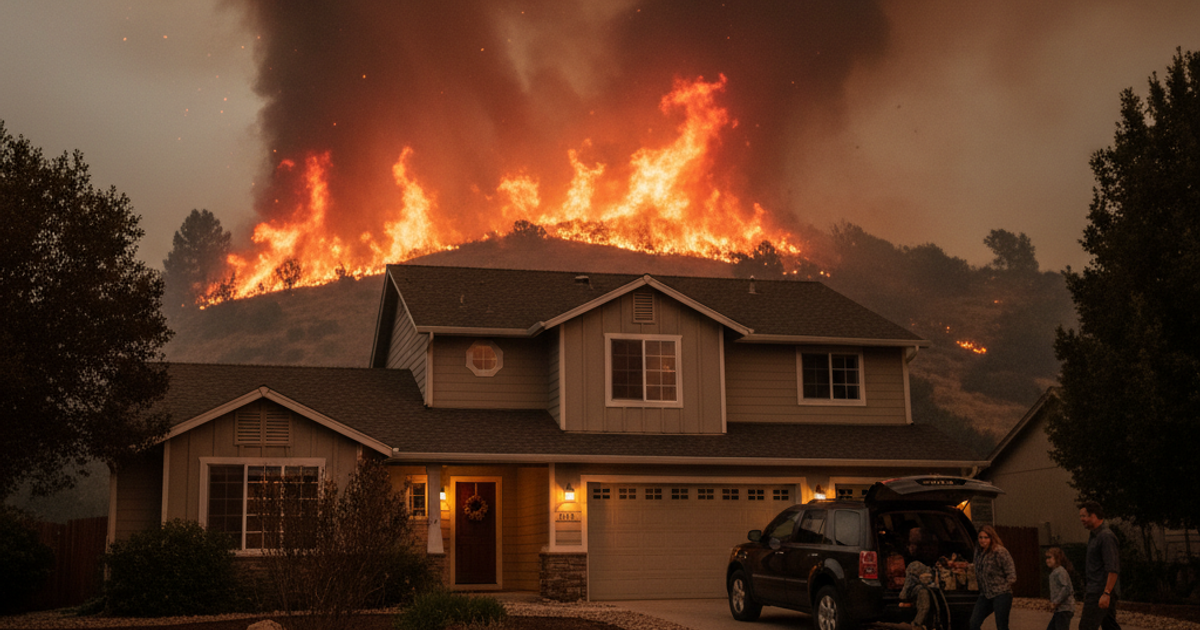
Wildfires are no longer a problem confined to remote forests and rural homesteads. In 2023, the National Interagency Fire Center recorded over 56,000 wildfires burning more than 2.7 million acres across the United States. Communities in California, Oregon, Washington, Colorado, and beyond have watched entire neighborhoods reduced to ash in a matter of hours. The Camp Fire in 2018 destroyed 18,804 structures and killed 85 people — and it moved fast enough to trap residents in their cars. Whether you live on rural acreage, a suburban cul-de-sac, or near wildland-urban interface zones, wildfire preparedness is not optional anymore. It is a core component of any serious emergency preparedness plan.
This guide walks you through everything you need to know: how to harden your home against embers, how to create defensible space, how to build a wildfire-specific bug out bag, and how to evacuate safely when the fire is bearing down.
Understanding How Wildfires Spread and Why Embers Are Your Biggest Threat
Most people imagine wildfires as a wall of flame approaching from the treeline. In reality, embers are responsible for the majority of structure ignitions during a wildfire event. Burning embers — called firebrands — can travel up to a mile ahead of the main fire front, landing on your roof, in your gutters, or against your fence. By the time you see flames, your house may already be on fire from the inside.
Wind-driven fires can spread at speeds exceeding 14 miles per hour on flat terrain and much faster in canyons and on slopes. This means your window for evacuation may be significantly shorter than you think. Situational awareness is not just a tactical concept — it is a life-saving discipline during wildfire season. Stay informed, monitor wind conditions, and never assume you have more time than you do. For a deeper look at building threat-detection habits that apply across all disaster types, check out our guide on Situational Awareness: How to Detect Threats Before They Become Dangerous.
How to Create Defensible Space Around Your Home
Defensible space is the buffer you create between your home and the surrounding vegetation. It is one of the most well-researched and consistently effective methods of improving your home's survival odds in a wildfire. Cal Fire and FEMA both recommend a three-zone approach.
Zone 1: The Home Ignition Zone (0–5 Feet)
This is the most critical zone. Keep it entirely non-combustible. Remove all dead vegetation, wood piles, doormats, and patio furniture from directly against the structure. Use gravel, concrete, or stone ground cover. Replace wood mulch with decomposed granite. This zone applies even if you live on a small suburban lot — any combustible material within five feet of your foundation is a risk.
Zone 2: The Lean, Clean, and Green Zone (5–30 Feet)
Thin and space out your vegetation so that fire cannot easily ladder from ground level into tree canopies. Maintain grass at under four inches. Remove lower tree branches up to six to ten feet from the ground. Keep this zone well-irrigated during fire season. For apartments and urban dwellers near wildland-urban interface areas, focus on shared landscaping concerns and advocate to your property manager.
Zone 3: The Reduced Fuel Zone (30–100 Feet)
Further reduce fuel loads and create spacing between trees and shrubs to slow fire spread and reduce intensity as it approaches your structure. This zone matters most for rural and semi-rural property owners. If you live on significant acreage, this is where prepper discipline around land management pays off directly in fire survivability.
Home Hardening: How to Make Your Structure More Fire-Resistant
Defensible space buys time. Home hardening is what keeps your structure from igniting. Research from the Insurance Institute for Business and Home Safety shows that homes built or retrofitted with fire-resistant materials are significantly more likely to survive wildfire events, even when neighboring structures burn.
Roof and Gutters
Class A fire-rated roofing materials — metal, tile, or asphalt — dramatically reduce your risk. Keep gutters clear of dead leaves and debris, or install gutter guards. Ember accumulation in gutters is one of the leading causes of residential wildfire ignition.
Vents and Openings
Unprotected vents are a direct pathway for embers into your attic and crawlspace. Replacing standard vents with ember-resistant models is one of the highest-return home hardening investments you can make. Firestop ember-resistant attic vents are specifically engineered to block ember intrusion while maintaining proper ventilation — a critical upgrade for any home in fire-prone areas, urban or rural.
Windows and Doors
Single-pane windows can fail quickly under radiant heat. Dual-pane or tempered glass holds up significantly longer. Install metal door sweeps and weather stripping to block embers from entering under doors. Cover exterior vents with fine wire mesh of 1/16 inch or smaller.
Decks and Fencing
Wooden decks and fences act as fuel ladders that can carry fire directly to your home. Composite decking materials and metal fencing offer substantial improvements in fire resistance. Even replacing the last several feet of a wooden fence connecting to your house with a non-combustible material can make a meaningful difference.
Building a Wildfire-Specific Bug Out Bag and Go-Kit
A wildfire evacuation demands a purpose-built survival kit. Unlike a general-purpose bug out bag, your wildfire go-bag needs to account for smoke inhalation hazards, rapid departure timelines, and the reality that you may be displaced for days or weeks.
For a solid foundation, the Ready America 72-hour emergency kit provides a pre-assembled base that covers food, water, first aid, and basic survival gear for multiple people — a practical starting point you can then customize for wildfire-specific needs.
Your wildfire go-bag should include:
- Respiratory protection: Wildfire smoke contains fine particulate matter (PM2.5), carbon monoxide, and volatile organic compounds. Standard cloth masks are inadequate. At minimum, carry N95 respirator masks rated for wildfire smoke protection for every member of your household, including children. N95s filter at least 95% of airborne particles and are your baseline protection during evacuation through smoke.
- Documents and identification: Copies of passports, insurance policies, property deeds, medical records, and prescriptions in a waterproof pouch
- Emergency food storage: At least 72 hours of shelf-stable food — ideally calorie-dense items like energy bars, freeze-dried meals, and trail mix
- Water and purification: One gallon per person per day minimum, plus a water purification method as backup
- Cash reserve: ATMs and card readers may be offline in disaster zones
- Medications: A minimum 7-day supply of all prescription medications
- Clothing: Long-sleeved cotton or wool clothing, sturdy boots, and work gloves
- Phone chargers and a portable power bank
- Goggles: Eye protection against smoke and ash
For extended smoke exposure or if you have underlying respiratory conditions, consider upgrading to a 3M P100 half-face respirator, which filters 99.97% of airborne particulates and provides substantially better protection for high-exposure scenarios. This is the level of respiratory protection that fire professionals and industrial workers rely on — and it is worth having in your survival gear arsenal.
For a detailed checklist covering all the essentials, see our Complete 72-Hour Bug Out Bag Checklist for Urban Survival.
If you have pets, do not forget their evacuation needs. Food, water, carriers, vaccination records, and comfort items for your animals should be packed alongside your own supplies. See our full guide on Prepping with Pets: How to Keep Your Animals Alive When SHTF for a comprehensive breakdown.
Wildfire Evacuation Planning: Know Before You Go
The single most dangerous thing you can do in a wildfire is wait too long to leave. Studies of wildfire fatalities consistently show that delayed evacuation — whether due to disbelief, information gaps, or the desire to protect property — is a primary contributing factor to civilian deaths.
Know Your Evacuation Zones and Routes
Most counties in fire-prone states use a tiered evacuation warning system: Evacuation Watch, Evacuation Warning, and Evacuation Order. Do not wait for an Evacuation Order. When a Warning is issued, you should be loading your vehicle. Identify at least two evacuation routes from your neighborhood in advance, and drive them before fire season begins. Know which roads dead-end and which connect to major highways.
Stay Informed with a Weather Alert Radio
Cell networks and internet connectivity are often degraded or overwhelmed during disaster events. A dedicated emergency weather radio ensures you receive official alerts even when your phone fails. The Midland ER310 emergency weather alert radio receives NOAA weather alerts, has a hand-crank and solar charging capability, and includes a USB charging port for your phone — making it an essential piece of off-grid emergency preparedness gear for wildfire season and beyond.
Pre-Position Your Vehicle
Keep your gas tank at least half full throughout fire season. Park your car facing outward in the driveway so you can leave immediately. Keep your go-bag and important documents in or near the vehicle during high-risk periods. Make sure your vehicle is stocked for emergencies — for guidance, see our article on Vehicle Emergency Kit: How to Prepare Your Car for Any Disaster.
Communicate Your Plan
Every member of your household needs to know the evacuation plan, the meeting point if you are separated, and the contact person outside the disaster area. Have a Family Emergency Plan documented and rehearsed before an emergency occurs.
If You Cannot Evacuate: Last-Resort Actions
If fire overtakes your area before you can escape, your options narrow dramatically. If you cannot leave by vehicle, do not attempt to outrun fire on foot through open terrain. Move to the largest clearing available, lie face down, cover yourself with soil if possible, and protect your airway. If you are in a structure, close all windows and doors to slow smoke and ember intrusion, fill sinks and tubs with water, shut off gas, and call 911 to report your location. These are last-resort actions only — the far better strategy is to leave early.
Recommended Survival Gear for Wildfire Preparedness
In addition to the products mentioned throughout this article, your overall wildfire preparedness kit should include a good quality headlamp, leather work gloves, a portable fire extinguisher, a NOAA-capable radio, and an N95 or P100 respirator for each family member. Regularly rotate your emergency food storage and check expiration dates on medications. Review and update your go-bag at the start of every fire season.
What You'll Need
- Emergency evacuation kit with water, non-perishable food, and medications
- N95 respirator masks for smoke protection
- Fire extinguishers and garden hoses
- Battery-powered radio and flashlights
- Important documents in a waterproof container
- Vehicle with at least half a tank of gas
- Hardscape materials or gravel for defensible space
Step-by-Step Instructions
Step 1: Create a Defensible Space Around Your Home
Clear all vegetation, dead leaves, and flammable materials within at least 30 feet of your home's perimeter. Remove low-hanging tree branches up to 10 feet from the ground and trim trees so branches are at least 10 feet from your roof. Replace wood mulch with gravel or rock landscaping in the immediate five-foot zone around your house. Keep your lawn hydrated and mowed to a maximum height of four inches during fire season.
Step 2: Harden Your Home's Exterior Against Embers
Install mesh screens over all vents, including those in eaves and attics, using metal screening with openings no larger than 1/8 inch. Replace or repair any damaged roof shingles and ensure your roof is made of fire-resistant materials like metal, tile, or asphalt. Seal gaps around windows and doors with weather stripping to prevent ember intrusion. Cover exterior walls with fire-resistant siding such as stucco, fiber cement, or treated wood.
Step 3: Prepare Your Emergency Evacuation Kit
Pack a go-bag for each family member containing three days' worth of water (one gallon per person per day), non-perishable food, prescription medications, and copies of critical documents. Include a battery-powered radio, extra batteries, flashlights, a first-aid kit, and N95 masks for smoke protection. Add cash, phone chargers, a change of clothes, and comfort items for children and pets. Store these kits in an easily accessible location near your main exit.
Step 4: Monitor Fire Conditions and Evacuation Alerts
Download emergency alert apps for your region and sign up for local evacuation notifications via text and email. Check fire danger ratings daily during fire season and monitor wind conditions, as high winds significantly increase fire spread. Keep a battery-powered radio tuned to local emergency stations and have multiple ways to receive alerts in case of power outages. Identify at least two evacuation routes from your neighborhood in case one becomes blocked.
Step 5: Execute Pre-Evacuation Preparations When Warnings Are Issued
Close all windows and doors but leave them unlocked for firefighter access if needed. Move furniture away from windows and close interior doors to limit fire spread between rooms. Turn off natural gas at the meter and propane tanks, and shut off air conditioning systems that could draw in smoke. Position your car in the driveway facing outward for quick departure and load your emergency kits and irreplaceable items.
Step 6: Evacuate Immediately When Ordered
Leave as soon as evacuation orders are issued—do not wait or attempt to defend your home against an approaching wildfire. Drive with headlights on, windows closed, and follow designated evacuation routes even if they seem longer than alternatives. Keep your emergency radio on and avoid using your cell phone while driving except for true emergencies to keep networks clear. If trapped, park away from vegetation, stay in your vehicle with windows up, cover yourself with a blanket, and lie on the floor until the fire passes.
Step 7: Return Home Safely After the Fire Passes
Wait for official clearance from authorities before returning to your property, as hot spots and hazards may remain for days. Wear protective gear including N95 masks, gloves, and sturdy boots when inspecting your property for damage. Document all damage with photos and videos for insurance claims before beginning cleanup. Check for structural damage, gas leaks, and compromised electrical systems before re-entering your home, and contact professionals if you detect any safety concerns.
Frequently Asked Questions
What should I put in a bug out bag for wildfire evacuation?
A wildfire-specific bug out bag should include N95 or P100 respirator masks for every family member, at least 72 hours of emergency food storage and water, copies of important documents in a waterproof container, a minimum 7-day supply of medications, a portable phone charger, sturdy protective clothing, and cash. A pre-assembled kit like the Ready America 72-hour emergency kit can serve as a strong foundation that you customize for smoke and fire-specific hazards. Don't forget supplies for pets if applicable.
How do I protect my home from wildfire if I live in the suburbs or a neighborhood?
Even suburban homeowners can take meaningful steps to reduce wildfire risk. Focus first on the five-foot zone immediately around your home — remove all combustibles from direct contact with the structure, including mulch, wood piles, and furniture. Upgrade attic vents to ember-resistant models, clear gutters of debris, and replace single-pane windows if possible. Advocate with your HOA or property manager for fire-resistant landscaping in shared spaces. Defensible space and home hardening principles apply regardless of lot size.
How early should I evacuate during a wildfire warning?
As soon as an Evacuation Warning — not just an Order — is issued for your area. Wildfires can double in size within minutes under the right wind conditions, and evacuation routes can become congested or cut off with very little notice. Emergency preparedness experts and fire agencies consistently recommend early voluntary evacuation over waiting for a mandatory order. If you are in a high-risk zone during active fire weather, have your go-bag loaded and your vehicle positioned to leave immediately.
Affiliate Disclosure: SHTF Plan participates in the Amazon Services LLC Associates Program. Some links are affiliate links — we may earn a small commission at no extra cost to you.