Guard Dogs for Preppers: How to Choose, Train, and Deploy a Security Dog for SHTF
The right guard dog can be your most reliable security asset when SHTF. Learn how to choose, train, and deploy one effectively.
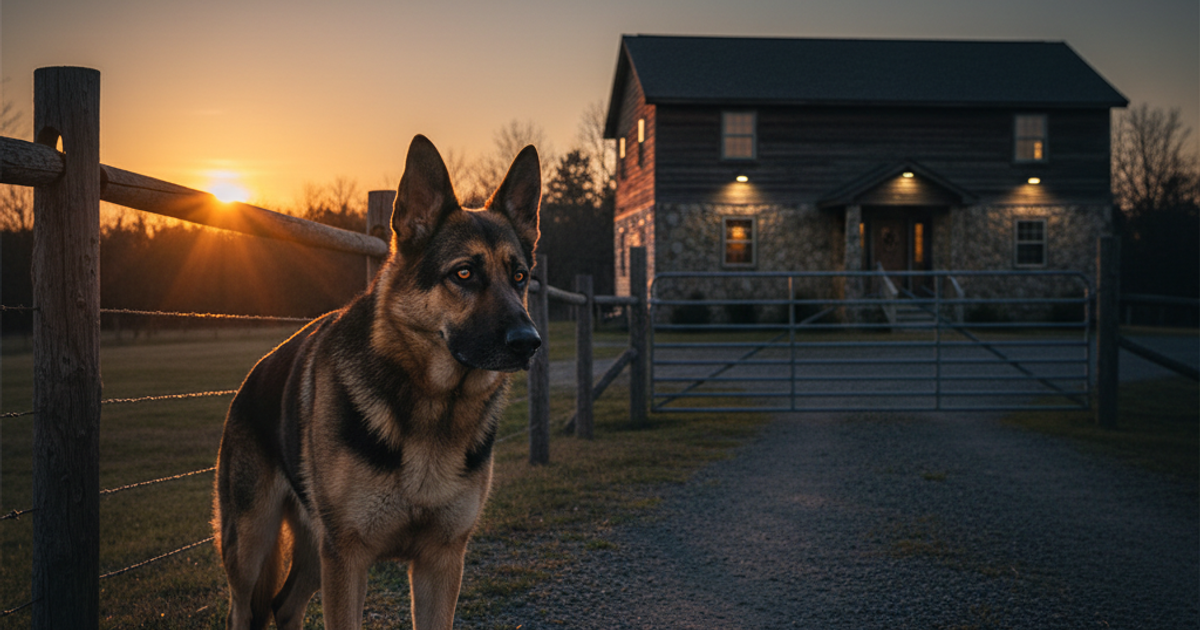
When the grid goes down, law enforcement response times stretch from minutes to hours — or disappear entirely. Your alarm system is useless without power. Your motion-activated lights mean nothing if no one is coming to help. In a true SHTF scenario, your security posture depends on layers: physical hardening, situational awareness, and human — or canine — presence. A well-trained security dog may be one of the most force-multiplying investments a prepper can make, and unlike electronics, a dog doesn't require batteries, a Wi-Fi connection, or a functioning grid.
This guide covers how to select, train, and deploy a guard dog for emergency preparedness — whether you live in a rural homestead, a suburban neighborhood, or an urban apartment.
Why a Security Dog Belongs in Your Emergency Preparedness Plan
Statistics consistently support the deterrence value of dogs. A study published in the Journal of Criminal Justice found that burglars actively avoid homes with dogs, with many surveyed offenders citing a barking dog as one of the top deterrents — ranking above alarm systems and security cameras. In a post-SHTF environment where social order has deteriorated, that deterrence factor multiplies dramatically.
Dogs offer capabilities no piece of survival gear can replicate:
- Scent detection: A dog can detect an intruder 40 times more effectively than a human by smell alone, often alerting before any visual or auditory cue is available.
- Hearing range: Dogs hear frequencies up to 65,000 Hz compared to the human ceiling of roughly 20,000 Hz, making them capable of detecting movement and sound at significant distances.
- Psychological deterrence: Even a medium-sized dog creates hesitation in a potential threat. A large, well-trained protection dog can stop a threat before it escalates.
- Companionship and morale: In prolonged emergencies, the psychological toll on your group is real. Dogs provide morale support that shouldn't be underestimated.
If you're already thinking seriously about layered self-defense options, a trained security dog deserves a place in that conversation.
Choosing the Right Breed for Your SHTF Security Needs
Not every dog makes an effective security animal, and not every breed suits every living situation. Matching your dog to your environment and threat model is critical.
Top Breeds for Prepper Security Roles
- German Shepherd: The gold standard for protection work. Intelligent, trainable, loyal, and physically capable. Adaptable to urban and rural environments.
- Belgian Malinois: Favored by military and law enforcement for extreme drive and athleticism. High energy — best for experienced handlers with active lifestyles.
- Doberman Pinscher: Fast, alert, and naturally protective. Less bulk than a Shepherd but extremely effective as a personal protection dog.
- Rottweiler: Powerful, confident, and deeply loyal to their family unit. Excellent for property protection on a homestead or suburban lot.
- Giant Schnauzer: An underrated working breed with strong protective instincts and a weatherproof coat — useful in colder climates.
- Cane Corso: A large, imposing breed with natural guardian instincts. Better suited for rural or suburban settings due to size.
Considerations for Urban and Apartment Preppers
Living in an apartment or dense urban area doesn't eliminate the option of a security dog — it just narrows the breed selection. Dobermans, standard-sized German Shepherds, and even well-trained Boxers can adapt to apartment living if properly exercised. The key factors are temperament stability, energy management, and reliable obedience. A reactive, poorly trained dog in a crowded building is a liability, not an asset. Urban preppers should prioritize alert dogs — animals that will notify you of a threat — over full protection dogs, which require more advanced training and space to deploy safely.
How to Train a Security Dog for SHTF Scenarios
Training is where most preppers fall short. Owning a large-breed dog is not the same as owning a trained security dog. An untrained dog may bark at everything — or nothing — and could freeze, flee, or become a danger to your own group under high-stress conditions.
The Foundation: Obedience First
Before any protection work begins, your dog must have rock-solid obedience. Sit, down, stay, come, heel, and place commands must be reliable under distraction. This is non-negotiable. A protection dog that won't reliably disengage on command is dangerous. Invest in professional obedience training or a quality structured program before advancing to security-specific work.
Remote Training Systems for Preppers
Electronic training collars, used properly, are powerful tools for building reliable off-leash obedience — a critical capability when your dog is working perimeter security. The SportDOG Brand remote training collar is a field-proven option used by hunters and working dog handlers alike, offering reliable range and multiple stimulation levels to match your dog's sensitivity. For preppers who want GPS integration alongside training capability, the Garmin Delta XC dog training system combines e-collar training with Garmin's rugged build quality — useful if your dog is working large rural property and you need to maintain contact at distance.
Controlled Alerting vs. Full Protection Training
Most preppers should aim for controlled alerting rather than full Schutzhund-level protection training. Alerting means your dog reliably signals the presence of a threat — barking, fixating, or positioning — and stops on command. Full bite-work protection training requires professional instruction, ongoing maintenance, and careful legal consideration. Biting dogs create liability even in grid-down scenarios, and a dog that engages the wrong person in your group could cause a catastrophic friendly-fire incident.
If you do pursue formal protection training, work with a certified trainer credentialed through the United Schutzhund Clubs of America (USCA) or the North American Police Work Dog Association (NAPWDA).
Managing Nuisance Barking Without Killing Alertness
One challenge with security dogs is calibrating their bark threshold. You want them alert, not neurotic. The PetSafe basic bark control collar can help condition dogs away from compulsive or nuisance barking during training phases, helping you develop a dog that alerts purposefully rather than reactively to every sound — an important distinction if you're trying to maintain a grey man profile in an urban survival scenario.
Deploying Your Security Dog in SHTF Conditions
Perimeter Patrol and Property Work
For rural preppers and those with defined property lines, a dog working in a designated patrol area is highly effective. Establish a perimeter the dog associates with home territory. Pair your dog's alerting behavior with your own perimeter security systems — fencing, lighting, and trip-wire alerts — to create overlapping detection layers.
Tactical Gear for Working Dogs
A working security dog needs appropriate equipment. The Ruffwear Web Master dog harness is a durable, well-fitting harness designed for working dogs in demanding environments — it provides a secure handle for physical control in tight spaces and fits properly even during sustained movement. For preppers who want a more tactical loadout, the OneTigris tactical dog vest MOLLE offers MOLLE webbing for attaching small pouches — useful for carrying a compact dog first aid kit, collapsible water bowl, or identification patches during a bug-out or patrol scenario.
Urban Deployment Considerations
In an urban or suburban environment, your dog's role shifts more toward close-quarters alerting and personal protection. Keep your dog on leash or in a controlled area during uncertain periods. Teach your dog to alert to door and window approaches, and integrate their natural territorial behavior with your home security assessment. A dog stationed near a ground-floor entry point is significantly more effective than relying on a door lock alone when supply chains and social order have broken down.
Keeping Your Security Dog Operational Long-Term
A dog is only as useful as it is healthy. In a prolonged emergency, veterinary care disappears. Stock a canine-specific first aid kit, maintain a 30–60 day supply of any medications your dog requires, and store high-calorie, long-shelf-life dog food alongside your emergency food storage. Rotate your stock. High-performance working dogs may require 1,500–2,500 calories per day depending on size and activity level — factor this into your long-term logistics. For more on keeping animals alive in grid-down conditions, see our guide on prepping with pets.
Keep vaccination records current, and consult your vet about building a basic canine medicine cache including wound care supplies, antibiotics (where legally accessible), anti-parasitics, and emergency pain management options.
Legal and Ethical Considerations
Even in a SHTF scenario, understand your local laws regarding protection dogs now, while you still can. Some jurisdictions have breed-specific legislation (BSL) that restricts ownership of certain breeds. Liability for dog bites — even in self-defense scenarios — varies significantly by state. Document your dog's training history. If you're part of a neighborhood mutual aid network, establish clear protocols for how your dog interacts with trusted community members versus unknown contacts.
What You'll Need
- High-quality dog food and water storage (30-90 day supply)
- Secure kennel or crate for safe containment
- Leash, collar, and harness (tactical-grade materials preferred)
- Training treats and reward system
- First aid kit specifically for canines
- Identification tags and microchip
- Protective vest or working dog gear (optional)
Step-by-Step Instructions
Step 1: Select the Right Breed for Security Work
Choose a breed with natural guarding instincts such as German Shepherds, Belgian Malinois, Rottweilers, or Doberman Pinschers. Consider your property size, climate, and living situation when making your selection. Avoid breeds that are too aggressive or too friendly, as you need a dog that can discern real threats from normal activity. Opt for a dog between 1-3 years old that has already been temperament-tested and shows confidence without excessive aggression.
Step 2: Establish Basic Obedience Foundation
Train your dog in the five essential commands: sit, stay, come, down, and heel. Practice these commands daily in 15-20 minute sessions until your dog responds reliably even with distractions present. A security dog that won't obey basic commands is a liability, not an asset. Consistency is critical—all family members must use the same commands and hand signals to avoid confusing the dog.
Step 3: Socialize Your Dog Properly
Expose your dog to various people, environments, and situations while maintaining control at all times. This helps the dog distinguish between normal visitors and actual threats. Introduce your dog to trusted friends and family members so it learns who belongs on your property. Proper socialization prevents false alerts and aggressive behavior toward innocent people while maintaining the dog's protective instincts.
Step 4: Train Alert and Barrier Behaviors
Teach your dog to bark on command and to stop barking on command using a word like "quiet" or "enough." Train the dog to patrol property boundaries and alert you to unusual sounds or approaching strangers. Practice scenarios where the dog positions itself between you and a potential threat, creating a physical barrier. Reward calm, controlled alertness rather than frantic or overly aggressive responses.
Step 5: Condition Your Dog for SHTF Scenarios
Gradually expose your dog to loud noises, chaotic situations, and unusual circumstances they might encounter during emergencies. Practice nighttime patrols and train the dog to work in various weather conditions. Simulate scenarios like strangers approaching your property, unusual noises, or multiple people arriving at once. This conditioning ensures your dog won't panic or become unreliable when crisis situations actually occur.
Step 6: Establish Deployment Protocols
Create clear protocols for when and how to deploy your security dog during different threat levels. Determine whether the dog will patrol freely, remain leashed with you, or guard a specific location like an entry point. Teach all household members the commands and procedures for activating the dog's security role. Practice transitioning the dog from companion mode to working mode using specific gear like a tactical vest or unique command phrase.
Step 7: Maintain Ongoing Training and Physical Fitness
Conduct weekly training refreshers to keep skills sharp and reinforce commands under varying conditions. Ensure your dog receives adequate exercise—at least 60-90 minutes daily—to maintain the strength and stamina needed for security work. Monitor your dog's health closely and maintain regular veterinary care to prevent illness from compromising your security. A well-trained security dog requires continuous investment of time and resources to remain effective when you need it most.
Frequently Asked Questions
What is the best guard dog breed for a prepper with limited space or an apartment?
For preppers in apartments or urban environments, the Doberman Pinscher and standard German Shepherd are generally the best options. Both adapt reasonably well to smaller living spaces when given adequate daily exercise, and both have strong natural alerting instincts. The key is consistent obedience training and daily physical and mental stimulation. A well-exercised, well-trained Doberman in a one-bedroom apartment is a more effective security asset than an untrained Rottweiler on a rural property.
How do I train my dog to be a guard dog without making it dangerous or aggressive?
The distinction between a trained security dog and a dangerous dog is obedience and handler control. Start with solid foundational obedience — your dog must respond reliably to all basic commands before any protection work begins. Focus initially on controlled alerting: teaching your dog to bark and signal a threat, then stop on command. Avoid amateur bite-work training. If you want to pursue full protection training, work exclusively with a certified professional. A dog that alerts reliably but only engages on command is the goal — not a dog that bites unpredictably.
How much food should I store for my security dog in a long-term emergency?
As a baseline, store a minimum of 30 days of food for your dog, with 90 days being a more practical target for serious emergency preparedness. A 70-pound working dog may consume 4–6 cups of dry food per day depending on activity level — roughly a 30-pound bag every two to three weeks. Store dry kibble in airtight, food-safe containers away from heat and moisture. Consider supplementing with canned dog food for caloric density. Factor your dog's food needs into your overall emergency food storage plan from the start, not as an afterthought.
Affiliate Disclosure: SHTF Plan participates in the Amazon Services LLC Associates Program. Some links are affiliate links — we may earn a small commission at no extra cost to you.