Keychain Survival Tools: The Best Pocket-Sized EDC Gear You Should Always Have on You
Your keychain is wasted space if it's not pulling double duty. These compact EDC tools could save your life when disaster strikes.
Most people think survival preparedness means a fully-stocked bug out bag, a pantry full of emergency food storage, or a homestead with off-grid capabilities. And while all of that matters, none of it helps you when you're stuck in a parking garage during a blackout, locked out of your car after a fender-bender, or trying to read a map in the dark on a back road at 2 a.m. What saves you in those moments is what's already on your person — right now, today.
That's the real value of keychain and pocket-sized EDC survival tools. They're not a replacement for a serious survival kit or a well-built 72-hour bug out bag — they're the layer of preparedness that's always with you, no matter where you are. According to a 2023 survey by the Federal Emergency Management Agency (FEMA), fewer than 50% of Americans feel prepared for even a basic emergency. The gap isn't always knowledge — it's access. You can't use gear that's sitting at home.
Whether you live in a high-rise apartment, a suburban neighborhood, or a rural homestead, the principle is the same: the best survival tool is the one you have on you. A few ounces of well-chosen gear clipped to your keys can bridge the gap between helplessness and capability in a crisis. This guide breaks down exactly what to carry, why it matters, and how to build a keychain EDC loadout that works across every environment.
What You'll Need
Tools
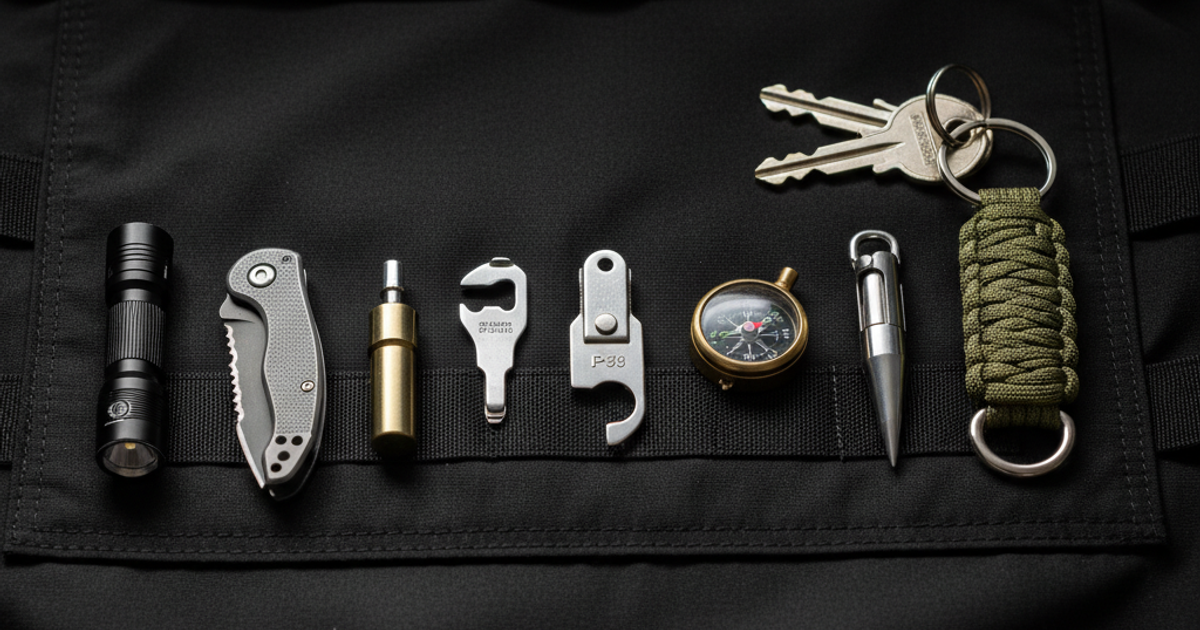
- Gerber Dime multi-tool keychain
- Victorinox Swiss Army Classic SD keychain knife
- Streamlight Nano keychain flashlight
- Firesteel Scout fire starter keychain
- Nite Ize DoohicKey key tool multi-function
Supplies
- Key ring or carabiner organizer
- Small zip tie or paracord loop for attachment
Why Keychain EDC Gear Is a Core Part of Urban Survival and Everyday Preparedness
The prepper community often debates the merits of elaborate gear setups, but the reality of most emergencies is that they're mundane, fast-moving, and personal. A car accident on the highway. A power outage at the office. A medical situation in a crowded subway. Situational awareness gets you to recognize the threat — but it's the tools on your person that let you act on it.
Keychain EDC tools thrive because they bypass the single biggest obstacle to preparedness: friction. You don't have to remember to grab your bag. You don't have to decide what to pack. Your keys go with you everywhere, which means your EDC gear does too. This is especially important for urban dwellers who commute, travel light by necessity, or live in apartment buildings where space for gear is already at a premium. For our deep dive into building out a broader everyday carry system, check out our guide on Everyday Carry (EDC) Essentials: What Every Prepper Should Have on Them at All Times.
The goal isn't to turn your keychain into a hardware store. It's to fill specific, high-probability gaps in your capability — light, cutting, fire, and basic tools — in a package that weighs less than a handful of coins.
The Core Categories of Keychain Survival Gear You Should Always Carry
Illumination: Because Darkness Is the Most Common Emergency
Power outages affect millions of Americans every year. The U.S. Energy Information Administration reported over 1.33 billion customer-hours of power interruptions in a recent year. In an urban environment, a sudden blackout turns familiar hallways, stairwells, and parking structures into genuine hazards. Rural residents face the same challenge in barns, outbuildings, and remote properties where a phone flashlight simply doesn't cut it.
A dedicated keychain light like the Streamlight Nano keychain flashlight delivers real lumens in a package smaller than your thumbnail. Unlike phone flashlights, it doesn't drain your communication device, works when your phone is dead, and survives drops and water exposure that would kill a phone. Always have a dedicated light source — never rely solely on your phone.
Cutting Tools: Small Blades Have Big Utility
A cutting edge is arguably the most versatile survival tool ever invented. On a keychain, it opens packaging, cuts rope, removes splinters, trims bandage tape, scores emergency cordage, or — in a worst-case scenario — assists with self-defense. For the prepper focused on staying legal and low-profile (the grey man principle), a small keychain knife stays under the radar while providing genuine capability.
The Victorinox Swiss Army Classic SD keychain knife is one of the most trusted small EDC blades ever made, featuring a small blade, file, scissors, and screwdriver in a slim form factor that's TSA-friendly in many configurations. It's been a go-to for travelers, hikers, and everyday preppers for decades for good reason. For higher-end options, the Benchmade Proper keychain pocket knife offers premium steel and craftsmanship in a slip-joint design that's refined enough for professional environments but capable enough for real-world use.
Multi-Tools: Maximum Capability in Minimum Space
When space is at an absolute premium, a multi-tool that fits on a keychain punches far above its weight class. The Gerber Dime multi-tool keychain packs pliers, a knife, scissors, a file, a screwdriver, a bottle opener, and more into a package smaller than a key fob. Whether you're tightening a loose screw in your car's interior or improvising a splint with materials on hand, pliers and a blade together open up a remarkable range of problem-solving options.
For a flat-carry option that slips directly onto a key ring like a large key, the StatGear Pocket Monkey keychain multi-tool is a card-style tool that provides hex wrenches, a bottle opener, a ruler, a phone stand, and more without adding significant bulk. It's an ideal complement to a folding multi-tool rather than a replacement. Similarly, the Nite Ize DoohicKey key tool multi-function slots right onto your keyring and offers a bottle opener, flathead screwdriver, and box cutter function in a nearly weightless format that most people forget is even there — until they need it.
Fire Starting: The Survival Tool That Never Goes Out of Style
Fire means warmth, signaling, water purification, and cooking. Even in an urban scenario — think being stranded overnight in a vehicle in a snowstorm — the ability to start a fire can be lifesaving. A keychain fire starter takes this capability to an always-on level.
The Firesteel Scout fire starter keychain is a compact ferrocerium rod that throws a shower of 3,000°F sparks regardless of weather conditions, altitude, or how long it's been sitting in your pocket. Unlike matches or lighters, it doesn't run out of fuel in the traditional sense, won't fail in wet conditions, and works at altitude where butane lighters struggle. If you want to deepen your fire-starting knowledge beyond the keychain tool itself, our article on Fire Starting Without Matches: How to Choose and Master Every Ignition Method for Survival covers every method in detail.
Expanded Toolkits: When You Want More Versatility
For preppers who want a more comprehensive keychain kit — particularly those who work in trades, travel frequently, or spend extended time in rural or wilderness areas — dedicated keychain toolkits offer more specialized options. The True Utility keychain toolkit EDC line offers a variety of modular, clip-on tools including SIM card ejectors, cable ties, cord cutters, and mini wrenches that can be mixed and matched to your specific needs. The modular approach lets you build a keychain EDC that fits your actual risk profile rather than a generic one-size-fits-all solution.
Building Your Keychain EDC Loadout Without the Bulk
The biggest mistake people make with keychain EDC is overcrowding. A keychain loaded with a dozen tools becomes a jangling, pocket-destroying mess that you'll eventually strip down out of frustration — taking your gear with it. The goal is surgical selection. Choose tools that address your highest-probability needs without duplicating functions unnecessarily.
A solid baseline loadout for most people includes: a small light, a cutting tool, one multi-function tool, and a fire starter. That's four items. From there, you adjust based on your environment. Urban commuters might prioritize a glass breaker or seatbelt cutter function. Rural residents might lean harder into fire-starting and cordage. Suburban preppers often benefit most from the multi-tool approach that covers the widest range of day-to-day and emergency scenarios. For those focused on urban survival specifically, pair your keychain kit with a broader EDC strategy — our article on Tactical Pen and Everyday Carry Weapons: How to Defend Yourself When You Can't Carry a Gun covers the self-defense layer of EDC in depth.
Weight discipline matters. Your entire keychain EDC loadout should add no more than 2–3 ounces to your keys. If it's heavier than that, you'll start leaving it behind — and a survival tool at home is worth exactly nothing.
Step-by-Step Instructions
Step 1: Audit Your Current Keychain and Identify Capability Gaps
Before buying anything, lay out what you currently carry and assess what's missing. Ask yourself: do I have light, a cutting edge, fire, and at least one multi-function tool? Note which categories are absent or underpowered. This audit prevents redundancy and keeps your keychain lean and purposeful.
Step 2: Choose Tools Based on Your Actual Environment and Risk Profile
A downtown city commuter faces different risks than a rural homesteader or a suburban parent doing school runs. Urban dwellers should prioritize illumination, a small blade, and a glass/seatbelt emergency tool. Rural and suburban preppers can lean into fire-starting and multi-tool versatility. Tailor your selections to the emergencies you're most statistically likely to face.
Step 3: Organize Your Tools on a Quality Key Ring or Carabiner
Cheap key rings fail under load and lose tools at the worst moments. Invest in a solid split-ring system, a locking carabiner, or a modular key organizer that keeps tools separated and accessible. Some preppers use a small quick-detach carabiner so the EDC loadout can be removed from the main key ring quickly if needed — useful when entering secure facilities that prohibit certain tools.
Test Each Tool Under Realistic Conditions Before You Depend on It
Strike your firesteel, operate your multi-tool pliers, and actually use your keychain light before a crisis forces you to learn on the job. Tools fail, mechanisms stick, and batteries die — discover these problems at home, not in the field. Check battery-powered tools monthly and replace batteries at the same time you change your smoke detector batteries.
Step 5: Practice Situational Awareness to Know When to Use What You Carry
Gear without awareness is just weight. Develop the habit of consciously noting your environment — exits, lighting conditions, potential hazards — wherever you go. Situational awareness is what tells you when to use your light before a situation deteriorates, when to have your cutting tool accessible, or when to signal for help. Our detailed guide on Situational Awareness: How to Detect Threats Before They Become Dangerous is essential reading for every EDC-focused prepper.
Step 6: Maintain OPSEC Around Your EDC Loadout
Don't broadcast what you carry. The grey man principle applies to keychain EDC just as much as it does to bug out bags and stockpiles. Bragging about your gear online or in casual conversation makes you a target, not a resource. Keep your capabilities close and your profile low. For more on why this matters, read our piece on OPSEC Warning: Why Sharing Your Preparedness Plans Online Could Make You a Target.
Step 7: Integrate Your Keychain EDC with Your Broader Preparedness Layers
Your keychain kit is the innermost layer of a preparedness system that should extend outward — to a pocket or belt pouch, to a vehicle emergency kit, to a bag, and ultimately to a home cache. Each layer covers different time horizons and scenarios. Make sure your keychain tools complement rather than duplicate your other layers. Review your full EDC system quarterly and update it as your circumstances change.
Step 8: Know the Legal Restrictions in Your Area for EDC Tools
Blade length restrictions, multi-tool prohibitions in government buildings, and local ordinances vary significantly. Research the laws in your city, state, and any jurisdiction you travel to regularly. A tool that lands you in legal trouble is worse than no tool at all — and a confident, legally-aware prepper never has to second-guess what's in their pocket.
Frequently Asked Questions
What is the best keychain survival tool for everyday carry?
There's no single "best" tool — the ideal keychain EDC is a combination of tools covering light, cutting, fire, and multi-function capability. For most people, a compact multi-tool like the Gerber Dime, a small flashlight like the Streamlight Nano, and a firesteel covers the core bases. If you can only carry one item, a quality keychain multi-tool with a blade gives you the most versatility per gram of weight.
How do I carry survival tools on a keychain without it getting too bulky or heavy?
Discipline and prioritization are key. Limit yourself to 3–5 tools maximum, choose items that don't duplicate functions, and use flat or card-style tools where possible to minimize bulk. A well-organized key system using a carabiner or modular key holder keeps everything accessible without turning your pocket into a hardware store. Aim for a total added weight of 2–3 ounces or less above your bare keys.
Are keychain knives and multi-tools legal to carry everywhere?
Laws vary significantly by location. Most jurisdictions allow small folding blades under 3 inches, but some cities, states, and countries have stricter rules. Government buildings, courthouses, schools, and airports have their own restrictions regardless of local law. Always research the specific laws for your area and any places you travel regularly. When in doubt, leave the blade at home and rely on a non-blade multi-tool or card tool instead.
Affiliate Disclosure: SHTFPlan.net participates in the Amazon Services LLC Associates Program. Some links are affiliate links — we may earn a small commission at no extra cost to you.