Why Potatoes Are the Ultimate Survival Crop — and How to Grow and Store a Year's Supply
Potatoes deliver more calories per square foot than almost any other crop you can grow. Here's how to plant, hill, harvest, cure, and store enough to feed your family through winter.
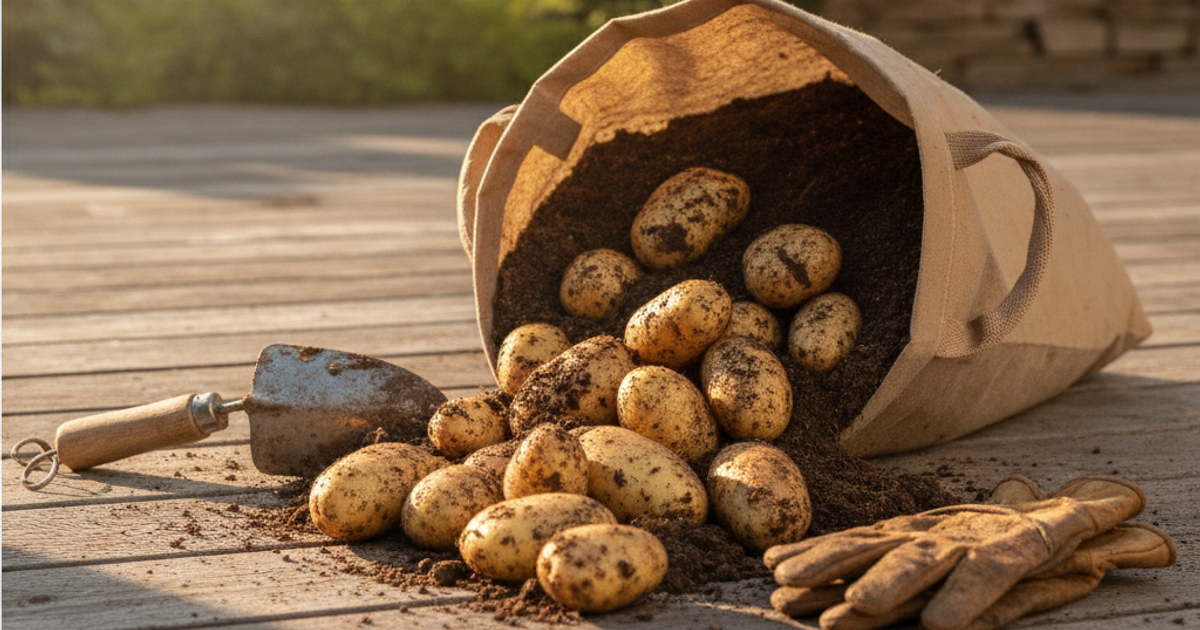
When preppers talk about calories, the conversation usually drifts toward rice, beans, and wheat berries sealed in buckets. Those are fine. But if the supply chain stays broken past the point where your stored food runs out, you need a crop that produces serious calories on small ground, with simple tools, and stores for months without electricity. That crop is the potato.
The numbers are hard to argue with. Potatoes produce more calories per acre than any other major staple — USDA and FAO figures put potato output in the range of 9 to 16 million calories per acre, compared to roughly 6 to 7 million for wheat and corn. A pound of raw potatoes delivers about 350 calories, plus potassium, B6, iron, and roughly 20 mg of vitamin C in a single medium tuber. That last detail matters more than most people realize: Irish tenant farmers survived largely on potatoes and buttermilk for generations without developing scurvy. If you're worried about vitamin deficiency on a long-term survival diet, a potato harvest in the cellar is cheap insurance.
Potatoes also scale. A rural homesteader can plant a quarter acre. A suburban family can get 200+ pounds from a 10x20 bed. An apartment dweller can grow real food on a balcony in fabric bags. Almost no other staple crop works across all three settings.
What You'll Need
Tools
- Digging fork for lifting tubers without slicing them
- Wheel hoe or cultivator for hilling larger rows
- 10-gallon grow bags for patios, balconies, and rooftops
- Wooden or plastic ventilated crates for curing and storage
- Thermometer and hygrometer for monitoring your storage space
Supplies
- Certified disease-free seed potatoes
- Organic granular fertilizer plus compost
- Mulch or landscape fabric for weed suppression and hilling
- Spinosad insect spray for Colorado potato beetle
- Copper fungicide for late blight prevention
How Many Potatoes Does It Take to Feed a Family for a Year?
Run the math before you run the tiller. At roughly 350 calories per pound, a single adult pulling 2,000 calories a day entirely from potatoes would need about 5.7 pounds daily — more than 2,000 pounds per year. Nobody should eat that way. But if potatoes supply one-third of your household's calories, a family of four needs roughly 1,000 to 1,200 pounds annually.
That's achievable. Well-managed garden beds commonly return 8 to 10 pounds per pound of seed planted, or about 1 to 2 pounds per square foot. A 400-square-foot plot can realistically produce 400 to 800 pounds. Rural growers with a quarter acre and decent soil can exceed a ton. Urban preppers growing in fabric bags should expect 3 to 6 pounds per 10-gallon container — twenty bags on a sunny balcony is 60 to 120 pounds, which is real food, not a hobby. Pair that with the techniques in our apartment prepping guide to growing food in small spaces.
Choosing Varieties That Actually Store
Not all potatoes keep. New potatoes and thin-skinned reds are delicious but break down in weeks. For emergency food storage, plant late-season, high-dry-matter varieties with thick skins:
- Kennebec — heavy yields, excellent keeper, blight tolerant
- Russet Burbank — the classic storage potato, 6-8 months in good conditions
- German Butterball and Yukon Gold — good flavor, solid storage life
- Red Pontiac — productive and forgiving in heavy soil
Always start with certified seed stock. Grocery store potatoes are frequently treated with sprout inhibitors and can carry ring rot or scab that will contaminate your soil for years. Once you have a clean crop, you can save your own seed potatoes each fall and become self-sustaining — a core principle covered in our guide to building a survival seed vault at home.
Step-by-Step Instructions
Step 1: Chit and cut your seed potatoes
Two to three weeks before planting, set seed potatoes in a bright, 60-70°F room to sprout — this is called chitting and it can accelerate emergence by 10-14 days. Cut large tubers into 1.5 to 2-ounce chunks, each with at least two eyes. Let the cut faces dry and callus for 24-48 hours to prevent rot.
Step 2: Prepare loose, slightly acidic soil
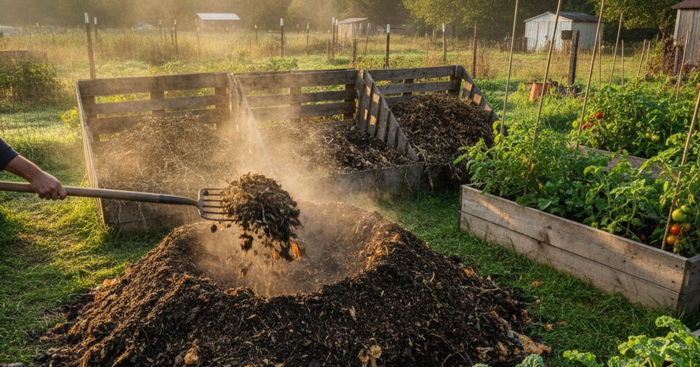
Potatoes want friable soil at pH 5.0-6.0 and hate compaction. Work in 2-3 inches of compost and a balanced organic fertilizer. Skip fresh manure and lime — both encourage scab. If you're building soil fertility without inputs, see our guide to making your own fertilizer from compost, manure, and ash.
Step 3: Plant deep and space correctly
Set seed pieces 4 inches deep, 12 inches apart, in rows 30-36 inches apart. In grow bags, start with 4-6 inches of soil, place three seed pieces, and cover. Plant when soil hits 45-50°F — roughly two weeks before your last frost date.
Step 4: Hill the plants two or three times
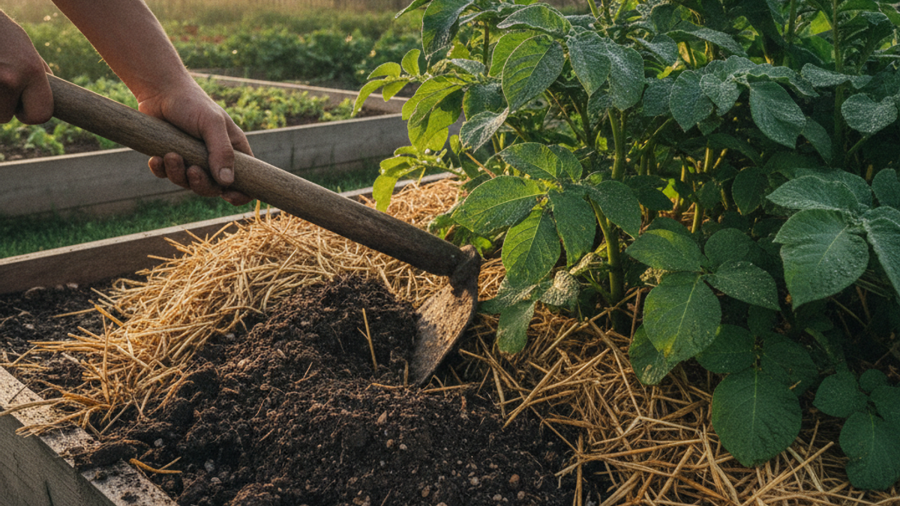
When shoots reach 8 inches, mound soil, straw, or compost up around the stems, leaving the top few inches exposed. Repeat every two to three weeks. Hilling increases tuber production and — critically — blocks sunlight that turns tubers green and solanine-laden. Mulch and fabric between rows cut weeding labor dramatically.
Step 5: Scout for beetles and blight weekly
Hand-pick Colorado potato beetles and crush egg clusters on leaf undersides. Treat heavier infestations with spinosad. In humid regions, apply copper fungicide preventively once plants close the rows — late blight can destroy a field in under a week, as 1845 Ireland demonstrated.
Step 6: Harvest after the vines die back
Stop watering when foliage yellows, then wait two weeks for skins to set. Dig on a dry day with a fork, starting a foot outside the row to avoid spearing tubers. Handle them like eggs — every bruise is a future rot pocket.
Step 7: Cure the crop for 10-14 days
Spread unwashed potatoes one layer deep in a dark space at 50-60°F with 85-95% humidity for 10 to 14 days. Curing thickens the skin and heals minor wounds. Never wash potatoes before storage — moisture is the enemy.
Step 8: Store cold, dark, and humid
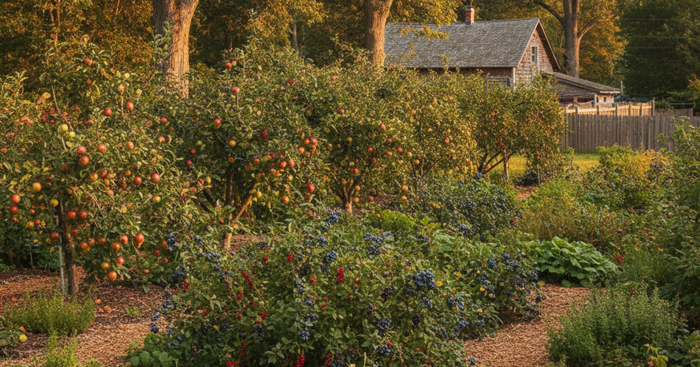
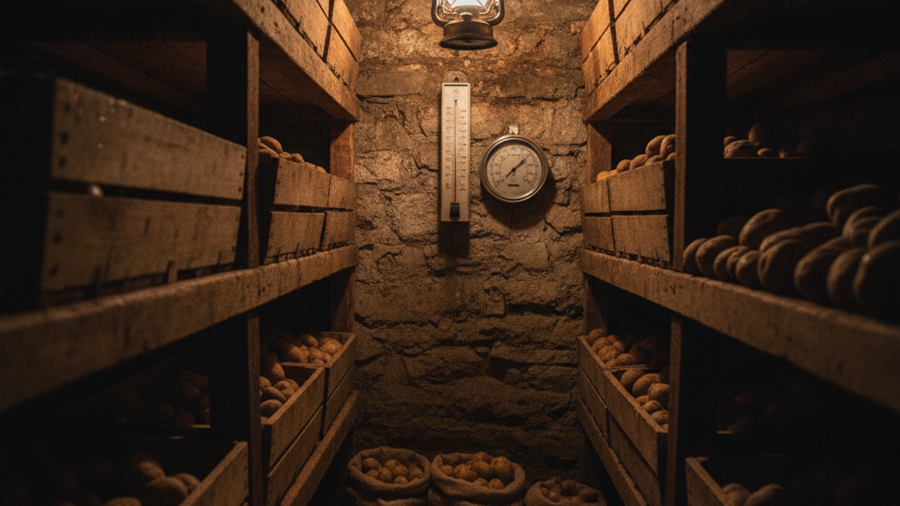
Move cured potatoes to 38-42°F at 90-95% humidity in ventilated crates. Below 40°F, starches convert to sugar; above 50°F, sprouting accelerates. Keep them away from apples and onions — ethylene gas triggers sprouting. A properly built DIY root cellar will hold a crop 6-8 months. Urban preppers can use an unheated closet, insulated garage bin, or a converted refrigerator set to 40°F.
Keeping Your Harvest Secure and Pest-Free
A visible potato patch is an advertisement. Interplant with ornamentals, use the techniques in our defensive gardening guide, and keep your cellar out of sight. Check stored crates every two weeks and remove any soft tuber immediately — one rotting potato can take out a whole crate. Line storage areas against rodents using the methods in our guide to pest-proofing emergency food storage.
Recommended Gear
Start with certified seed potatoes and a quality digging fork — the single most important harvest tool you'll own. Apartment and suburban growers should invest in 10-gallon fabric grow bags, which make hilling and harvesting a two-minute job. Rural growers running long rows will save hours with a wheel hoe cultivator. Round out your supplies with organic fertilizer, a roll of landscape fabric, and both spinosad insect spray and copper fungicide for crop defense. Browse more recommended survival gear and equipment to round out your self-reliance kit.
Frequently Asked Questions
How long do potatoes last in storage without refrigeration?
Properly cured late-season potatoes held at 38-42°F in a dark, humid root cellar will keep 6 to 8 months. In a cool basement at 50-55°F, expect 3 to 4 months before sprouting accelerates. Any potatoes showing green skin should be peeled deeply or discarded — green tissue contains solanine, which is toxic in quantity.
Can you grow enough potatoes on a balcony to matter?
Yes. Each 10-gallon grow bag with 6+ hours of direct sun produces 3 to 6 pounds. Twenty bags yield 60 to 120 pounds — roughly 21,000 to 42,000 calories, or two to three weeks of emergency calories for one adult. That's a meaningful layer in any urban survival food plan.
Can I plant potatoes from the grocery store?
You can, but it's risky. Most commercial potatoes are treated with chlorpropham sprout inhibitor and may carry soil-borne disease. Certified seed potatoes are inspected for ring rot, blight, and scab, and cost only a few dollars per pound — cheap insurance for a crop you're counting on to feed your family.
Affiliate Disclosure: SHTFPlan.net participates in the Amazon Services LLC Associates Program. Some links are affiliate links — we may earn a small commission at no extra cost to you.