
Mosquitoes, Ticks, and Fleas: How to Control Disease-Carrying Pests When Public Health Services Collapse
When mosquito abatement trucks stop running and pharmacies close, insect-borne disease becomes a top killer. Here's how to break the bite cycle around your home and body.
In a functioning society, you never think about vector control. Municipal crews spray culverts, treat storm drains with larvicide, and monitor mosquito pools for West Nile virus. County extension offices track tick populations. Landlords hire exterminators. All of that is invisible infrastructure — and it is also among the first things to disappear when budgets collapse, fuel runs out, or civil order breaks down.
The consequences are not theoretical. The World Health Organization counted roughly 263 million malaria cases and 597,000 deaths in 2023 alone, almost entirely in regions without organized vector control. In the United States, the CDC reported that vector-borne disease cases tripled between 2004 and 2016, and an estimated 476,000 Americans are diagnosed and treated for Lyme disease every year — with full public health services operating. After Hurricane Katrina, researchers documented a doubling of West Nile neuroinvasive disease in the affected parishes, driven by standing water and abandoned properties. Mosquitoes kill more humans annually than any other animal on earth, and they don't need society to fail to do it.
For preppers, this is a blind spot. People stockpile ammunition and long-term food while ignoring the insect that will put their family down with a 104°F fever. Insect-borne illness is a slow-motion threat that degrades your labor force, burns through your medical supplies, and can kill children and elderly family members outright. Here is how to control it — in an apartment, a subdivision, or on 40 acres.
What You'll Need
Tools
- Fine-tipped tick removal tool kit
- 1-gallon pump sprayer for perimeter and larvicide application
- Fine-mesh window screening and screen repair kit
- Stiff yard rake and machete or brush cutter for habitat reduction
Supplies
- Permethrin clothing treatment
- 20% Picaridin skin repellent
- BTI larvicide briquets
- Insecticide-treated bed nets
- Mosquito head nets
How to Control Mosquitoes Without Municipal Spraying
Adult mosquitoes are the symptom. Standing water is the disease. A female Aedes mosquito needs about a tablespoon of water — a bottle cap, a bromeliad leaf, the saucer under a balcony planter — to complete a life cycle in as little as seven to ten days. Kill the larvae and you never fight the adults.
Source reduction is free and it is the single highest-yield action you can take. Walk your property (or balcony, or shared courtyard) every week and dump, drain, or cover every container holding water: tires, buckets, tarps with sagging pockets, clogged gutters, kiddie pools, birdbaths, wheelbarrows, and pet bowls. In a grid-down scenario your rain barrels and emergency water storage containers become the biggest mosquito factory on the block — every one of them needs a sealed lid or fine mesh screen over the opening.
For water you can't dump — ornamental ponds, livestock troughs, ditches, disused pools, septic overflow — use Mosquito Dunks BTI larvicide briquets. Bacillus thuringiensis israelensis is a naturally occurring soil bacterium that kills mosquito larvae but is harmless to fish, pets, birds, and humans. One briquet treats 100 square feet of surface water for 30 days, and dunks have a multi-year shelf life in a sealed container — which makes them an ideal, cheap, high-leverage stockpile item that almost nobody has.
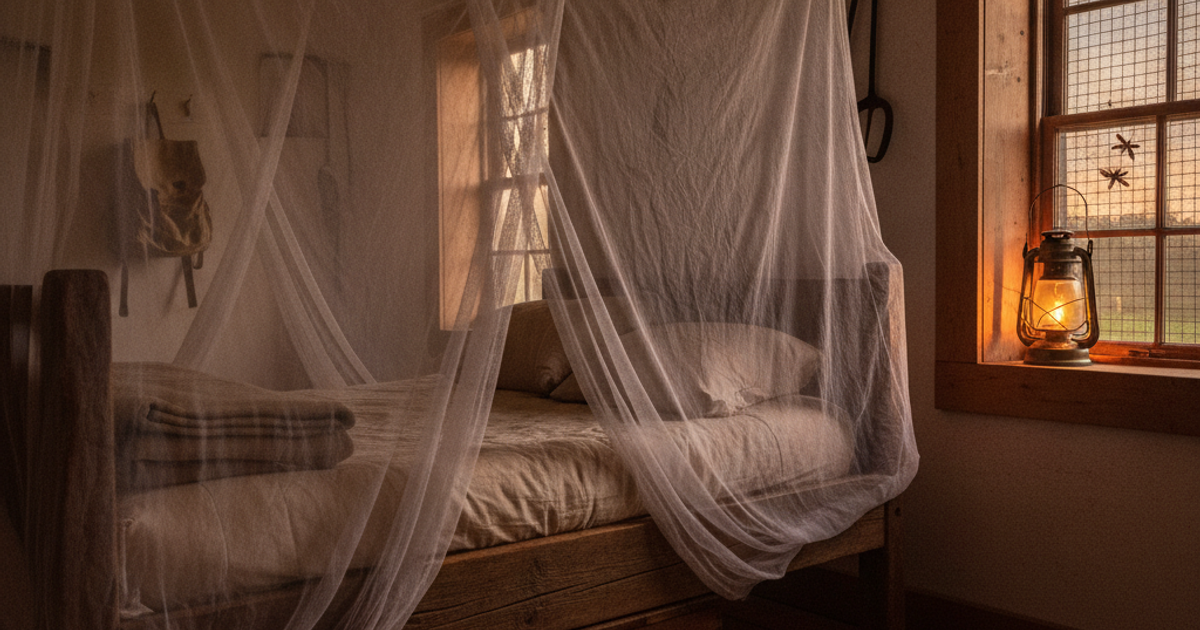
Apartment and urban dwellers: you cannot control the vacant lot next door, so control your envelope. Repair every window and door screen, seal gaps around AC units, and hang treated netting over sleeping areas. When the power fails and windows stay open all night in summer heat — a scenario covered in our guide to surviving extreme heat without power — screens and nets are the only thing between you and hundreds of bites per night.
How to Prevent Tick Bites and Lyme Disease When There's No Doctor
Ticks are ambush predators that quest from the tips of grass and leaf litter. They don't jump or fly. That means habitat management works: keep grass cut short, remove leaf litter, clear brush along trails and property edges, and maintain a three-foot wood chip or gravel barrier between woods and your yard or garden. Studies of residential tick control have shown that landscape modification alone can meaningfully reduce tick encounters in the areas people actually use.
The most important number to memorize: most tick-borne pathogens, including the Lyme spirochete, generally require 24 to 36 hours of attachment to transmit. Daily, thorough tick checks are therefore a legitimate medical intervention. Check the scalp, behind ears, armpits, waistband, groin, and behind the knees. Remove with fine-tipped tweezers or a purpose-built remover — grip at the skin, pull straight up with steady pressure, don't twist, don't burn it, don't smother it in petroleum jelly. A dedicated tick remover kit belongs in every first aid kit and bug out bag. Save the removed tick in a sealed bag with the date — if illness develops later, that specimen is diagnostic information.
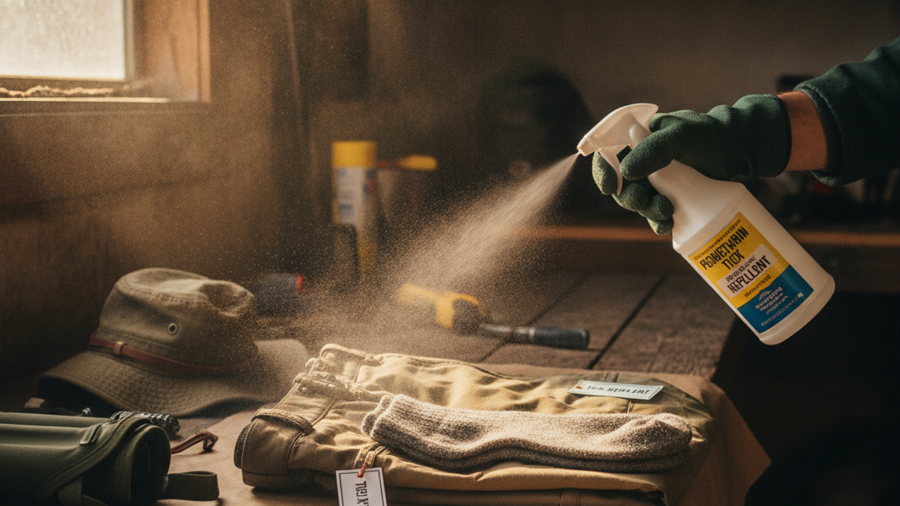
Treat clothing with permethrin. Field studies of outdoor workers have found permethrin-treated uniforms reduced tick bites dramatically compared to untreated clothing, and a single treatment survives roughly six washes or six weeks. Spray boots, socks, pants, and hats — not skin — and let them dry fully before wearing.
Flea Control, Rodents, and the Disease Nobody Expects

Fleas are a downstream problem. They ride rodents. When sanitation fails, garbage piles up, and food storage becomes sloppy, rat and mouse populations explode — and with them come murine typhus, and in the American Southwest, plague. The CDC still records an average of about seven human plague cases per year in the U.S., nearly all flea-transmitted. Controlling fleas means controlling rodents, which means airtight pest-proofed food storage and disciplined waste management when the sewers stop working.
Indoors, roughly 95% of a flea infestation is eggs, larvae, and pupae in carpet, bedding, and cracks — not adults on the animal. Vacuum aggressively (dispose of the bag outside), wash bedding in the hottest water available, and treat pets with whatever preventive you've stockpiled. Diatomaceous earth worked into carpet edges and pet bedding is a shelf-stable, non-toxic fallback that kills by desiccation. A residual barrier treatment like Ortho Home Defense perimeter spray applied around foundations, thresholds, and window frames creates a chemical moat that lasts weeks and works on fleas, ticks, and crawling insects alike.
Step-by-Step Instructions
Step 1: Survey and eliminate all standing water weekly
Walk your entire property, balcony, or building surroundings once a week with a bucket. Dump, drill drainage holes in, or invert every container capable of holding water. Clean gutters, flatten tarp pockets, and re-grade low spots that pool after rain. This single habit eliminates the majority of local mosquito production.
Step 2: Treat permanent water sources with BTI larvicide
For ponds, troughs, rain barrels, ditches, and disused pools, apply BTI dunks or granules at labeled rates and re-treat every 30 days during warm months. Stockpile at least a two-year supply, stored dry and sealed. BTI is safe around livestock, fish, and drinking-water containers used for animals.
Step 3: Seal and screen your living space
Inspect every window screen for tears and every door for gaps. Repair with screen patch kits, replace worn weatherstripping, and stuff steel wool into pipe penetrations to block rodents. In a long-term event, screens are irreplaceable — stock spare rolls of mesh and a screen spline tool.
Step 4: Treat clothing with permethrin before the season starts
Hang work clothes, boots, and field gear outdoors and spray to the point of dampness with 0.5% permethrin. Let dry a minimum of two hours. Re-treat every six weeks or six washes. Keep treated garments away from cats until fully dry, as wet permethrin is toxic to felines.
Step 5: Apply skin repellent and wear physical barriers
Use 20% Picaridin or 25–30% DEET on exposed skin, reapplying per label. Wear long sleeves, tuck pants into socks, and add a head net during dawn and dusk activity or in heavy-tick brush. Light-colored clothing makes ticks visible before they reach skin.
Step 6: Conduct daily full-body tick checks
Make tick checks a nightly household ritual, especially for children and anyone doing outdoor labor. Shower within two hours of coming inside and tumble-dry clothing on high heat for 10 minutes to kill any hitchhikers. Remove attached ticks immediately with a proper tool.
Step 7: Hang treated bed nets over every sleeping position
Install insecticide-treated nets over beds, cots, and hammocks — indoors and out. Tuck edges under the mattress and inspect for holes weekly. Bed nets are the most cost-effective anti-malaria intervention in global public health and work equally well against West Nile and dengue vectors.
Step 8: Establish and maintain a chemical perimeter
Apply residual barrier spray to foundation lines, door thresholds, window frames, and the vegetation edge of your yard every 30–60 days in warm weather. Combine with mowing, brush clearing, and leaf removal to deny ticks and fleas their preferred humid microhabitat.
Recommended Gear
Build your vector-control kit the way you'd build a survival gear loadout — layered and redundant. On skin, Sawyer 20% Picaridin lotion is the workhorse: it's odorless, won't melt synthetic gear or plastics the way DEET does, and provides up to 12 hours of protection. For jungle-grade conditions or heavy swarms, keep a bottle of Repel 100 DEET pump spray in reserve — nearly pure DEET, tiny footprint, and a decade-long shelf life. On clothing, Sawyer permethrin treatment handles ticks and chiggers. For sleeping and static work, a Coghlan's head net weighs an ounce and saves your sanity, while a treated pyramid bed net protects a whole sleeping position all night. Round it out with larvicide, perimeter spray, and a tick tool, and pair the whole kit with fever-management supplies and antibiotics from your medical stockpile — doxycycline is the frontline drug for most tick-borne bacterial infections.
Frequently Asked Questions
How do I control mosquitoes in an apartment with no yard?
Focus on your envelope and your containers. Screen every window and repair tears immediately, keep balcony planter saucers dry or dosed with a BTI dunk, cover any stored water, and hang a treated bed net over your sleeping area. Fans also help — mosquitoes are weak fliers and struggle in moving air, which doubles as heat mitigation during a blackout.
What's the best insect repellent to stockpile for long-term survival?
Stockpile all three chemistries: permethrin for clothing and gear, Picaridin for daily skin use, and high-concentration DEET as a compact reserve. Unopened repellents typically remain effective for many years when stored cool and out of sunlight. Concentrated products give you far more protection per ounce of storage space than pre-diluted sprays.
How long does a tick have to be attached before it transmits disease?
Most tick-borne bacterial infections, including Lyme disease, require roughly 24 to 36 hours of attachment before meaningful transmission occurs — which is why daily tick checks are so effective. Some pathogens, such as the Powassan virus, can transmit much faster, so prompt removal is always the priority. Monitor any bite site for expanding rash, fever, or joint pain over the following month.
Affiliate Disclosure: SHTFPlan.net participates in the Amazon Services LLC Associates Program. Some links are affiliate links — we may earn a small commission at no extra cost to you.