Bartering Skills, Not Just Stuff: How to Trade Your Way Through an Economic Collapse
When cash is worthless and shelves are bare, your skills may be worth more than your stockpile. Here's how to build a barter economy skillset before SHTF.
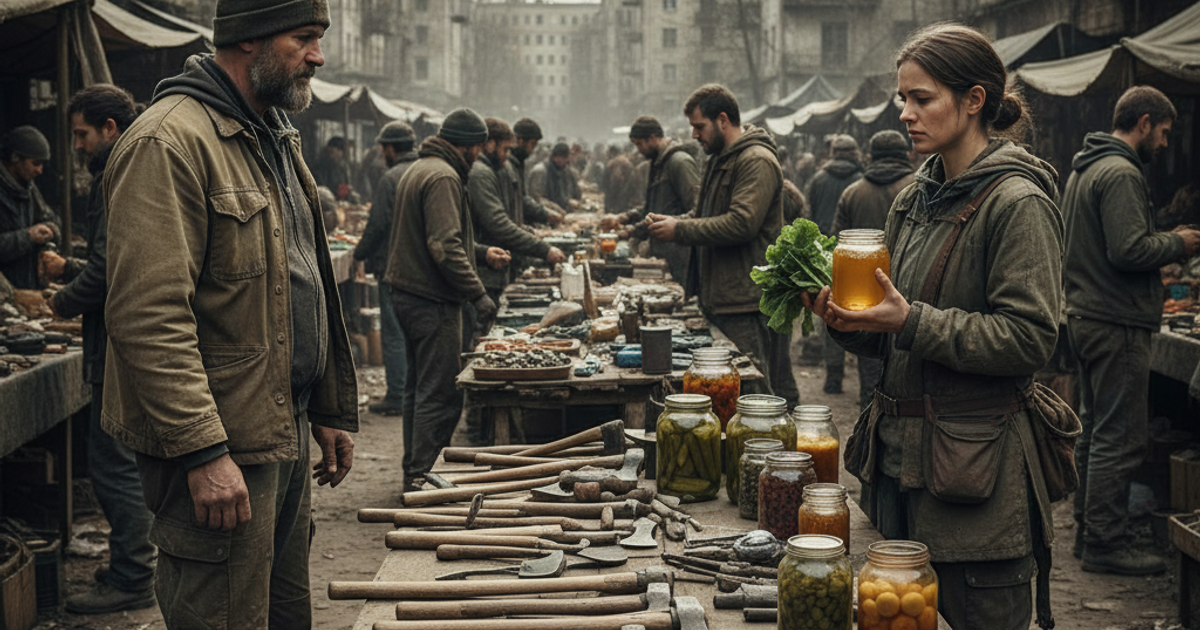
When the economy collapses — really collapses — paper money becomes wallpaper and credit cards become plastic garbage. History proves this repeatedly. During the Weimar Republic hyperinflation of the 1920s, Germans famously wheeled barrows of cash to buy a loaf of bread. In post-Soviet Russia, cigarettes and vodka functioned as hard currency. In Venezuela's ongoing economic crisis, doctors accepted chickens as payment. In every case, the people who survived and even thrived weren't necessarily those with the most stuff stockpiled — they were the ones who had something other people needed.
That's the core principle most preppers miss. You can fill a basement with emergency food storage, gear, and supplies, but when those run out — or when your neighbors are desperate enough to try and take them — what you know how to do becomes your most durable currency. Skills don't run out. Skills can't be stolen in one raid. And skills compound in value the longer a crisis lasts.
This guide is about building a barter economy skill set that works whether you're in a high-rise apartment, a suburban neighborhood, or a rural homestead.
Why Skills Outperform Goods in a Long-Term Economic Collapse
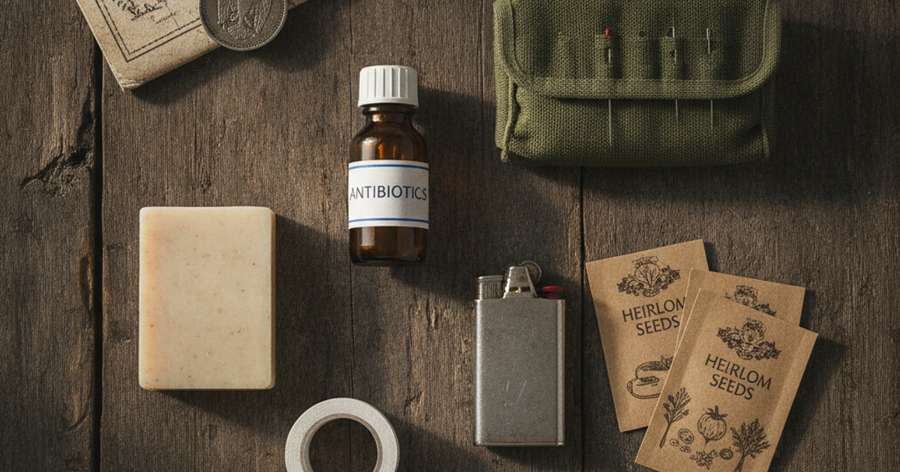
Stockpiled goods are a finite resource. Once you trade your last bottle of antibiotics or your last case of canned goods, you have nothing left to offer. Skills, by contrast, are renewable. A person who knows how to treat cuts, burns, and infections in the field can provide that service again and again, trading medical care for food, shelter, information, or protection.
Consider the historical record: According to economist Peter Leeson's research on pirate economies and informal trade networks, skills-based barter communities consistently outlast goods-based ones because they create interdependence rather than one-time transactions. When you fix someone's water pump, you create an ongoing relationship. When you trade them your last can of beans, the relationship ends the moment they swallow the last spoonful.
The SHTF barter economy rewards people who solve problems. That's the mindset shift you need to make right now, before the crisis hits.
The High-Value Skills Every Prepper Should Develop Before SHTF
Medical and First Aid Skills
Nothing commands more barter value in a collapse than the ability to keep people alive. EMT certification, Wilderness First Responder training, or even a solid understanding of wound care, infection management, and improvised splinting will make you indispensable. You don't need to be a surgeon — you need to be the most medically capable person in your immediate community. A well-stocked Johnson & Johnson first aid kit large is a good starting point for your medical supplies, but the real investment is in learning how to use every item in it under stress.
Mechanical and Repair Skills
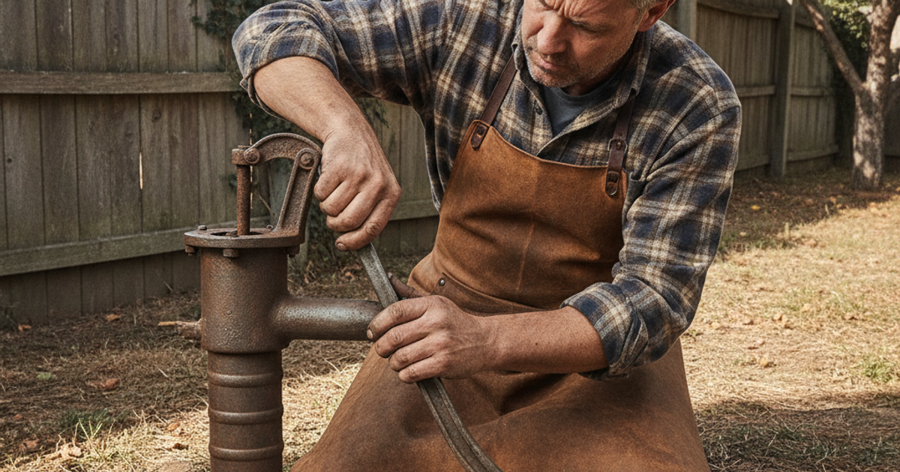
When supply chains collapse, "repair" replaces "replace" as the dominant economic activity. People who can fix engines, generators, water pumps, and basic appliances will be in constant demand. Even basic skills — patching a tire, replacing a fuel filter, diagnosing a generator problem — become rare and valuable when there are no repair shops open. A Leatherman Wave multi-tool is one of the most versatile instruments a repair-minded prepper can carry, combining pliers, wire cutters, screwdrivers, a blade, and more in a single pocket-sized package.
Sewing, Textile Repair, and Fabrication
Clothing wears out. Equipment fails. In a post-collapse world, the ability to repair fabric, leather, and gear is surprisingly high-value. A Singer heavy duty sewing machine can handle heavy canvas, denim, and leather — the materials that matter most for durable repair work. This skill is equally viable for apartment dwellers and rural homesteaders. If you own a working sewing machine and know how to use it, you have a barter service that almost nobody else will be offering.
Food Preservation and Production
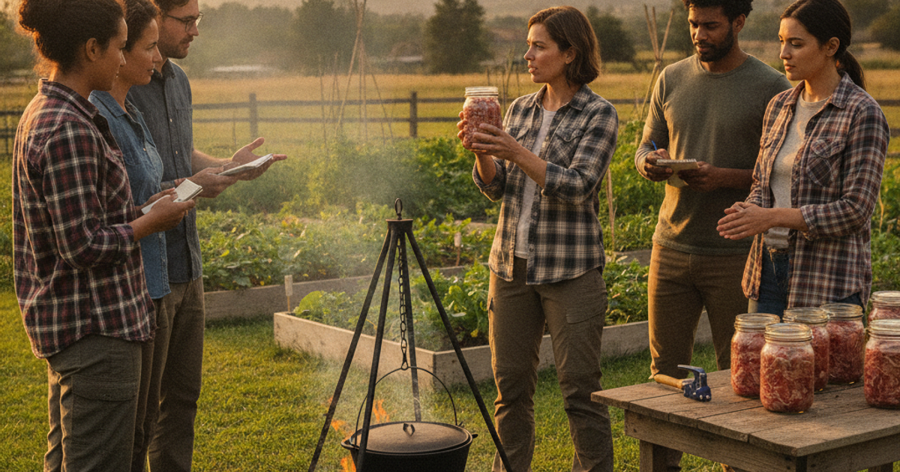
Knowing how to preserve food — through canning, fermenting, smoking, and dehydrating — is a skill that produces tangible, tradeable goods. If you know how to pressure can meat, beans, and soups, you can convert someone else's raw ingredients into long-shelf-life calories and earn a percentage in the process. Urban preppers can develop fermentation skills (sourdough, lacto-fermented vegetables) that require no outdoor space at all.
Knife Sharpening and Tool Maintenance
Dull blades are dangerous and inefficient. Most people don't know how to sharpen a knife properly, and in a collapse scenario, every cutting tool needs to stay functional. A Fiskar sharpening stone whetstone set gives you the equipment to offer knife and tool sharpening as a mobile barter service — something you can do in any setting with nothing but hand skill and a stone. This is a particularly good skill for urban survival scenarios where you can move through a neighborhood offering services.
Physical Goods That Complement Your Skill-Based Barter Economy
Skills are primary, but smart preppers also stockpile small, high-value consumables that function as "wages" — things you can accept in trade or offer to bootstrap a transaction. Think in terms of items that are cheap now, universally needed, and difficult to produce locally.
Fire-starting capability is a perfect example. A BIC lighter bulk pack 50 count costs very little today but will be extraordinarily valuable when reliable ignition sources run out. Lighters are small, lightweight, universally understood, and don't require any explanation of value — everyone knows immediately what they're worth. Pair this with your fire-starting knowledge, and you have both a skill and a physical commodity to trade.
Similarly, a Lodge cast iron skillet set represents durable, multi-generational cookware that works over open fire, wood stove, or any heat source. Cast iron is virtually indestructible and has been traded as a value item throughout human history. If you know how to cook on it and maintain it — seasoning, rust removal, proper heat management — that knowledge itself becomes part of the trade value. You can see our full guide to financial preparedness and building a barter economy for more on which physical goods hold value.
A Victorinox Swiss Army knife classic is another small, high-perceived-value item worth stockpiling in quantity. Compact multi-tools make excellent barter items because their value is immediately obvious, they're lightweight to store, and they represent genuine utility to the recipient.
Information as a Barter Currency: Don't Overlook Situational Awareness
In a collapse, information is power, and the prepper with situational awareness and reliable communication tools becomes a valuable community asset. Knowing what roads are passable, which areas are dangerous, where resources can be found, and what's happening outside the immediate neighborhood is worth real barter value to people who are operating blind.
An Eton emergency hand crank weather radio requires no grid power and can pull in NOAA weather alerts, emergency broadcasts, and shortwave signals when all other communication infrastructure has failed. The person in your community who has working radio reception and is willing to share what they hear becomes a trusted, protected asset. Pair this with solid situational awareness skills and you have a genuine intelligence service to offer your community.
What You'll Need
Tools
- Leatherman Wave multi-tool
- Fiskar sharpening stone whetstone set
- Singer heavy duty sewing machine
- Lodge cast iron skillet set
Supplies
- BIC lighter bulk pack (50 count)
- Victorinox Swiss Army knife classic
- Johnson & Johnson first aid kit large
- Eton emergency hand crank weather radio
Step-by-Step Instructions
Step 1: Audit Your Current Skills Against Community Needs
Write down every skill you have that could solve a problem for someone else — medical care, mechanical repair, cooking, sewing, electrical work, construction, communication. Then map those skills against the likely needs in your immediate community. This audit will show you where your barter portfolio is strong and where you have gaps to fill before SHTF.
Step 2: Identify and Fill Your Two Biggest Skill Gaps
Most preppers are strong in one or two areas and completely unprepared in others. If you can build a shelter but can't treat a wound, your barter value drops sharply once the construction phase of a collapse is over. Enroll in a first aid certification course, take a basic auto mechanics class at a community college, or find a local craftsperson who will teach you their trade in exchange for something you already know.
Step 3: Build a Portable Barter Kit for Your Primary Skill
Whatever your strongest tradeable skill is, assemble the tools required to deliver it in a portable format. A knife sharpener, a medical bag, a sewing kit — whatever represents your primary trade should fit in a bag you can carry. Portability matters because your customers may not be able to come to you, and the grey man principle applies: you don't want to advertise your resources while traveling.
Step 4: Stockpile Small High-Value Consumable Goods for Seeding Trades
Acquire bulk quantities of universal barter goods — lighters, small knives, sewing supplies, over-the-counter medications, coffee, salt, and alcohol. These items cost almost nothing now and function as "seed capital" in a barter economy, helping you initiate transactions and build relationships before your skill services become established. Store these separately from your primary emergency food storage and survival gear.
Step 5: Establish Your Barter Network Before You Need It
The worst time to meet your neighbors is during a crisis. Start now by building relationships with people in your immediate community who have complementary skills. The farmer, the nurse, the mechanic, and the carpenter in your area are your future trade partners. Knowing who they are — and having already established trust — is worth more than any single item in your bug out bag. Consider joining or forming a neighborhood mutual aid network now.
Step 6: Practice OPSEC While Building Your Barter Identity
There's a tension in barter economy building: you need people to know what you can offer, but advertising your stockpile or full skill set too widely makes you a target. Develop a deliberate, limited public persona — be known for one or two skills, not for having a fully stocked prepper compound. Read our guide on OPSEC for preppers to understand how to balance visibility with security.
Step 7: Document Your Skills and Create a Simple Service Menu
Write out a clear, concise list of what you can do, what tools you need to do it, and what you'd want in exchange. Think of it like a pre-collapse business plan. This exercise clarifies your own thinking, helps you communicate your value quickly in a high-stress situation, and forces you to consider what fair exchange looks like for each service before emotions and desperation distort the negotiation.
Step 8: Train Someone Else in Your Primary Skill
This may seem counterintuitive — why create competition? — but teaching someone else one of your skills creates loyalty, reciprocity, and a trained ally. In a true collapse scenario, having a partner who can assist you or cover for you dramatically increases your capacity and safety. The prepper who teaches is the one who leads, and leaders earn the most durable social capital of all.
Frequently Asked Questions
What skills are most valuable for bartering after an economic collapse?
Medical and first aid skills consistently rank highest because they address life-or-death needs that no one can defer. After that, mechanical repair (engines, generators, pumps), food preservation (canning, fermenting, smoking), and construction or shelter repair are all extremely high-value. The key is that your skill must solve a problem someone has right now, not a problem they might have someday. Skills that produce consumables — like food preservation — or that extend the life of essential equipment rank highest in a sustained SHTF scenario.
How do I start bartering skills when I don't have special training or certifications?
Start with what you already know that others don't. Can you cook from scratch? Sew? Sharpen a knife properly? Fix a bicycle? Most people are surprisingly skilled in areas they don't think of as "survival" skills, because in normal times those skills have low economic value. In a collapse, that changes dramatically. Begin by taking inventory of your existing knowledge, then identify one gap and fill it with a hands-on course, a library book, or practice time before SHTF. You don't need a certification — you need competence and the tools to back it up.
Is it better to stockpile goods or learn skills for post-SHTF bartering?
Both, but weighted heavily toward skills. Goods are finite — once traded, they're gone. Skills are renewable and compound over time as you practice them. The ideal approach is to stockpile small, high-value consumable goods (lighters, medications, salt, coffee) as a barter bridge — something to offer while you're establishing your skill-based reputation in your community. Think of physical goods as your startup capital and your skills as your ongoing business. Also remember that goods can be stolen; skills cannot. Our Prepper's Guide to Bartering: What Skills and Goods Will Actually Have Value When SHTF goes deeper on both sides of this equation.
Affiliate Disclosure: SHTFPlan.net participates in the Amazon Services LLC Associates Program. Some links are affiliate links — we may earn a small commission at no extra cost to you.